](https://deep-paper.org/en/paper/130_one_demo_is_worth_a_thousa-2522/images/cover.png)
Introduction
Imagine you are teaching a robot to pick up a coffee mug. You guide the robot’s hand, gripping the mug and placing it on a coaster. The robot records this motion and the video feed from its camera. You run the policy, and it works perfectly. But then, you move the mug three inches to the left, or perhaps you rotate the robot’s base slightly. Suddenly, the robot flails, misses the mug, or crashes into the table.
This is the fragility of visuomotor policies—systems that map visual inputs directly to motor actions. While they are incredibly powerful, they suffer from a significant “Out-of-Distribution” (OOD) problem. If the robot encounters a visual scene or a starting position it hasn’t explicitly seen during training, it often fails catastrophically.
To fix this, researchers typically resort to the brute-force method: collecting hundreds or thousands of human demonstrations covering every possible angle and position. This is tedious, expensive, and scales poorly.
But what if a single demonstration could be mathematically expanded into thousands of valid, diverse training examples?
This is the premise of 1001 DEMOS, a new research paper that introduces a framework for Action-View Augmentation. By combining novel view synthesis (using Gaussian Splatting) with trajectory optimization, the researchers have developed a way to take one real-world demo and generate thousands of realistic variations—including scenarios with obstacles that weren’t even in the original scene.
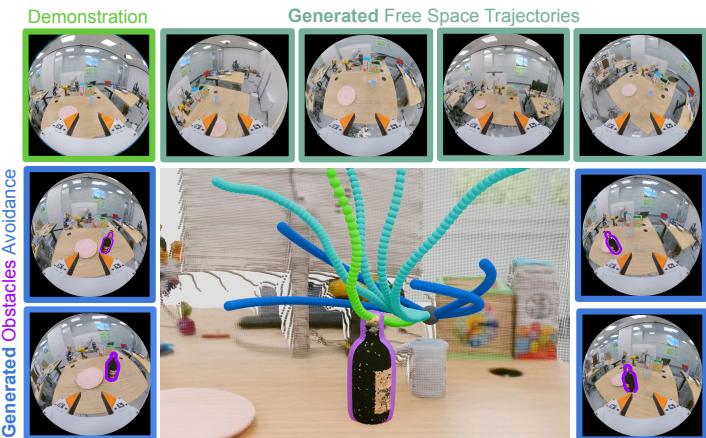
In this post, we will dive deep into how this system works, the math behind the trajectory generation, and how it allows robots to learn robust behaviors from minimal human effort.
Background: The Data Bottleneck in Robotics
To understand why this paper is significant, we first need to look at how we currently train robots. The dominant paradigm is Imitation Learning, where a robot clones the behavior of an expert (a human).
In computer vision (e.g., classifying images of cats and dogs), data augmentation is a standard practice. If you don’t have enough pictures of cats, you can take your existing pictures and rotate them, crop them, or change the colors. A rotated cat is still a cat.
However, in robotics, this falls apart. If you rotate the image the robot sees, you must also mathematically adjust the action (the movement of the robot arm) to match that new perspective. If you simply rotate the image but tell the robot to move the same way, you are teaching it to hallucinate and crash.
The Challenge of Action-View Consistency
This creates a dual challenge:
- Visual Consistency: You need to generate new images that look realistic from a new camera angle.
- Physical Consistency: You need to generate a new trajectory (path) that makes sense for that new angle, ensuring the robot doesn’t collide with objects.
Prior works have tried to solve this. Some inject noise into the state, while others use simulation to generate data. However, generating realistic visual data (images) alongside physically valid action data (trajectories) has remained a massive hurdle, especially for “eye-in-hand” cameras (cameras mounted on the robot’s wrist), where the camera moves as the robot moves.
The Core Method: 1001 DEMOS
The researchers propose a pipeline that takes a single scan of a scene and a single demonstration video, and outputs thousands of augmented episodes. The framework consists of three distinct phases: Reconstruction, Action Generation, and View Rendering.
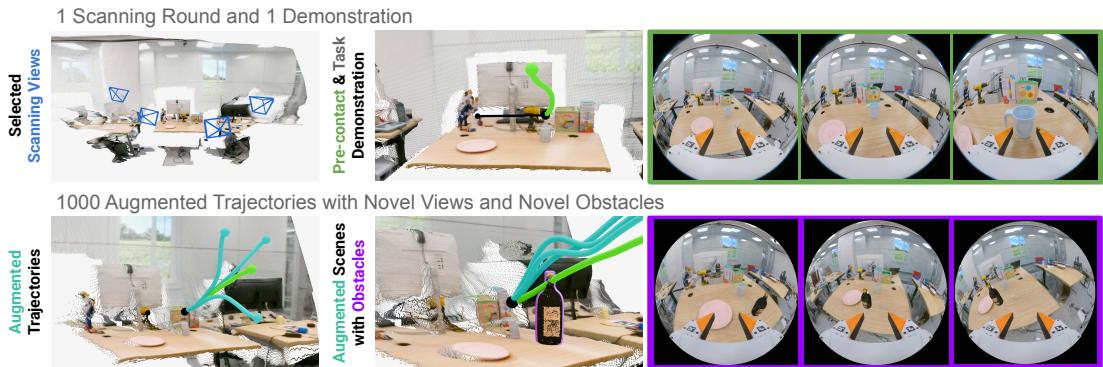
As shown in Figure 2 above, the process begins with a scanning round to map the environment, followed by the actual task demonstration. Let’s break down the technical innovations in each step.
1. Seeing the World: Fisheye 3D Gaussian Splatting
The first step is to create a digital twin of the environment. The researchers use a technique called 3D Gaussian Splatting (3DGS). Unlike traditional mesh-based 3D models (which use triangles) or NeRFs (which use neural networks to estimate density), 3DGS represents a scene as a cloud of 3D Gaussians (ellipsoids). Each Gaussian has a position, rotation, scale, opacity, and color.
3DGS is favored for its speed—it can render novel views in real-time. However, standard 3DGS assumes a “pinhole camera” model—a perfect, rectilinear lens. The robot used in this research (and many real-world robots) uses a fisheye lens to get a wide field of view.
Fisheye lenses distort straight lines into curves. If you try to render a fisheye image using standard 3DGS, the geometry breaks down.
The Fisheye Ray Sampler
To solve this, the authors introduce a Fisheye Ray Sampler.
In a standard renderer, rays are shot through pixels in a straight grid. In this modified version, the ray direction for each pixel \((u, v)\) is calculated based on the specific distortion model of the fisheye lens.
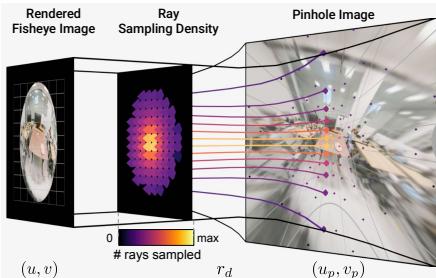
As illustrated in Figure 3, the sampling density is not uniform. The system projects the fisheye rays back into a pinhole coordinate system to associate them with the 3D Gaussians. This allows the system to utilize the highly optimized CUDA rasterization kernels of standard 3DGS while correctly handling the severe distortion of a wide-angle lens.
The result is a 3D representation of the scene that can be viewed from any angle, rendered with the correct fisheye distortion that the robot’s camera expects.
2. Planning the Moves: Trajectory Optimization
Now that we have a 3D scene, we can simulate “what if” scenarios. What if the robot started 10cm to the left? What if the camera was tilted 20 degrees down?
We cannot simply interpolate the old trajectory. A linear interpolation might send the robot’s arm through a table. We need to generate a new path that is:
- Smooth: No jerky movements.
- Collision-Free: It must respect the scene geometry.
- Goal-Oriented: It must end up in the correct position to grasp the object.
The researchers model this as a Trajectory Optimization problem. They solve for a sequence of poses \(x\) that minimizes a specific cost function.

Let’s dissect this equation (shown in the image above) to understand the logic:
- \(\mathcal{L}_{funnel}\) (The Funnel Loss): This ensures the new trajectory converges to the original pre-contact pose. It acts like a funnel, forcing the robot to align with the object exactly as the expert did right before grasping it. This preserves the delicate contact dynamics of the manipulation.
- \(\mathcal{L}_{collision}\) (Collision Loss): This uses a Signed Distance Function (TSDF) of the scene. It penalizes any pose where the robot intersects with the environment (the table, shelves, etc.).
- \(\mathcal{L}_{render}\) (Render Loss): This is a clever addition. It constrains the new trajectory to stay within viewpoints that are “close” to the original data. This prevents the camera from moving into angles where the 3DGS reconstruction is poor (floater artifacts or blurry areas), ensuring the generated images look realistic.
- \(\mathcal{L}_{smooth}\) (Smoothness): This penalizes velocity jerkiness, ensuring fluid motion.
- The Constraint: The intersection of the trajectory \(X\) and the obstacle point cloud must be empty (\(\emptyset\)).
Augmenting with Obstacles
One of the most powerful features of this framework is the ability to insert virtual obstacles.
The researchers take 3D scans of random objects (from the Objaverse dataset) and insert them digitally into the 3D scene. They then run the trajectory optimization with the added constraint that the robot must not hit this new object.
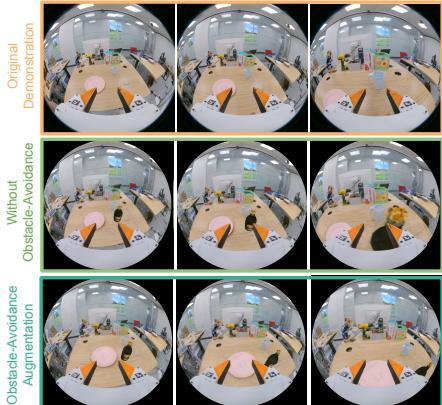
Figure 4 demonstrates this capability vividly.
- Top Row: The original human demo.
- Middle Row: What happens without optimization—the robot (or the augmented path) would simply clip through the obstacle.
- Bottom Row: The generated obstacle-avoidance trajectory. The optimizer bends the path around the virtual object.
Crucially, because the 3DGS system can render this virtual object into the video feed, the robot receives a perfectly paired training example: an image showing an obstacle, and a trajectory that avoids it.
3. Rendering the View
The final step is binding the action and the view.
- Free-Space Generation: The system samples a new starting pose in free space, optimizes a path to the object, and renders the video frames using the Fisheye 3DGS of the static scene.
- Obstacle Scene Generation: The system merges the 3DGS of the scene with a 3DGS of a new object. It plans a path around the object and renders the composite scene.
To ensure the robot’s hand looks correct, the system uses segmentation (SAM2) to isolate the gripper from the original footage and overlays it onto the rendered frames, or renders the gripper if a model is available.
Experiments and Results
The theory is sound, but does it work in practice? The authors validated 1001 DEMOS using both the RoboMimic simulator and real-world experiments with a UMI (Universal Manipulation Interface) gripper.
Simulation: Beating the Baselines
In the RoboMimic “square” task (picking up a square nut and putting it on a rod), the researchers compared their method against several baselines, including “Aug Action Only” (perturbing actions but not images) and SPARTN (a prior NeRF-based method).
The graph in Figure 5(b) (above) reveals the performance gap.
- Blue Line (Ours): 1001 DEMOS consistently outperforms the baselines. Even with only 50 demonstrations, it achieves success rates comparable to baselines using far more data.
- Green Line (GT Rendering): This represents the “perfect” upper bound where images are rendered by the simulator (Ground Truth) rather than 3DGS. The fact that the Blue line tracks closely to the Green line proves that the quality of the Fisheye 3DGS rendering is high enough to train effective policies.
Real-World: The Cup Serving Task
The real test was on a physical robot. The task was to pick up a cup and place it on a serving plate. The robot was trained on demonstrations that were all “upright” and “obstacle-free.”
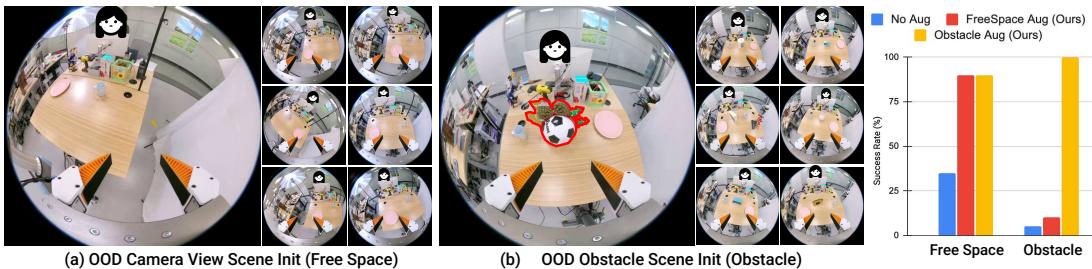
During testing, the researchers placed the robot in Out-of-Distribution (OOD) starting positions and introduced physical obstacles (bottles, boxes) that the robot had never seen during training.
The results in Figure 6 (above) are striking:
- No Aug (Vanilla Policy): Failed significantly on OOD views and completely failed (0-5% success) when obstacles were present.
- FreeSpace Aug: Improved performance on new viewpoints but still struggled with obstacles.
- Obstacle Aug (Ours): Achieved a 100% success rate in the obstacle test cases shown.
By training on hallucinated obstacles, the robot learned a generalizable concept of “avoidance” that transferred to real physical obstacles.
Stress Testing: Challenging Obstacles
The researchers didn’t stop at simple bottles. They tested the policy against a “Challenging Obstacle” set, including large boxes, bookshelves, and complex geometries.
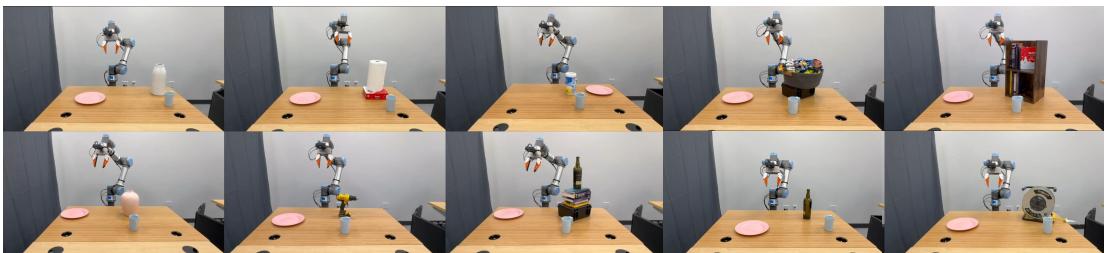
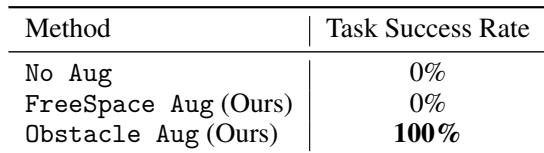
As shown in the table above, the difference is night and day. Without the specific obstacle augmentation, the robot has zero chance of success in these cluttered environments. With 1001 DEMOS, it retains a 100% completion rate.
How Much Augmentation is Too Much?
Is there a limit to this technique? Can we render views from anywhere?
The authors investigated this by varying the “rotation bound”—how far the new starting camera pose deviates from the original demonstration.
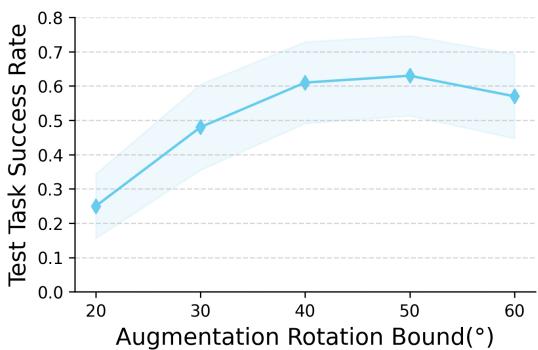
Figure A1 shows a classic trade-off.
- Low Rotation (\(20^\circ\)): High rendering quality (easy to reconstruct), but low data diversity. The robot doesn’t learn enough spatial invariance.
- High Rotation (\(60^\circ\)): High diversity, but the rendering quality drops. The camera is looking from angles the 3DGS model can’t reconstruct well, leading to artifacts that confuse the policy.
- The Sweet Spot: The experiments found that \(50^\circ\) provided the optimal balance, maximizing success rates.
Conclusion & Implications
The “1001 DEMOS” framework represents a significant step forward in data-efficient robot learning. By effectively acting as a generative simulator based on reality, it allows researchers to squeeze exponentially more utility out of every minute spent collecting data.
The key takeaways are:
- Geometry Matters: You cannot augment robot data without respecting 3D geometry and collisions.
- Fisheye Adaptation: Standard computer vision tools (like 3DGS) often need modification to work with the specific hardware (fisheye lenses) used in robotics.
- Synthesizing Skills: We can teach robots skills they were never explicitly shown (like obstacle avoidance) by generating synthetic scenarios that force those behaviors to emerge.
While the method currently relies on static scenes (augmenting before or after the robot touches the object), it opens the door for future work where dynamic interactions could also be simulated and augmented. For students and researchers in robotics, this highlights the growing importance of combining neural rendering (3DGS/NeRF) with optimal control (trajectory optimization) to solve the data hunger of modern AI.