](https://deep-paper.org/en/paper/2176_timebase_the_power_of_min-1631/images/cover.png)
In the current landscape of Artificial Intelligence, the prevailing mantra has largely been “bigger is better.” From Large Language Models (LLMs) like GPT-4 to massive Vision Transformers (ViTs), the trend is to scale up parameters into the billions to capture complex dependencies. It is natural to assume that this logic applies everywhere—including Long-term Time Series Forecasting (LTSF).
But does it?
Time series data—like the fluctuation of electricity usage, traffic flow, or weather patterns—is fundamentally different from language or images. It is often repetitive, periodic, and governed by simpler underlying rules. Do we really need a billion parameters to predict that traffic will peak at 5:00 PM?
Enter TimeBase, a groundbreaking paper presented at the International Conference on Machine Learning (ICML) 2025. The researchers behind TimeBase challenge the status quo by proposing an ultra-lightweight network. How lightweight? We are talking about a model that uses as few as 0.39k parameters (yes, fewer than 400 parameters in some cases) while outperforming or matching state-of-the-art models that are thousands of times larger.
In this deep dive, we will explore how TimeBase harnesses the power of minimalism. We will unpack the mathematics of basis component extraction, analyze why “low-rank” structures matter, and see how this tiny model achieves giant results.
The Problem: The Cost of Complexity
Long-term Time Series Forecasting (LTSF) involves predicting a long sequence of future values based on a history of observed values. Traditionally, as deep learning advanced, researchers applied complex architectures like RNNs, Transformers, and MLPs to this problem.
While these models are powerful, they come with significant baggage:
- Computational Cost: They require massive amounts of memory and processing power (FLOPs/MACs).
- Latency: Inference speeds can be slow, which is problematic for real-time applications like high-frequency trading or grid management.
- Over-parameterization: Using a complex model to learn simple patterns can lead to inefficiency and overfitting.
The authors of TimeBase argue that current approaches essentially “crack a nut with a sledgehammer.” They observed that unlike the high-dimensional complexity of images or natural language, time series data often exhibits temporal pattern similarity and low-rank characteristics.
Understanding the Data Structure
To understand why TimeBase works, we first need to look at the data itself.
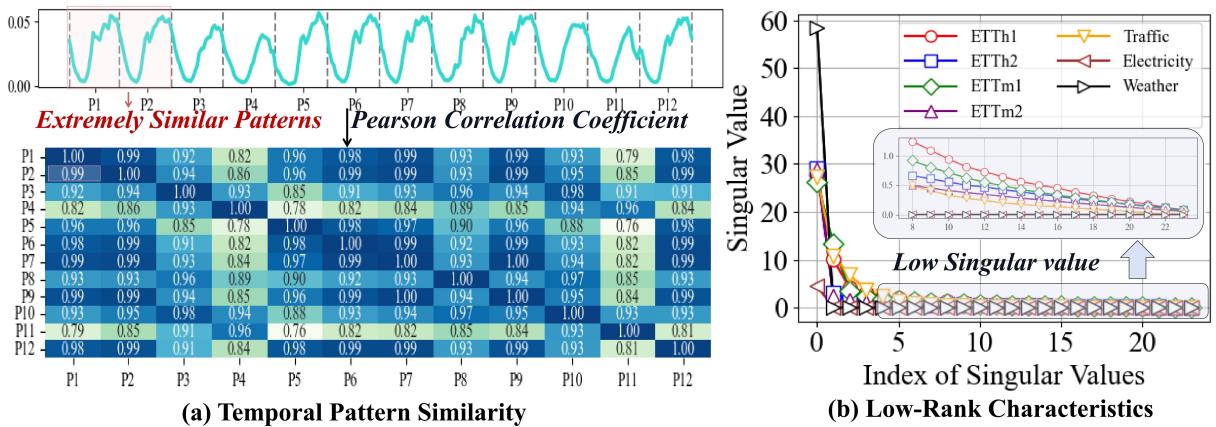
As shown in Figure 1 above, time series data is distinct:
- Panel (a): Shows the similarity between different segments of a time series. The heatmap indicates high Pearson correlation coefficients between different periods (P1, P2, etc.). Essentially, history repeats itself; the pattern at 9:00 AM today looks a lot like the pattern at 9:00 AM yesterday.
- Panel (b): Shows the Singular Value Decomposition (SVD) of various datasets. Notice how the singular values drop off precipitously after the first few components. This is the definition of low-rank. It means that the vast majority of the information in the signal can be compressed into a very small number of components without losing much detail.
If the data is low-rank and repetitive, why use a dense Transformer? The researchers hypothesize that we can achieve SOTA performance by explicitly modeling these “basis components” rather than learning point-by-point dependencies.
TimeBase: The Methodology
The core philosophy of TimeBase is Basis Component Extraction combined with Segment-level Forecasting. Instead of predicting every single future point individually (which is noisy and expensive), the model breaks the series into chunks (segments), identifies the fundamental “shapes” (basis) that make up those chunks, and predicts how those shapes evolve.
Let’s break down the architecture step-by-step.
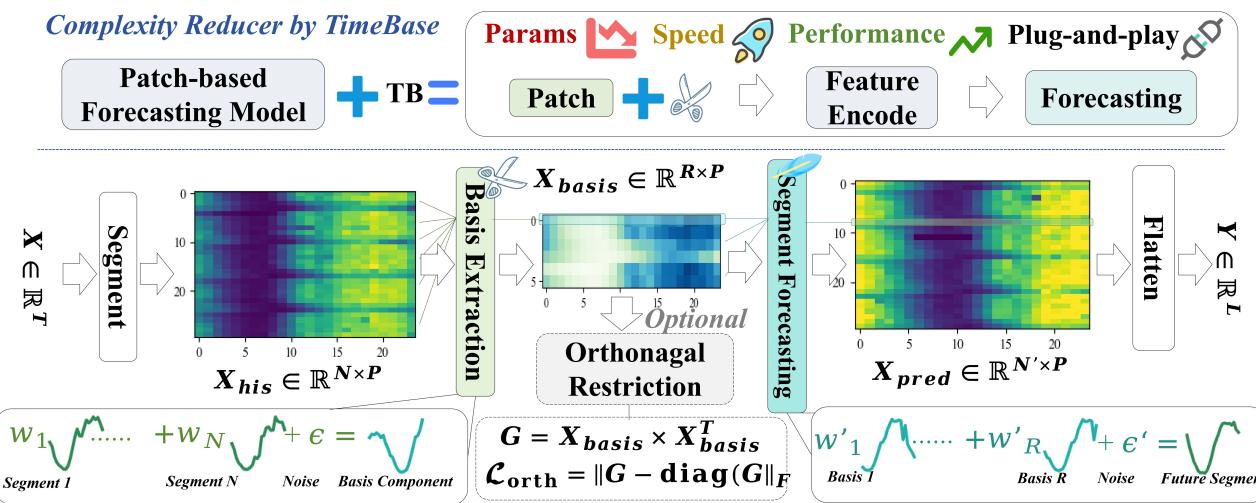
Figure 3 illustrates the entire pipeline. It is elegant in its simplicity, consisting primarily of two linear layers.
Step 1: Segmentation
First, we take the historical time series \(X\) and chop it up. If we have a look-back window of length \(T\), we divide it into \(N\) non-overlapping segments, each of length \(P\).
- \(P\) is usually chosen based on the natural period of the data (e.g., 24 for hourly data to represent a day).
- \(N\) is simply the number of segments (\(N \approx T/P\)).
This transforms our 1D time series into a 2D matrix \(\mathbf{X}_{\mathrm{his}}\).

Here, \(\mathbf{X}_{\mathrm{his}} \in \mathbb{R}^{N \times P}\). Each row represents one “period” or segment of history.
Step 2: Basis Component Extraction
This is the heart of the method. Because of the low-rank property discussed earlier, we know that the matrix \(\mathbf{X}_{\mathrm{his}}\) contains a lot of redundant information. We want to distill this down to a set of Basis Components.
Think of basis components like the primary colors in painting. You can create millions of images using just Red, Blue, and Yellow mixed in different amounts. Similarly, TimeBase assumes that all complex time series segments are just linear combinations of a few fundamental “shapes” (basis vectors).
The model learns a projection matrix to extract these basis components:

Here, \(\mathbf{X}_{\mathrm{basis}} \in \mathbb{R}^{R \times P}\), where \(R\) is the number of basis components. Importantly, \(R\) is usually much smaller than \(N\). We are compressing the historical information from \(N\) segments down to \(R\) fundamental patterns.
This operation is implemented as a simple Linear Layer. It learns the best way to combine the historical segments to reveal the underlying basis.
Step 3: Segment-level Forecasting
Now that we have the core patterns (\(\mathbf{X}_{\mathrm{basis}}\)), we need to predict the future.
Traditional models perform Point-level forecasting, predicting \(t+1, t+2, \dots\) sequentially. TimeBase performs Segment-level forecasting. It predicts the future segments directly from the basis components.

This SegmentForecast operation is, again, a simple linear layer. It maps the \(R\) basis components to \(N'\) future segments (where \(N'\) is the number of segments needed to cover the forecast horizon \(L\)).
Finally, we flatten these predicted segments back into a 1D sequence to get our final output \(\mathbf{Y}\).

Step 4: Orthogonal Restriction
There is a subtle risk in the method described so far. If we just let the linear layers run wild, the model might learn redundant basis components (e.g., two basis vectors that look almost identical). This wastes parameter capacity.
To ensure that each basis component captures a unique and distinct aspect of the temporal pattern, the authors introduce an Orthogonal Restriction.
They compute the Gram matrix \(G\) of the basis components:
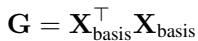
If the basis vectors are perfectly orthogonal (uncorrelated), \(G\) should be a diagonal matrix (values only on the diagonal, zeros everywhere else). Any non-zero value off the diagonal implies correlation between different basis components.
The authors add a loss term to penalize these off-diagonal values:

This loss forces the learned basis components to be diverse. The final loss function combines the standard prediction error (MSE) with this orthogonal regularization:

Why is this efficient?
The parameter efficiency of TimeBase is staggering. The number of parameters isn’t determined by the depth of a neural network, but by the linear transformations between segments and basis components.
The total parameter count is governed by this theorem:
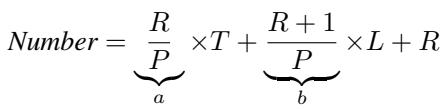
Where:
- \(T\) is the look-back window.
- \(L\) is the forecast horizon.
- \(P\) is the segment length.
- \(R\) is the number of basis components.
Because \(R\) is small (often single digits) and \(P\) is relatively large (e.g., 24 or 96), the fractions \(\frac{R}{P}\) are very small. This results in a model size that grows linearly but with a very tiny slope.
Experimental Results
The theory sounds solid: exploit low-rank structures to build a small model. But does it work in practice? The authors conducted extensive experiments on 21 real-world datasets, ranging from electricity and traffic to weather and solar energy.
1. Forecasting Accuracy
The primary concern with “lightweight” models is usually a drop in accuracy. However, TimeBase defies this expectation.
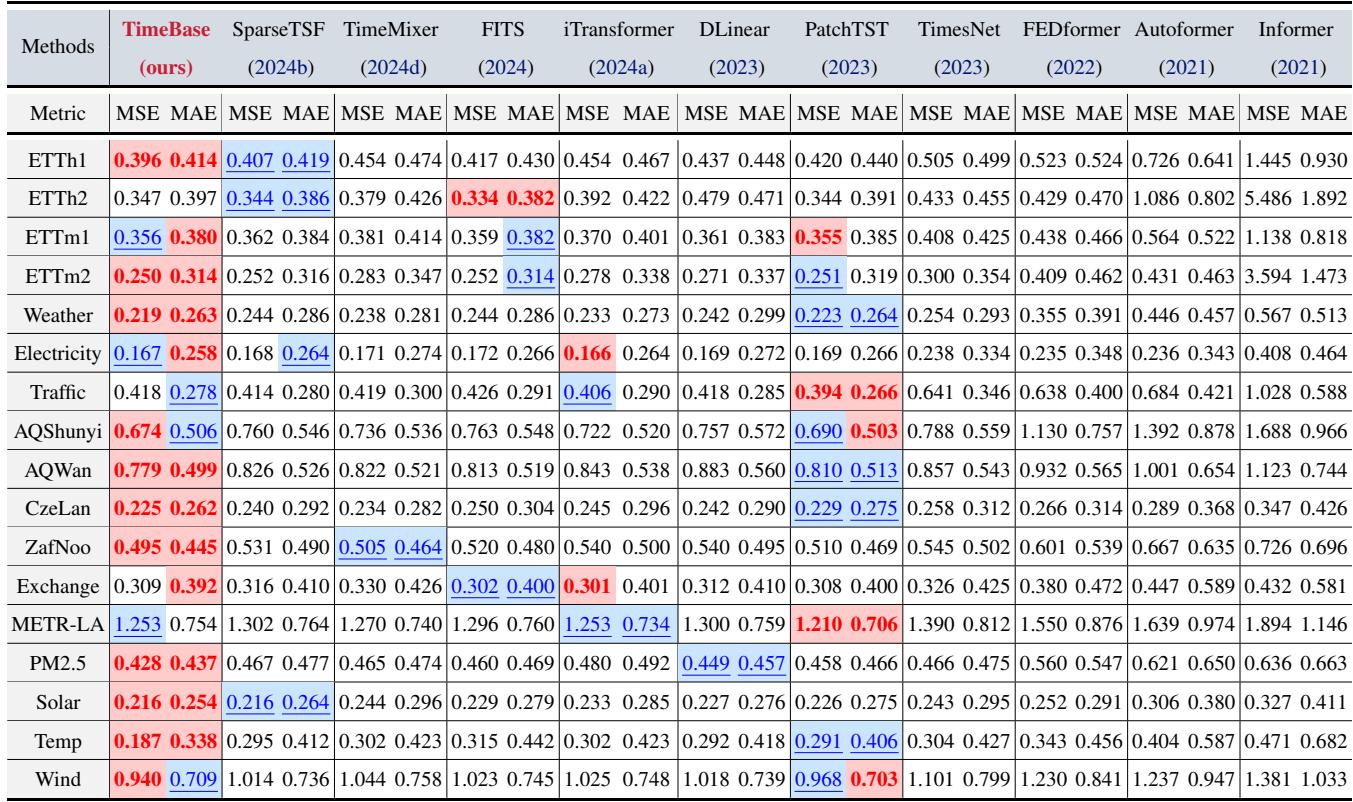
Table 2 presents the comparison against top-tier baselines like PatchTST (a heavy Transformer model), iTransformer, and TimesNet.
- Performance: TimeBase (left column) is marked frequently with red (best) and blue (second best).
- Consistency: It achieves Top-2 performance on 16 out of 17 normal-scale datasets.
- Comparison: On the Electricity dataset, it beats the complex Transformer models while using a fraction of the compute.
2. Efficiency Analysis
This is where TimeBase truly shines. The authors compared the computational cost (MACs), memory usage, and inference speed.
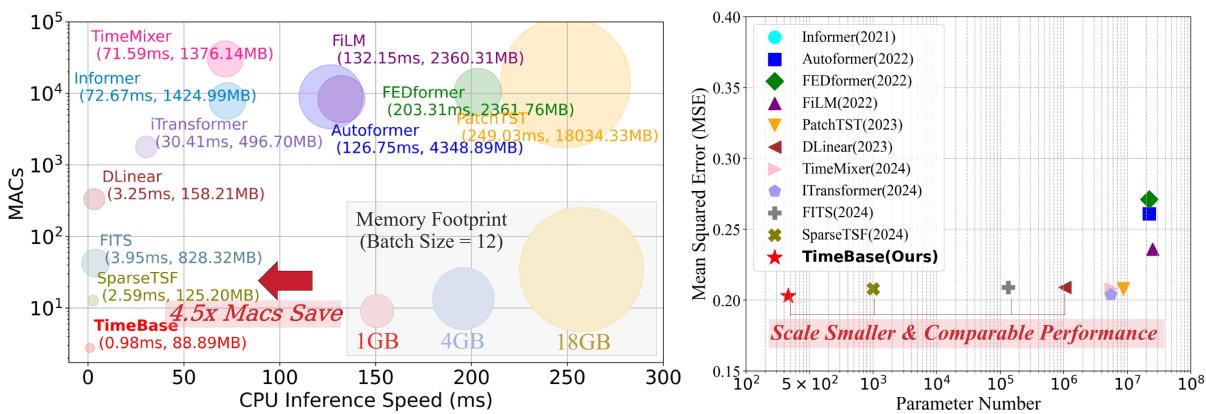
Figure 2 is perhaps the most striking visualization in the paper.
- The Left Plot shows Inference Speed vs. MACs (computational operations). TimeBase is in the bottom left corner—the “sweet spot” of being incredibly fast and computationally cheap (note the arrow indicating a 4.5x MACs save compared to the next best lightweight model).
- The Right Plot compares Error (MSE) vs. Parameter count. TimeBase occupies the “Scale Smaller & Comparable Performance” zone. It achieves similar or better MSE than huge models (top right) while existing in the ultra-low parameter zone (bottom left).
To see the raw numbers, we can look at the detailed efficiency table:
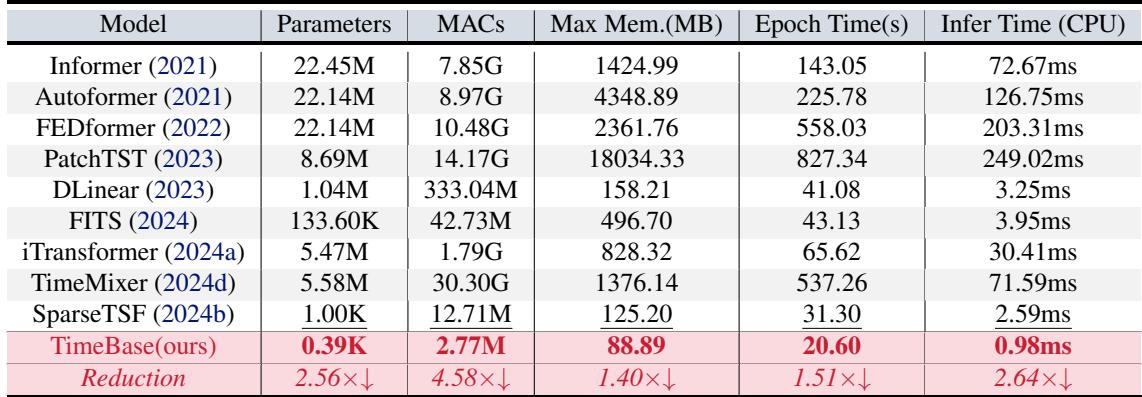
Table 3 reveals the stark differences. Compared to PatchTST, TimeBase:
- Reduces parameters by thousands of times (8.69M vs 0.39K).
- Reduces MACs from 14.17G down to just 2.77M.
- Is roughly 250x faster in inference speed (249ms vs 0.98ms).
Even compared to other “lightweight” attempts like SparseTSF, TimeBase is significantly leaner.
3. Scalability with Look-back Window
A common issue with Transformers is the quadratic complexity \(O(T^2)\) with respect to the input length \(T\). As you look further back in history, the model becomes exponentially slower.
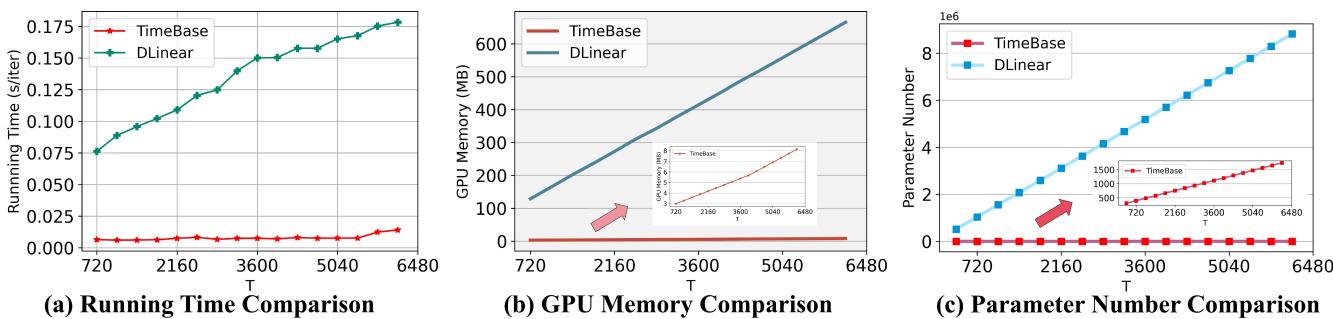
Figure 4 demonstrates TimeBase’s linear scalability.
- (a) Running Time: As the look-back window increases from 720 to 6480, TimeBase’s runtime (red line) remains almost flat.
- (c) Parameters: While DLinear’s parameter count explodes (green line), TimeBase remains negligible.
This property makes TimeBase uniquely suited for tasks requiring extremely long historical contexts, which are typically computationally prohibitive for Transformers.
A “Plug-and-Play” Complexity Reducer
One of the most interesting contributions of this paper is that TimeBase isn’t just a standalone model; it can be used to “fix” other models.
Many modern forecasters use “patching” (breaking data into patches). The authors propose using TimeBase’s basis extraction as a preprocessing step for these heavy models. Instead of feeding raw patches into a Transformer, you feed the extracted basis components.
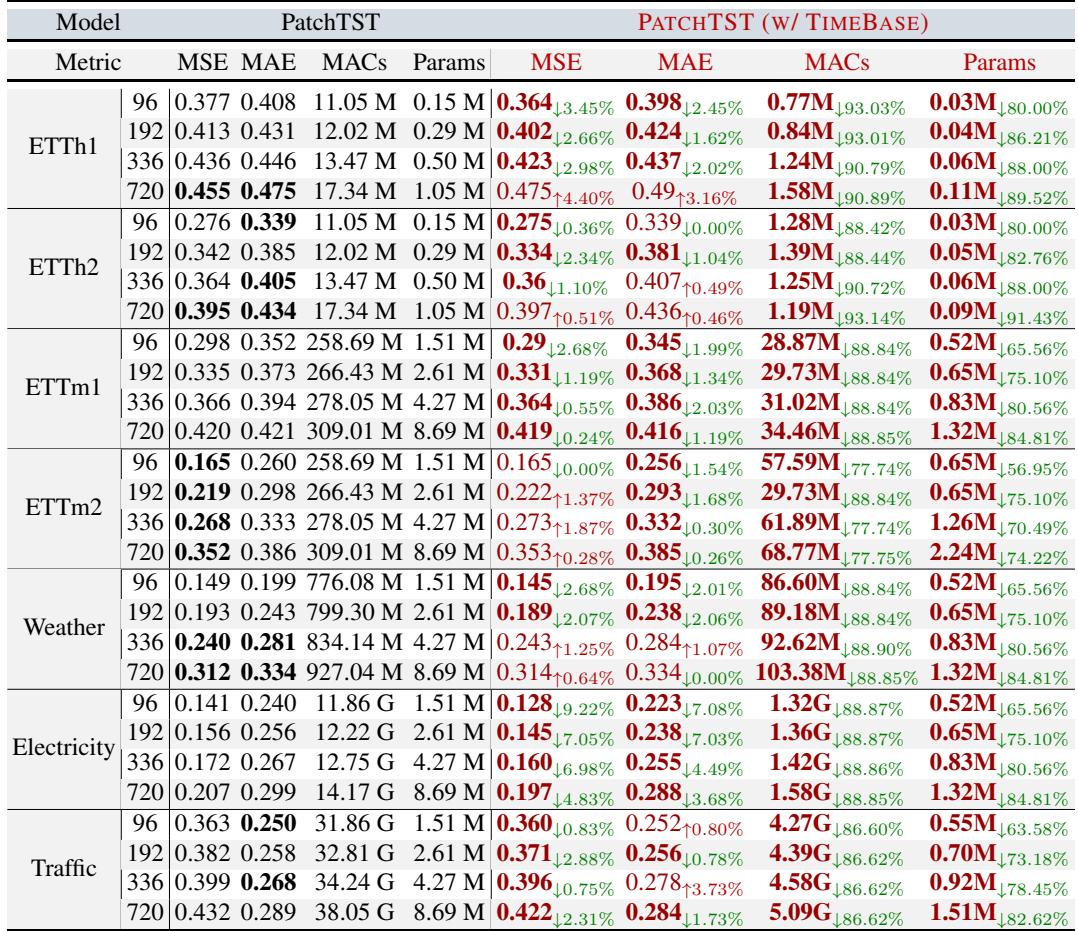
Table 4 shows what happens when TimeBase is integrated into PatchTST (creating PATCHTST (W/ TIMEBASE)).
- MACs Reduction: Computational cost drops by ~90%.
- Parameter Reduction: Parameter count drops by ~80-90%.
- Accuracy: Surprisingly, the accuracy (MSE) often improves or stays the same.
This suggests that the heavy Transformers were largely overfitting to noise. By filtering the data through TimeBase first, we force the Transformer to focus on the essential signals, improving both speed and accuracy.
Visualizing What TimeBase Learns
Is the model actually learning meaningful patterns, or is this just a mathematical trick?
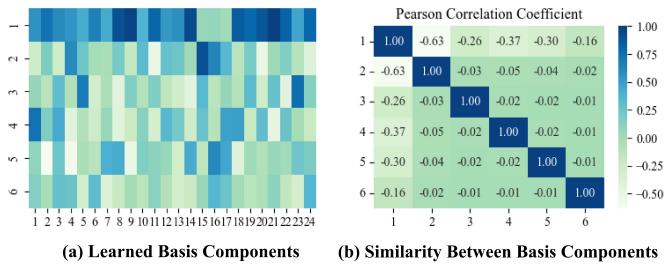
Figure 10(a) shows the actual basis components extracted from the Electricity dataset. We can see distinct cyclical patterns—some capturing daily peaks, others capturing flatter trends.
Figure 10(b) shows the correlation between these learned components. The values are mostly low (blue/green), confirming that the Orthogonal Restriction successfully forced the model to learn distinct, non-overlapping features.
Conclusion & Implications
The TimeBase paper offers a refreshing perspective in an era dominated by large-scale deep learning. It reminds us that:
- Data Characteristics Matter: Understanding the low-rank, periodic nature of time series allowed the authors to design a mathematically superior architecture for this specific domain.
- Minimalism is Powerful: We do not always need millions of parameters. 390 parameters, properly applied, can outperform 8 million parameters.
- Green AI: The extreme reduction in computational cost (MACs) and energy usage makes TimeBase a prime candidate for deployment on edge devices (like sensors or mobile phones) where battery and compute are limited.
TimeBase is not just a new model; it is a proof of concept that efficiency and performance are not mutually exclusive. Whether used as a standalone forecaster or a complexity reducer for larger models, it sets a new standard for what we should expect from efficient time series forecasting.
For students and researchers entering the field, TimeBase serves as a perfect case study: before building a skyscraper, check if a simple bridge will get you to the other side.