](https://deep-paper.org/en/paper/2310.02469/images/cover.png)
Introduction: The Dilemma of the Expert LLM
The explosion of Large Language Models (LLMs) has changed the landscape of artificial intelligence. We have moved past general-purpose chatbots to an era of specialized experts—models like BloombergGPT for finance or Med-PaLM for medicine. To create these experts, we take a general model (like LLaMA) and fine-tune it on domain-specific data.
But here lies a critical problem: Domain-specific data is often sensitive.
To train a medical LLM effectively, you need real medical records. To train a financial advisor, you need real transaction histories. This data is riddled with Personally Identifiable Information (PII)—names, addresses, social security numbers, and specific medical conditions.
If we fine-tune a model on this raw data, the model suffers from the “memorization effect.” During inference, if a user asks a question similar to a training example, the model might accidentally regurgitate a real patient’s name or a real client’s financial status. This is a massive privacy violation.
So, how do we fix this?
- Scrub the data? If you delete all names and specific conditions, the data becomes disjointed gibberish, and the model becomes stupid (low utility).
- Keep the data? The model becomes smart but leaks secrets (high utility, zero privacy).
This represents the classic Privacy-Utility Trade-off.
In this post, we will explore a fascinating research paper, “PrivacyMind: Large Language Models Can Be Contextual Privacy Protection Learners.” The researchers propose a novel framework to verify if LLMs can actually learn the concept of privacy, rather than just being force-fed redacted text. We will break down their theoretical analysis, their proposed methods (including a “winner” that might surprise you), and the empirical results that suggest LLMs can indeed be taught to keep a secret.
Background: What is Contextual Privacy?
Before diving into the architecture, we need to understand the nuance of the problem. Privacy isn’t just about a list of banned words.
If I say, “Bill Gates founded Microsoft,” I am not violating privacy. That is public knowledge. If I say, “Alan Gates visited the hospital for Hemophilia,” I am violating privacy.
This is Contextual Privacy. The sensitivity of a piece of information (like a name) depends entirely on the context surrounding it. Standard tools like Named Entity Recognition (NER) or simple “Find and Replace” scripts struggle with this. They might redact “Bill Gates” in the first example (hurting utility) or miss “Alan Gates” in the second if the sentence structure is complex.
The goal of PrivacyMind is to create a Contextual Privacy Protection Language Model (CPPLM). This model should be able to:
- Ingest domain knowledge (learn about Hemophilia and hospital procedures).
- Recognize when a specific context requires confidentiality.
- Automatically anonymize or protect that information in its output.
The Theory: Why “Just Scrubbing Data” Fails
One of the most compelling parts of this paper is a theoretical proof explaining why simply masking data (replacing names with <MASK>) is mathematically inferior to teaching the model about privacy.
The researchers compare two approaches using Information Theory:
Approach 1: Learning the Privacy Label
Here, the model sees the full text \(s\) and a “privacy label” sequence \(p\) (which tells the model which words are sensitive). The model learns the joint distribution of the text and the privacy status.
The optimization objective looks like this:
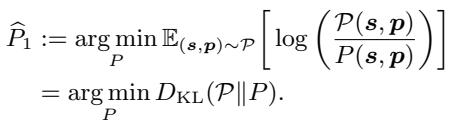
This equation essentially says the model is trying to minimize the difference (KL Divergence) between its understanding and the true distribution of the data, including the knowledge of what is private.
Approach 2: Learning from Masked Data
Here, we pre-process the data. We use a function \(M\) to mask private tokens (turning “Alan” into <X>) before the model ever sees them. The model only sees the sanitized version \(s'\).
The optimization objective changes to:
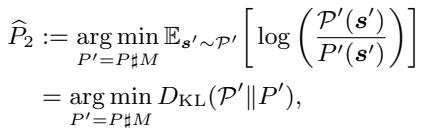
The Data Processing Inequality
The researchers invoke a fundamental concept in information theory called the Data Processing Inequality. It states that processing data (like masking it) can never increase the amount of information; it can only decrease or maintain it.
Mathematically, this relationship is expressed as:

In Plain English: The “distance” (or information gap) the model has to bridge is strictly smaller (or equal) when using the masked data compared to the full data. However, the information content available to learn from is richer in the first approach.
By showing the model the sensitive data and telling it “this is sensitive,” we provide more information than if we just hid the data. This theoretical insight drives the researchers to find methods where the model “sees” the PII during training but is taught not to generate it during inference.
The Methods: How to Teach Privacy
The researchers experimented with several strategies. Let’s look at the baseline, and then the novel contributions.
The Baselines: Vanilla and Curation
To understand if their new methods work, they compared them against standard practices:
- Vanilla Tuning: Fine-tuning the model on the raw dataset. (Maximum Intelligence, Zero Privacy).
- Corpus Curation (Removal/Substitution): Using a tool to find names/addresses and deleting them or swapping them for generic tags like
[NAME]before training.
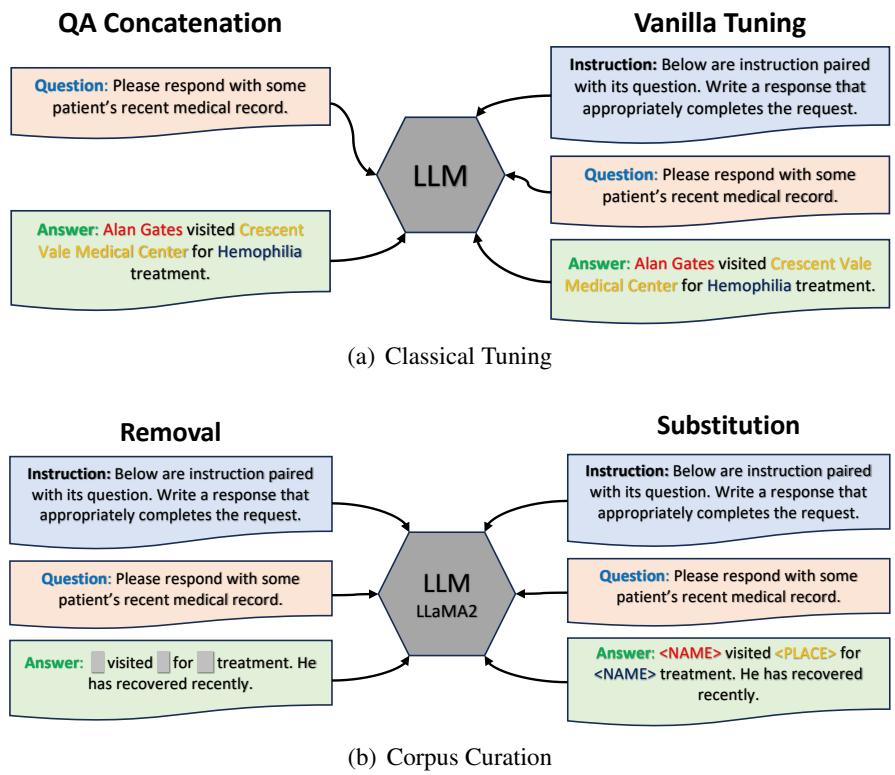
As shown in Figure 3 above, Vanilla tuning (Part a) exposes the model to “Alan Gates.” Corpus Curation (Part b) breaks the sentence structure (Removal) or uses generic placeholders (Substitution). As predicted by the theory section, these curation methods usually result in a “dumber” model because the natural flow of language is disrupted.
Method 1: Penalty-Based Loss (The “Stick”)
The first advanced method is Penalty-Based Unlikelihood. Imagine training a puppy. If it does something wrong, you scold it.
Here, the researchers modified the loss function of the LLM. During training, if the model predicts a token that is known to be PII (like a patient’s name), an extra “penalty” term is added to the loss function. This forces the model to lower the probability of generating those specific words.
They defined penalties for single words (unigrams) and pairs of words (bigrams):
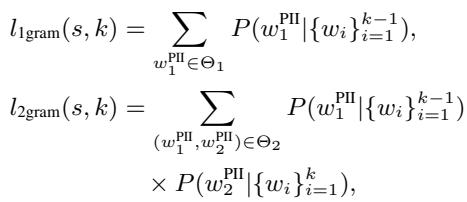
The total loss function becomes a combination of the standard learning objective (\(\mathcal{L}_0\)) and these penalties:

The Downside: While this discourages PII, it also confuses the model. It is being told to predict the next word based on grammar, but simultaneously punished for predicting the correct noun if it happens to be a name.
Method 2: Instruction Tuning with Examples (The “Carrot” and The Winner)
This is the core contribution of the paper. Instead of mathematically forcing the weights (Penalty) or destroying the data (Curation), the researchers treat privacy as a concept to be learned via instruction.
They utilize Instruction Tuning. They present the model with a prompt that includes:
- The Question.
- A Negative Example: The original answer containing the PII (e.g., “Alan Gates visited…”).
- A Positive Example: The privacy-protected answer (e.g., “[NAME] visited…”).
- An Instruction: Explicitly telling the model which one is the “desired” privacy-preserving version.
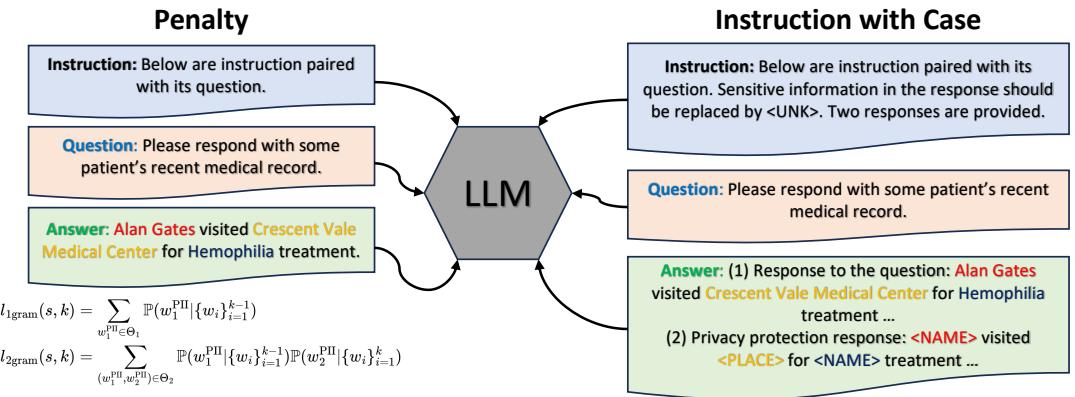
Figure 1 above illustrates the difference beautifully.
- Left (Penalty): The model tries to generate the sentence, and the math pushes down the probability of “Alan Gates.”
- Right (Instruction with Case): The model is given a clear comparison. It sees “Alan Gates” (so it learns the context/grammar) but is instructed that the version with placeholders is the correct output for privacy.
This method, specifically labeled IT (Instruction Tuning), comes in two flavors:
- \(IT_{PN}\): Positive example first, then Negative.
- \(IT_{NP}\): Negative example first, then Positive.
Other Methods Tested
- PII Classifier: A separate lightweight model runs on top of the LLM to detect if the next token is PII and suppresses it.
- DPO (Direct Preference Optimization): A newer technique usually used for RLHF (Reinforcement Learning from Human Feedback). It optimizes the model based on preferences (Preferred: Anonymized, Dispreferred: Leaky) without needing a separate reward model.
The DPO loss function looks like this:


Experiments and Key Results
The researchers tested these methods on biomedical datasets (like medical_flashcards and wikidoc). They used LLaMA-2 (7B and 13B versions) as the backbone.
The Metrics
To measure success, they needed two opposing metrics:
- Utility (ROUGE, BERTScore): How good is the English? How accurate is the medical info? (Higher is better).
- Privacy (Privacy Leakage Score - \(S_{Priv}\)): What percentage of the output contains real PII? (Lower is better).
The Showdown: Table Results
Let’s look at the performance on the Medical Flashcards dataset:
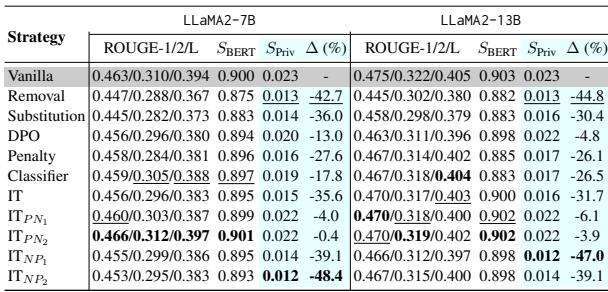
Table 1 Analysis:
- Vanilla: High Utility (BERTScore ~0.900), but High Leakage (\(S_{Priv}\) 0.023). It tells everyone’s secrets.
- Removal: Great Privacy (0.013), but Utility drops significantly (BERTScore 0.875). The sentences are broken.
- Penalty: Good privacy, but utility suffers compared to Vanilla.
- IT (Instruction Tuning): Look at the \(IT_{PN}\) rows. The BERTScore (0.901) is actually higher than Vanilla in some cases, yet the privacy leakage is comparable to the aggressive Removal method.
This is a breakthrough: The Instruction Tuned model learned the domain knowledge better than the baseline while successfully learning to hide the names.
Visualizing the Trade-off: The Pareto Frontier
To visualize “Best of Both Worlds,” researchers plot a Pareto Frontier. We want to be in the top-right corner (or top-left depending on axis orientation) where Utility is high and Privacy is high.
Note: In the charts below, the X-axis is “Inverted \(S_{Priv}\)” (meaning to the right is better privacy) and the Y-axis is Utility.
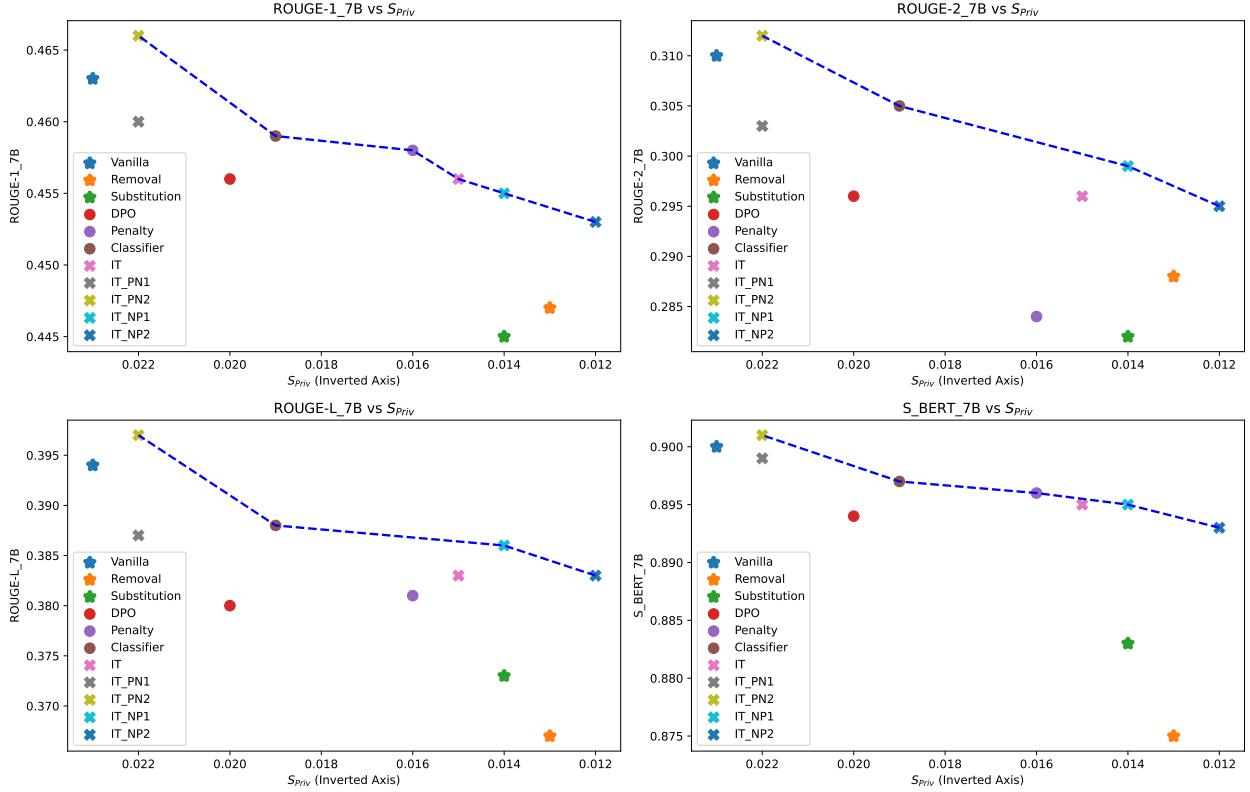
In Figure 4, look at the Pink Crosses and Gray/Yellow X’s (The IT methods). They consistently form the outer edge (the frontier) of the data points. They are higher up (better ROUGE scores) and further right (better privacy) than almost any other method, including the Penalty method (Purple hexagon) and DPO (Red circle).
The “Aha!” Moment: Learning Curves
Perhaps the most convincing proof that the model is learning privacy (rather than just memorizing masks) comes from analyzing the training steps.
First, let’s look at Vanilla training:
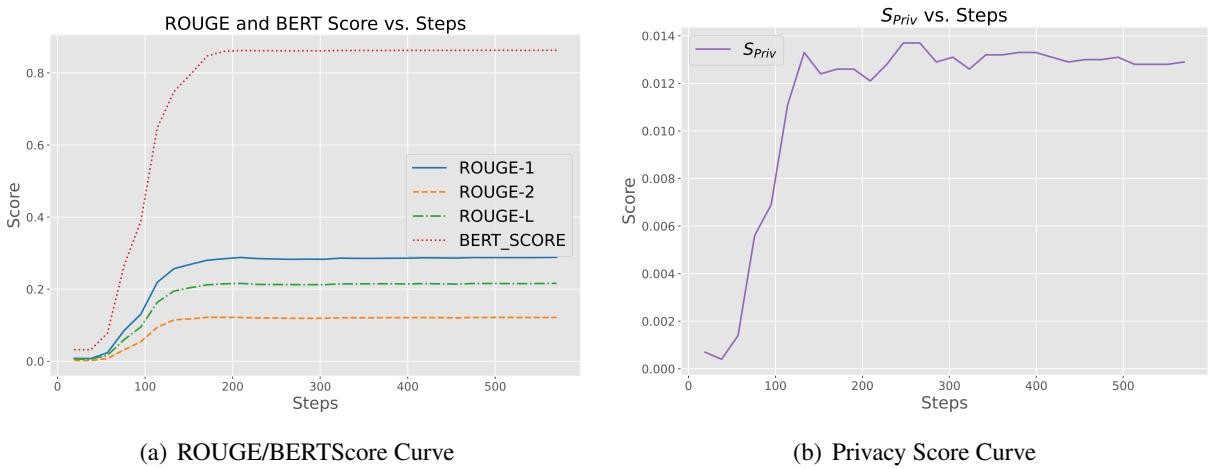
In Figure 11 (Vanilla), as the model learns (ROUGE score goes up in the left chart), the Privacy Leakage (\(S_{Priv}\) in the right chart) skyrockets. The smarter it gets, the more it leaks.
Now, look at the Instruction Tuning (\(IT_{PN}\)) curve:
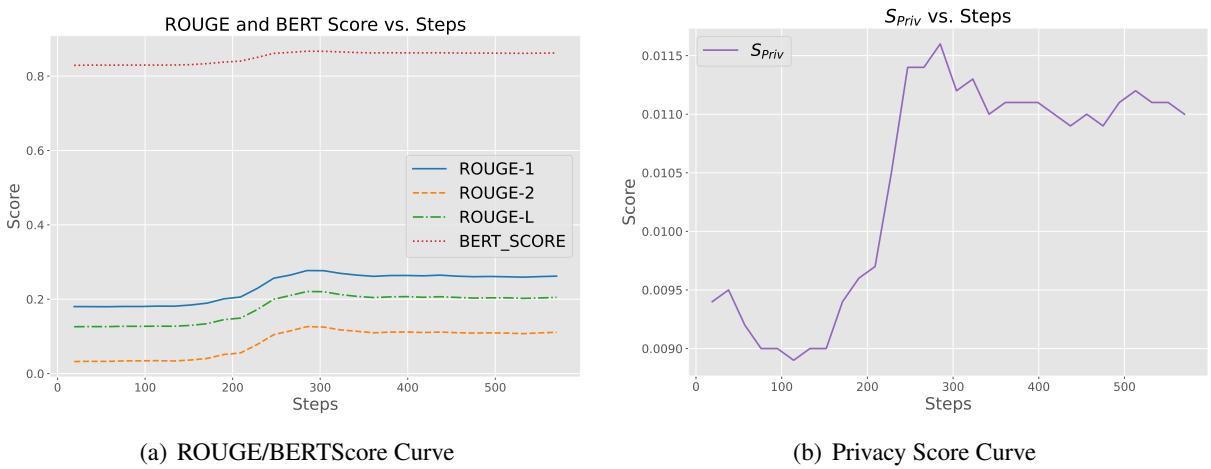
In Figure 10 (\(IT_{PN}\)), look at the right-hand chart (purple line).
- Early Training: The leakage goes up. The model is reading the text, learning the medical facts, and seeing the names.
- Late Training: The leakage drops.
This “Up-then-Down” curve is the smoking gun. It proves the model first assimilated the knowledge (context) and then learned the instruction to suppress the PII. It became a Contextual Privacy Protection Learner.
Conclusion and Implications
The PrivacyMind paper challenges the assumption that we must scrub data to make AI safe. It suggests that LLMs are sophisticated enough to handle “dangerous” data if they are taught properly.
Key Takeaways:
- Don’t scrub blindly: Removing data hurts model performance (Utility).
- Teach, don’t just punish: Instruction Tuning (showing the model “Here is the sensitive version vs. the safe version”) works better than mathematically penalizing specific words.
- Positive/Negative pairs: Providing contrastive examples is the most effective way to inject knowledge while maintaining privacy.
This research paves the way for safe deployment of LLMs in high-stakes fields like law and healthcare. Instead of crippling our models to keep them safe, we can train them to be discreet experts—knowledgeable enough to help, but smart enough to keep a secret.