](https://deep-paper.org/en/paper/2401.15207/images/cover.png)
If you have ever tried to fine-tune a Large Language Model (LLM) like LLaMA or RoBERTa, you have likely run into the “memory wall.” You download the model, set up your PyTorch training loop, and hit run, only to be immediately greeted by the dreaded CUDA Out of Memory (OOM) error.
The culprit is usually Full-Parameter Fine-Tuning (FPFT). While FPFT is the gold standard for adapting a model to a new task—allowing the model to adjust every single weight to learn new patterns—it is exorbitantly expensive. It requires storing not just the model weights, but also the gradients and, crucially, the optimizer states (like momentum in AdamW) for every single parameter simultaneously.
For years, the NLP community has relied on compromises. We use Parameter-Efficient Fine-Tuning (PEFT) methods like LoRA or adapters, which freeze the main model and only train tiny add-on layers. While efficient, these are approximations. They sometimes fail to capture complex behaviors, especially in reasoning or math tasks.
But what if you didn’t have to compromise? What if you could fine-tune all the parameters of a 7-billion parameter model on a single 24GB consumer GPU, achieving the same performance as a massive cluster?
This is the promise of HiFT (Hierarchical Full Parameter Fine-Tuning), a novel strategy proposed by researchers from Northeastern University (China) and LMU Munich. In this post, we will deconstruct how HiFT works, why it changes the landscape of efficient training, and how it manages to fit “an elephant into a refrigerator.”
The Problem: The High Cost of “Full” Training
To understand why HiFT is necessary, we first need to look at the math of memory consumption during training. When you train a model using a standard optimizer like AdamW, your GPU memory is consumed by four main components:
- Model Parameters: The weights of the model itself (e.g., 14GB for a 7B model at 16-bit precision).
- Gradients: The calculated direction of change for every parameter.
- Optimizer States: The history of gradients (momentum, variance) used to stabilize training.
- Activations/Residual States: The intermediate data created during the forward pass needed for backpropagation.
In standard FPFT, items 2 and 3 are the killers. For AdamW, you need to store two state variables for every single parameter. If you have a 7B model, those states alone can consume tens of gigabytes, far exceeding the capacity of a standard RTX 3090 or 4090.
Previous Attempts and Their Flaws
Researchers have tried to solve this before:
- PEFT (e.g., LoRA, Prefix-Tuning): These methods freeze the model and add low-rank matrices. They save memory but can lead to information loss or performance degradation because the base model never evolves.
- Zeroth-Order Optimization (e.g., MeZO): These estimate gradients without calculating them fully. While memory-efficient, they are notoriously unstable and often result in significantly worse performance than gradient-based methods.
- LOMO: This method fuses gradient calculation and updates to save memory but requires two forward passes and often forces specific quantization, limiting its flexibility.
The authors of HiFT argue that we shouldn’t have to abandon the proven stability of momentum-based optimizers (like AdamW) or the performance benefits of updating all parameters.
The Solution: Hierarchical Fine-Tuning (HiFT)
The core insight of HiFT is simple yet brilliant: You don’t need to update every parameter at the exact same millisecond.
HiFT adopts a “block-by-block” training strategy. Instead of loading the optimizer states for the entire neural network into memory, it divides the model into groups (blocks) of layers. At any given training step, HiFT selects one group of layers to be active. It updates the parameters for that specific group while keeping the rest of the network frozen. Over the course of training, it cycles through all the groups, ensuring that every parameter in the network is eventually updated.
How It Works: The Architecture
Let’s visualize this process using the schematic from the paper.
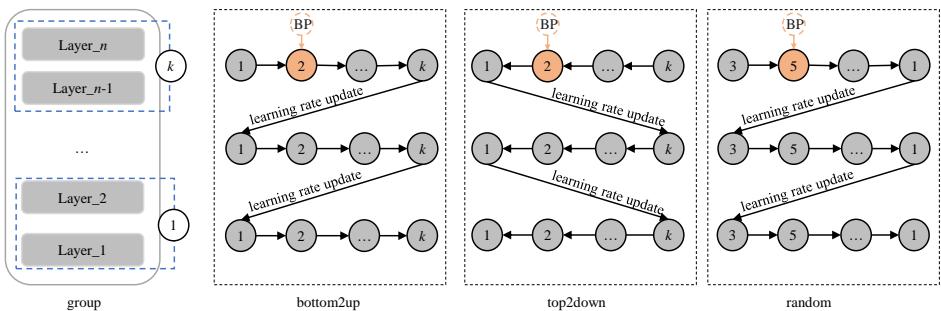
As shown in Figure 1, the model is sliced into \(k\) groups. During a training step, the algorithm selects a specific group (highlighted in brown) to be “active.”
- Forward Pass: Data flows through the whole model.
- Backward Pass (BP): Gradients are calculated. However, the optimizer only “sees” the parameters of the active group.
- Update: The weights of the active group are updated. The optimizer states for this group are temporarily loaded to GPU, used, and then offloaded (or discarded if not needed immediately).
- Shift: For the next step, a different group is selected.
This approach significantly reduces the “peak” memory required. You only need to store gradients and optimizer states for \(\frac{1}{k}\) of the model at any time.
The Algorithm
The researchers formalized this into a specific training loop.
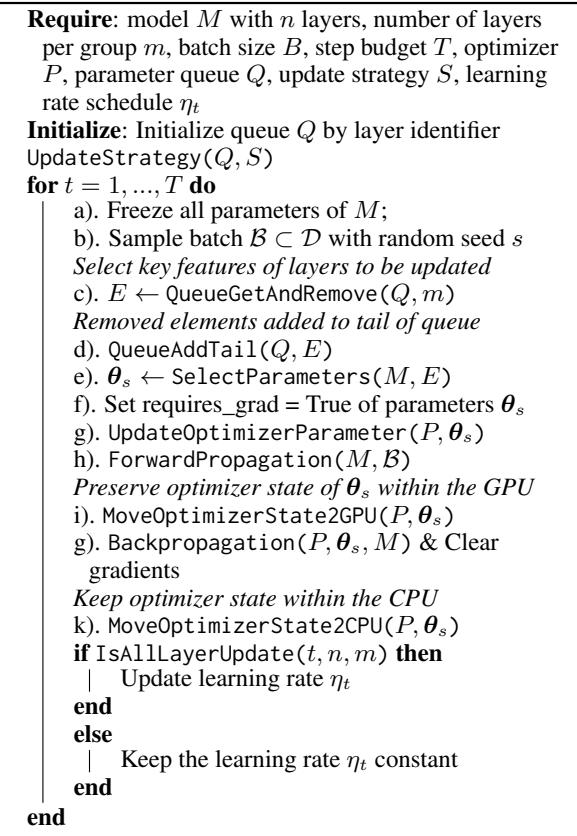
The algorithm manages a queue of layers. It supports different update strategies:
- Bottom-to-Up (bottom2up): Updates layers starting from the embeddings up to the head.
- Top-to-Down (top2down): Updates from the head down to the embeddings.
- Random: Shuffles the update order.
Crucially, the algorithm employs a Delayed Learning Rate Update. Because different layers are updated at different times, changing the global learning rate after every single step could cause instability (some layers might get updated with a high rate, others with a low rate within the same epoch). HiFT only updates the learning rate schedule once all layers have been updated once. This ensures consistent update amplitudes across the model depth.
The Mathematics of Efficiency
Why does this save so much memory? Let’s look at the equations provided by the authors.
First, consider the memory cost (\(\zeta\)) of standard Full-Parameter Fine-Tuning (FPFT). We denote the memory for model weights as \(\zeta_1\).
- Optimizer states (\(\zeta_2\)) for AdamW are usually \(2 \times\) the model weights.
- Gradients (\(\zeta_3\)) are \(1 \times\) the model weights.
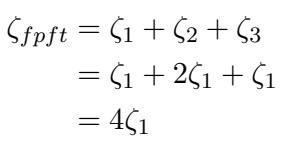
So, standard training requires roughly 4 times the memory of the model weights alone (plus activation overhead). This is why a 14GB model needs 60GB+ to train.
Now, look at HiFT. Because we divide the model into \(k\) groups, we only store the optimizer states and gradients for the active group.
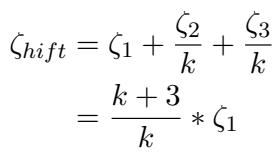
As \(k\) (the number of groups) increases, the memory required for states and gradients approaches zero relative to the total model size. The memory saving is substantial:
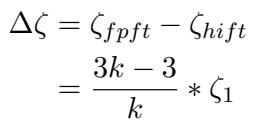
For a large model where you might split the layers into \(k=32\) groups, you are essentially removing almost the entire burden of the optimizer states from the GPU memory.
Theoretical Rigor
You might worry that updating layers asynchronously could destabilize the model or prevent it from converging. The authors tackle this by providing a generalization bound, proving that the gap between the test loss of HiFT and the optimal parameters is bounded.
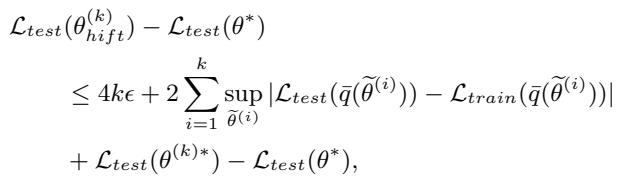
While the math is complex, the takeaway is reassuring: HiFT is theoretically sound. It is guaranteed to converge under standard assumptions, meaning you aren’t trading mathematical validity for memory savings.
Experimental Results
The theory sounds great, but does it work in practice? The researchers tested HiFT across a wide range of models (RoBERTa, GPT-2, LLaMA, OPT) and tasks (NLU, Instruction Tuning, Math).
1. Does it learn as well as FPFT?
The primary concern with any approximation method is performance loss. The authors compared HiFT against standard FPFT and various PEFT methods on the GLUE and SuperGLUE benchmarks.
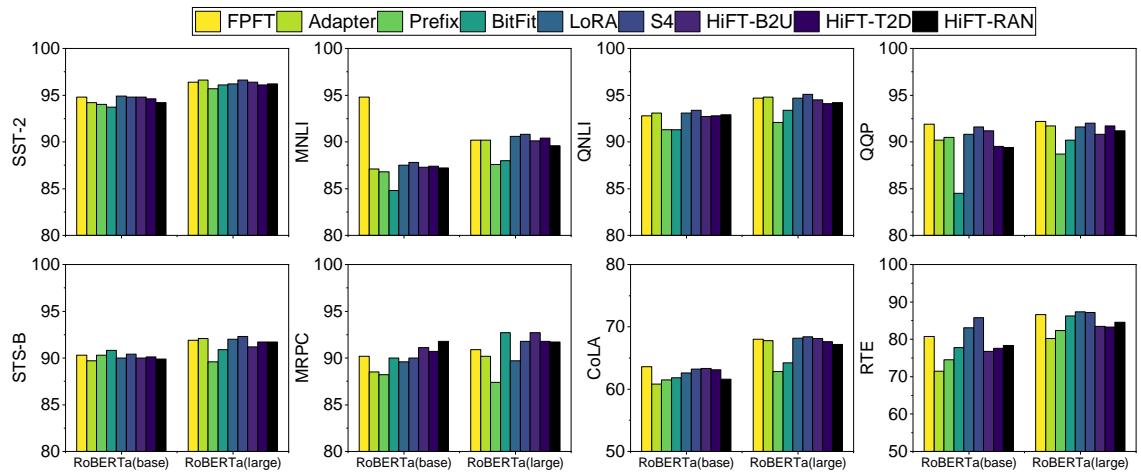
In Figure 5, we see the accuracy of RoBERTa on various datasets. The HiFT variants (orange, yellow, pink bars) consistently match the performance of standard FPFT (blue bar). In many cases, HiFT outperforms PEFT methods like BitFit or Adapters.
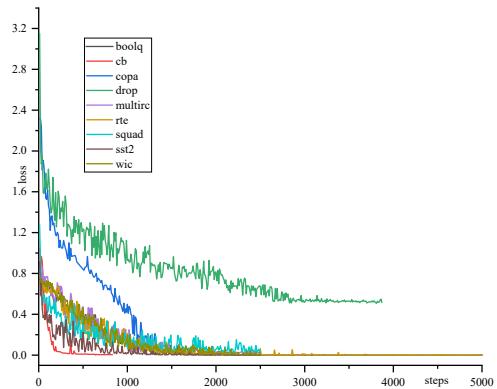
Furthermore, looking at the loss curves, we can see that HiFT (despite its “chopped up” training style) converges smoothly.
2. Instruction Tuning and Reasoning
The real test for modern LLMs is instruction following and complex reasoning. The researchers fine-tuned models like LLaMA-7B and Mistral-7B using HiFT and tested them on the MT-Bench, a challenging benchmark that evaluates capabilities in coding, reasoning, and roleplay.
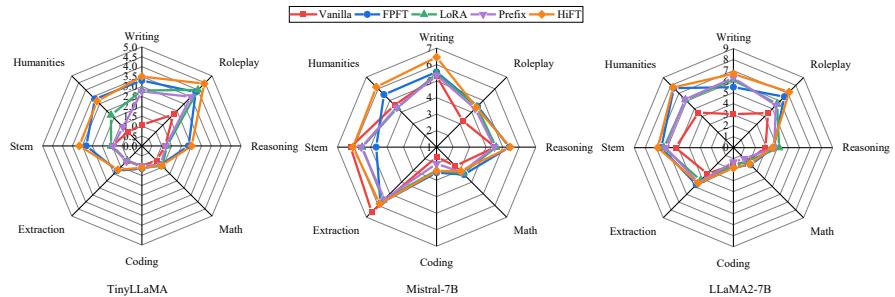
The radar chart above (Figure 2) is telling.
- HiFT (Orange line): consistently pushes to the outer edges, matching or beating FPFT (Blue).
- LoRA (Green): often lags behind, particularly in complex categories like Reasoning and Coding.
This supports the authors’ claim that full-parameter tuning—even when done hierarchically—captures complex patterns better than low-rank approximations.
Specific results on the LLaMA-7B and 13B models reinforce this, particularly on the GSM8K dataset (Grade School Math), which requires multi-step reasoning.
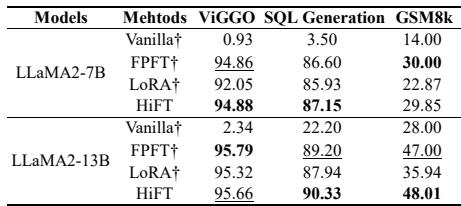
In Table 4, look at the GSM8K column. HiFT achieves 29.85 on LLaMA-7B, almost identical to FPFT’s 30.00, while LoRA drops significantly to 22.87. This suggests that for tasks requiring deep structural changes to the model’s behavior, updating all parameters is crucial.
3. Memory Efficiency: The Pie Chart
We established that HiFT saves memory mathematically, but what does the breakdown look like on an actual GPU?
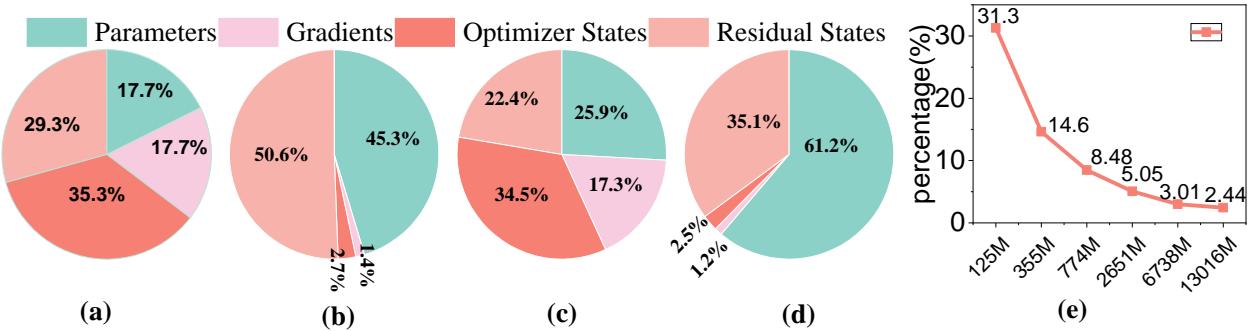
Figure 6 compares standard FPFT (a) with HiFT (b).
- FPFT (a): The “Optimizer States” (yellow slice) take up 35.3% of the memory, and Gradients (orange) take another 17.7%.
- HiFT (b): The Optimizer States shrink to just 2.7%.
This massive reduction allows the system to fit larger batch sizes or simply run on hardware that would otherwise crash.
4. Does Update Order Matter?
One distinct feature of HiFT is the ability to choose which blocks to update in what order. Does it matter if we train the bottom layers first or the top layers?
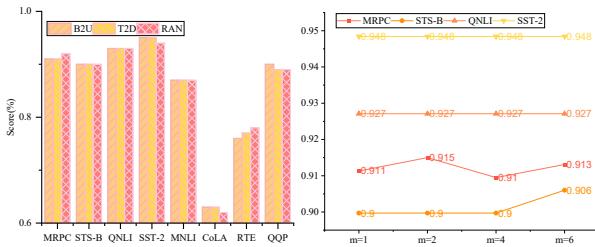
Surprisingly, Figure 4 (left) shows that the strategy (Bottom-to-Up, Top-to-Down, or Random) makes almost no difference in final accuracy. This robustness is excellent news for parallelization: it implies that future work could potentially train different blocks on different devices simultaneously without strictly enforcing a specific sequential order.
Conclusion and Implications
HiFT represents a significant step toward democratizing Large Language Model research. By decoupling the need for “Full Parameter” tuning from the need for “Full Memory” allocation, it breaks the hardware barrier that keeps many students and independent researchers from working with state-of-the-art models.
Key Takeaways:
- 7B on 24GB: HiFT allows full-parameter fine-tuning of LLaMA-7B class models on a single consumer GPU (like an RTX 3090 or 4090).
- No Performance Compromise: Unlike MeZO or some PEFT methods, HiFT achieves results comparable to standard fine-tuning, especially on reasoning tasks.
- Optimizer Agnostic: It works with AdamW, SGD, or any other optimizer, letting you keep the training dynamics you trust.
As models continue to grow in size, strategies like HiFT that optimize how we update weights—rather than just which weights we update—will be essential. For students and researchers, this means the ability to conduct deep, meaningful experiments on LLMs is no longer reserved for those with access to massive H100 clusters. You can now renovate the whole house—just one room at a time.