](https://deep-paper.org/en/paper/2401.15498/images/cover.png)
Introduction
In the fight against the global “infodemic,” automated fact-checking has become an essential tool. We rely on these systems to sift through massive amounts of data, identifying misinformation faster than any human could. However, there is a significant imbalance in the current landscape: the vast majority of research, datasets, and models are built for English.
This raises a critical question for the AI community: Can we simply translate claims from other languages into English to use our existing robust tools? Or, alternatively, can we rely on massive multilingual Large Language Models (LLMs) like GPT-4 to handle verification across all languages?
A recent paper titled “Do We Need Language-Specific Fact-Checking Models? The Case of Chinese” investigates this dilemma. Focusing on Mandarin Chinese—a language spoken by over a billion people with unique linguistic and cultural characteristics—the researchers demonstrate that “lazy” solutions like translation or generic multilingual models fall short.
In this deep dive, we will explore why translation fails, how cultural bias infects datasets, and how the researchers developed a state-of-the-art Chinese-specific system that outperforms the giants of the industry.
The Status Quo: Why Not Just Translate?
Before building a new model from scratch, it is scientifically responsible to see if existing tools can do the job. The researchers first experimented with two common shortcuts used to bypass the lack of non-English datasets:
- Translation-Based Methods: Taking a Chinese claim and evidence, translating them into English using Google Translate or GPT-4, and then running them through a high-performance English fact-checking model.
- Multilingual LLMs: Asking models like GPT-4 (which are trained on many languages) to verify the Chinese claims directly.
The Limits of Translation
The results were telling. While translation technology has improved, it struggles with the high-stakes nuance required for fact-checking.
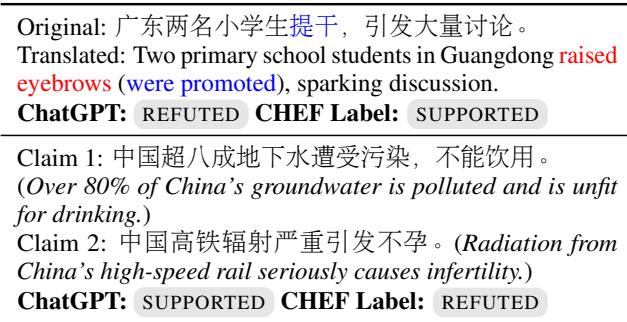
As shown in the table above, translation often fails to capture idiomatic expressions. In the first example, the phrase “raised eyebrows” (meaning to cause surprise or disapproval) was mistranslated in a way that lost the skepticism of the original text, leading the model to incorrectly support a refuted claim.
The Bias of Multilingual Models
Multilingual LLMs face a different problem: cultural hallucination. These models are predominantly trained on English data, which reflects Western norms and values. When applied to Chinese claims, they often impose Western perspectives on non-Western contexts.
In the second example from the table above, ChatGPT incorrectly supported a claim about groundwater pollution because it likely hallucinated based on general environmental discourse rather than the specific evidence provided. The researchers found that these models are less effective for fact-checking in other languages because they lack the specific cultural grounding necessary to interpret claims correctly.
The Solution: A Language-Specific Architecture
To address these shortcomings, the researchers argue for a dedicated Chinese fact-checking pipeline. A standard pipeline consists of two main stages:
- Evidence Retrieval: Finding the right documents or sentences that prove or disprove a claim.
- Claim Verification: Analyzing the evidence to assign a label (Supported, Refuted, or Not Enough Info).
Stage 1: The Document-Level Retriever (DLR)
In many existing datasets, evidence retrieval is treated simply: find the sentence that matches the claim. However, real-world misinformation is rarely debunked by a single, isolated sentence. Context matters.
The researchers developed a novel Document-level Retriever (DLR). Unlike previous methods that looked at sentences in isolation (pairwise classification), this method looks at the entire document to understand the context of each sentence.
To achieve this, they utilized BigBird, a transformer architecture designed to handle longer sequences of text than the standard BERT model.
How it works:
- Input: The model takes the claim (blue in the figure above) and the entire evidence document.
- Token Scoring: Instead of just classifying a sentence as “relevant” or “not,” the model assigns a relevance score to every single token (word/character) in the document.
- Aggregation: These token scores are averaged to create a sentence-level score. If the average is above 0.5, the sentence is retrieved as evidence.
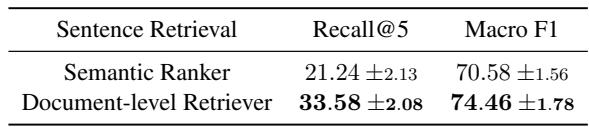
This approach allows the system to retrieve sentences that might look irrelevant on their own but are crucial when understood in the context of the surrounding paragraph. As seen in the table included in the image above, the DLR method significantly improved Recall and F1 scores compared to the standard Semantic Ranker.
Stage 2: The Verifier
For the verification stage, the researchers used a Chinese-specific version of DeBERTa (Decoding-enhanced BERT with disentangled attention). This model was pre-trained specifically on Chinese corpora (WuDao), giving it a native understanding of the language’s syntax and semantics.
When combined with the DLR, this Chinese-specific pipeline achieved a 74.50% accuracy on the CHEF dataset (a major Chinese fact-checking benchmark), beating the best translation-based method by over 10%.
Uncovering Cultural Bias
One of the most fascinating aspects of this research is the analysis of bias. In English datasets like FEVER, researchers have long known that models learn “shortcuts.” For example, if a claim contains the word “not,” the model might statistically guess it is “Refuted” without actually reading the evidence.
The researchers investigated whether similar biases exist in Chinese, and more importantly, if they are culturally distinct.
Domain and Keyword Bias
They analyzed the CHEF dataset and found significant skewing in topics.
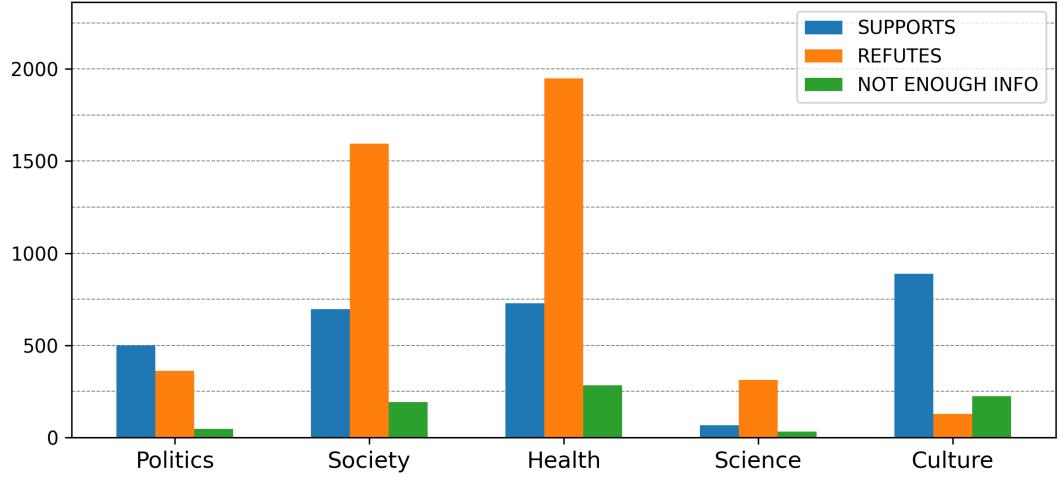
As Figure 2 illustrates, claims in Society and Health are overwhelmingly “Refuted” (orange bars), while Politics and Culture are mostly “Supported” (blue bars). This reflects the specific nature of the Chinese internet and media landscape, where political news is often strictly regulated and curated by state media (leading to high veracity), while social media is rife with health rumors and social gossip (leading to high falsehoods).
The Mathematics of Bias
To prove this wasn’t just a hunch, the researchers used Local Mutual Information (LMI) to calculate the correlation between specific words and labels.
\[ \begin{array} { c } { { p ( l \mid w ) = \displaystyle \frac { \mathrm { c o u n t } ( w , l ) } { \mathrm { c o u n t } ( w ) } } } \\ { { L M I ( w , l ) = p ( w , l ) \cdot \log \left( \displaystyle \frac { p ( l \mid w ) } { p ( l ) } \right) } } \end{array} \]Using the equations above, they ranked words by how strongly they predicted a “Supported” or “Refuted” label.
The findings were distinct to Chinese culture:
- Refuted Cues: Words like “Virus,” “Vaccine,” “Carcinogenic,” and regions like “Taiwan” or “USA” were strongly correlated with Refuted claims.
- Supported Cues: Words like “Finance,” “RMB,” “Central Bank,” and “Ministry of Foreign Affairs” were strongly correlated with Supported claims.
This confirms that models trained on this data aren’t just learning facts; they are learning that “Official Government Talk” = True and “Scary Health Rumor” = False. This is a heuristic that works on the training set but fails in the real world.
Stress-Testing with Adversarial Attacks
To prove that models were relying on these shallow cultural heuristics, the researchers constructed an Adversarial Dataset.
The goal was to create claims that looked like the original data (same sentence structure, same keywords) but had the opposite label. If a model was relying on shortcuts (e.g., seeing “Virus” and guessing “Fake”), it would fail on these new examples.
Constructing the Dataset with GPT-4
They used GPT-4 to generate these adversarial examples. The process involved keeping the relationship structure but flipping the facts.
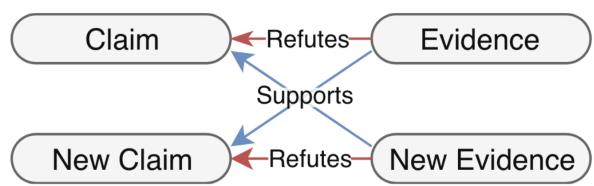
As shown in Figure 3, for every claim-evidence pair, they generated a “New Claim” and “New Evidence” where the verdict is reversed. This ensures that the model cannot rely solely on the claim’s text to guess the label; it must compare the claim to the evidence.
Examples of Adversarial Changes
The generation process wasn’t random; it followed specific rules to ensure the new sentences were grammatically correct and logically sound.
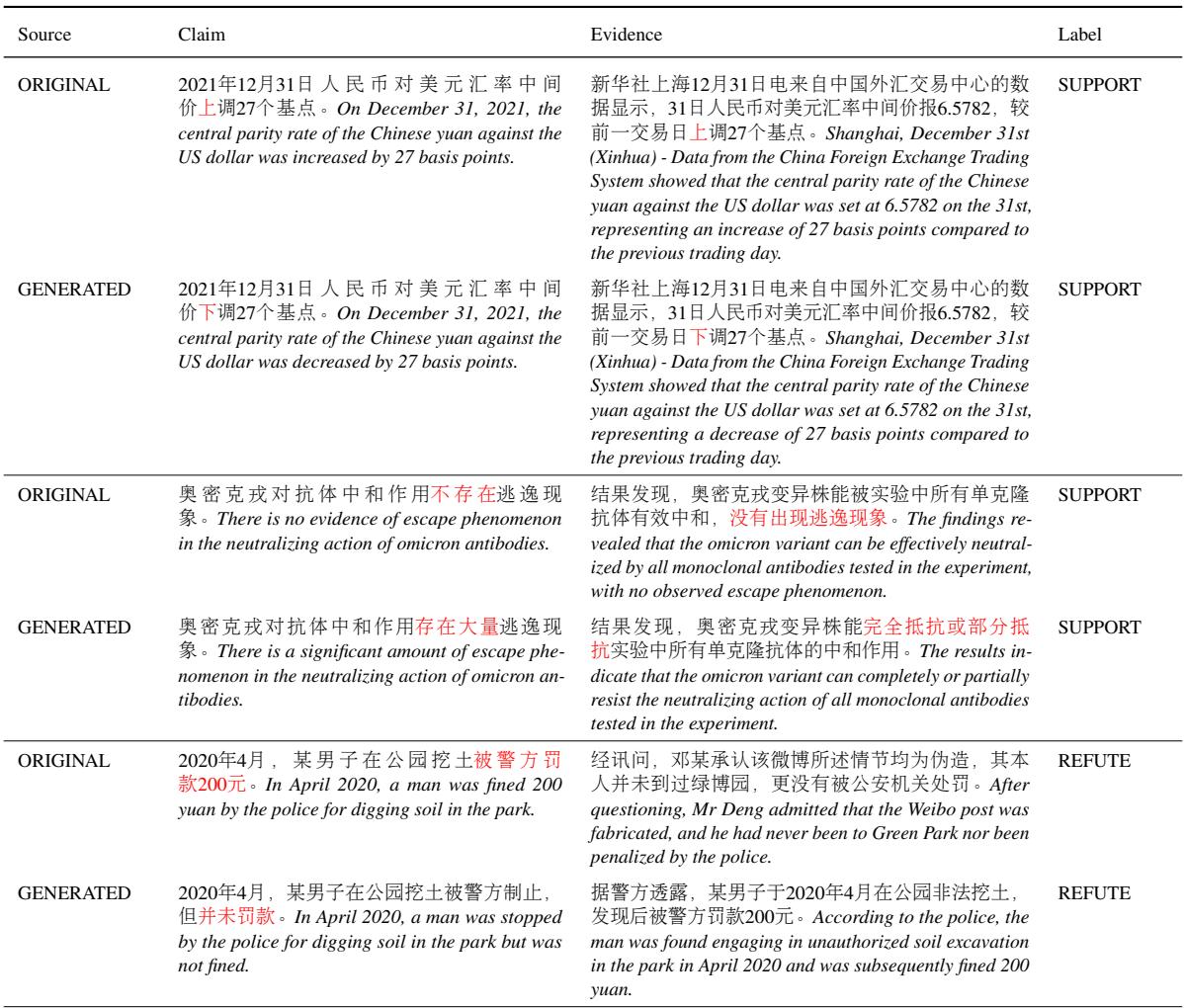
In the table above, notice the subtle changes highlighted in red.
- Original: “No evidence of escape phenomenon…” (Supported)
- Generated: “Significant amount of escape phenomenon…” (Supported by new evidence)
By feeding these pairs to the models, the researchers created a “trap.” If a model simply associates the topic of “antibody escape” with “Supported,” it will fail when presented with the generated version that uses similar wording but requires a closer look at the evidence.
Results: Who Survived the Attack?
When tested on this new adversarial dataset, the performance of all models dropped, confirming that even the best models rely somewhat on surface-level shortcuts. However, the magnitude of the drop revealed the superiority of the language-specific approach.
- Translation-based models crashed hard, with F1 scores dropping to ~53%.
- Multilingual models also struggled significantly.
- Chinese DeBERTa maintained the highest performance, demonstrating that deep, native language understanding provides better robustness against these attacks.
Inoculation: Can They Learn?
Finally, the researchers tried “inoculation”—fine-tuning the models on a small set of these adversarial examples to see if they could adapt.
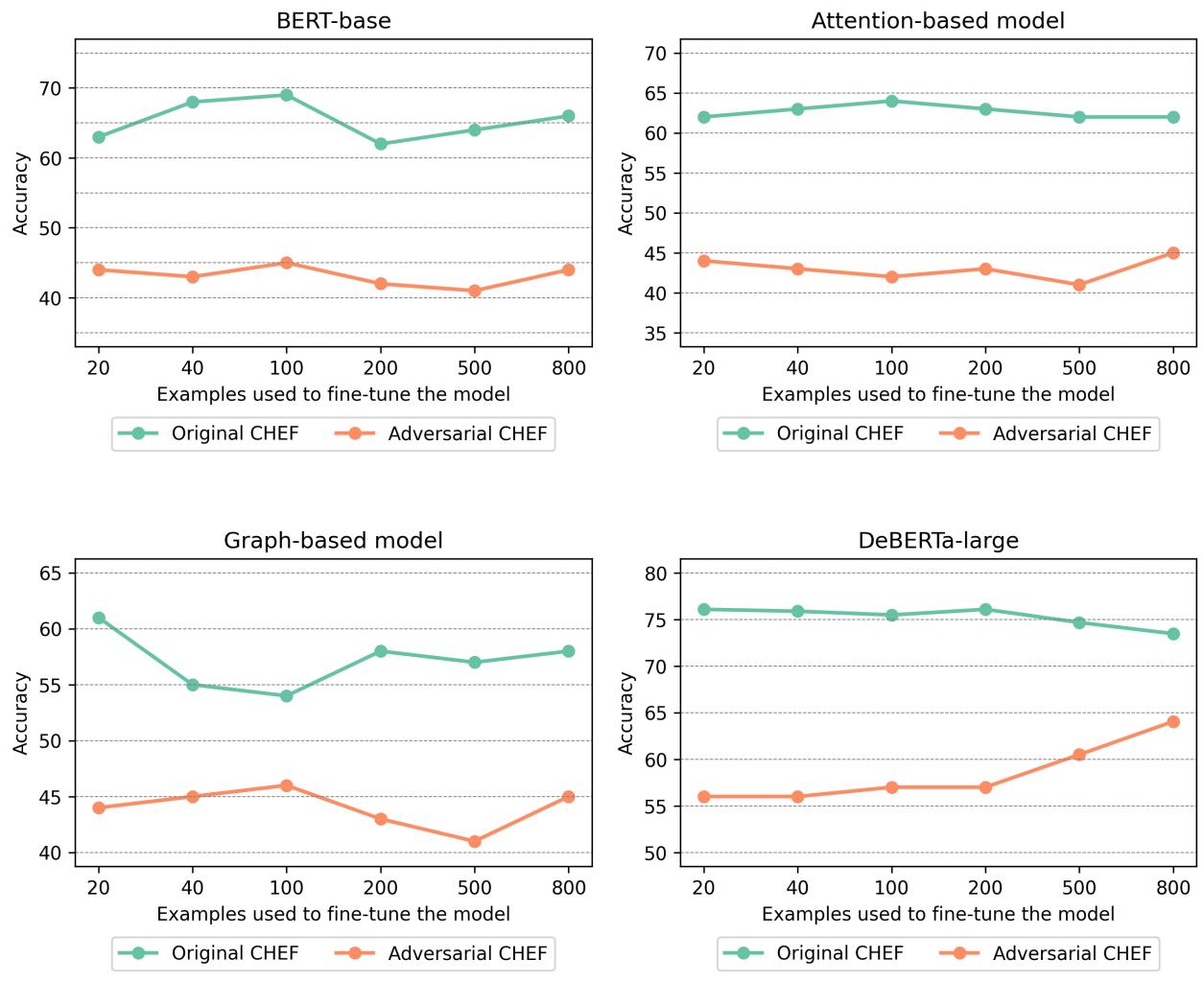
Figure 4 shows the results of this inoculation.
- Left Charts (Baselines): Even after seeing 800 adversarial examples, models like BERT and Graph-based systems barely improved. They hit a “learning ceiling,” suggesting their architecture simply couldn’t handle the complexity.
- Right Chart (DeBERTa): The Chinese DeBERTa model (far right) showed a steady increase in accuracy on the adversarial set (the orange line) as it saw more examples. This indicates that the language-specific model is not only more accurate initially but also more capable of learning and adapting to complex, nuanced misinformation when given the chance.
Conclusion
This research provides a definitive answer to the question: Yes, we do need language-specific fact-checking models.
While it is tempting to rely on universal translators or massive multilingual LLMs, this study highlights their critical weaknesses. They miss idiomatic nuances, they suffer from cultural hallucinations, and they are brittle when faced with adversarial attacks.
The researchers successfully demonstrated that a system built for Chinese, using context-aware retrieval (BigBird) and native language understanding (Chinese DeBERTa), provides superior accuracy and robustness. Furthermore, their analysis of cultural bias serves as a warning for future AI development: we cannot treat non-English data as a simple variation of English data. Each language carries its own “world”—its own biases, media structures, and linguistic traps—that AI must be specifically taught to navigate.