](https://deep-paper.org/en/paper/2402.11176/images/cover.png)
Introduction
We have all experienced it: you ask a Large Language Model (LLM) a specific, detailed question—perhaps about a medical condition or a historical event—and the answer comes back sounding incredibly confident. The grammar is perfect, the tone is professional, but the content is… slightly off. Maybe it misses a crucial detail, hallucinates a date, or presents arguments in a confusing order.
Despite their massive pre-training on the internet, LLMs still struggle with knowledge-intensive tasks. They are excellent at mimicking the style of an expert but often fail to retrieve the specific substance required for complex queries. This leads to three main problems:
- Incompleteness: The answer lacks depth.
- Non-factuality: The model makes things up (hallucinations).
- Illogicality: The reasoning doesn’t flow.
The core issue isn’t just that the model doesn’t “know” the facts; it is that standard training methods don’t force the model to be aware of the knowledge it possesses.
In this post, we dive into a research paper titled “KnowTuning: Knowledge-aware Fine-tuning for Large Language Models.” The researchers propose a novel two-stage fine-tuning method designed to fix these specific blind spots. By the end of this article, you will understand how “KnowTuning” works, how it forces models to recognize “hard” facts, and how it trains them to distinguish between logic and nonsense.
The Problem with “Vanilla” Fine-Tuning
To understand why KnowTuning is necessary, we first need to look at how LLMs are typically trained for specific tasks. This standard process is called Supervised Fine-Tuning (SFT).
In SFT, the model is given a dataset of questions and correct answers. It learns to predict the next word in the answer sequence. Mathematically, the goal is to minimize the difference between what the model predicts and the actual target text.
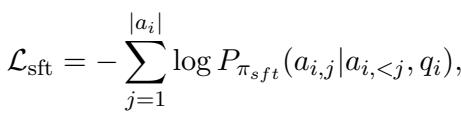
While effective for general conversation, standard SFT treats every word equally. It cares just as much about predicting the word “the” correctly as it does about predicting a specific chemical compound in a medical answer.
Because of this, SFT models often lack knowledge awareness.
- Fine-grained awareness: They can’t identify which specific atomic facts within a sentence are difficult or crucial.
- Coarse-grained awareness: They struggle to differentiate between a high-quality answer and one that is subtly wrong or incomplete.
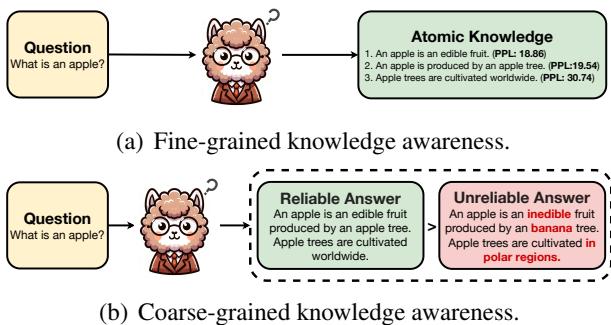
As shown in Figure 1 above, a vanilla model might confidently state that an apple is produced by a banana tree (Figure 1b), simply because it follows the grammatical structure of a definition, failing to flag the factual error.
The KnowTuning Solution
The researchers propose KnowTuning, a method that explicitly targets these weaknesses. The approach is split into two distinct stages:
- Fine-grained Knowledge Augmentation: This works at the micro-level. It identifies specific facts the model finds difficult and forces the model to practice them.
- Coarse-grained Knowledge Comparison: This works at the macro-level. It trains the model to prefer complete, factual, and logical answers over corrupted versions.
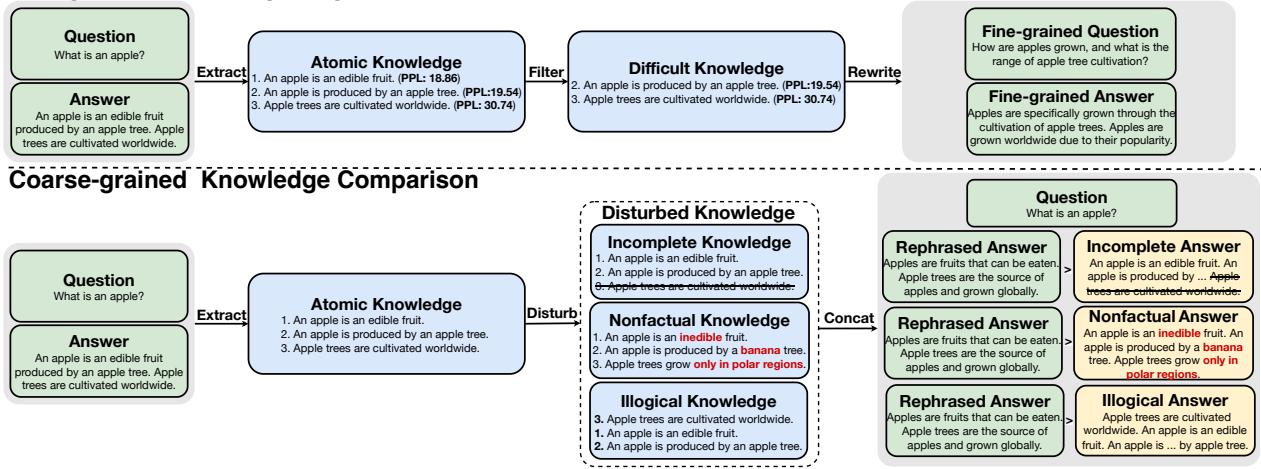
Figure 2 provides a high-level roadmap of the system. Let’s break down the mechanics of each stage.
Stage 1: Fine-grained Knowledge Augmentation
The first step is to improve the model’s grasp of specific details—what the paper calls “Atomic Knowledge.”
Extracting Atomic Knowledge
An answer to a complex question is essentially a collection of small facts. The researchers use a prompting technique to break a full sentence down into these atomic units.

For example, the sentence “Apple trees are cultivated worldwide” might be broken down into atomic facts like “An apple is a fruit” and “Apple trees grow globally.”
Identifying “Difficult” Knowledge
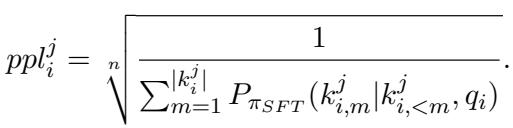
Not all facts are hard for an LLM. It likely knows what an apple is. But obscure medical terms or historical dates might differ. To find the “hard” facts, the researchers calculate the Perplexity (PPL) of each atomic fact.
Perplexity effectively measures how “surprised” the model is by a sequence of words. If the model has high perplexity for a specific fact, it means the model is uncertain about it.
Augmenting the Data
Once the “difficult” facts (those with high perplexity) are identified, the system doesn’t just hope the model learns them. It actively rewrites the training data.
The system takes the original question and rewrites it to specifically ask about those difficult facts.

It also rewrites the answer to ensure it directly addresses those specific points.

Finally, these new, targeted Q&A pairs are added to the training set. This effectively forces the model to “study harder” on the topics it finds most confusing.

Stage 2: Coarse-grained Knowledge Comparison
While Stage 1 helps the model memorize facts, Stage 2 teaches it discernment. The goal is to train the model to distinguish between a “reliable” answer and an “unreliable” one.
To do this, the researchers use Direct Preference Optimization (DPO). DPO is a training technique where the model is shown two answers—a winner and a loser—and is updated to increase the probability of generating the winner and decrease the probability of generating the loser.
The cleverness of KnowTuning lies in how it generates the “loser” (negative) samples. Instead of just picking random bad answers, they systematically corrupt good answers in three specific ways: Completeness, Factuality, and Logicality.
1. Knowledge Completeness (The “Don’t Leave Stuff Out” Training)
A good answer should be comprehensive. To teach this, the researchers create an “incomplete” dataset. They take the full set of atomic facts from a good answer and randomly delete some of them.

They then concatenate the remaining facts to form an incomplete answer (\(a^c_i\)).

Ideally, the model should prefer the full, rephrased answer (\(a^r_i\)) over this chopped-up version.

2. Knowledge Factuality (The “Don’t Lie” Training)
To tackle hallucinations, the model needs to recognize when a fact is wrong. The researchers take the correct atomic facts and use an external model (like GPT-3.5) to explicitly revise them into incorrect statements (e.g., changing “produced by an apple tree” to “produced by a banana tree”).
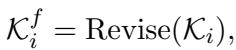
These wrong facts are strung together to create a non-factual answer (\(a^f_i\)).
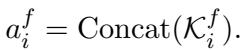
This creates a comparison set where the model learns to reject factual errors.

3. Knowledge Logicality (The “Make Sense” Training)
Finally, an answer needs to flow logically. To simulate an illogical answer, the researchers take the correct atomic facts and randomly shuffle their order.
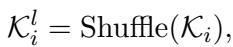
This results in an answer that contains true information but is presented in a disjointed, confusing manner (\(a^l_i\)).
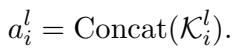
The model is trained to prefer the well-structured answer over the shuffled one.

The Final Training Objective
All three comparison sets (Completeness, Factuality, Logicality) are combined into one massive dataset (\(\mathcal{D}_{kc}\)).

The model is then trained using the DPO loss function. This function mathematically penalizes the model if it assigns a higher probability to the “bad” answer (incomplete, non-factual, or illogical) than the “good” answer.
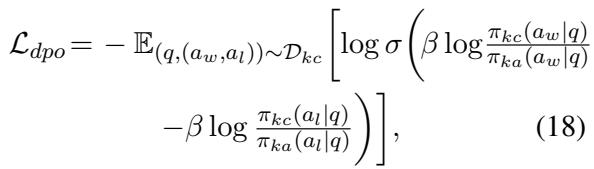
To ensure the model doesn’t lose its basic conversational ability, the final loss function combines this comparison training with the standard supervised fine-tuning loss.

Experiments and Results
Does this complex two-stage process actually work? The researchers tested KnowTuning against several baselines, including standard SFT, Reinforcement Learning from AI Feedback (RLAIF), and FactTune (a competitor method focused solely on factuality).
They used two primary datasets:
- Dolly: A generic question-answering dataset.
- MedQuAD: A specialized medical QA dataset (highly knowledge-intensive).
Automatic Evaluation
First, they used automated metrics (METEOR and BERTScore) to compare the generated answers against gold-standard references.
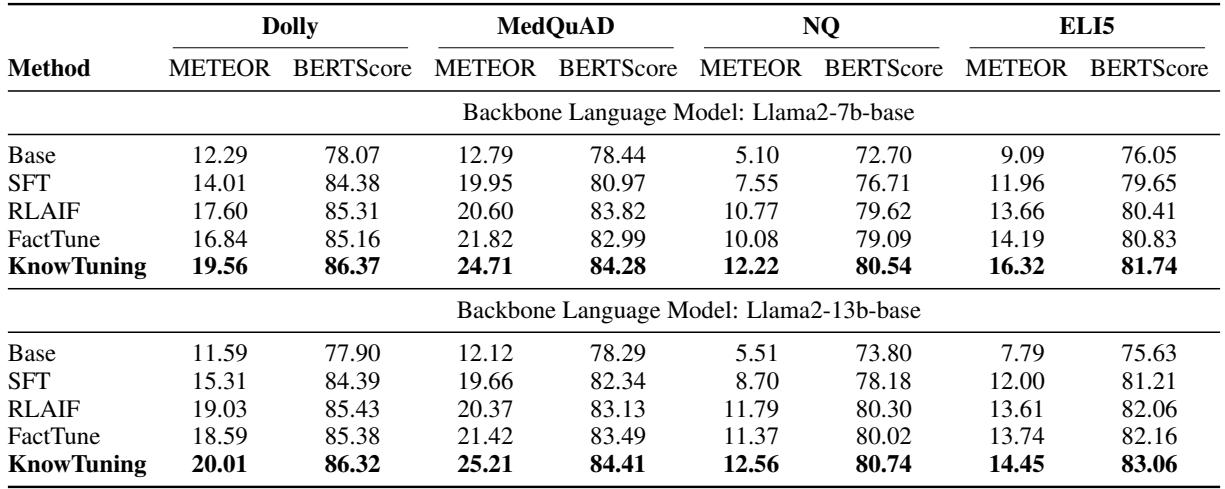
As shown in Table 1, KnowTuning consistently achieved the highest scores across both generic and medical domains, regardless of whether the base model was Llama2-7b or Llama2-13b.
GPT-4 As a Judge
Metrics like BERTScore are useful, but they don’t truly capture nuance. The researchers used GPT-4 to act as a judge, comparing KnowTuning’s answers against the baselines in a head-to-head tournament.
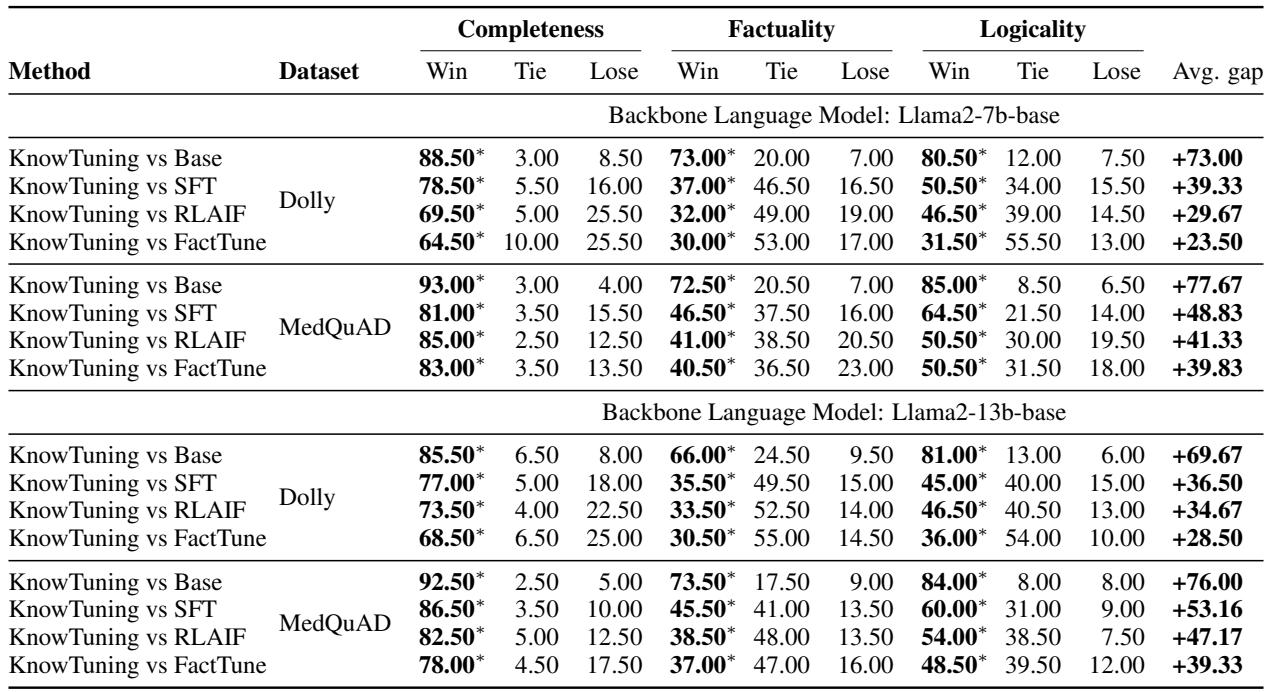
Table 2 shows the “Win/Tie/Lose” rates. Against standard SFT on the Dolly dataset, KnowTuning achieved a massive win rate in Completeness (78.5%), Factuality (37% win vs 16.5% loss), and Logicality (50.5%).
The gap was even more pronounced in the medical dataset, proving that KnowTuning excels in domain-specific tasks where precision is paramount.
Fine-Grained Fact Evaluation
Perhaps the most impressive result comes from the “Fine-grained facts evaluation.” Here, the researchers extracted every single atomic fact generated by the models and verified them.
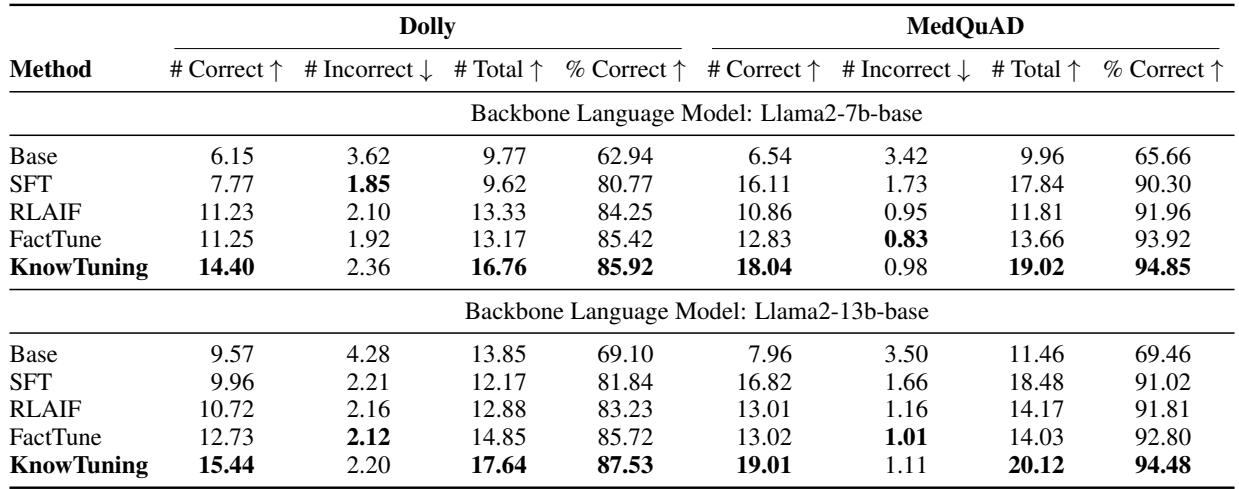
Table 4 reveals a critical insight: KnowTuning generates more facts overall (# Total), but also maintains a higher percentage of correctness (% Correct).
While other methods like FactTune improved the percentage of correct facts, they often did so by generating shorter, safer answers (lower # Total facts). KnowTuning managed to be both more comprehensive and more accurate.
Ablation Study: Do we need all the parts?
The researchers removed different components of the system to see what mattered most.
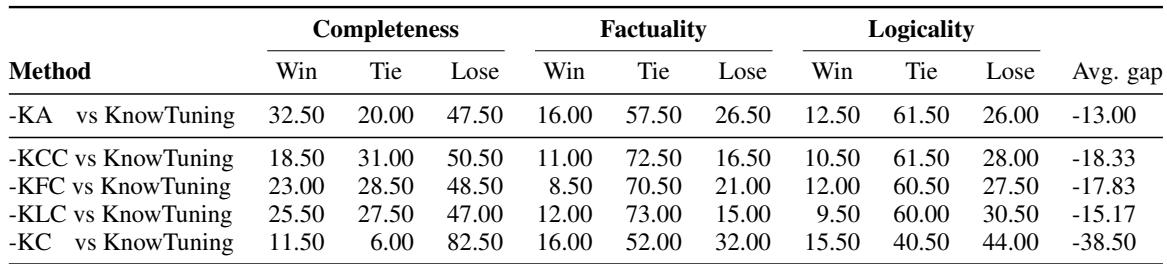
Table 5 shows that removing any component hurt performance.
- Removing Augmentation (-KA) dropped performance significantly, proving that focusing on “hard” facts is essential.
- Removing Logicality Comparison (-KLC) hurt the logic score, confirming that shuffling facts is a valid way to teach structure.
- Removing Completeness (-KCC) hurt completeness scores.
This confirms that the specific design of targeting Completeness, Factuality, and Logic individually is necessary for the final result.
Conclusion
Large Language Models are often criticized for being “stochastic parrots”—repeating patterns without understanding truth. The KnowTuning paper argues that we can mitigate this not just by feeding the model more data, but by changing how it learns from that data.
By identifying the specific facts a model finds difficult (Fine-grained Augmentation) and explicitly training it to reject incomplete, false, and disordered answers (Coarse-grained Comparison), KnowTuning creates a model that is significantly more robust.
For students and practitioners in NLP, this paper highlights an important trend: the future of fine-tuning isn’t just about “instruction following.” It’s about designing training objectives that force the model to internalize the structure and validity of knowledge itself. Whether for medical advice or historical analysis, methods like KnowTuning are paving the way for AI that is not just chatty, but trustworthy.