](https://deep-paper.org/en/paper/2404.11201/images/cover.png)
The dream of a “universal translator”—a single AI model capable of fluently speaking dozens, if not hundreds, of languages—is one of the Holy Grails of Natural Language Processing (NLP). Companies and researchers are racing to build massive multilingual models that can translate English to French, Chinese to Swahili, and everything in between.
But there is a hidden conflict inside these models. When you force one neural network to learn thirty different languages, the languages often fight for “brain space.” This phenomenon is known as negative interference. High-resource languages (like English or German) tend to dominate the model’s parameters, causing performance to drop for low-resource languages. Conversely, optimizing for too many tasks can degrade performance on the main tasks compared to specialized, single-language models.
In this post, we will deep-dive into a fascinating research paper, “Neuron Specialization: Leveraging Intrinsic Task Modularity for Multilingual Machine Translation,” which proposes a clever solution. The researchers discovered that we don’t necessarily need to add new components to solve this problem. Instead, they found that neurons within these models naturally specialize in specific languages. By identifying and leveraging this intrinsic behavior, we can boost performance without adding a single extra parameter.
The Multilingual Dilemma
Before we get into the solution, let’s set the stage. Standard Multilingual Machine Translation (MMT) involves training a single Transformer model on a mix of language pairs.
The benefits are obvious:
- Knowledge Transfer: Learning Spanish might help the model learn Portuguese because they share linguistic roots.
- Efficiency: You only have to deploy and maintain one model instead of thirty.
The downsides are the “Interference” mentioned earlier. To fix this, researchers typically use two strategies:
- Adapters: They add small, language-specific layers (extra parameters) to the model. This works well but increases model size and memory usage.
- Pruning/Lottery Tickets: They try to find a “sub-network” (a specific subset of weights) for each language. This usually requires expensive, time-consuming fine-tuning to discover which weights matter for which language.
The authors of this paper asked a fundamental question: Does the model naturally organize itself without us forcing it?
The Discovery: Neurons Have “Nationalities”
The core contribution of this paper begins with an analysis of the Feed-Forward Networks (FFN) inside the Transformer. In a Transformer, the FFN layers contain the vast majority of the parameters. The researchers hypothesized that specific neurons in these layers might be activating only for specific languages.
To test this, they took a pre-trained multilingual model and ran validation data through it without updating any weights. They simply watched which neurons lit up (activations > 0) for which language.
1. Language Proximity in Neural Space
What they found was striking. Neurons do not fire randomly. There is a structural overlap in active neurons that mirrors the real world.
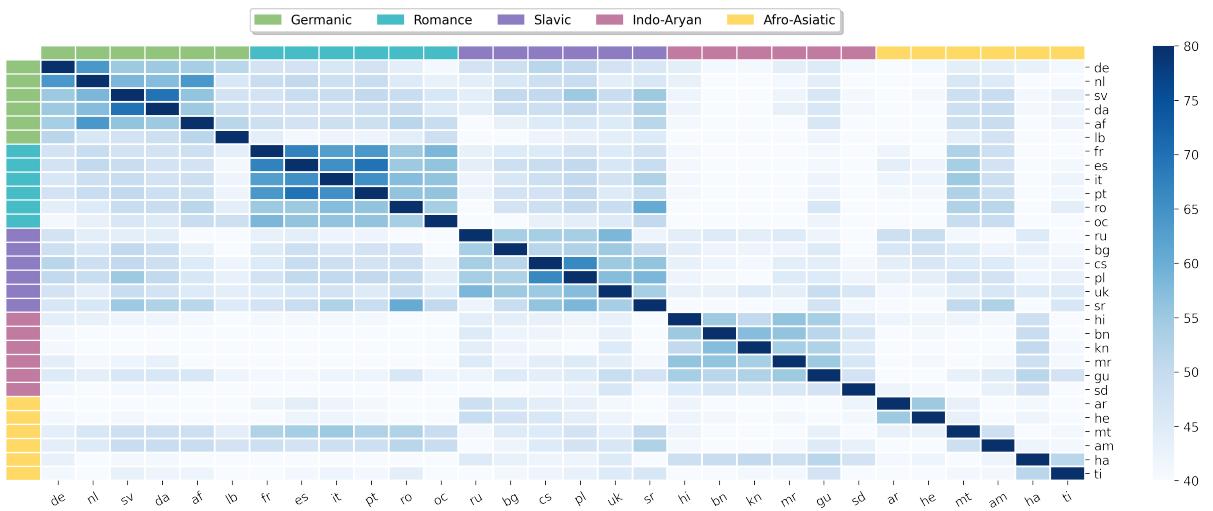
As shown in Figure 1, the heatmap visualizes the overlap (Intersection over Union) of active neurons between different languages in the decoder.
- Darker squares mean high overlap (the languages use the same neurons).
- Lighter squares mean low overlap (they use different neurons).
Notice the clusters? Languages from the same family (like the Romance languages French, Spanish, Italian, and Portuguese) form dark clusters. They share a significant number of specialized neurons. Conversely, Germanic languages and Slavic languages form their own distinct clusters. This proves that the model naturally learns to share capacity between similar languages while separating dissimilar ones.
2. The Evolution from Encoder to Decoder
The researchers didn’t just look at one layer; they looked at how this specialization evolves from the bottom of the model to the top.
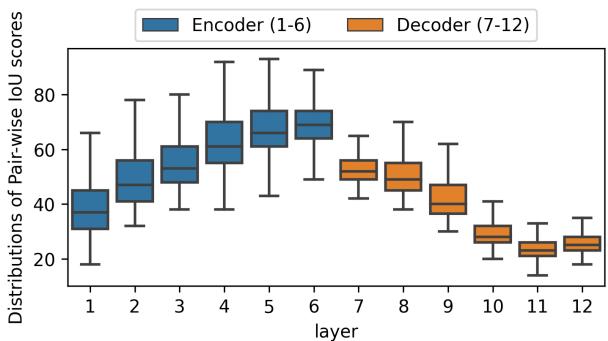
Figure 2 reveals a fascinating journey of information processing:
- In the Encoder (Blue): The overlap between languages increases as you go deeper (layers 1 to 6). This suggests the encoder is moving from language-specific features (like specific words or script shapes) to language-agnostic semantic representations. It is trying to find a “universal meaning.”
- In the Decoder (Orange): The trend reverses. As the model prepares to generate the output text, the overlap decreases. The neurons become highly specialized again to handle the specific grammar and vocabulary of the target language.
The Core Method: Neuron Specialization
Based on these observations, the authors proposed Neuron Specialization. The idea is simple: if the model naturally wants to use specific neurons for specific languages, let’s explicitly encourage that behavior during training.
Step 1: Identification
First, we need to identify which neurons belong to which task (language pair).
The researchers define a set of specialized neurons \(S_k^t\) for a task \(t\). They accumulate the frequency of neuron activations during a forward pass. They then select the most active neurons that contribute to a cumulative threshold \(k\) (e.g., the top neurons that account for 95% of total activation mass).
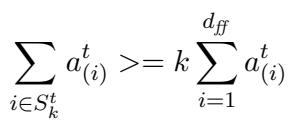
Here, \(a^t\) represents the activation frequency of neurons for task \(t\). The variable \(k\) acts as a threshold factor. A higher \(k\) means we include more neurons (less sparsity); a lower \(k\) means we select only the most critical, highly active neurons.
Step 2: Specialized Training via Masking
Once the specialized neurons are identified, the method “locks” the rest of the network for that specific task.
In a standard Transformer FFN, the operation looks like this:

In the Neuron Specialization approach, they apply a binary mask \(m_k^t\) to the first weight matrix \(W_1\).

The mask \(m_k^t\) is a simple vector of 0s and 1s.
- If a neuron is in the specialized set: The mask is 1. The weight is used and updated during backpropagation.
- If a neuron is NOT specialized: The mask is 0. The weight is effectively turned off for this task and is not updated.
Crucially, this introduces no new parameters. The model size remains exactly the same. The “specialization” is just a way of routing the computation through the most relevant parts of the existing network.
Experiments and Results
The researchers tested this method on two datasets: IWSLT (small-scale, 8 languages) and EC30 (large-scale, 30 languages). They compared their method against strong baselines, including standard Multilingual Training (mT), Adapters, and LaSS (Language-Specific Sub-networks).
1. Performance Gains
The results on the large-scale EC30 dataset were consistent and impressive.
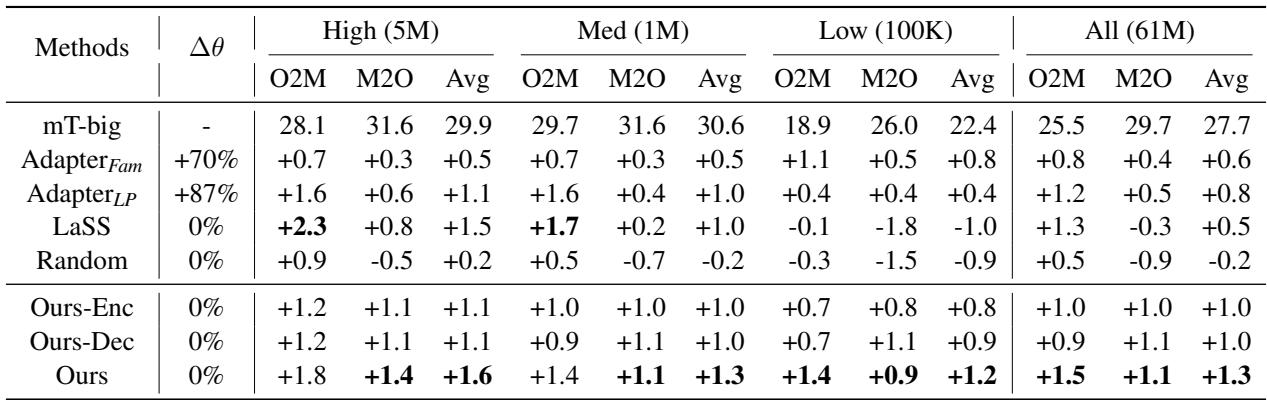
Looking at Table 2, we can see:
- “Ours” (Neuron Specialization) consistently outperforms the baseline (mT-big) across High, Medium, and Low-resource languages.
- Comparison to Adapters: Adapters (\(Adapter_{LP}\)) add a massive amount of parameters (87% increase!) but often perform worse than Neuron Specialization, which adds 0% parameters.
- Comparison to LaSS: LaSS is a pruning method that requires training. While it helps high-resource languages, it actually hurts low-resource languages (negative scores). Neuron Specialization helps everyone.
2. Efficiency: The Killer Feature
One of the strongest arguments for this method is efficiency. Finding “winning lottery tickets” or sub-networks usually requires expensive fine-tuning and pruning cycles.
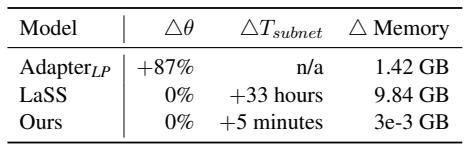
Table 4 highlights the stark difference:
- Adapters add 1.42 GB of memory overhead.
- LaSS takes 33 hours of extra GPU time to find the sub-networks.
- Neuron Specialization takes 5 minutes to identify the specialized neurons and adds negligible memory overhead.
3. Mitigating Interference
The primary goal was to stop languages from fighting each other. Did it work?
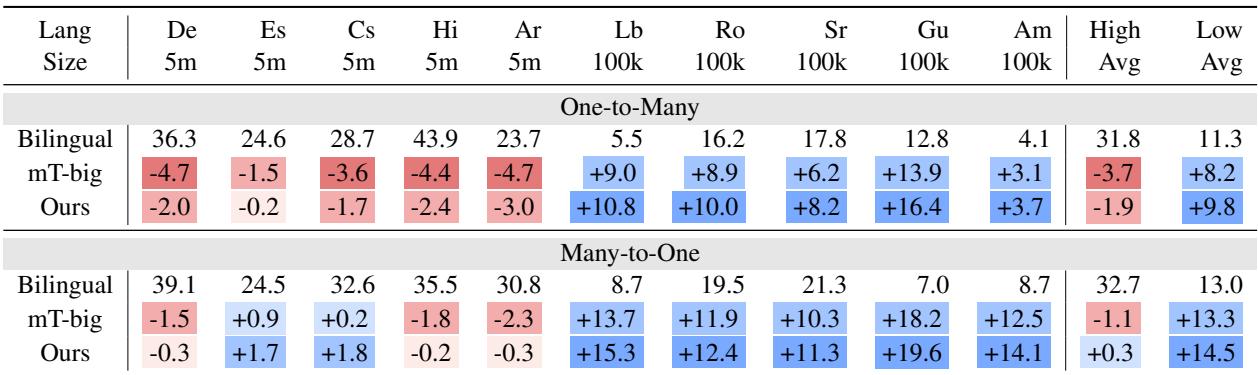
Table 3 compares the multilingual models against “Bilingual” models (models trained on only one language pair, which suffer zero interference).
- Red cells indicate negative interference (multilingual is worse than bilingual).
- Blue cells indicate positive transfer (multilingual is better).
The standard mT-big model (second row) shows deep red for high-resource languages like German (De) and French. The model simply doesn’t have enough capacity for them because it’s distracted by 29 other languages. “Ours” (bottom row) significantly reduces this interference (the numbers are much closer to the bilingual baseline) while drastically boosting the “positive transfer” for low-resource languages (deep blue columns on the right).
4. The Parameter Trade-off
One interesting analysis involved the threshold \(k\). How “specialized” should the neurons be?
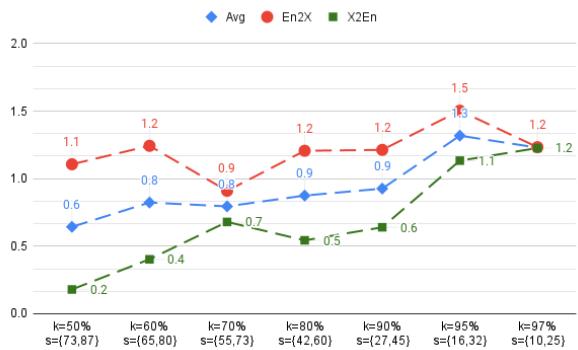
Figure 4 plots the performance gain against the factor \(k\).
- As \(k\) increases (meaning we use more of the network for each language), performance improves.
- The “sweet spot” appears to be around 95%. This suggests that while specialization is key, languages still benefit from accessing a large portion of the shared capacity, provided the core specialization is maintained.
Deep Dive: Why Does This Work?
The success of Neuron Specialization tells us something profound about Deep Learning. We often treat neural networks as “black boxes” or amorphous blobs of computation. However, this research confirms that modularity is an emergent property.
Even without being told to, a network trained on English, Chinese, and Arabic will physically separate the processing of these languages into different neurons. The “overlaps” in these neurons aren’t random; they encode linguistic history.
By identifying these natural pathways and reinforcing them (via the masking during training), we get the best of both worlds:
- Isolation: High-resource languages get their own dedicated “highways” through the network, preventing them from overwriting the knowledge needed for other languages.
- Sharing: Similar languages (like Spanish and Italian) naturally overlap in their selected neurons, allowing for positive transfer of grammatical and lexical knowledge.
Conclusion
The paper “Neuron Specialization” offers a refreshing perspective on Multilingual Machine Translation. Rather than fighting the model’s complexity by adding more layers (Adapters) or spending days searching for optimal sub-networks (Pruning), the authors simply listened to what the model was already saying.
By performing a quick, 5-minute analysis of neuron activations, they unlocked a way to modularize the network that is:
- Efficient: No extra parameters.
- Effective: Beats heavy baselines.
- Universal: Works for both high-resource and low-resource languages.
For students and practitioners in AI, the takeaway is clear: sometimes the best optimization isn’t a new architecture, but a better understanding of the intrinsic behaviors inside the architectures we already have.