](https://deep-paper.org/en/paper/2405.10443/images/cover.png)
The dream of the “universal translator”—a device that translates speech instantly as it is spoken—has long been a staple of science fiction. In the real world, this is known as Simultaneous Machine Translation (SimulMT). Unlike standard translation, where the model waits for a full sentence before generating text, SimulMT must generate the translation concurrently with the source input.
With the explosion of Large Language Models (LLMs) like GPT and Falcon, there has been a rush to apply their powerful linguistic capabilities to this task. However, LLMs are naturally designed to process entire sequences, not streaming data.
Adapting LLMs for simultaneous translation has historically relied on “prompting optimization”—complex tricks involving data augmentation or restructuring prompts to trick the model into behaving correctly. A recent paper by researchers from Oregon State University, “Simultaneous Masking, Not Prompting Optimization,” argues that these methods are inefficient and flawed. Instead, they propose a new paradigm called SimulMask.
In this post, we will break down why current methods struggle with real-time translation and how SimulMask offers a cleaner, faster, and more accurate solution.
The Challenge: LLMs vs. Real-Time Translation
To understand the innovation of SimulMask, we first need to understand the friction between how LLMs work and what SimulMT requires.
The Problem of “Wait-k”
Simultaneous translation relies on a decision policy. The most common baseline is the wait-k policy. Simply put, the model waits to read \(k\) words from the source language before it starts writing the translation. It then alternates between reading and writing.
If you are translating a full sentence (offline translation), you can see the future context. In SimulMT, you cannot. You have to make decisions based on partial inputs.
The Shortcomings of Prompting Optimization
Prior to this paper, researchers tried to force LLMs into this “wait-k” behavior using two main strategies, collectively called Prompting Optimization:
- Data Augmentation (Prefix Fine-Tuning): This involves chopping up training sentences into many partial segments to mimic the streaming process. For example, creating training pairs for “The,” “The cat,” “The cat sat,” etc.
- Prompt Restructuring: This involves creating complex, conversational-style prompts that alternate between source and target words explicitly in the text.
The authors identify three critical failures in these approaches:
- Fine-tuning/Inference Mismatch: The way the model is trained doesn’t match how it is used. When using data augmentation, the model treats a partial sentence as a complete input. However, during real-time inference, the model has a “Key-Value (KV) Cache”—a memory of what it has already processed. The prompting methods often corrupt this cache or make it unusable because the context keeps shifting.
- Positional Confusion: As the source stream grows, the relative positions of words change. If the model relies on cached memory, the positional information stored in that memory becomes outdated, leading to hallucinations.
- Computational Inefficiency: Because of the cache issues, these methods often force the model to recompute the entire sequence at every step. This destroys the low-latency benefit of SimulMT.
The Solution: SimulMask
The researchers propose that instead of changing the data (prompts), we should change how the model pays attention during fine-tuning.
Inference Mirrored Attention
The core philosophy behind SimulMask is Inference Mirrored Attention. The goal is to ensure that during training, the model is restricted to seeing exactly what it would see during real-time inference—no more, no less.
If a model is trained on a full sentence but masked to only “see” the first three words when predicting the first translated word, it learns to handle uncertainty naturally.
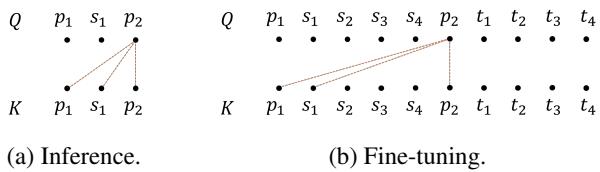
As shown in Figure 1 above:
- (a) Inference: During real-time usage, the query \(p_2\) (a prompt part) only has access to previous tokens \(p_1\) and \(s_1\).
- (b) Fine-tuning with SimulMask: Even though the full source sequence (\(s_1\) to \(s_4\)) is available during training, the model is forced (via the dotted lines) to attend only to the tokens available at that specific moment in time (\(p_1\) and \(s_1\)).
This eliminates the mismatch between training and testing. The model learns to translate based on the exact partial context it will encounter in the real world.
The Mechanism: Constructing the Mask
How is this achieved technically? By manipulating the self-attention mechanism of the Transformer.
The standard attention mechanism in Transformers allows tokens to “look at” other tokens to gather context. This is governed by the equation:
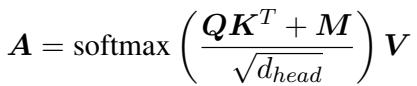
Here, \(M\) is the attention mask. In a standard LLM, \(M\) is a Causal Mask, which creates a triangular pattern preventing the model from looking at future tokens (you can’t predict word 5 by looking at word 6).
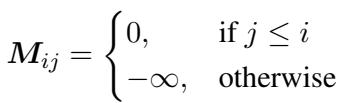
SimulMask takes this a step further. It modifies the mask to also block out specific source tokens based on the wait-k policy.
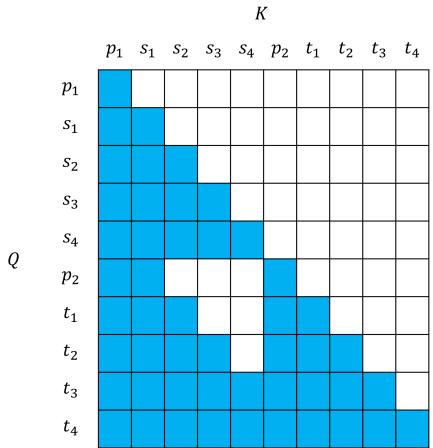
Figure 2 illustrates this mask visually:
- The Blue squares represent allowed attention.
- The White squares represent masked (blocked) attention.
- Notice the “staircase” effect on the left side. As the model moves through the target sequence (\(t_1, t_2...\)), it is gradually allowed to see more of the source sequence (\(s_1, s_2...\)).
This forces the LLM to learn the SimulMT policy directly within its weights, rather than relying on a complex prompt to guide it.
Solving the Position Problem: Modified ALiBi
There is one major technical hurdle with masking: Position Embeddings.
LLMs need to know the order of words. Many modern LLMs (like Falcon) use ALiBi (Attention with Linear Biases). ALiBi encodes position by adding a penalty to the attention score based on the distance between two tokens.

The problem is that SimulMask removes chunks of attention. If you simply mask out tokens, ALiBi sees a “gap” in the sequence, confusing the model about how far away the source tokens actually are.
To fix this, the authors introduce a Modified ALiBi.
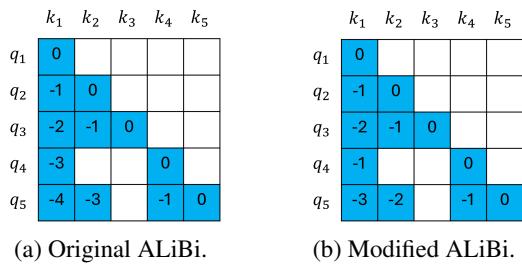
In Figure 3:
- (a) Original ALiBi: Notice how the masking (white space) creates a disruption in the relative distance scores.
- (b) Modified ALiBi: The researchers dynamically adjust the bias values. If a token is masked out, the “distance” counter is paused. This ensures that the model perceives the visible tokens as being contiguous, preserving the correct positional relationships even when parts of the sentence are hidden.
Experimental Results
The researchers tested SimulMask using the Falcon-1.3B LLM on the IWSLT 2017 dataset, covering 5 different language pairs (English to French, Dutch, Italian, Romanian, and German).
Translation Quality vs. Latency
The primary metric for success in SimulMT is the trade-off between Quality (measured by BLEU score, higher is better) and Latency (measured by LAAL, lower is better).
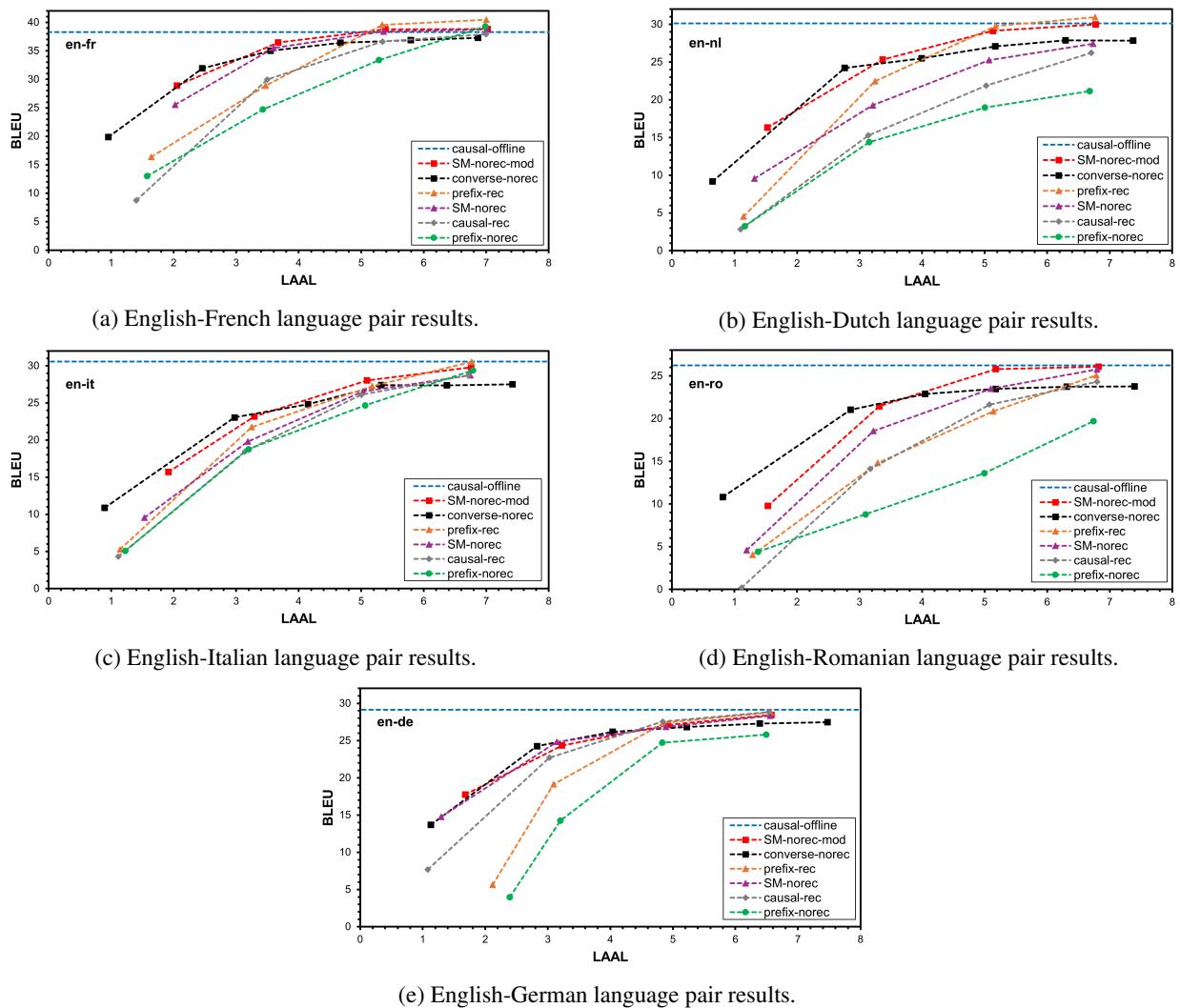
Figure 4 presents these results. Here is how to read these graphs:
- The X-axis is Latency (Lag).
- The Y-axis is Quality (BLEU).
- The ideal model would be in the top-left corner (high quality, low lag).
The Red Line with Squares (SM-norec-mod) represents SimulMask with the modified ALiBi. In almost every case, it sits higher than the competing methods (Prefix Fine-tuning in orange/green, Conversational Prompting in black). This indicates that for any given amount of delay (latency), SimulMask produces a better translation.
Computational Efficiency
This is where SimulMask truly shines. Because SimulMask allows for proper Key-Value (KV) caching, the model does not need to recompute the entire history for every new word it generates.
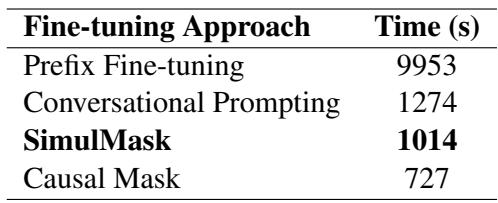
Table 1 shows the training efficiency. Prefix fine-tuning explodes the dataset size, taking nearly 10,000 seconds for an epoch. SimulMask takes only 1,014 seconds—a nearly 10x speedup in training time.
But what about inference (running the model)?
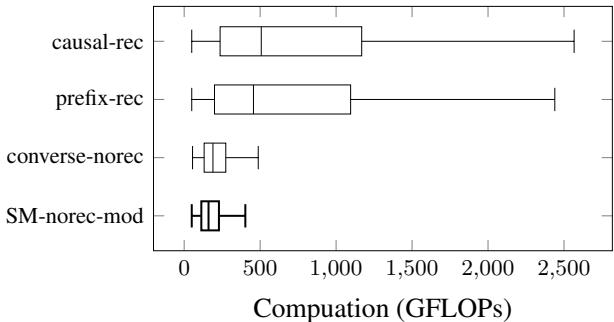
Figure 5 visualizes the computational cost in GFLOPs (billions of floating-point operations).
- Top 2 bars: Existing methods (causal-rec, prefix-rec) require massive computation because they force re-computation of the cache.
- Bottom bar: SimulMask (
SM-norec-mod) is tiny by comparison. It is drastically more efficient because it simply retrieves previous states from memory.
The Cost of Recomputing
Why is the difference so huge? Figure 6 breaks down the cost.
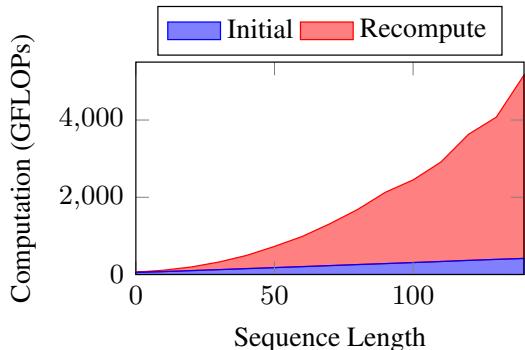
The Red Area shows the “waste”—the computational cost of re-processing words the model has already translated. In prompting optimization methods, this waste grows linearly with the sentence length. SimulMask eliminates this red area entirely, incurring only the Blue Area (Initial) costs.
Conclusion
The paper “Simultaneous Masking, Not Prompting Optimization” marks a significant step forward in applying Large Language Models to real-time translation.
By moving away from “prompt engineering” and instead modifying the underlying attention mechanism during fine-tuning, the researchers achieved three major wins:
- High Accuracy: Matching or beating state-of-the-art translation quality.
- Low Latency: Maintaining the speed required for simultaneous translation.
- Massive Efficiency: Drastically reducing the computational power required for both training and running the model.
This approach effectively turns a standard LLM into a specialized simultaneous translator without breaking its fundamental architecture. As we look toward a future where language barriers are broken in real-time, techniques like SimulMask will likely be the engine under the hood.