](https://deep-paper.org/en/paper/2406.11130/images/cover.png)
Introduction
Imagine you are building an AI to analyze customer reviews for a restaurant. You receive the feedback: “The steak was incredible, but the service was agonizingly slow.”
If you use standard sentiment analysis, the model might just output “Mixed” or “Neutral.” That isn’t very helpful. You need to know specifically that the food was positive and the service was negative. This is the domain of Aspect-Based Sentiment Analysis (ABSA).
In recent years, the field has moved toward generative approaches, where models like T5 write out the sentiment analysis as a structured sentence. However, there is a catch. The order in which the model generates these insights matters. Should it identify the aspect (“steak”) first, or the sentiment (“positive”) first?
Existing methods usually fall into two traps: they either stick to one rigid order (which misses nuance) or they try every possible order and vote on the best result (which is incredibly slow and computationally expensive).
In this post, we are diving deep into a new research paper: “Dynamical Order Template Prediction for Generative Aspect-Based Sentiment Analysis.” The researchers propose a clever solution called the Dynamic Order Template (DOT) method. Instead of guessing blindly or trying everything, their model dynamically decides how many “views” (perspectives) are needed to analyze a specific sentence. The result? State-of-the-art accuracy with a fraction of the computational cost.
Background: The Quadruple Problem
To understand the innovation of this paper, we first need to understand the task at hand. Modern ABSA aims to extract “sentiment quadruples.” For any given opinion, the model must identify four elements:
- Aspect (A): The specific target (e.g., “steak”).
- Category (C): The general category (e.g., “food quality”).
- Opinion (O): The words used to express the sentiment (e.g., “incredible”).
- Sentiment (S): The polarity (e.g., “positive”).
Generative models tackle this by treating the extraction as a text generation problem. They take the review sentence as input and are trained to output a formatted string, such as:
[Category] is [Sentiment] because [Aspect] is [Opinion]
The Dependency Issue
Here is where it gets tricky. Generative models like Transformers are autoregressive. This means they generate one word at a time, and every word they generate relies on what came before it.
If the model is forced to generate the Sentiment before the Aspect, the prediction of the Aspect is conditioned on that Sentiment. If you flip the order, the dependencies change. A static, fixed order (Single-View) often fails to capture complex dependencies between these four elements.
The Multi-View Solution (and its Flaws)
To solve this, previous researchers developed Multi-View Prompting (MvP). The idea is simple: brute force. The model generates the quadruple using many different templates (orders):
- Aspect first…
- Sentiment first…
- Opinion first… …and so on.
Then, it aggregates the results (often using voting) to find the most likely answer. While this improves accuracy, it is extremely inefficient. If a sentence is simple (“The pizza is good”), generating 15 different views is a waste of computing power.
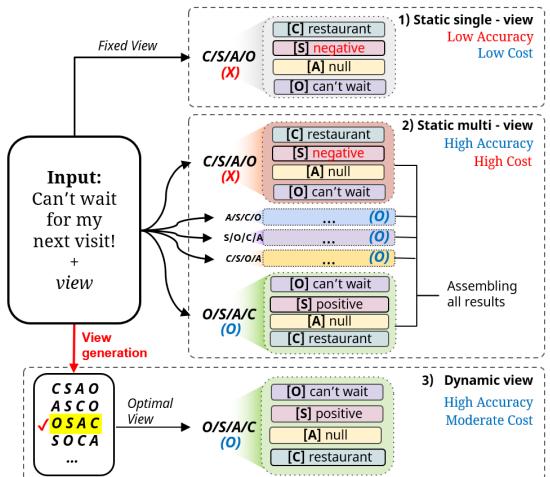
As shown in Figure 1, the “Static Single-View” (top) is fast but inaccurate. The “Static Multi-View” (middle) is accurate but computationally heavy. The paper’s proposed Dynamic View (bottom) finds the sweet spot: it determines that for a specific sentence, it might only need one specific view to get the right answer.
The Core Method: Dynamic Order Templates (DOT)
The researchers propose decomposing the difficult problem of “generating accurate quadruples” into two easier sub-tasks:
- Stage 1: Determine the complexity of the sentence (how many tuples are there?) and generate an initial template.
- Stage 2: Use that template to generate the detailed sentiment quadruples.
This divide-and-conquer strategy allows the model to exert only as much computational effort as is necessary for the specific input instance.
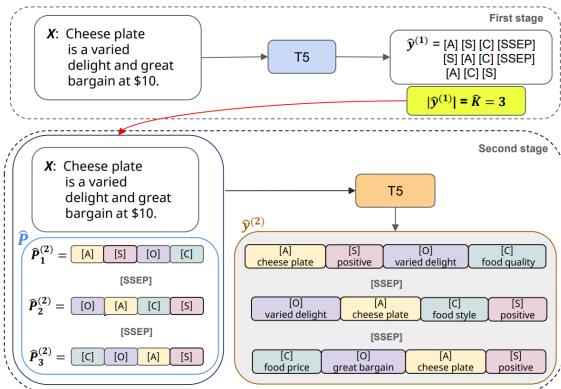
Figure 2 illustrates this workflow. Let’s break down the mechanics of each stage.
Stage 1: Generating the Order Template
The primary goal of the first stage is not to find the final answer, but to structure the problem. The model (a T5 transformer) reads the input sentence and predicts the number of sentiment tuples (\(K\)) present.
Why is this important? Because the number of tuples dictates how many “views” the model likely needs to resolve the sentiment accurately. If there are three distinct opinions in a sentence, the model likely needs to look at the sentence from different angles (orders) to capture them all.
Entropy-Based Ranking
How does the system decide which templates (views) to use? It uses Entropy.
Entropy is a measure of uncertainty. In the context of a language model, low entropy means the model is very confident in its prediction; high entropy means it is confused. The researchers calculate the entropy for different permutations of the elements (Aspect, Category, Sentiment) using the formula below:

Here, \(P(v|x_i)\) is the probability of a specific view \(v\) given the input \(x_i\).
The system ranks all possible template orders by their entropy scores. It assumes that the views with the lowest entropy (highest confidence) are the best ones to use.
In Stage 1, the model predicts a sequence of templates corresponding to the number of tuples it detects. The target output \(y^{(1)}\) looks like a chain of templates separated by special [SSEP] tokens:

By predicting this sequence, the model is essentially planning its work for the next stage. It says, “I see three opinions here, so I will prepare three specific templates to extract them.”
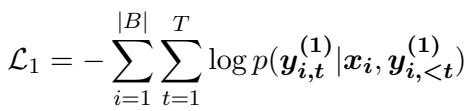
The loss function for this stage is standard negative log-likelihood, training the model to become excellent at estimating the structure of the sentiment in the text:
Stage 2: Sentiment Tuple Generation
Once Stage 1 has determined how many tuples exist and which templates to use, Stage 2 performs the extraction.
This stage uses a second T5 model. It takes the original sentence plus the order templates generated in Stage 1 as its input prompt.
Because Stage 1 has already done the heavy lifting of determining the structure, Stage 2 focuses on filling in the blanks. It generates the full quadruples, including the Opinion (O) term, which was excluded in Stage 1 to simplify the initial estimation.
The target output for Stage 2 interleaves the template markers with the actual text from the review:

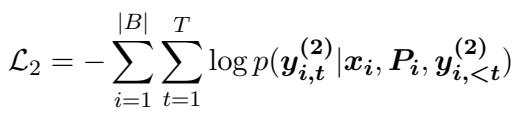
Ideally, if Stage 1 predicted there are two tuples, Stage 2 will output exactly two sentiment quadruples using the optimized orders provided. The training loss for this stage ensures the model adheres to the constraints provided by the prompt:
Why This Approach Works
The genius of DOT lies in resource allocation.
In previous Multi-View methods (MvP), a hyperparameter \(k\) was set globally. You might tell the model, “Always use 15 views.”
- For a simple sentence, you waste 14 inference passes.
- For a highly complex sentence, 15 might be enough, but you paid the cost on every other simple sentence in the dataset.
DOT treats \(K\) (the number of views) as an instance-level variable.
- Simple Sentence: “The screen is bright.” \(\rightarrow\) DOT predicts \(K=1\). It runs 1 view. Fast.
- Complex Sentence: “The screen is bright, but the battery dies fast, and the keyboard is mushy.” \(\rightarrow\) DOT predicts \(K=3\). It runs 3 views. Thorough.
This adaptability allows DOT to retain the high accuracy of ensemble methods while keeping inference time low.
Experimental Results
The researchers tested DOT on standard benchmarks: ASQP (Aspect Sentiment Quad Prediction) and ACOS (Aspect-Category-Opinion-Sentiment). They also used the MEMD dataset to test transferability across domains.
Accuracy vs. Baselines
Table 1 in the paper (not shown here, but summarized) highlights that DOT achieves state-of-the-art F1 scores on most benchmarks. It outperforms “Static Single-View” models significantly and edges out “Static Multi-View” (MvP) models.
Crucially, it beats MvP while being much “smarter” about how it works. MvP forces diversity by random seeding or fixed permutations; DOT learns which permutations are actually useful for the specific input.
The Efficiency Breakthrough
The most compelling result is the inference time. Because DOT usually predicts a low \(K\) for most real-world sentences (which tend to be short), it rarely triggers the computationally expensive multi-view behavior unless necessary.
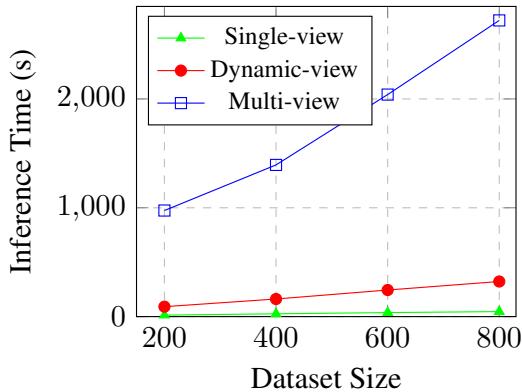
Figure 7 shows the inference time (y-axis) as the dataset size increases (x-axis).
- Blue Line (Multi-view): The time skyrockets. It is extremely slow because it processes every single data point dozens of times.
- Red Line (Dynamic-view / DOT): It hugs the bottom of the graph. It is nearly as fast as the Single-view approach (Green).
This graph proves that you do not need to sacrifice speed to get the accuracy benefits of multi-view prompting.
Scaling with Model Size
Does this method hold up if we use larger underlying models (like T5-Large vs. T5-Small)?
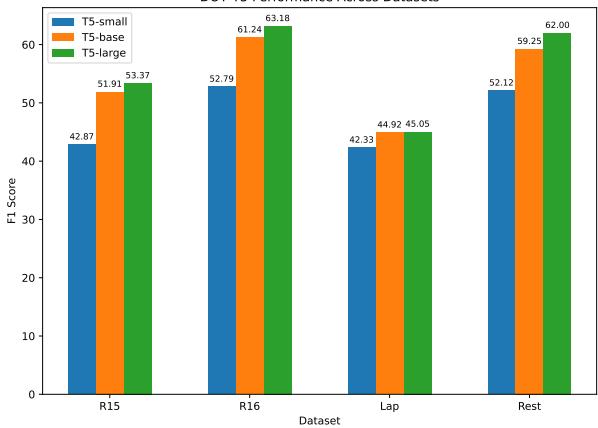
Figure 3 confirms that the “Scaling Laws” apply here. As the backbone model gets larger (from Small to Base to Large), the F1 score improves across all datasets (R15, R16, Lap, Rest). This suggests that DOT is a robust method that can scale up with better foundational models.
Case Study Analysis
To make this concrete, let’s look at how the model handles different types of sentences.

Figure 5 visualizes three scenarios:
- Case 1 (Efficiency): A simple sentence about a Mexican place. The model correctly identifies it only needs one view. It generates the correct tuple immediately.
- Case 2 (Correction): A sentence with implicit sentiment (“crowd is mixed”). The model identifies the nuance better than a static template might, correctly labeling the “mixed” crowd as a neutral sentiment regarding ambience.
- Case 3 (Complex): A long sentence with multiple clauses (“good tasting,” “large portions,” “creative sushi”). The model realizes this is complex and generates multiple tuples. While it gets most right, it also shows the difficulty of the task—it hallucinates a “negative” tuple about fish smell that wasn’t in the ground truth, likely due to the complexity of the sentence structure.
Detailed Analysis and Ablations
The researchers performed an ablation study to see which parts of their complicated two-stage engine were actually doing the work.
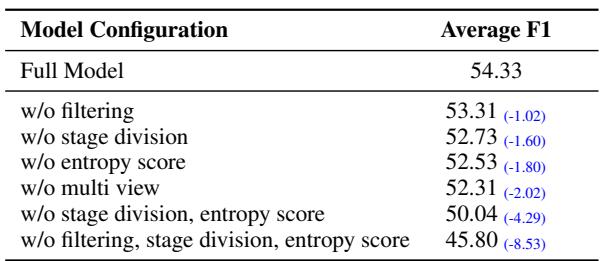
Table 3 shows the impact of removing features:
- w/o Stage Division: Merging everything into one model drops performance significantly. This validates the “Divide and Conquer” strategy.
- w/o Entropy Score: If you pick views randomly instead of using the entropy-based ranking, performance drops. This confirms that some “views” (orders) are inherently better than others for specific data.
- w/o Multi-view: If you force DOT to always use just one view (effectively turning it into a single-view model), performance drops.
Handling Data Irregularities
One interesting practical detail in the paper is how they handled “Stop Words.” Real-world datasets are messy. Sometimes the sentiment tuple includes words like “the” or “is,” and sometimes it doesn’t.
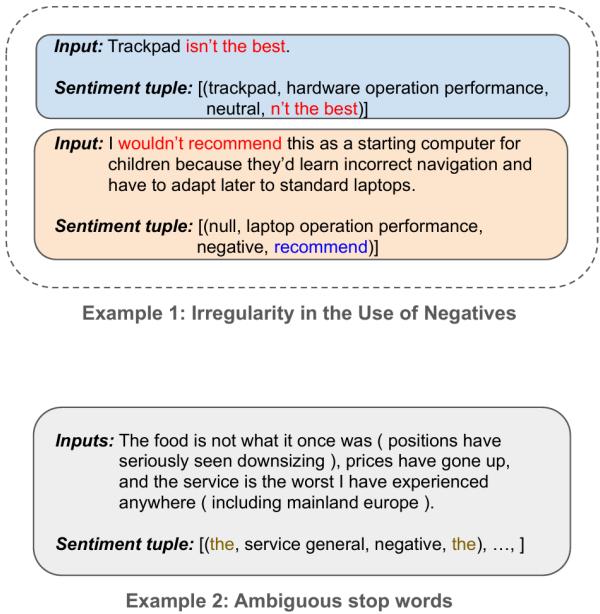
Figure 4 highlights this issue. In Example 1, the negation “n’t” is crucial. In Example 2, the tuple includes “the,” which is noise. The researchers implemented a filtering step to clean these irregularities, which further boosted the model’s reliability.
Conclusion
The Dynamic Order Template (DOT) method represents a mature step forward for Aspect-Based Sentiment Analysis. It acknowledges a fundamental truth about language processing: not all sentences are created equal.
Treating a complex paragraph and a simple three-word review with the same computational rigor is inefficient. By introducing a “Scout” (Stage 1) to assess the landscape and an “Executor” (Stage 2) to perform the extraction using optimized views, DOT achieves the best of both worlds.
For students and practitioners in NLP, this paper offers a valuable lesson in dynamic compute. Instead of building larger models or more complex prompt ensembles, sometimes the best optimization is simply teaching the model when to work hard and when to keep it simple.