](https://deep-paper.org/en/paper/2406.14491/images/cover.png)
The history of Large Language Models (LLMs) over the last few years has been dominated by a specific recipe: take a massive amount of raw text from the internet, train a model to predict the next token (unsupervised learning), and then, at the very end, fine-tune it to follow instructions (supervised learning).
This recipe, popularized by models like GPT-2 and GPT-3, is known as “Vanilla Pre-Training.” It relies on the sheer scale of data. But there is a lingering hypothesis in the AI community: supervised multitask learning—where the model is explicitly told what task to perform—is actually a more efficient way to learn. The problem has always been scaling. We have petabytes of raw web text, but we don’t have petabytes of high-quality, human-labeled instruction-response pairs.
But what if we could manufacture them?
In the paper “Language Models are Supervised Multitask Learners,” researchers from Microsoft Research and Tsinghua University propose a framework called Instruction Pre-Training. By building an “Instruction Synthesizer,” they convert raw text into massive datasets of instruction-response pairs. The results are compelling: models pre-trained this way are drastically more data-efficient and outperform their vanilla counterparts, even allowing small models to rival giants.
In this deep dive, we will explore how Instruction Pre-Training works, the architecture behind the synthesizer, and what this means for the future of efficient AI training.
The Bottleneck of Vanilla Pre-Training
To understand why this paper is significant, we first need to look at the current standard.
Unsupervised vs. Supervised Multitask Learning
In Vanilla Pre-Training, a model reads raw corpora (like Common Crawl or Wikipedia) and learns probability distributions of words. It learns knowledge and grammar, but it doesn’t inherently learn tasks until it encounters them by chance in the text.
In contrast, Instruction Tuning (a form of supervised multitask learning) explicitly presents the model with a task (“Translate this,” “Summarize this”) and a target output. This has been shown to significantly boost generalization. However, this is usually saved for the post-training phase because human-annotated instruction data is expensive and scarce.
The researchers propose bridging this gap. Instead of waiting for the fine-tuning stage, they want to inject supervised learning signals right from the start.
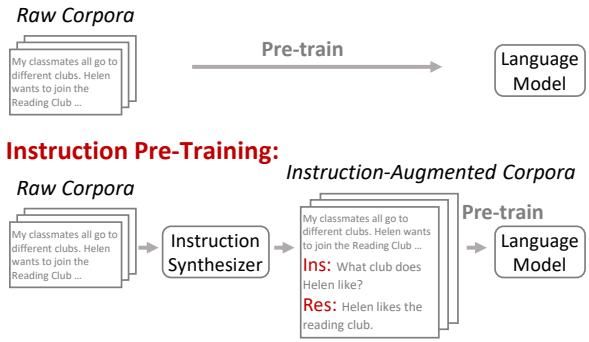
As shown in Figure 1 above, the difference is in the data processing pipeline.
- Top (Vanilla): Raw text goes straight into the model.
- Bottom (Instruction Pre-Training): Raw text passes through an Instruction Synthesizer first. This synthesizer augments the text with Q&A pairs (Instructions and Responses) derived from the content. The model then trains on this richer, augmented dataset.
The Core Method: Instruction Pre-Training
The heart of this paper is the Instruction Synthesizer. You cannot simply ask a human to write billions of instructions for billions of web pages. You need an automated agent capable of reading a piece of text and generating relevant, high-quality tasks based on it.
1. Building the Instruction Synthesizer
The researchers did not use a closed-source giant like GPT-4 for this. Instead, they fine-tuned an open-source model (Mistral-7B) to become a dedicated instruction generator.
To train this synthesizer, they curated a massive collection of existing datasets that involve context-based tasks. These included:
- Reading Comprehension: SQuAD, HotpotQA.
- Reasoning: RACE, DROP.
- Information Extraction: Various entity recognition datasets.
The goal was to teach the synthesizer the relationship between a context (raw text) and a task (instruction/response).
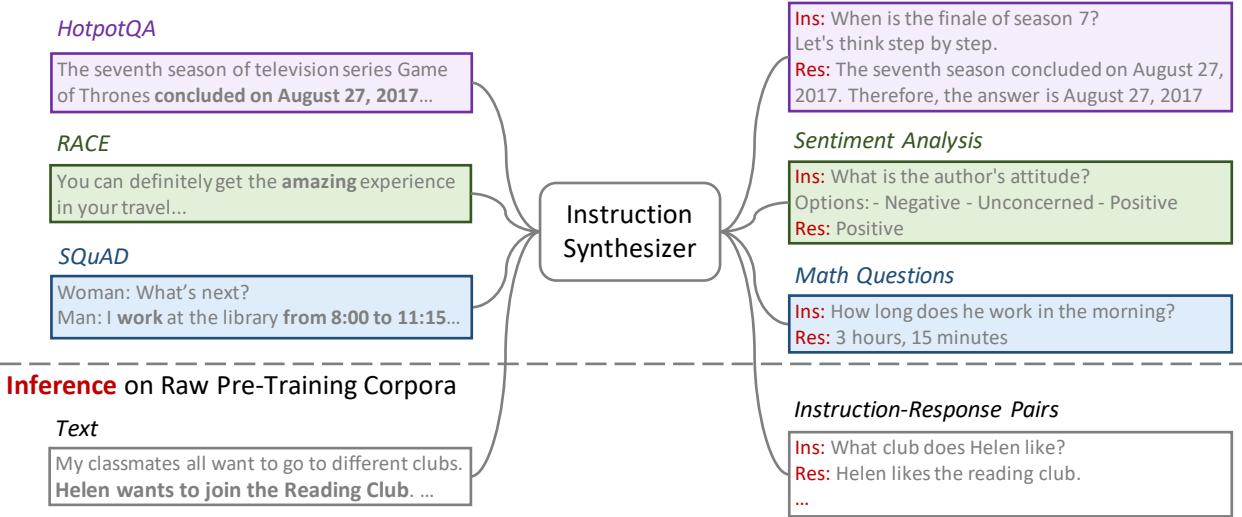
Figure 2 illustrates this workflow. On the right, we see the “Multitask Tuning” phase. The synthesizer is trained on diverse examples where it sees a text and must predict the corresponding instruction and response.
Once trained, the synthesizer enters the “Inference” phase (left side of Figure 2). It takes any random raw text from the pre-training corpus—text it has never seen before—and hallucinates (in a controlled, positive way) plausible instructions and responses relevant to that text. For example, if it reads a news snippet about a club meeting, it might generate the question: “What club does Helen like?” and the answer “Helen likes reading club.”
2. The Multi-Round Inference Strategy
A single instruction-response pair per document isn’t enough to simulate complex learning. The researchers employed a multi-round inference strategy to create few-shot examples.
In language modeling, “few-shot” refers to providing the model with several examples of a task before asking it to perform one. This helps the model understand the pattern. To bake this into the pre-training data, the synthesizer generates a sequence of related tasks.
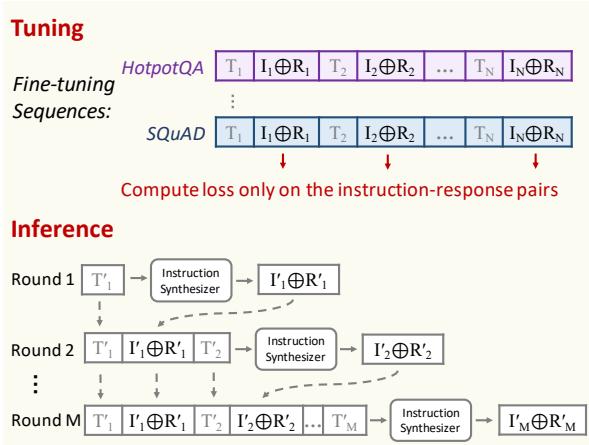
Figure 3 details this clever construction:
- Tuning (Top): The synthesizer is trained on sequences containing multiple examples (\(T_N, I_N, R_N\)) from the same dataset. This teaches it to maintain a consistent format.
- Inference (Middle): When processing raw pre-training data, the synthesizer runs in loops (Round 1 to Round M). The output of Round 1 becomes part of the input for Round 2. This allows the synthesizer to generate new instructions that are contextually aware of the previous ones.
- LM Pre-Training (Bottom): The final data fed to the main Language Model is a concatenation of the raw text plus all the synthesized instruction-response pairs.
3. Scaling Up
Using this method, the authors generated 200 million instruction-response pairs covering over 40 task categories. They applied this to two scenarios:
- Pre-training from Scratch: Training a model from a random initialization.
- Continual Pre-training: Taking an existing strong model (Llama3-8B) and adapting it to specific domains (Biomedicine and Finance).
Experimental Results
The paper provides rigorous experiments to prove that this synthetic data isn’t just noise, but a high-quality learning signal.
Scenario 1: General Pre-Training from Scratch
The researchers trained two models (500M and 1.3B parameters) on 100 Billion tokens. They compared three approaches:
- Vanilla PT: Standard pre-training on raw text.
- Mix PT: Mixing raw text with the tuning data used for the synthesizer (but not the synthesized data itself).
- Instruct PT (Ours): The proposed method using the augmented corpora.
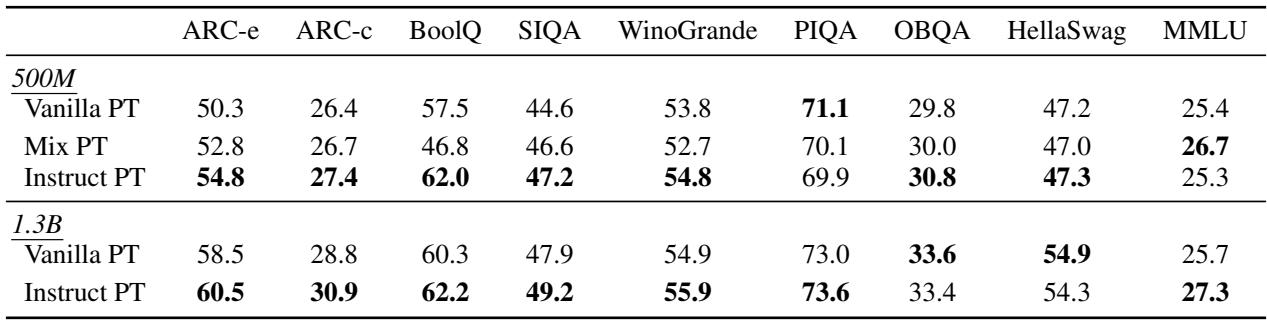
Table 1 shows the results across standard benchmarks like ARC (Reasoning), BoolQ (Question Answering), and MMLU (General Knowledge).
- Performance Jump: The “Instruct PT” models consistently outperform the Vanilla PT models. For the 1.3B parameter model, the average score jumps from 54.9 to 54.3? No, look closely at the table—on MMLU, it jumps from 25.7 to 27.3, and on ARC-c (Challenge), it jumps from 28.8 to 30.9.
- Data Efficiency: Perhaps the most shocking result is found when comparing these models to other open-source giants.
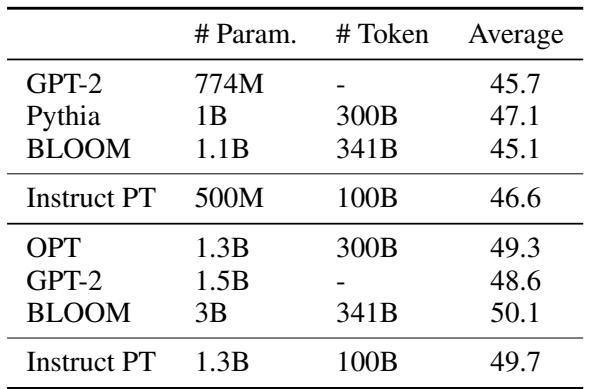
Table 2 highlights the efficiency. The Instruct PT 500M model, trained on only 100B tokens, achieves an average score (46.6) comparable to the Pythia-1B model (47.1) which was trained on 300B tokens. Roughly speaking, Instruction Pre-Training allowed a model half the size to perform nearly as well using one-third of the data.
Better Preparation for Instruction Tuning
One of the key arguments for this method is that it prepares the model for the final stage of training. Because the model has seen instructions during pre-training, it adapts much faster when explicitly instruction-tuned later.
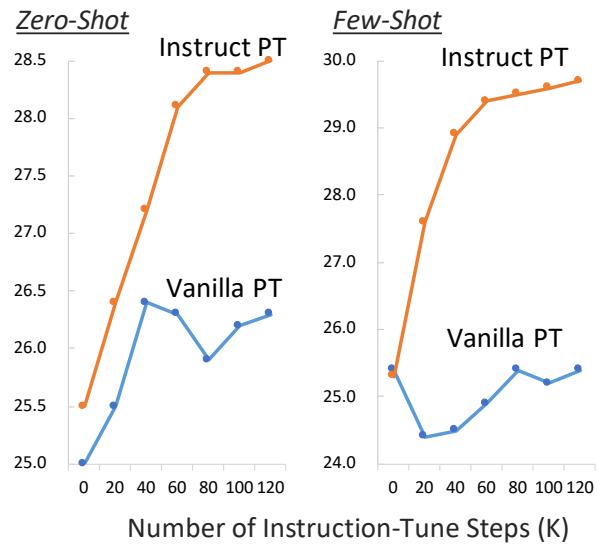
Figure 4 plots the performance on MMLU as the models undergo further instruction tuning. The Orange line (Instruct PT) starts higher and maintains a lead over the Blue line (Vanilla PT). The gap suggests that Instruction Pre-Training provides a better initialization point—the model already “knows” what an instruction looks like.
Scenario 2: Domain-Adaptive Continual Pre-Training
The second set of experiments focused on taking a powerful existing model, Llama3-8B, and making it an expert in Finance and Biomedicine.
The researchers converted raw corpora (PubMed abstracts and Financial news) into instruction-augmented versions.
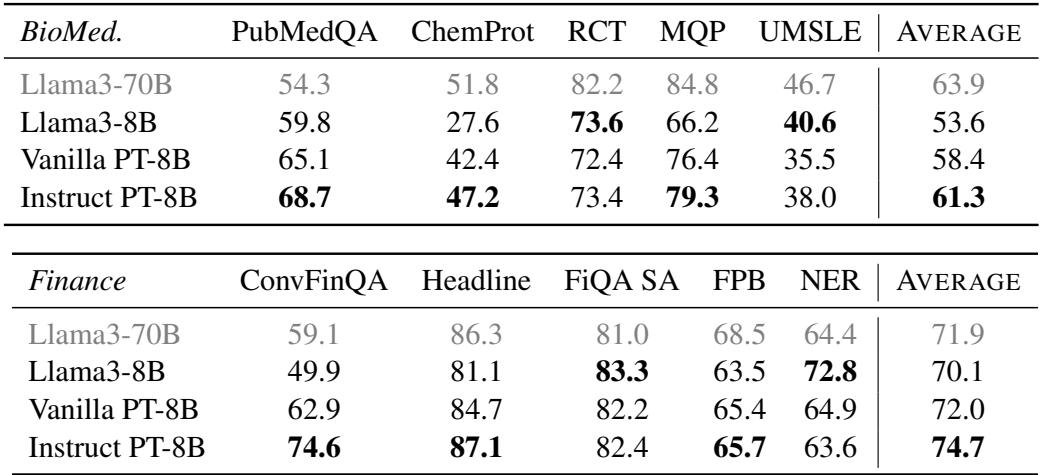
Table 3 displays the results. The comparison here is fascinating:
- Llama3-8B (Base): The starting point.
- Vanilla PT-8B: Llama3 trained further on raw domain text.
- Instruct PT-8B: Llama3 trained further on instruction-augmented domain text.
- Llama3-70B: The much larger teacher model (Reference).
In the Biomedicine domain (Top), Instruct PT-8B scores 61.3, beating Vanilla PT (58.4) and dangerously approaching the massive 70B parameter model (63.9). In the Finance domain (Bottom), Instruct PT-8B actually outperforms the Llama3-70B model (74.7 vs 71.9) on average. This suggests that high-quality instruction augmentation can allow smaller models to punch significantly above their weight class in specialized domains.
Analysis: Why Does It Work?
It is reasonable to ask: isn’t synthetic data prone to errors? If the synthesizer hallucinates incorrect facts, won’t that poison the model?
Quality of the Synthesizer
The authors evaluated their synthesizer against the base Mistral model. They found that fine-tuning significantly improved the ability to generate relevant questions and correct answers.
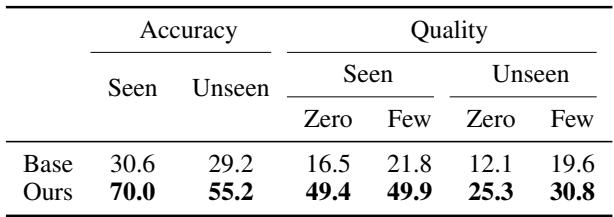
Table 5 shows that the “Ours” (Fine-tuned Synthesizer) achieves 70% accuracy on seen datasets and 55.2% on unseen datasets, vastly outperforming the base model. While 70% isn’t perfect, it appears to be sufficient to provide a strong learning signal.
Generalization Helpfulness
To verify that the synthetic pairs actually help, the researchers tested an LM’s performance when these pairs were included in the context window.
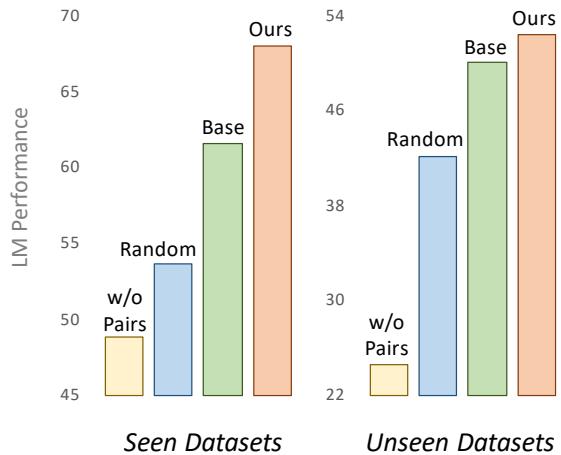
Figure 5 shows that when the model is prompted with the synthesized pairs (Orange bar), it performs better on downstream tasks compared to random pairs (Blue) or no pairs (Yellow). This confirms that the synthesizer is generating relevant and helpful context, not just random noise.
Diversity of Tasks
Finally, for multitask learning to work, the tasks must be diverse. You don’t want a model that only knows how to summarize.

Figure 6 breaks down the types of tasks generated by the synthesizer. It’s not just summarization (11%); it includes Commonsense Reasoning (23%), Coreference Resolution (16%), and even Math (7%). This diversity prevents the model from overfitting to a single type of interaction and builds a robust general-purpose understanding.
Conclusion and Implications
The paper “Language Models are Supervised Multitask Learners” challenges the entrenched separation between pre-training and fine-tuning. By introducing Instruction Pre-Training, the authors demonstrate that we don’t have to wait until the end of the pipeline to teach models how to follow instructions.
Key takeaways for students and practitioners:
- Synthetic Data is Viable for Pre-Training: We can augment raw corpora with machine-generated instructions to scale supervised learning.
- Efficiency: This method allows smaller models to reach the performance levels of larger models trained on much more data.
- Open Source Synergy: The entire pipeline relies on open-source models (Mistral, Llama), making it accessible for researchers without proprietary budgets.
As we look toward the future of Large Language Models, the distinction between “learning knowledge” (pre-training) and “learning to behave” (instruction tuning) is blurring. Instruction Pre-Training suggests that the best way forward might be to teach the model how to behave while it learns what it knows.