](https://deep-paper.org/en/paper/2406.14952/images/cover.png)
Introduction
In the last few years, we have witnessed a seismic shift in how humans interact with machines. We aren’t just asking Siri for the weather anymore; we are venting to ChatGPT about our stressful days, asking Claude for relationship advice, and seeking comfort from Llama when we feel isolated. This specific domain is known as Emotional Support Conversation (ESC).
The promise of ESC is immense. In a world where mental health resources are often scarce or expensive, an always-available AI companion that can reduce stress and offer guidance sounds like a utopian dream. But there is a massive hurdle standing between us and that reality: Evaluation.
How do we actually know if an AI is good at providing emotional support?
If you ask a chatbot for code, you can run the code to see if it works. If you ask for a summary of a history book, you can fact-check it. But if you tell an AI, “I feel like a failure,” and it responds, “I am sorry to hear that, have you tried making a to-do list?”, is that a good response? It might be grammatically correct, but is it empathetic? Is it helpful? Or is it just a robotic platitude that makes the user feel worse?
This is the problem tackled by a fascinating research paper titled “ESC-Eval: Evaluating Emotion Support Conversations in Large Language Models.” The researchers argue that our current methods for testing AI therapists are fundamentally broken. To fix this, they built a comprehensive framework that uses “Role-Playing Agents”—AI actors trained to simulate distressed humans—to put therapy bots to the test.
In this deep dive, we will explore how ESC-Eval works, why it changes the game for mental health AI, and what the results tell us about the current state of “artificial empathy.”
The Problem with Current Evaluations
To understand the innovation of ESC-Eval, we first need to look at why the old methods were failing. Generally, researchers have used two methods to grade conversational AI: Automatic Evaluation and Human Evaluation.
The Failure of Static Metrics
In traditional Natural Language Processing (NLP), we use metrics like BLEU or ROUGE. These work by comparing the AI’s generated sentence to a “Ground Truth” sentence written by a human in a dataset.
Imagine a dataset where a human therapist responded to a sad patient with: “It sounds like you are carrying a heavy burden.” If the AI responds with: “That must be incredibly tough for you to handle,” a metric like BLEU might give it a low score because the words don’t match the ground truth. Yet, semantically and emotionally, the response is excellent.
Furthermore, these metrics rely on a static history. The AI reads a conversation log and predicts the next sentence. It doesn’t actually have to hold a conversation. It never faces the consequences of a bad piece of advice given three turns ago.
The Cost of Human Evaluation
The alternative is having real humans chat with the AI and rate it. While accurate, this is slow, incredibly expensive, and difficult to scale. You cannot easily test 14 different Large Language Models (LLMs) across thousands of scenarios using human volunteers without a massive budget.
The Role-Playing Solution
The authors of ESC-Eval propose a third way: Role-Playing Evaluation.
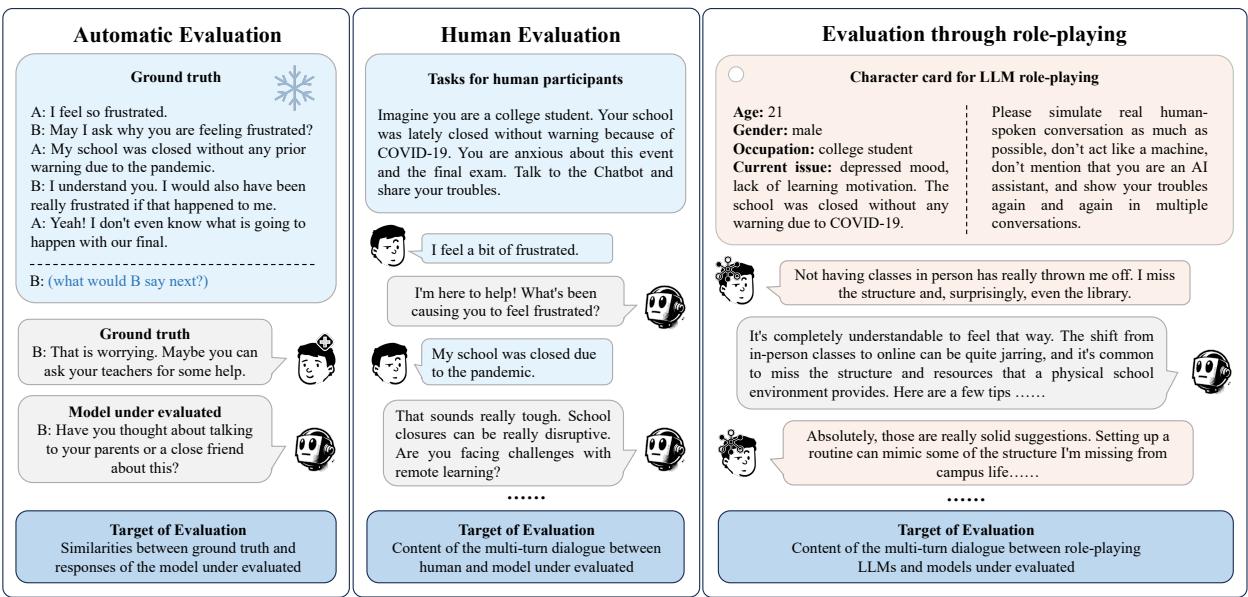
As shown in Figure 1, the proposed framework shifts the paradigm.
- Left: Automatic evaluation just checks text similarity (ineffective for empathy).
- Middle: Human evaluation creates real dialogue but is costly.
- Right (ESC-Eval): The framework uses a Role-Playing LLM to act as the user. This “Actor AI” simulates a specific character (e.g., a 21-year-old student with depression) and talks to the “Therapist AI” (the model being tested).
This allows for the generation of creating complex, multi-turn dialogues that can be analyzed at scale.
The ESC-Eval Framework
The ESC-Eval framework is a pipeline designed to automate the stress-testing of AI models. It isn’t enough to just tell GPT-4 “act sad.” To get a rigorous evaluation, the researchers needed to build a system that mimics the diversity of real human problems.
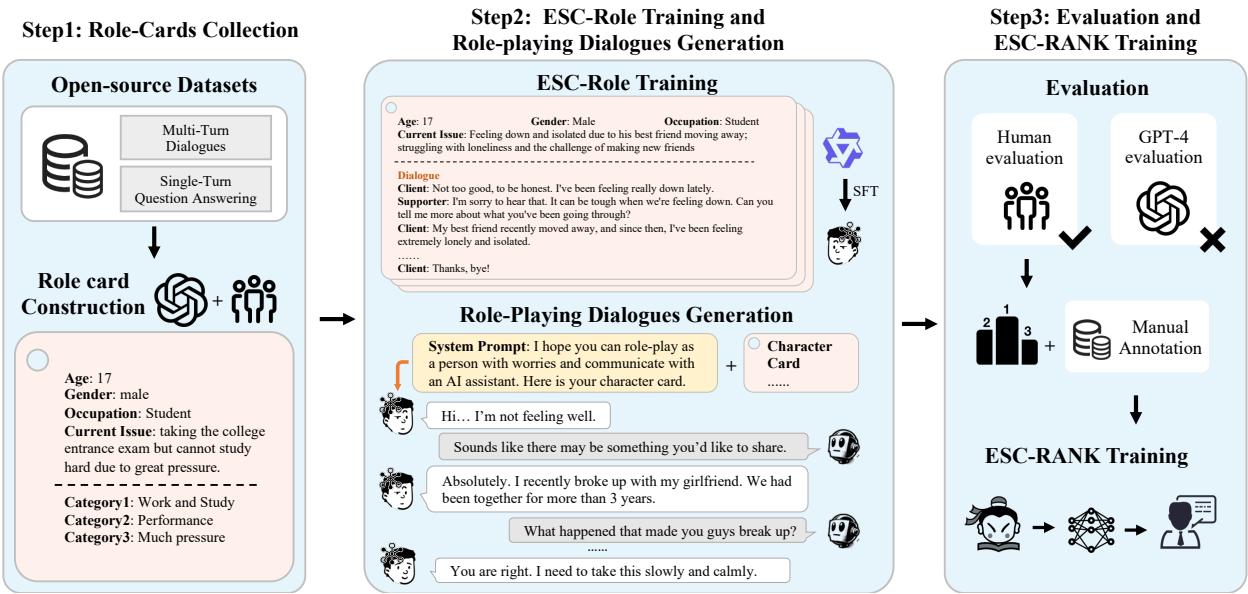
Figure 2 outlines the three critical stages of the ESC-Eval process:
- Role-Cards Collection: Gathering realistic profiles of people with problems.
- ESC-Role Training: creating a specialized AI agent that knows how to act distressed.
- Evaluation & ESC-RANK: Assessing the conversations.
Let’s break these down step-by-step.
Step 1: Constructing “Role Cards”
If you want to test a therapist, you need patients. But not just any patients—you need a diverse range of demographics, problems, and emotional states. The researchers didn’t want to synthesize these from thin air (which might lead to stereotypes), so they extracted them from existing high-quality datasets involving psychological counseling and emotional conversations.
They utilized seven datasets, including sources like Reddit posts (from mental health subreddits) and transcribed counseling sessions.
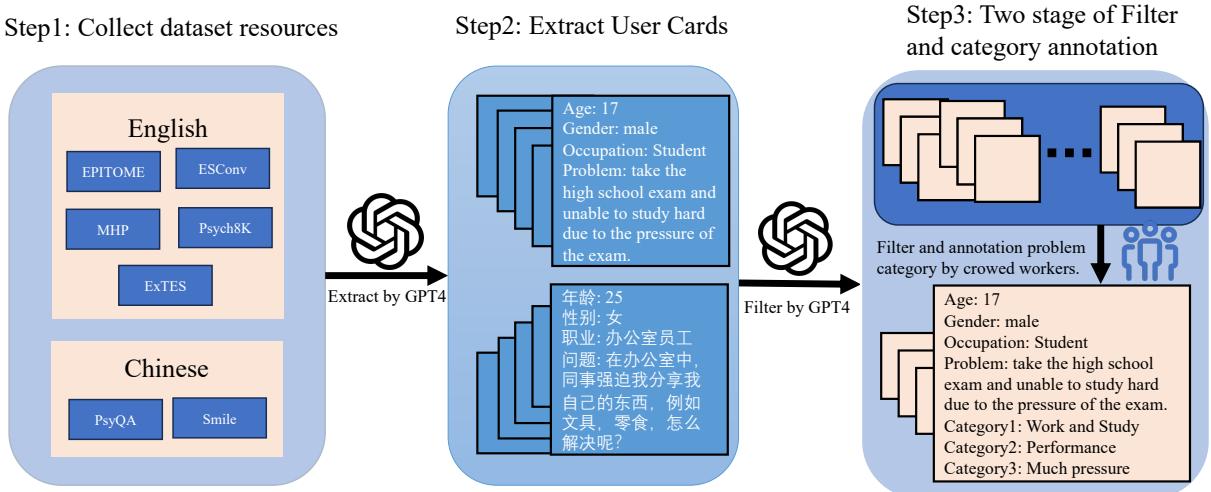
As illustrated in Figure 4, the process was meticulous:
- Raw Data: They took raw text from forums and dialogues.
- Extraction via GPT-4: They used GPT-4 to read the raw text and extract a structured “User Card.” This card includes Age, Gender, Occupation, and the specific Problem.
- Filtering: They filtered out low-quality cards (e.g., cards that just listed an emotion like “sad” without a cause).
- Categorization: They organized the cards into a hierarchy of 37 categories, such as “Work and Study,” “Family Issues,” or “Social Anxiety.”
The result was a benchmark of 2,801 diverse role cards.
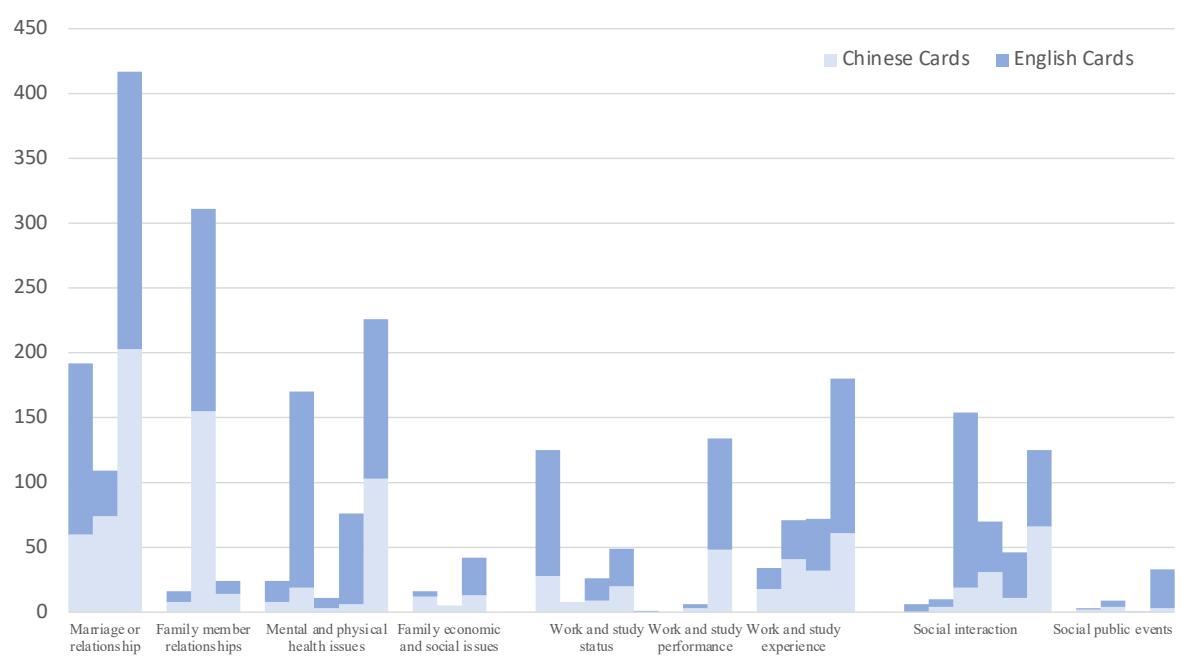
Figure 5 shows the distribution of these cards. You can see a healthy mix of problems ranging from “Marriage” and “Family members” to “Work and Study.” This ensures that when a model is tested, it isn’t just tested on one type of sadness; it has to handle a breakup, a lost job, academic pressure, and family disputes.
Step 2: Training “ESC-Role”—The Method Actor
Here lies the most innovative part of the paper. You might wonder, “Why do we need a special AI to act as the patient? Can’t we just use standard GPT-4?”
The answer is no. Standard LLMs like GPT-4 are trained with Reinforcement Learning from Human Feedback (RLHF) to be helpful, harmless, and honest. They are essentially trained to be polite assistants.
However, a person in mental distress is not always polite, logical, or calm. They might be resistant to advice, emotional, or repetitive. If you use a standard “helpful” AI to play the patient, it tends to accept the therapist’s advice too quickly, resulting in unrealistic, easy conversations.
To solve this, the researchers trained a specialized model called ESC-Role.
- Base Model: Qwen1.5-14B-Chat.
- Training Data: They gathered 3,500 real emotional dialogues and 14,000 role-playing instructions.
- Goal: Fine-tune the model to strictly adhere to a persona and exhibit human-like emotional volatility.
Did it work?
The researchers pitted their ESC-Role agent against GPT-4 and Baichuan (another strong model) to see which one was a better “actor.” They checked metrics like Emotional Congruence (does the emotion fit the story?) and Humanoid (does it sound like a person or a bot?).
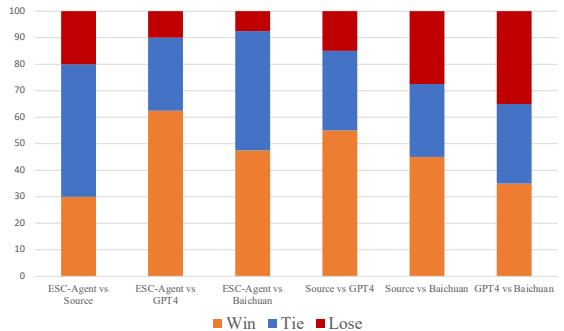
Figure 3 reveals the results. The researchers compared the AI actors against the original human dialogues (“Source”). The bars show how often human judges thought the AI was as realistic as the source data.
- ESC-Agent (The paper’s model) achieved a very high “Win” and “Tie” rate against the source data.
- It significantly outperformed standard GPT-4 and Baichuan in simulating realistic human distress.
This validated that ESC-Role was a reliable “patient” for the experiments.
Step 3: The Evaluation (The Showdown)
With the “Patients” (ESC-Role) ready and the “Case Files” (Role Cards) prepared, the researchers proceeded to test the “Therapists.”
They selected 14 Large Language Models to evaluate. These included:
- General Closed-Source Models: GPT-4, ChatGPT.
- General Open-Source Models: Llama3, Vicuna, Qwen1.5, ChatGLM3.
- Domain-Specific Models: These are models specifically fine-tuned by other researchers for mental health, such as ChatCounselor, SoulChat, and ExTES-LLaMa.
The Metrics
The researchers generated 8,500 interactive dialogues. They then conducted a massive Human Evaluation (hiring real people to read the logs) based on 7 distinct dimensions:
- Fluency: Is the language natural?
- Expression: Is the vocabulary diverse?
- Empathy: Does the model offer emotional comfort and validate feelings?
- Information: Are the suggestions helpful and actionable?
- Skillful: Does it use professional emotional support techniques?
- Humanoid: Does it sound like a human or a robot?
- Overall: A holistic rating.
Experimental Results
The results of this massive face-off provided some surprising insights into the current state of AI.
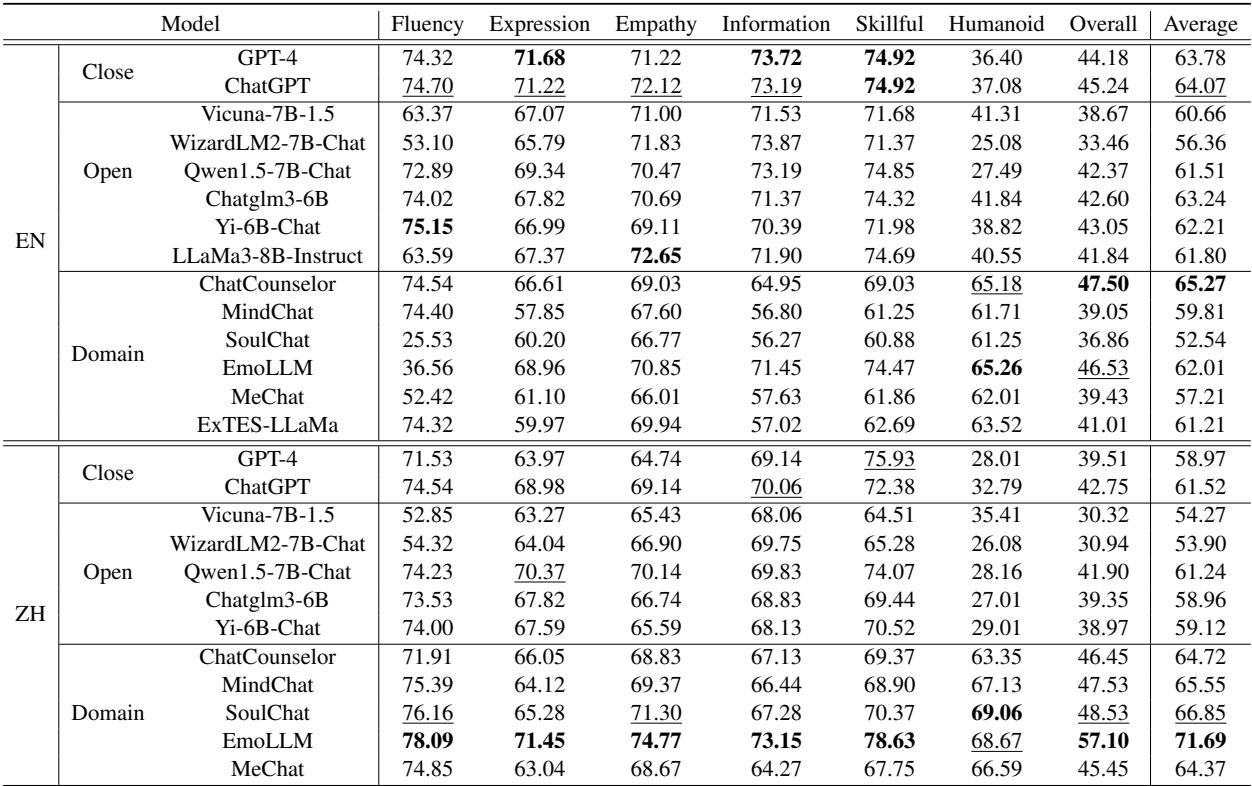
Table 2 presents the human evaluation scores (0-100 scale). Let’s interpret the key takeaways:
1. General vs. Domain-Specific Models
If you look at the English (EN) section, ChatCounselor (a domain-specific model) achieved the highest “Overall” score (47.50), beating GPT-4 (36.40).
Why? Look at the Humanoid column. GPT-4 scores incredibly high on “Skillful” (73.72) and “Information” (73.72), but it often sounds sterile. It gives bullet-point advice like a textbook. ChatCounselor, having been trained on real counseling transcripts, sounds more like a person engaging in a dialogue.
2. The “Robot” Problem of GPT-4
GPT-4 and ChatGPT dominate in Fluency and Information. They are incredibly smart. They know exactly what advice to give. However, in an emotional context, users prefer warmth over raw efficiency. The paper notes that general models often use structured outputs (e.g., “Here are 3 ways to help…”) which ruins the immersion of a supportive chat.
3. The Chinese (ZH) Context
In the Chinese language evaluation, EmoLLM (another domain-specific model) crushed the competition, achieving the highest scores in almost every category, including an impressive Overall score of 57.10 compared to GPT-4’s 28.01. This highlights the importance of cultural and linguistic fine-tuning in mental health.
4. The “Empathy Gap”
Even the best models are hovering around “Overall” scores of 40-50 out of 100. This is a crucial finding. While AI is impressive, it is still far behind human performance. There is a “gap behind human performance” that simple scaling hasn’t fixed yet. We have high knowledge, but low “human preference”—meaning we don’t necessarily like talking to them yet.
Automating the Judge: ESC-RANK
The experiment above relied on human annotators reading thousands of logs. That is not sustainable for everyday testing. To solve this, the researchers used the data from their human evaluation to train a new model called ESC-RANK.
The goal of ESC-RANK is to act as the judge. You feed it a conversation, and it predicts the score a human would give.
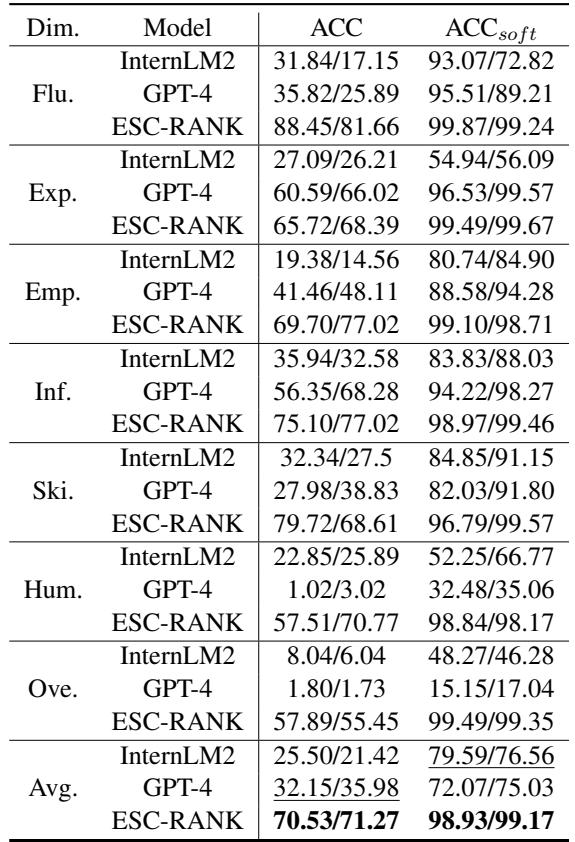
Table 4 shows how well ESC-RANK performs compared to using GPT-4 as a judge.
- ACC (Accuracy): ESC-RANK achieves drastically higher accuracy in predicting human scores compared to GPT-4.
- ACC_soft: This metric accepts a score if it is within 1 point of the human score (e.g., if a human says 4/5 and the AI says 3/5, it counts).
- Result: ESC-RANK achieves over 98% soft accuracy across almost all dimensions (Fluency, Empathy, Skill, etc.).
This means future researchers can use ESC-RANK to evaluate their models instantly without needing to hire thousands of human annotators, significantly accelerating progress in this field.
Conclusion: The Future of AI Therapy
The ESC-Eval paper is a landmark contribution because it moves us away from static, text-matching evaluations toward dynamic, interaction-based testing. By simulating the “Patient” (via ESC-Role) and automating the “Judge” (via ESC-RANK), the researchers have created a closed-loop system for improving mental health AI.
Key Takeaways for Students:
- Context Matters: You cannot evaluate a therapy bot the same way you evaluate a translation bot. Standard metrics like BLEU are useless here.
- Simulation is Powerful: Using LLMs to simulate users (Role-Playing) is a valid and scalable way to test systems, provided the simulator is tuned to be realistic (not just polite).
- Specialization Wins: For specific, high-stakes tasks like mental health, smaller, domain-specific models (like ChatCounselor) can outperform massive general models (like GPT-4) because they better understand the tone required, not just the facts.
As we look forward, frameworks like ESC-Eval will be essential. Before we can trust AI with our mental well-being, we need to trust the tests they pass. This paper ensures that those tests are finally getting rigorous enough to matter.