](https://deep-paper.org/en/paper/2407.00397/images/cover.png)
The human brain is often compared to a complex orchestra. Distinct regions—like the sections of strings, woodwinds, and percussion—must perform in perfect synchrony to produce a coherent symphony of thought and action. However, unlike a standard orchestra where the speed of sound is constant, the “communication speed” between brain regions is constantly shifting. Sometimes regions talk to each other instantly; other times, the signal lags, reflecting different cognitive processes like surprise, attention, or inhibition.
For neuroscientists, “listening” to this communication is notoriously difficult. Modern technology allows us to record thousands of neurons simultaneously across multiple brain areas, but analyzing this data to find the direction and speed of information flow remains a massive computational hurdle.
Existing models usually fall into two traps: they either ignore the time delays entirely (assuming instant communication), or they assume the delays are static—forever fixed at a specific speed. But the brain is dynamic. A feedback signal might be slow one moment and fast the next.
In this post, we are diving deep into a new framework called the Adaptive Delay Model (ADM). This research introduces a mathematical bridge between two powerful families of algorithms—Gaussian Processes and State Space Models—to create a tool that can learn time-varying communication delays from large-scale neural recordings.
The Problem: Why “Static” Models Fail the Brain
To understand the innovation of ADM, we first need to understand the data. Neuroscientists record “spike trains”—sequences of electrical firings from neurons. When we look at two brain regions, say the Primary Visual Cortex (V1) and a higher-order area (V2), we aren’t just looking for correlation. We are looking for causality and latency.
If V1 fires and V2 fires 10 milliseconds later, that suggests a “feedforward” signal. If V2 fires and V1 follows, that’s “feedback.”
Most current algorithms, such as standard Factor Analysis or even sophisticated dynamical systems, struggle with:
- Time-Varying Delays: They assume the lag between V1 and V2 is constant throughout the experiment.
- Scalability: Methods that do model delays often use Gaussian Processes (GPs), which scale cubically (\(O(T^3)\)). If you record for twice as long, the analysis takes eight times longer. For long neural recordings, this is impossible.
The ADM solves this by allowing the delay parameter to drift over time and by using a clever algorithmic trick to reduce the computational cost to logarithmic time (\(O(\log T)\)).
Part 1: Modeling The Neural Signal
The researchers approach this problem by assuming that the noisy, chaotic spiking of thousands of neurons is actually driven by a smaller number of smooth, underlying “latent” variables.
They decompose the neural activity \(\boldsymbol{x}\) into two distinct types of signals:
- Across-Region Variables (\(\boldsymbol{x}^a\)): These are the “messages” being sent between regions. They share dynamics but are separated by a time delay.
- Within-Region Variables (\(\boldsymbol{x}^w\)): These are the local chatter specific to a single region, independent of others.
The relationship between these latent drivers and the actual recorded data \(\boldsymbol{y}\) (the spikes) is modeled using Factor Analysis:

Here, \(\mathbf{C}\) is a projection matrix that maps the latent thought patterns onto the physical neurons, and \(\epsilon\) is noise.
The Multi-Output Squared Exponential Kernel
To capture the “communication,” the model focuses on the Across-Region Variables. The researchers model these using a Gaussian Process (GP). A GP is defined by a “kernel” function, which describes how data points relate to each other over time.
To explicitly model the delay between region \(i\) and region \(j\), they use the Multi-Output Squared Exponential (MOSE) kernel:
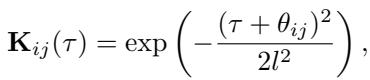
In this equation:
- \(\tau\) is the time difference.
- \(l\) is the length scale (how smooth the signal is).
- \(\theta_{ij}\) is the crucial delay parameter. If \(\theta_{ij}\) is positive, region \(i\) leads region \(j\). If negative, it lags.
This kernel is the heart of the “delay” concept. It allows the model to say, “The activity in Region A looks exactly like Region B, just shifted by 50 milliseconds.”
Part 2: The Mathematical Bridge
Here lies the core theoretical contribution of the paper.
Gaussian Processes (GPs) are fantastic at modeling delays (via the kernel above), but they are computationally heavy and usually static. State Space Models (SSMs), on the other hand, are great at handling time-varying dynamics and are efficient, but they usually require complex manual design to mimic specific kernels.
The authors derive a universal connection to turn any temporally stationary GP kernel into an SSM. This gives us the best of both worlds: the expressive power of kernels and the efficiency of state-space inference.
From Kernels to Matrices
How do we turn a kernel function \(K(\tau)\) into the transition matrices of a linear system? The authors treat the SSM as a regression problem.
Imagine we want to predict the current state \(\boldsymbol{x}_t\) based on the past \(P\) states. We can write this as a linear equation:

Here, \(\mathbf{A}_p\) are the transition matrices we need to find. By viewing this as a regression problem:

The authors realized that the regression coefficients \(\mathbf{G}\) (which contain the transition matrices) and the noise \(\mathbf{Q}\) can be solved using Least Squares estimation. Crucially, the terms needed for this estimation (\(\mathbf{V}\mathbf{V}^\top\) and \(\mathbf{W}\mathbf{V}^\top\)) act as covariance matrices.
And what defines covariance in a GP? The Kernel.
This leads to a beautiful derivation where the transition matrices of the SSM are directly proportional to the kernel evaluations:
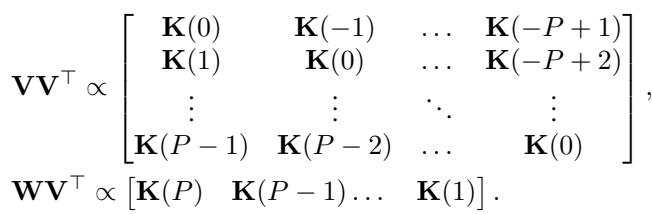
This means that if you define a kernel (like the MOSE kernel with a specific delay), you can immediately calculate the exact matrices needed to run a State Space Model. You don’t need to manually design the dynamical system; the kernel does it for you.
The Markovian Structure
Once the conversion is done, the model is restructured into a “Markovian” form. Even though the GP considers long-term history, the converted model tracks the necessary history in a larger “state vector” \(\hat{\boldsymbol{x}}\).
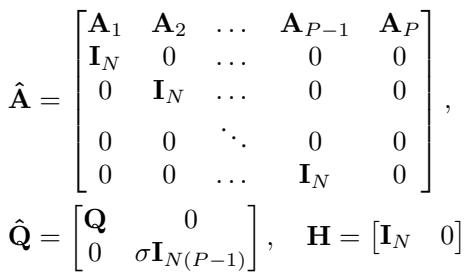
This structure transforms the problem. We are no longer dealing with a dense kernel matrix of size \(T \times T\). We are dealing with a sequential system that updates step-by-step.
Part 3: Making it Adaptive (Time-Varying)
So far, we’ve built a bridge that turns a static delay kernel into an SSM. But the goal is to model time-varying delays.
Because the authors successfully converted the GP into an SSM format, they can now utilize a unique feature of State Space Models: the parameters can change at every time step.
In the ADM framework, the transition matrix \(\hat{\mathbf{A}}\) is no longer constant. It becomes \(\hat{\mathbf{A}}_t\), derived from a time-specific delay \(\theta_{ij,t}\).

At every moment \(t\), the model constructs a local Markovian GP conditioned on the delay specific to that moment. This allows the delay \(\theta\) to drift smoothly over the course of an experiment, capturing how brain regions speed up or slow down their communication.
Part 4: Inference at the Speed of Logarithms
The final piece of the puzzle is speed. Standard Kalman Filtering (the algorithm used to solve SSMs) is sequential. To compute the state at time \(t=100\), you must compute \(t=1...99\) first. This is \(O(T)\), which is linear and generally fast, but not fast enough for massive datasets.
The authors employ Parallel Scan Inference.
By formulating the Kalman Filter operations as associative operators, the computation can be parallelized on modern GPUs. Instead of a chain, the problem is solved like a binary tree. This reduces the time complexity from linear \(O(T)\) to logarithmic \(O(\log T)\).

This allows the ADM to analyze very long recordings that would choke traditional GP methods.
Experimental Results
The researchers validated ADM on three distinct levels: synthetic data, monkey visual cortex, and mouse visual cortex.
1. Synthetic Data: Can it find the hidden delay?
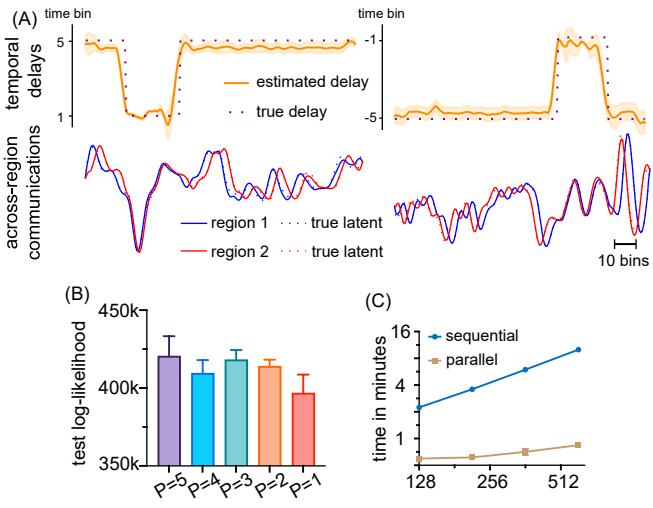
They generated artificial data where the delay between two regions shifted from positive (Region A leads) to negative (Region B leads) over time.
As shown in Figure 1 below, ADM (red/blue lines) tracks the ground truth (dotted lines) almost perfectly. Panel (A) specifically shows the “Estimated Delay” (orange line) hugging the “True Delay” (purple dotted line) as it swings from +5 bins to -5 bins. Panel (C) highlights the computational advantage: as the duration \(T\) increases, the Parallel Scan (brown line) remains nearly instant, while the sequential method (blue line) skyrockets in time.
2. Monkey V1-V2: Visual Processing
Next, they applied the model to recordings from a Macaque monkey viewing drifting gratings. The focus was on the interaction between the primary visual cortex (V1) and the secondary visual area (V2).
The results, shown in Figure 2, reveal a fascinating dynamic.
- Panel A: You can see the estimated delay (purple line) shifting.
- Interpretation: Immediately after the visual stimulus appears, the communication is not static. There is a strong “feedback” signal (V2 talking to V1) that changes speed. This aligns with theories of predictive coding—higher brain areas send predictions down to lower areas, and the timing of this updates as the brain processes the surprise of the new image.
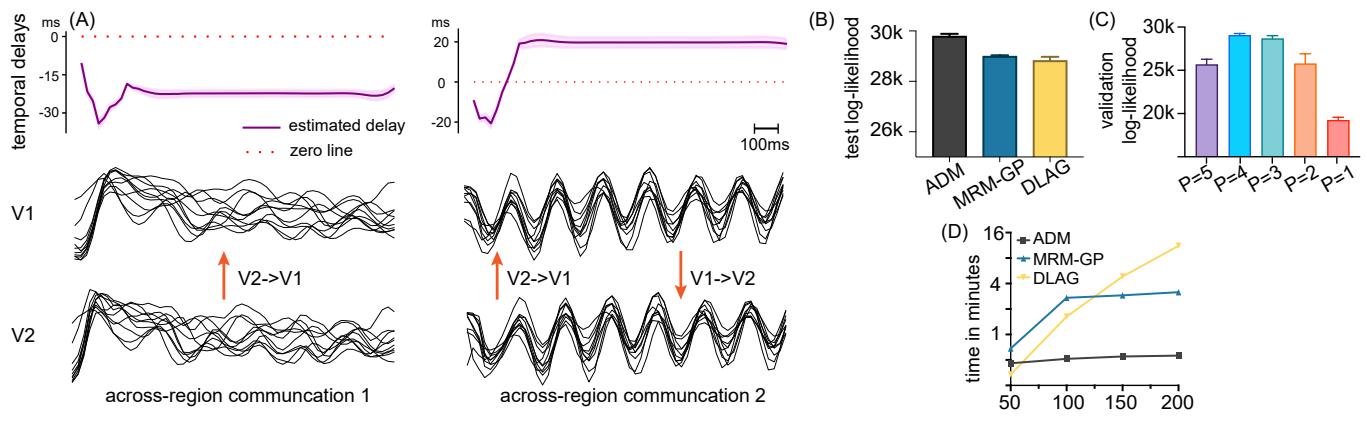
ADM outperformed the baseline models (MRM-GP and DLAG) in terms of test log-likelihood (Panel B), proving that modeling the change in delay provides a better fit to biological reality.
3. Mouse 5-Region Network: The Meso-Scale Map
Finally, they scaled the model to five different regions of the mouse visual cortex. This is where the efficiency of ADM shines, as modeling interactions between 5 regions with time-varying delays is computationally heavy.
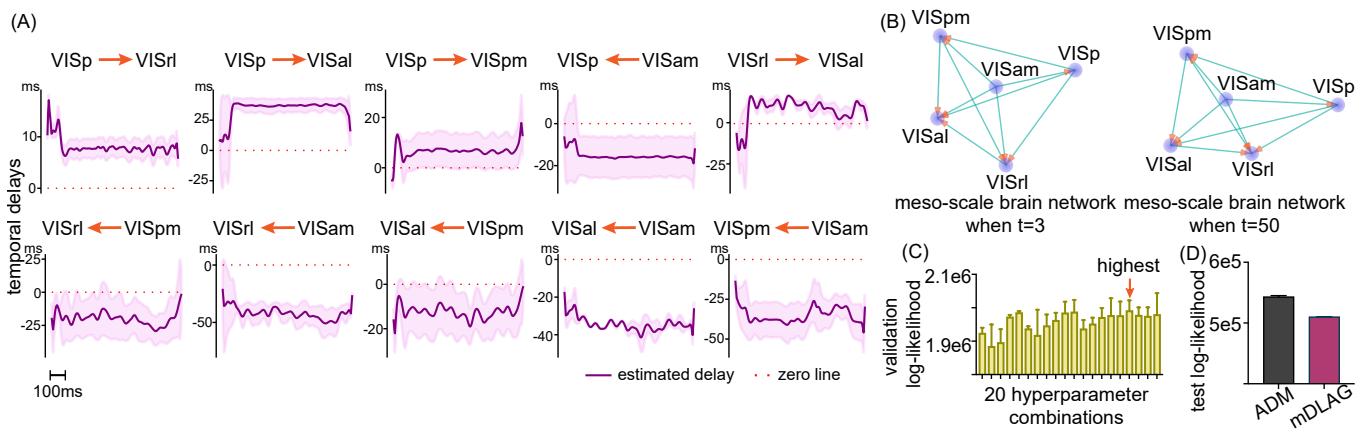
Figure 3 visualizes the “Meso-scale brain network.”
- Panel A: Shows the pairwise delays. Notice how the delays (purple lines) wiggle and drift—they are rarely constant.
- Panel B: This is a snapshot of the brain network at two different times (\(t=3\) and \(t=50\)). The arrows show the direction of influence.
- Forward Flow: You can see consistent flow from VISp (Primary) to higher areas like VISal.
- Dynamic shift: The relationship between VISrl and VISal actually reverses direction between time points. A static model would have averaged this out and missed the nuance entirely.
Conclusion & Implications
The Adaptive Delay Model represents a significant step forward in computational neuroscience. By bridging the gap between the expressive power of Gaussian Processes and the speed of State Space Models, it solves two major problems:
- Biological Realism: It accepts that the brain is dynamic, allowing delays to change over time.
- Scalability: It uses parallel inference to handle large datasets efficiently.
This framework does more than just fit data better; it allows neuroscientists to ask new questions. We can now investigate how communication breakdowns occur in dynamic disorders like epilepsy, or how the “speed of thought” changes when we are tired versus alert. By watching the delays shift in real-time, we get a glimpse into the brain’s internal traffic control system, revealing not just where information goes, but when and how fast it gets there.