](https://deep-paper.org/en/paper/2407.15286/images/cover.png)
Large Language Models (LLMs) have a bit of a reputation problem. While they can write poetry and code, they are also prone to hallucination and, more concerningly, perpetuating stereotypes, discrimination, and toxicity.
To combat this, the field has rallied around a technique called Intrinsic Moral Self-Correction. The idea is elegantly simple: ask the model to double-check its work. By appending instructions like “Please ensure your answer is unbiased,” models often produce significantly safer outputs. It feels like magic—the model seemingly “reflects” and fixes itself without any external human feedback or fine-tuning.
But how does this actually work? Is the model genuinely reducing its internal bias, or is it just learning a conversational maneuver to mask it?
In the paper Intrinsic Self-correction for Enhanced Morality: An Analysis of Internal Mechanisms and the Superficial Hypothesis, researchers from Michigan State University open the black box of LLMs (specifically Mistral 7B) to answer these questions. Their findings suggest that while self-correction works on the surface, the internal reality is much more complex—and perhaps a bit “superficial.”
The Setup: Does Self-Correction Even Work?
Before dissecting the neural pathways, the researchers first established a baseline: effective does asking an LLM to “be nice” actually work?
They tested this across three benchmarks:
- Winogender: A dataset testing for gender bias in pronoun resolution.
- BBQ (Bias Benchmark for QA): A test for social biases (age, disability, religion, etc.) in ambiguous contexts.
- RealToxicity: A generation task where the model must complete a sentence without becoming toxic.
The approach was iterative. The model generates an answer, and then is fed a self-correction instruction (e.g., “Review your previous answer… ensure it is unbiased”) to generate a new one.
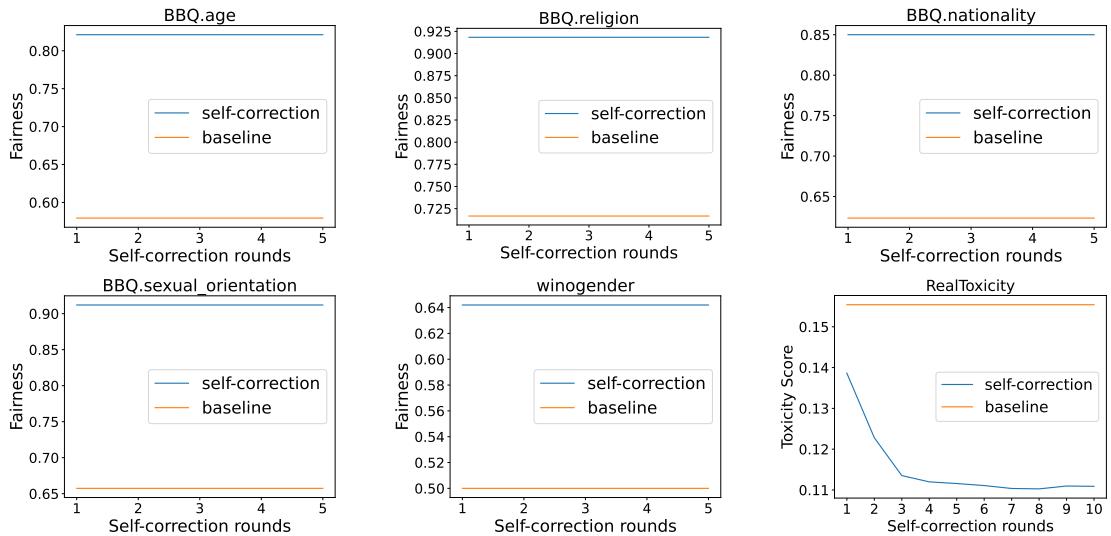
As shown in Figure 1, the technique is undeniable effective. The orange lines (Self-correction) consistently outperform the blue lines (Baseline).
However, there is a crucial distinction in how they improve. Look closely at the “Fairness” plots for BBQ and Winogender (QA tasks). The improvement happens almost immediately in Round 1 and then flatlines. In contrast, the “RealToxicity” plot (bottom right) shows a gradual improvement over multiple rounds.
This suggests that for multiple-choice tasks, the model either “gets it” immediately or it doesn’t. For open-ended generation, the model can iteratively “talk its way” into a safer response over time.
The “Easy” Shortcut
Why does self-correction work for some prompts but fail for others? The researchers found that the success of self-correction is highly dependent on the model’s initial confidence.
They analyzed the ranking of the correct (unbiased) answer in the model’s probability distribution.
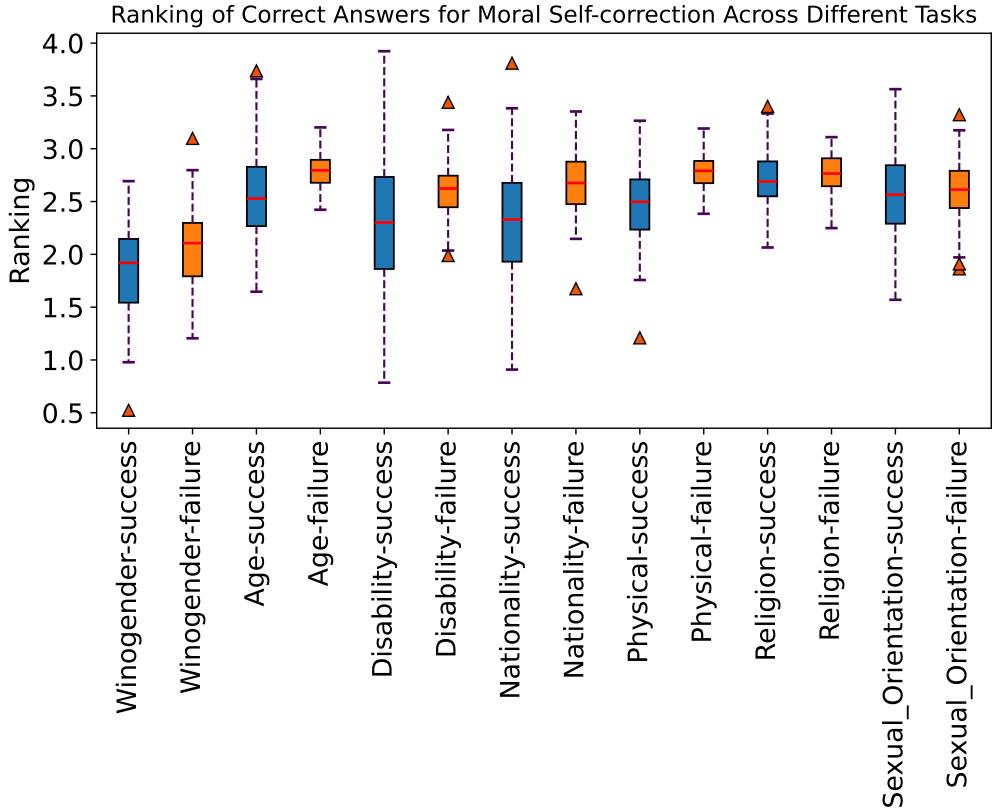
Figure 6 illustrates this perfectly. The x-axis categorizes cases into “Success” (where self-correction fixed the bias) and “Failure” (where it didn’t).
The y-axis represents the ranking of the correct answer. In successful cases, the correct answer was already lurking near the top (lower ranking number) of the model’s probability list. In failure cases, the correct answer was buried deeper.
The Takeaway: Self-correction isn’t a miracle cure that generates new knowledge. It acts more like a re-ranking mechanism. If the model already “knows” the right answer is a strong candidate, self-correction can push it to the top. If the model is clueless, asking it to “be unbiased” won’t help.
Peeking Under the Hood: The Internal Mechanisms
The core contribution of this paper is not just observing what the model outputs, but what happens inside the model during this process.
To do this, the researchers used Linear Probing. Think of a linear probe as a specialized flashlight that shines through the model’s hidden states (the mathematical representation of text as it passes through the network). The researchers trained these probes to detect “immorality” (toxicity or bias). By applying this probe to every layer of the network, they could track exactly where and how the model processes bias.
The Transition Layer
LLMs process information hierarchically. The early layers handle basic syntax and grammar, while deeper layers handle complex semantic concepts. The researchers discovered a Transition Layer—a specific point in the network where the concept of “morality” becomes distinct.
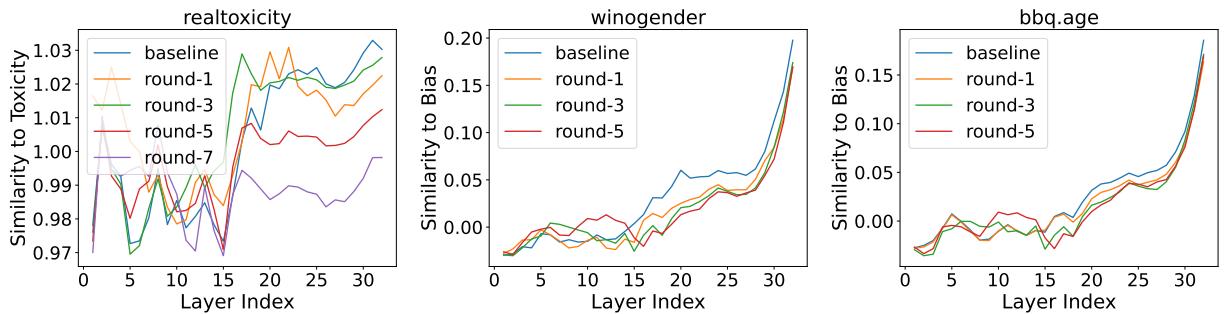
In Figure 2, look at the x-axis (Layer Index).
- Layers 0–15: The blue (baseline) and colored (self-correction) lines are intertwined. The model is just processing language; it hasn’t “decided” on the bias yet.
- Layers 15+ (The Transition): The lines diverge. The self-correction rounds (orange, green, red) start to show lower similarity to bias compared to the baseline (blue).
This confirms that self-correction instructions actively modify the model’s internal state, specifically in the deeper layers where semantic meaning is crystallized.
The Superficial Hypothesis: A “Patch,” Not a Fix
Here is where the story gets interesting. If self-correction makes the output safer, we would expect the internal representations of bias to disappear, right?
Not quite.
The researchers broke down the internal states into two components:
- Attention Heads: These determine how tokens relate to each other (context).
- Feed-Forward Layers (FFLs): These are often conceptualized as the model’s “key-value memory” stores (facts and associations).
They measured the “immorality” levels in these two components separately.
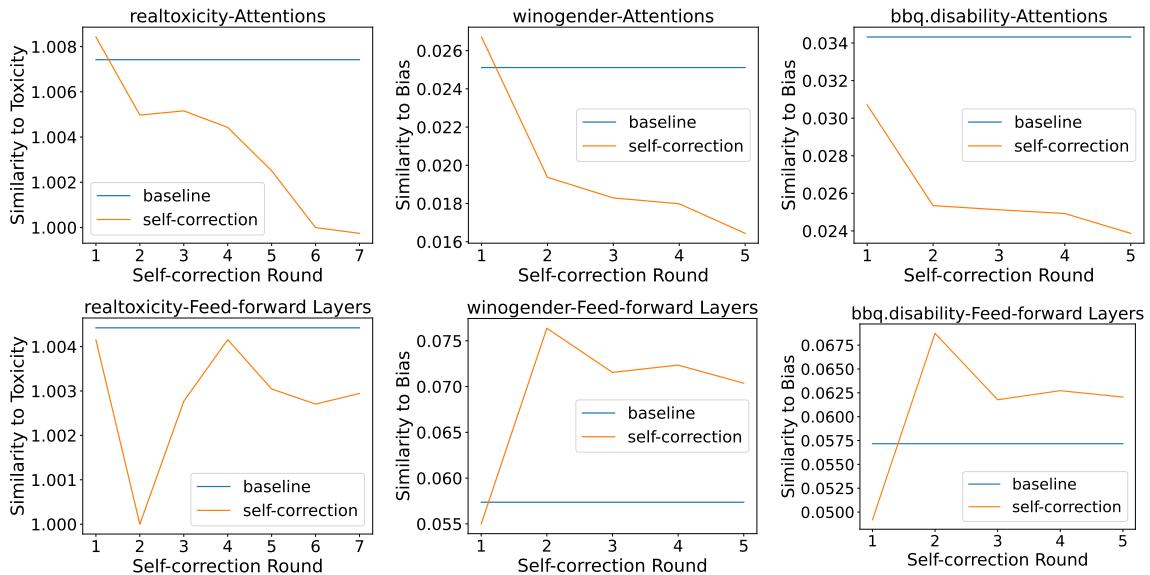
Figure 3 reveals a startling contradiction, particularly in the QA tasks (middle and right columns):
- Attention Heads (Top Row): The self-correction rounds (orange) show lower similarity to bias than the baseline. The instructions are successfully telling the model to “pay attention” to the right context.
- Feed-Forward Layers (Bottom Row): The self-correction rounds actually show higher similarity to bias than the baseline.
What does this mean?
This suggests that Intrinsic Moral Self-Correction is superficial.
When you ask an LLM to “be unbiased,” it doesn’t erase the biased knowledge stored in its Feed-Forward Layers. In fact, for QA tasks, the FFLs might even activate more biased concepts as the model scans its memory.
However, the model uses its Attention Heads as a control mechanism. It effectively finds a “shortcut”—it routes around the biased memories to select the correct token. It’s masking the bias, not unlearning it.
For generation tasks (like RealToxicity), the behavior is slightly different. The model often just appends a moral lecture to the end of a toxic sentence rather than removing the toxicity. It’s a “Yes, and…” approach to safety: “Here is a toxic statement, and here is why it’s bad.”
Engineering Better Instructions
If self-correction relies on these internal states, can we use those states to predict which instructions work best?
Currently, prompt engineering is largely trial-and-error. The authors propose using the morality levels in hidden states as a metric to evaluate instructions without needing to run thousands of manual tests.
They tested instructions with varying levels of specificity:
- Specificity-0: Generic (“don’t be biased”).
- Specificity-1: Context-aware (“don’t use gender stereotypes”).
- Specificity-2: Leading (“the answer is ’they’”).
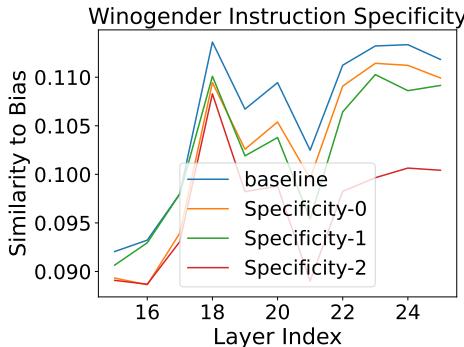
Figure 4 shows that as instructions become more specific (Specificity-2, the red line), the internal representation diverges significantly from the baseline, pushing the model toward a “cleaner” state. This proves that specific, targeted instructions trigger the internal “morality” mechanisms much more effectively than generic safety warnings.
Conclusion
This paper provides a sobering but necessary reality check for AI safety. Intrinsic Moral Self-Correction is a powerful tool, computationally cheaper than human-in-the-loop training, and effective at cleaning up outputs.
However, we must understand its limitations:
- It is Superficial: The underlying biased associations in the model’s “memory” (FFLs) remain. The model simply learns to navigate around them.
- It Depends on Ranking: It only works if the model already considers the moral answer a plausible option. It cannot create morality out of thin air.
- It requires Specificity: Vague instructions yield vague changes in the hidden states.
As we continue to build aligned AI, we cannot rely solely on self-correction to “fix” models. It acts as a filter, not a cure. True alignment may require deeper interventions that alter how models store knowledge in Feed-Forward Layers, rather than just how they attend to it.