](https://deep-paper.org/en/paper/2408.12163/images/cover.png)
Introduction
Imagine you are a professor asking a student to write an essay. If the student writes a single draft and hands it in immediately, the quality might be decent, but it likely misses some nuance. Now, imagine you ask the student to write a draft, read it over, critique their own work based on specific criteria (like “be more concise” or “add references”), and then write a final version. The result is almost guaranteed to be better.
This process of reflection and refinement is natural to humans, but it is not the default behavior for Large Language Models (LLMs). Typically, when we train or query LLMs, we treat them as “one-shot” generators.
In the rapidly evolving field of AI alignment, researchers are constantly looking for ways to make models adhere better to human intentions. A standard approach involves Reinforcement Learning from Human Feedback (RLHF), where models generate data, and we filter the good from the bad to retrain the model. But how do we get the model to generate better data to begin with?
A new research paper titled “Preference-Guided Reflective Sampling for Aligning Language Models” introduces a novel method called PRS. This technique moves beyond the standard “roll the dice and hope for the best” approach of random sampling. Instead, it forces the model to “think,” reflect on its output, and refine it based on specific user preferences before the final answer is chosen.
In this deep dive, we will explore how PRS works, why it outperforms traditional methods, and how it enables us to align models to diverse personalities—from being humorous to being strictly professional.
Background: The Challenge of Alignment
Before understanding PRS, we need to understand the ecosystem in which it operates. The goal is Alignment: ensuring an LLM produces helpful, harmless, and honest content that matches what the user actually wants.
Offline Reinforcement Learning (Offline RL)
One of the most efficient ways to align models is through Offline RL. Here is the simplified loop:
- Data Generation: The current model generates a batch of responses to various prompts.
- Scoring: A separate “Reward Model” (a judge) scores these responses.
- Selection: We keep the high-scoring responses and discard the low-scoring ones.
- Re-training: We retrain the model on this new, high-quality dataset.
This cycle repeats, with the model (hopefully) getting smarter each time.
The Bottleneck: Data Sampling
The critical step here is Data Generation. If your model generates garbage, you have nothing good to train on.
The industry standard is Repeated Random Sampling (often called Best-of-N). It works exactly like it sounds:
- You give the model a prompt.
- You ask it to generate \(N\) different responses (e.g., 32 responses) independently.
- You pick the one with the highest reward score.
While effective, this method is inefficient. It relies on randomness. It’s like trying to hit a bullseye by throwing 32 darts with your eyes closed. You might get lucky, but there is no strategy involved. Furthermore, random sampling struggles to adapt to specific “styles” or preferences (like “be concise”) unless the model gets lucky.
This is where Preference-Guided Reflective Sampling (PRS) comes in.
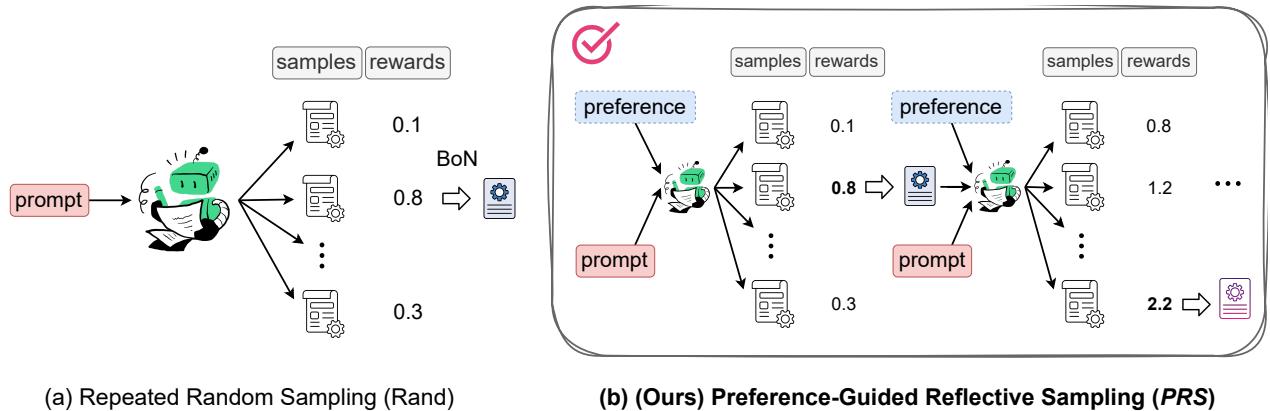
Figure 2 above illustrates the fundamental difference. In the top path (a), Random Sampling simply fires off multiple attempts and picks the best one. In the bottom path (b), PRS uses a tree-based structure where the model uses feedback to improve its score iteratively, climbing from a low reward (0.1) to a high reward (2.2).
The Core Method: Preference-Guided Reflective Sampling (PRS)
PRS is designed to solve two main problems:
- Inefficient Exploration: Random sampling wastes computation on bad paths.
- Lack of Control: It’s hard to force random sampling to adhere to specific constraints (like tone or format).
PRS addresses this with a two-pronged approach: Preference Guidance and a Tree-Based Generation Framework.
1. Preference Guidance
In standard generation, the input is just the user’s prompt (\(x\)). In PRS, the researchers explicitly add a preference instruction (\(z\)) to the input.
For example:
- Prompt (\(x\)): “Explain quantum physics.”
- Preference (\(z\)): “I prefer a response that is humorous and uses analogies involving food.”
By conditioning the generation on \(z\), we narrow the search space. The model isn’t just looking for an answer; it’s looking for a funny, food-related answer. This helps the model focus its “creative energy” in the right direction immediately.
2. The Tree-Based Generation Framework
This is the engine of PRS. Instead of generating distinct samples independently, PRS builds a “tree” of thoughts. It balances Exploration (trying new ideas) and Exploitation (improving good ideas).
Let’s break down the process step-by-step, as visualized in the architecture diagram below.
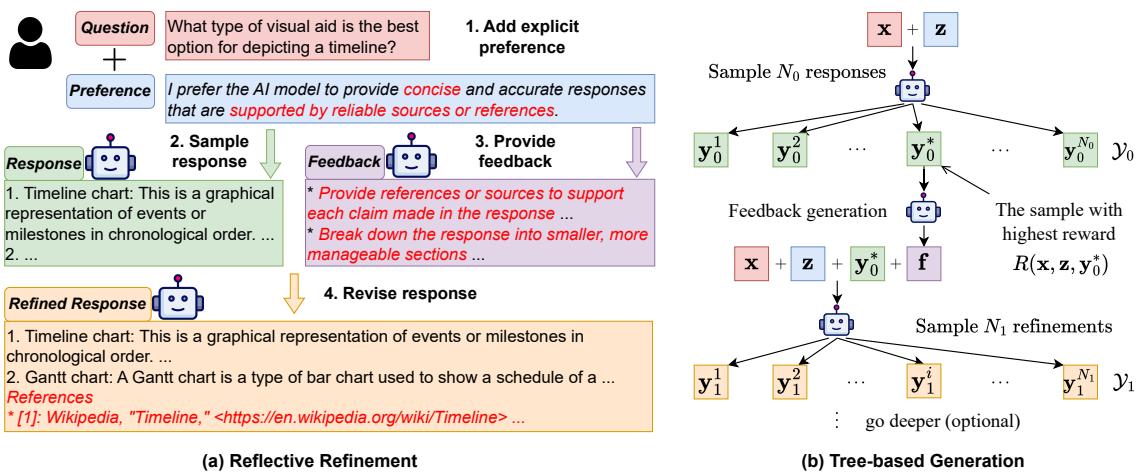
As shown in Figure 3 above:
Step A: Initial Sampling (The Root)
The model takes the prompt (\(x\)) and the preference (\(z\)) and generates a small batch of initial drafts (\(N_0\)).
- Analogy: This is like writing 3 quick outlines for your essay.
Step B: Selection
The Reward Model scores these initial drafts. The best one (\(y_0^*\)) is selected as the “anchor” for the next step.
- Analogy: You pick the most promising outline.
Step C: Reflective Refinement (The Feedback Loop)
Here is the magic. The model doesn’t just rewrite the draft blindly. It performs two sub-steps:
- Generate Feedback (\(f\)): The model critiques its own selected draft (\(y_0^*\)). It asks, “How can I make this better align with the preference (\(z\))?”
- Example in Figure 3a: The user wanted references. The model looks at its draft and says, “The response lacks references. I need to add sources.”
- Refine (\(y_1\)): The model generates a new set of responses (\(N_1\)), conditioned on the original prompt, the original draft, and the feedback.
- Analogy: You rewrite the essay specifically addressing the note to “add sources.”
Step D: Final Selection
Finally, the system pools the initial drafts and the refined drafts together. It picks the single best response from the entire group.
The Mathematical View
The paper formalizes this process using probability. The probability of generating a high-quality response \(y\) isn’t just dependent on the input \(x\). It depends on the preference \(z\), the initial draft \(y_0\), and the feedback \(f\).
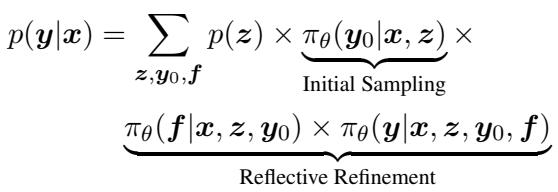
This equation shows that the final output is a product of the Initial Sampling (getting a starting point) and the Reflective Refinement (using feedback to improve).
Optimizing the “Refining” Ability
To train the model to be good at this, PRS uses a clever trick during the training phase. It looks for “Improving Pairs.”
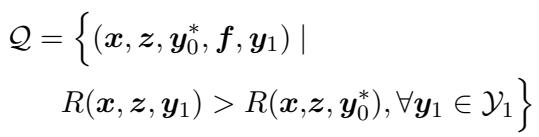
The algorithm looks for instances where the refined response (\(y_1\)) has a strictly higher reward score than the initial response (\(y_0^*\)). If the refinement actually made the answer better, that sequence (Draft \(\rightarrow\) Feedback \(\rightarrow\) Better Draft) is added to the training data. This teaches the model: “When you reflect like this, you succeed.”
Experiments and Results
The researchers tested PRS extensively against standard baselines. They used benchmarks like AlpacaEval and Arena-Hard, which are known for being difficult and correlating well with human judgment.
1. Does PRS generate better data?
The first question is whether this complex tree sampling actually produces higher-reward responses than just randomly spamming the model.
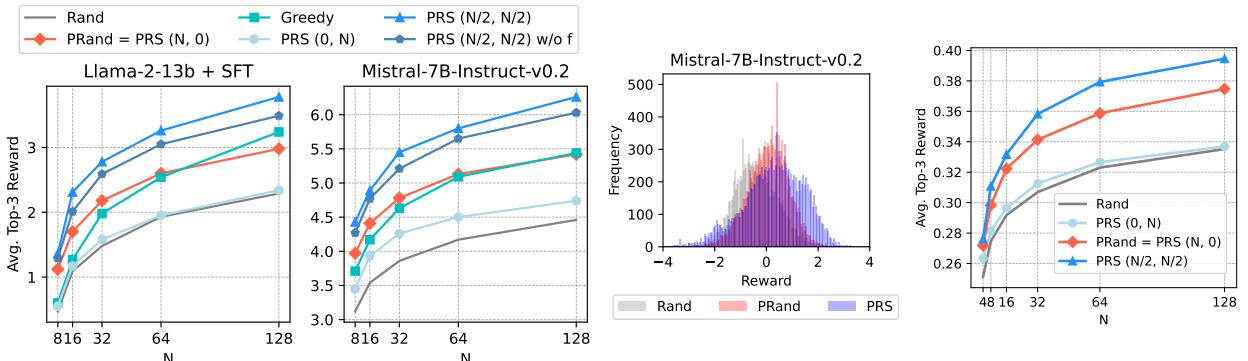
Figure 4 (Left) shows the average reward score as the number of samples (\(N\)) increases.
- Rand (Gray line): The performance improves slightly but remains the lowest.
- PRS (Blue/Red lines): PRS consistently achieves significantly higher rewards. The “N/2, N/2” split (half the budget for initial drafts, half for refinement) appears to be the sweet spot, balancing exploration and refinement.
Figure 4 (Middle) shows the distribution of rewards. Notice how the PRS curve (orange) is shifted to the right compared to Random (blue). This means the average quality of a PRS response is fundamentally higher.
2. Head-to-Head Win Rates
The researchers pitted PRS against Random Sampling in a “Best-of-32” contest. This means both methods got 32 attempts to generate the best answer, and the winners were compared.
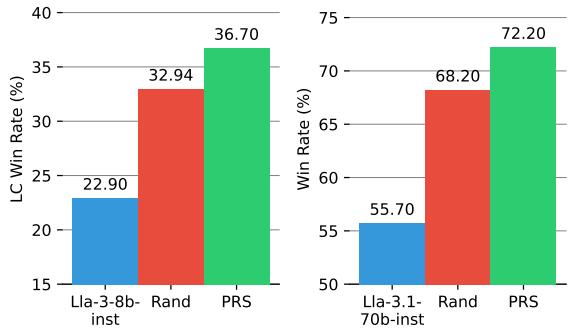
Figure 1 is a crucial summary of the paper’s success:
- AlpacaEval v2.0: PRS achieved a 36.70% win rate compared to Random’s 32.94% (on the Llama-3-8b model).
- Arena-Hard: PRS reached 72.20%, beating Random’s 68.20%.
While a few percentage points might seem small, in the world of LLM benchmarks, these are significant margins, especially given that the underlying model architecture is identical. The only difference is the strategy used to generate the answer.
3. Offline RL Training Success
The ultimate test is using the data generated by PRS to train a model. Does the model get smarter over time?
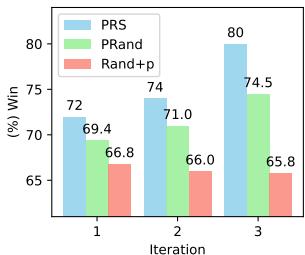
Figure 5 tells a compelling story about iterative learning.
- Rand (Red): The model improves in the first iteration but then stagnates or even gets worse. This is because random sampling runs out of “good” data to find; it hits a ceiling.
- PRS (Green): The model continues to improve through Iteration 2 and 3. Because PRS uses reflection, it can constantly “squeeze” more quality out of the model, creating a better training set for the next round.
4. Adaptability and Personality
One of the coolest features of PRS is the ability to align to specific personas using the preference input (\(z\)). The researchers tested categories like “Humorous,” “Professional,” and “Concise.”
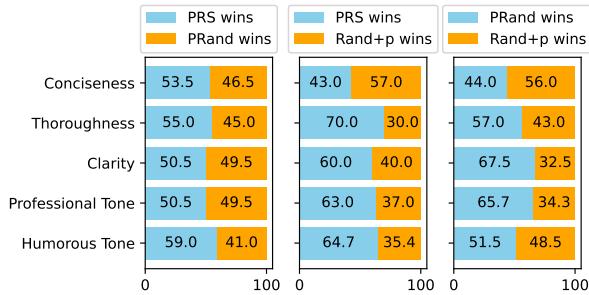
Figure 6 shows that PRS (Green) wins the majority of the time against other methods when asked to adapt to a specific style.
- Humorous Tone: PRS wins 59% of the time.
- Thoroughness: PRS wins 55% of the time.
This suggests that PRS is not just making the model “smarter” in a general sense; it makes the model more steerable. If you want a chatbot that acts like a pirate or a formal lawyer, PRS provides a structured way to enforce that preference during data generation and training.
Why Does This Matter?
The “Preference-Guided Reflective Sampling” paper highlights a shift in how we think about Large Language Models.
- Quality over Quantity: We don’t need more data; we need better data. PRS shows that we can synthesize higher-quality data by simulating a human-like revision process.
- Self-Correction: The paper proves that models are capable of recognizing their own flaws (via feedback generation) and fixing them, provided we give them the structure to do so.
- User-Centric AI: By baking user preferences (\(z\)) directly into the generation loop, we move closer to personalized AI that doesn’t just answer the question, but answers it how you want it answered.
Conclusion
PRS offers a sophisticated alternative to the “brute force” method of random sampling. By creating a tree of thoughts, evaluating them, generating feedback, and refining the output, PRS creates a virtuous cycle of improvement.
For students and researchers in AI, this paper serves as a reminder: How you sample from a model is just as important as how you train it. As we move forward, methods that mimic human cognition—planning, reflecting, and refining—will likely become the standard for building truly aligned Artificial Intelligence.