](https://deep-paper.org/en/paper/2409.14083/images/cover.png)
In the rapidly evolving world of Artificial Intelligence, Large Vision-Language Models (LVLMs) like LLaVA and GPT-4V have become the new standard. These models can look at an image and describe it, answer questions about it, or classify it with impressive accuracy. However, they suffer from a well-known flaw: hallucinations. They sometimes see things that aren’t there or misinterpret visual cues based on their training biases.
To fix this, researchers often turn to Retrieval-Augmented Generation (RAG). The idea is simple: if the model is unsure, let it “look up” similar examples from a database to guide its answer.
But here lies the trap. What if the model looks up the wrong information? What if the retrieved example is visually similar but conceptually different? For standard models, this “poisoned” context often leads to even worse answers than if they had just guessed.
In this deep dive, we explore a new framework called SURf (Selectively Utilize Retrieved information). This paper introduces a novel training method that teaches models not just to use external help, but to critically evaluate it—learning to surf the waves of information without wiping out on the noise.
The Problem with “Blind Trust” in RAG
Retrieval-Augmented Generation has revolutionized text-based LLMs, but applying it to multimodal (image + text) tasks is tricky.
In a multimodal RAG setup, when a user asks a question about an image, the system searches a massive database for similar image-caption pairs. The assumption is that these similar examples will act as a reference, helping the model understand the nuances of the input image.
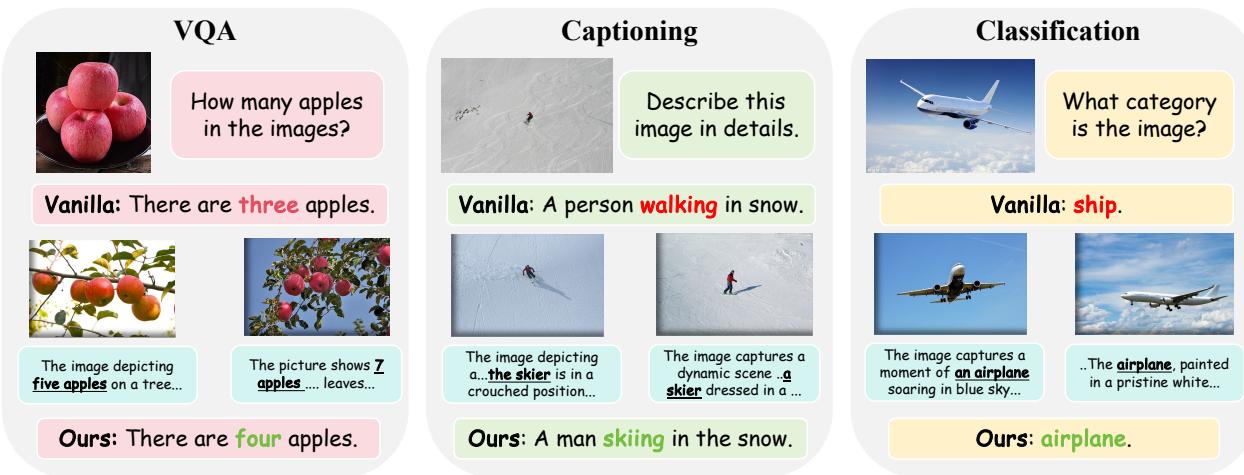 Figure 1: How Multimodal RAG works across different tasks. By retrieving similar images (references) and their descriptions, the model should ideally gain enough context to answer correctly.
As shown in Figure 1 above, this works beautifully when the retrieved images are relevant. If you are classifying an airplane and the model retrieves photos of other airplanes, the accuracy improves.
However, the retrieval process is rarely perfect. It usually relies on similarity scores (like CLIP embeddings), which match images based on general visual patterns rather than specific semantic details. This can lead to the retrieval of irrelevant or misleading content.
When RAG Goes Wrong
Consider the example below. The model is asked, “What does she lie on?” regarding an image of a woman on the floor.
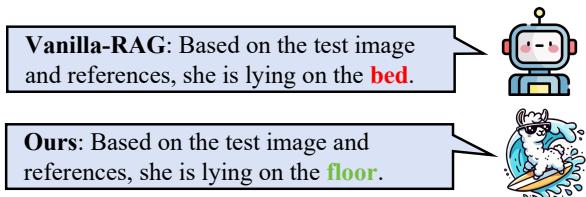 Figure 2: The danger of misleading references. A “Vanilla” RAG model sees a retrieved image of people sleeping in a bed (right reference) and is tricked into answering “Bed,” even though the correct answer is “Floor.”
In Figure 2, the retrieval system found an image of people sleeping in a bed because it visually resembled the input (people lying down). The standard “Vanilla-RAG” model blindly trusted this reference and gave the wrong answer (“She is lying on the bed”). The researchers found that when irrelevant content is introduced, the performance of standard LVLMs drops significantly—often becoming worse than if they hadn’t used RAG at all.
This brings us to the core hypothesis of the paper: We cannot build a perfect retriever, so we must build a smarter generator. We need a model that knows when to use the retrieved info and when to ignore it.
The SURf Solution: A Self-Refinement Framework
The researchers propose SURf, a training framework designed to make LVLMs robust against noisy data. Instead of training the model on perfectly curated data, SURf trains the model on its own mistakes and successes.
The method is elegant because it doesn’t require massive new external datasets. It recycles the model’s existing training data to create a “curriculum” of critical thinking.
How SURf Works
The training process follows a specific pipeline, illustrated in the diagram below:
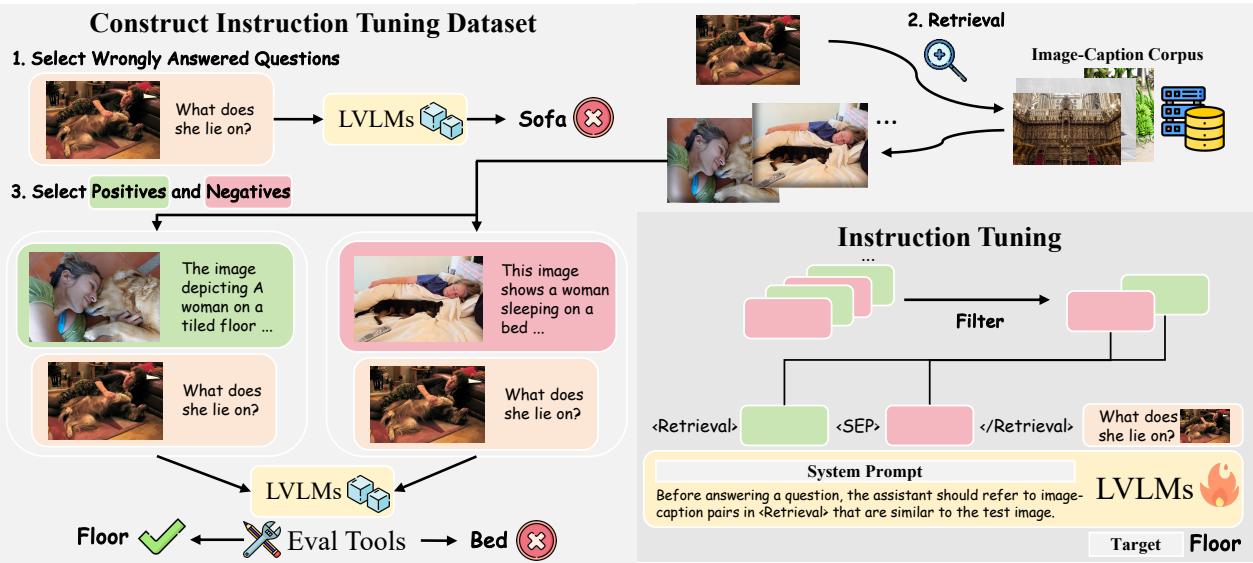 Figure 3: The SURf pipeline. The system identifies where the model fails, retrieves help, and then categorizes that help as “Positive” (it fixed the error) or “Negative” (it didn’t help).
Let’s break down the algorithm shown in Figure 3 into digestible steps:
- Identify Weaknesses: The researchers start with the model’s standard training data. They ask the LVLM to answer questions without any retrieval. They specifically isolate the questions the model answers incorrectly. These are the “knowledge gaps.”
- Retrieve Context: For every incorrectly answered question, they perform a retrieval step, fetching the top image-caption pairs from a database.
- Re-Evaluate (The Sorting Hat): They ask the model the same question again, but this time they provide the retrieved context.
- Positive Samples: If the model changes its answer from wrong to correct, this specific retrieved context is labeled as a “Positive.” It was useful.
- Negative Samples: If the answer remains wrong or gets worse, the context is labeled as “Negative.” It was irrelevant or misleading.
- Instruction Tuning: Finally, the model is fine-tuned using these sorted samples. It learns to associate specific types of context with “helpful” signals and others with “noise.”
The Importance of Hard Negatives
A key innovation here is how SURf handles the Negative samples. They don’t just pick random bad images; they pick the hardest negatives.
In the filtering phase, the researchers select negative examples that have the highest visual similarity to the input image but still result in wrong answers. This forces the model to pay attention to subtle details. It teaches the model: “Just because this reference image looks like the input doesn’t mean the answer applies here.”
Experimental Success
Does teaching a model to be skeptical actually improve performance? The researchers tested SURf across three major computer vision tasks: Visual Question Answering (VQA), Image Captioning, and Image Classification.
Surpassing the Baselines
The results were compared against a “Zero-shot” baseline (no retrieval) and “Vanilla-RAG” (standard retrieval without selectivity).
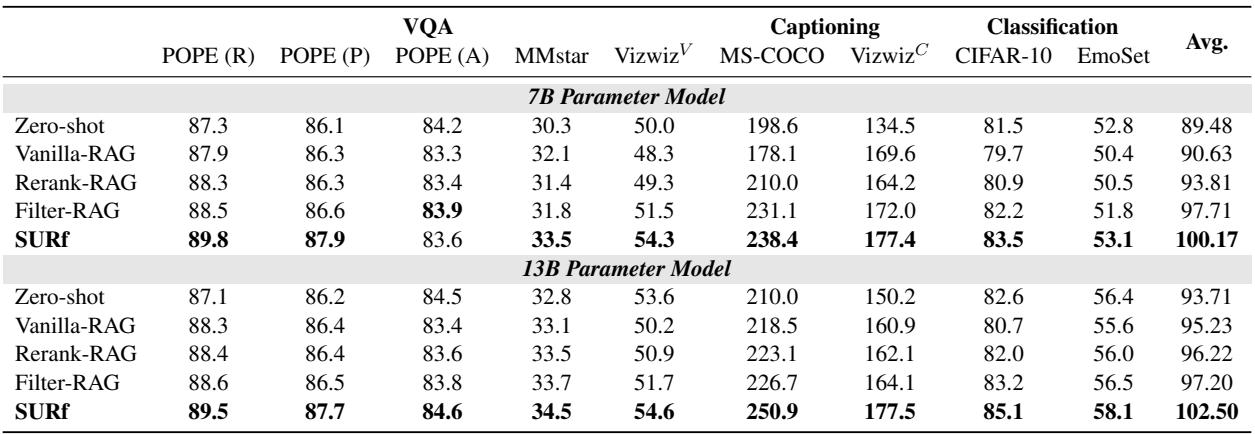 Table 1: Performance comparison. SURf (bottom row of each section) consistently outperforms standard methods across diverse datasets like POPE, VizWiz, and MS-COCO.
As seen in Table 1, SURf achieves state-of-the-art results.
- VQA: On the difficult POPE benchmark, which tests for hallucinations, SURf significantly reduced errors compared to standard RAG.
- Captioning: The improvement was even more pronounced in image captioning, suggesting the model became much better at synthesizing descriptive details from valid references.
- Classification: While Vanilla-RAG sometimes hurt classification accuracy (due to retrieving objects of similar shape but different classes), SURf recovered this loss and improved upon the baseline.
Robustness Against Noise
The most compelling evidence for SURf comes from stress-testing the model with intentionally irrelevant data. The researchers injected “noise”—image-caption pairs that were increasingly dissimilar or irrelevant—to see if the model would get confused.
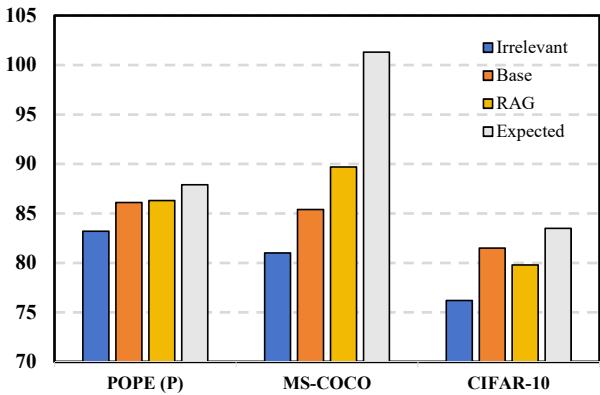 Figure 4: The impact of noise. The blue bars (“Irrelevant”) show how drastically performance drops for standard models when bad retrieval data is added. SURf aims to bring performance closer to the gray “Expected” bars.
Figure 4 highlights the vulnerability of current models (the “Base” and “Irrelevant” bars). When a standard LLaVA model is fed irrelevant RAG data, its performance (Blue bars) often drops below its baseline performance (Orange bars).
However, SURf changes this dynamic.
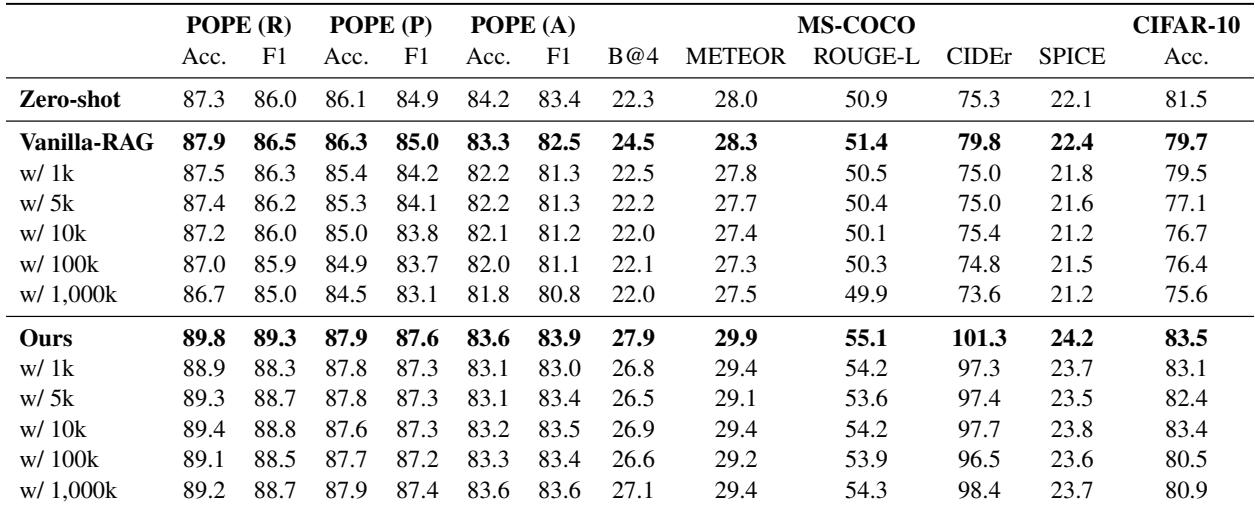 Table 2: Robustness test. Even when fed retrieval data from the “100k” or “1,000k” range (meaning very low relevance), SURf maintains high accuracy, whereas Vanilla-RAG degrades.
Table 2 demonstrates SURf’s “shield.” Even when the retrieval system provides data that is vastly different (the 1,000k columns), SURf’s accuracy remains stable. This confirms that the model has successfully learned to ignore information it deems irrelevant.
Qualitative Case Studies
Numbers are great, but seeing the model in action makes the difference clear. Let’s look at a “tennis ball” hallucination test.
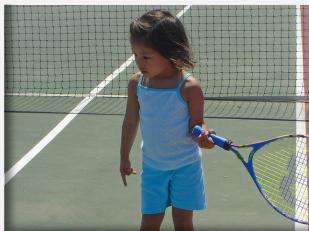 Figure 5: In the bottom-left image, there is no tennis ball. Vanilla-RAG hallucinates one (likely due to retrieved images of tennis courts). SURf correctly identifies that no ball is present.
In Figure 5, we see a young girl on a tennis court.
- Vanilla (Zero-shot) correctly guesses “No” (or is unsure).
- Vanilla-RAG retrieves images of tennis courts (which usually have balls) and incorrectly confidently answers “Yes.”
- SURf uses the context but filters out the hallucination, correctly answering “No.”
This ability to filter is crucial for real-world applications where safety and accuracy are paramount, such as autonomous driving or medical imaging.
Conclusion and Future Implications
The SURf paper identifies a critical bottleneck in Multimodal AI: the assumption that more context is always better. By demonstrating that irrelevant retrieval can poison a model’s output, the researchers highlight the need for “active” rather than “passive” consumption of data.
SURf provides a cost-effective solution. It doesn’t require training a new massive model from scratch or labeling thousands of new datasets. By leveraging the model’s own errors to create positive and negative training signals, SURf equips LVLMs with a critical filter.
As we move toward more autonomous AI agents, this ability to selectively utilize information will be the difference between a smart assistant and a confused one. SURf teaches models that in the ocean of big data, the key to staying afloat is knowing which waves to ride and which to let pass.