](https://deep-paper.org/en/paper/2410.05565/images/cover.png)
Imagine you are reading a complex mystery novel. On page 10, the detective puts a key in his pocket. On page 50, he moves the key to a drawer. On page 200, he gives the contents of the drawer to his partner. Finally, on page 300, the partner unlocks a door. To understand that scene, you need to track the location of that key across hundreds of pages and several state changes.
For humans, this is relatively easy. We maintain a mental model of the world—a state. For Large Language Models (LLMs) based on the Transformer architecture, this is surprisingly difficult. While LLMs excel at generating fluent text, they often struggle with Entity Tracking: the ability to maintain and update the status of an entity through a sequence of operations.
In this post, we are doing a deep dive into a fascinating paper titled “Chain and Causal Attention for Efficient Entity Tracking.” The authors identify a fundamental theoretical limit in how standard Transformers handle these chains of events and propose a clever, mathematically elegant solution: ChaCAL (Chain and Causal Attention Layer).
The Problem: Transformers Have a “Hop” Limit
To understand why LLMs lose track of items, we first need to look at how they process information. Most modern LLMs (like GPT-4, Llama, etc.) are based on the Transformer architecture. The engine driving this architecture is the Attention Mechanism.
Standard Attention Recap
In a standard attention layer, a token (a word or piece of a word) looks back at previous tokens to gather context.
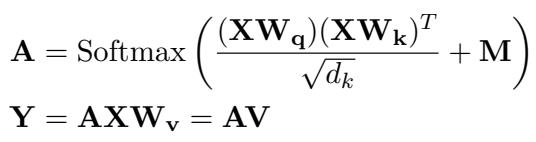
Here, \(\mathbf{A}\) is the attention matrix containing scores that determine how much “attention” one token pays to another. \(\mathbf{Y}\) is the output, a weighted sum of the values \(\mathbf{V}\).
Crucially, a single attention layer allows a token to “attend” to another token. In graph theory terms, this is a path of length 1. If Token C depends on Token B, and Token B depends on Token A, a single attention layer usually only captures the direct relationship (C looking at B). It doesn’t inherently understand that C is effectively connected to A through B.
What is Entity Tracking?
Entity tracking is essentially a graph traversal problem. Consider a task where items are moved between boxes.
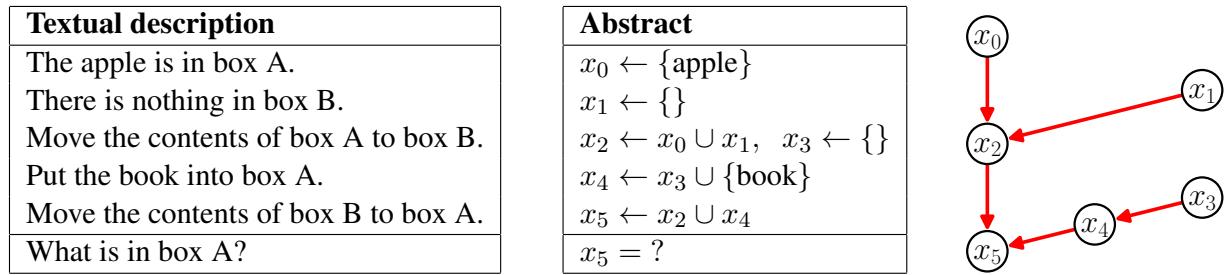
As shown in Figure 1 above:
- Textual description: We get instructions like “Move contents of A to B.”
- Abstract variables: We can map these to variables (\(x_0, x_1, \dots\)).
- Graph representation: This forms a dependency chain. To know the value of \(x_5\), you need to trace the path all the way back to \(x_0\).
The Theoretical Bottleneck
The researchers provide a formal proof—Theorem 1—identifying a hard limit on standard Transformers.

This theorem states that to track an entity through \(n\) state changes (a dependency chain of depth \(n\)), a Transformer requires at least \(\log_2(n+1)\) layers.
Why? Because standard attention acts like a pointer in a linked list. In one layer, a node can only see its immediate neighbors. To see a neighbor’s neighbor, you need a second layer. However, Transformers are clever; they can aggregate information hierarchically.
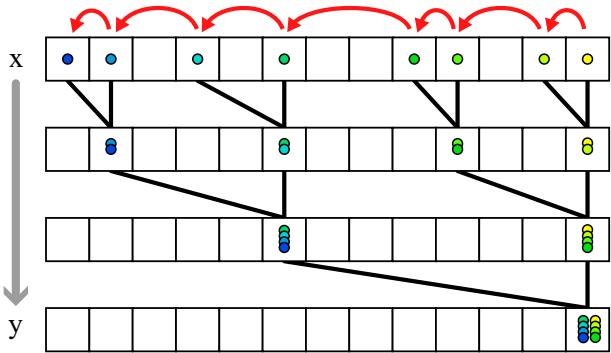
Figure 2 illustrates this beautifully. If you have a chain of 8 dependencies (the colored dots):
- Layer 1 connects neighbors.
- Layer 2 connects the results of Layer 1 (effectively jumping 2 steps).
- Layer 3 connects the results of Layer 2 (jumping 4 steps).
To cover a chain of 8 nodes, you need \(\log_2(8) = 3\) layers. This means that as the complexity of the tracking task increases (longer chains of events), the model must become deeper to solve it. If the chain is longer than what the depth allows, the model fails.
The Solution: ChaCAL (Chain and Causal Attention)
The authors propose that we shouldn’t need a deeper network to solve this. We just need a smarter attention mechanism. Their solution, ChaCAL, allows a single layer to track dependencies of arbitrary length.
Attention as an Adjacency Matrix
The core insight relies on graph theory. If we treat the attention matrix \(\mathbf{A}\) as the adjacency matrix of a graph:
- \(\mathbf{A}\) represents paths of length 1 (direct connections).
- \(\mathbf{A}^2\) (matrix multiplication of A by itself) represents paths of length 2.
- \(\mathbf{A}^3\) represents paths of length 3.
To track an entity through an arbitrary number of changes, we essentially want to sum up all possible paths. We want the information to flow from the start of the chain to the end, regardless of how many steps lie in between.
Mathematically, this looks like a geometric series:
\[ \mathbf{S} = \mathbf{A} + \mathbf{A}^2 + \mathbf{A}^3 + \dots \]If you recall high school algebra, the sum of a geometric series \(1 + r + r^2 + \dots\) converges to \(\frac{1}{1-r}\) (provided \(|r| < 1\)).
In matrix terms, this infinite sum has a closed-form solution:
\[ \mathbf{S} \approx \mathbf{A}(\mathbf{I} - \mathbf{A})^{-1} \]The ChaCAL Formula
The authors adapt this concept into the attention mechanism. They introduce a learnable scalar parameter, \(\gamma\) (gamma), to ensure convergence and control the “decay” of the signal over long chains.
The new attention output equation becomes:

Here is the breakdown:
- \(\mathbf{A}\) is the standard attention matrix.
- \((\mathbf{I} - \gamma \mathbf{A})^{-1}\) effectively computes the sum of all path lengths (1 hop, 2 hops, 3 hops…).
- \(\gamma\) acts as a gate. If \(\gamma = 0\), the term \((\mathbf{I})^{-1}\) becomes Identity, and we revert to standard attention. As \(\gamma\) approaches 1, we include longer and longer dependency chains.
This allows a single layer to capture the relationship between the first and last step of a sequence, regardless of how many steps are in between.
Computational Efficiency: Avoiding the Inverse
You might be thinking: “Wait, inverting a matrix is computationally expensive (\(O(N^3)\)). Isn’t this going to be incredibly slow?”
This is where the “Causal” part of the paper’s title comes in. In Causal Language Modeling (like GPT), tokens can only attend to previous tokens. This means the attention matrix \(\mathbf{A}\) is strictly lower triangular.
Consequently, the matrix \(\mathbf{B} = \mathbf{I} - \gamma \mathbf{A}\) is also lower triangular. We don’t need to perform a full matrix inversion. We just need to solve a linear system.
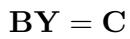
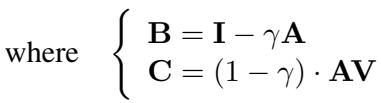
Triangular systems are much faster and numerically stable to solve than general matrix inversions. During training, this can be done efficiently on GPUs.
Inference: Token-by-Token
During text generation (inference), we generate one token at a time. ChaCAL handles this elegantly using forward substitution. The model doesn’t need to re-compute the whole history. It can update the state for the new token based on the previous states.
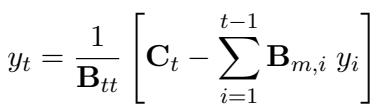
This creates a recurrent view of the attention mechanism. The state \(y_t\) accumulates information from all previous \(y_i\), weighted by the attention scores. This is structurally similar to how Recurrent Neural Networks (RNNs) work, but integrated directly into the powerful Transformer architecture.
Experiments and Results
The theory sounds solid, but does it work? The researchers tested ChaCAL against standard Transformers on three distinct tasks.
1. The Toy Dataset: Stress Testing the Limit
They created a synthetic task specifically designed to break Transformers. It involves jumping through a list of random indices.
- The Task: “Index 5 points to Index 2. Index 2 points to Index 8…” The model must predict the next index in the chain.
- The Setup: Chain length is 15. According to the theorem, \(\log_2(16) = 4\) layers should be the minimum required for a standard Transformer.
The Results:
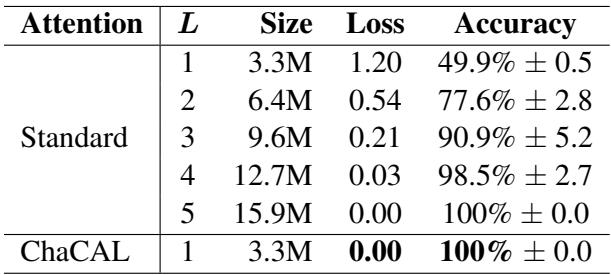
The results perfectly validate the theorem.
- Standard Transformer (1 layer): ~50% accuracy (Failed).
- Standard Transformer (3 layers): ~91% accuracy (Struggling).
- Standard Transformer (5 layers): 100% accuracy (Success).
- ChaCAL (1 layer): 100% accuracy.
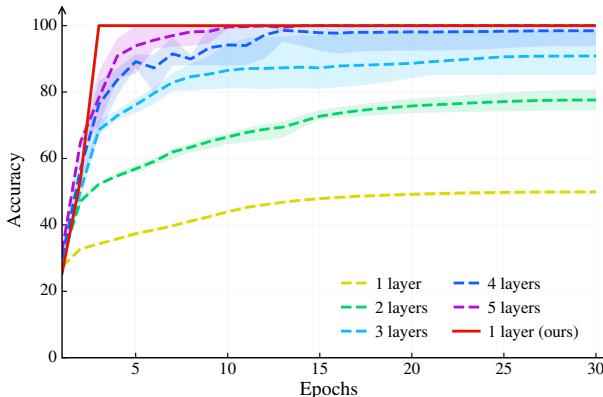
As shown in Figure 3, ChaCAL (the red line) solves the task almost instantly, while standard models struggle for many epochs or require significantly more depth to even begin learning.
2. The Boxes Dataset: Explicit Entity Tracking
Next, they used a textual dataset involving objects moving between boxes (similar to the example in the Introduction). They used an “Advanced” version of the dataset where operations are implicit (e.g., “Move contents of Box A to Box B” rather than listing the items), forcing deep dependency tracking.
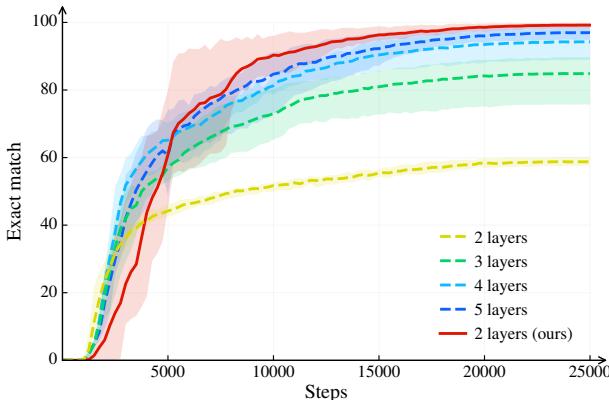
Figure 4 shows the training progress. The standard models (even with 5 layers) struggle to reach high accuracy efficiently. The 2-layer ChaCAL model (red line) learns faster and reaches higher final accuracy (99.1%) than a 5-layer standard Transformer (97.0%).
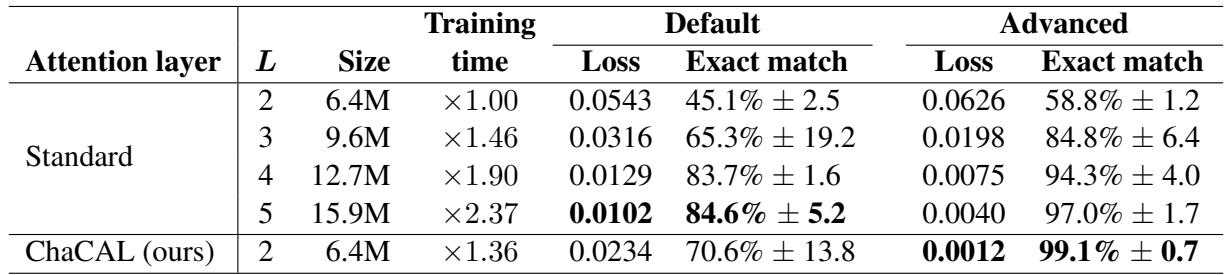
This confirms that for tasks requiring logic and state maintenance, the “infinite hop” capability of ChaCAL is a massive advantage. It allows for “frugal” models—achieving better results with fewer layers (and thus less memory and compute).
3. General Language Modeling
Finally, one might worry: does this specialized math mess up the model’s ability to just write normal English?
The researchers fine-tuned a GPT-2 model (replacing attention with ChaCAL) on the OpenWebText dataset.
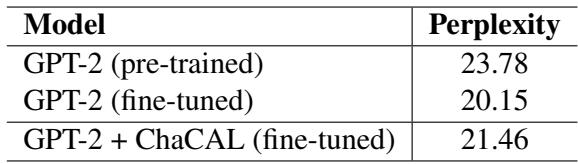
The perplexity (a measure of how well a probability model predicts a sample) remained competitive. ChaCAL does not degrade the general language capabilities of the model. This suggests it could be a drop-in replacement or an enhancement for future LLM architectures.
The Role of Gamma (\(\gamma\))
The parameter \(\gamma\) is critical. It controls how far back the model looks.
- \(\gamma \approx 0\): Acts like standard attention (1 hop).
- \(\gamma \approx 1\): Looks infinitely far back.
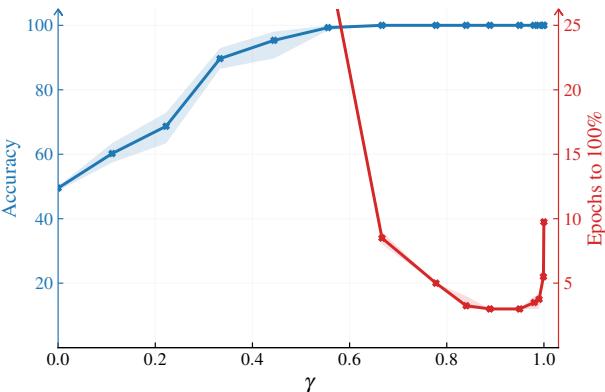
The authors found that \(\gamma = 0.9\) is a sweet spot. As seen in Figure 5, if \(\gamma\) is too low, accuracy drops (the model can’t see the full chain). If it’s too high (extremely close to 1), the training becomes unstable because the matrix becomes nearly singular.
Conclusion and Implications
The paper “Chain and Causal Attention for Efficient Entity Tracking” provides a crucial piece of the puzzle regarding why LLMs sometimes hallucinate or lose track of details in long contexts. It’s not just about context length; it’s about depth.
Standard Transformers are theoretically limited in tracking state changes by their layer count. By re-imagining attention as a graph adjacency matrix and applying a geometric series summation, ChaCAL breaks this limit.
Key Takeaways:
- Theoretical Limit: Transformers need \(\log_2(n)\) layers to track \(n\) state changes.
- Infinite Receptive Field: ChaCAL enables a single layer to track dependencies of arbitrary length.
- Efficiency: It solves the problem using triangular linear systems, avoiding expensive matrix inversions.
- Frugality: ChaCAL models can match or beat much deeper standard models on tracking tasks, saving computational resources.
This research opens exciting avenues for “frugal AI.” Instead of simply making models bigger and deeper to make them smarter, we can make the internal mechanisms more mathematically robust. For applications involving reasoning, code execution, or long-form storytelling, mechanisms like ChaCAL could be the key to the next generation of more consistent and reliable Language Models.