](https://deep-paper.org/en/paper/2410.14204/images/cover.png)
Introduction
Imagine a future where doctor burnout is significantly reduced, and patients have instant access to high-quality medical triage. This is the promise of Medical Task-Oriented Dialogue (TOD) systems. These AI agents aim to assist doctors by collecting patient medical history, aiding in diagnosis, and guiding treatment selection.
However, if you have ever tried to build a medical chatbot, you likely ran into a massive wall: data. Specifically, the lack of high-quality, privacy-compliant, English-language datasets. While general-purpose chatbots have flourished thanks to massive internet scrapes, medical AI is starved for data due to strict privacy regulations (like HIPAA). Furthermore, the few datasets that do exist often oversimplify the complexity of medicine. They might capture that a patient has a fever, but fail to capture when it started, how it progressed, or what makes it better.
In this deep dive, we are exploring a new research paper that aims to solve these problems: MediTOD. This paper introduces a new dataset, a novel annotation schema called CMAS, and a suite of benchmarks that challenge even the most advanced Large Language Models (LLMs) like GPT-4 and Llama 3.
If you are a student of NLP or Health informatics, understanding MediTOD is crucial because it shifts the paradigm from simple “keyword spotting” to deep, structured medical understanding.
The Problem with Existing Medical Datasets
To understand why MediTOD is necessary, we first need to look at the current landscape of Task-Oriented Dialogue (TOD). A typical TOD system usually consists of three modular components:
- Natural Language Understanding (NLU): Deciphering what the user wants (Intents) and extracting specific details (Slots).
- Policy Learning (POL): Deciding what the system should do next based on the dialogue history.
- Natural Language Generation (NLG): Converting the system’s decision into a natural language response.
For a medical system to work, it needs training data for all three components. However, existing datasets suffer from three major limitations:
- Language Barriers: Many high-quality medical datasets are in Chinese (e.g., CMDD, MIE, ReMeDi), limiting their utility for the global English-speaking research community.
- Fragmented Annotations: Most datasets only annotate for one task (usually NLU) rather than the full pipeline (NLU, POL, and NLG).
- Simplistic Representation: This is the most critical flaw. Most datasets use “Key-Value” pairs to represent information.
The “Key-Value” Trap
In a standard TOD dataset (like those used for booking restaurants), a slot might be price=cheap. This works for booking a table, but medicine is hierarchical and relational.
Consider a patient saying: “I have had a sore throat for four days and a fever for two days.”
A standard key-value annotation might look like this:
Symptom: Sore ThroatDuration: 4 daysSymptom: FeverDuration: 2 days
When these are flattened into a list, the model loses the connection. Which symptom lasted four days? Which one lasted two? In a diagnosis, the chronology of symptoms is vital. If the fever started before the sore throat, it might suggest a different pathology than if it started after.
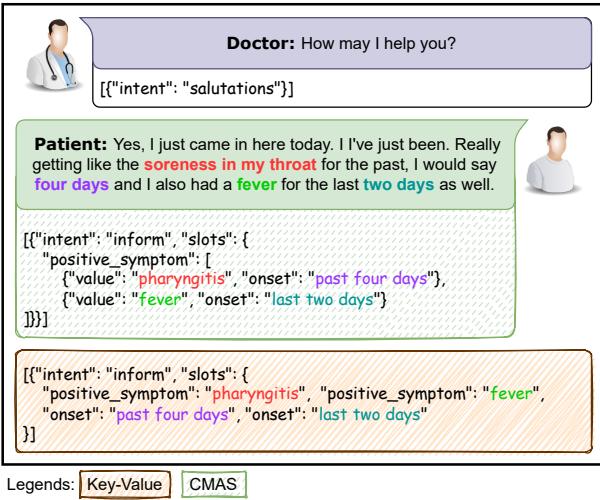
As shown in Figure 1 above, the MediTOD paper introduces a solution to this. The top section shows the CMAS (Comprehensive Medical Attribute Schema) structure. Notice how onset is treated as an attribute nested directly under the specific symptom (Pharyngitis or Fever). This creates a structured patient profile where every attribute is inextricably linked to its parent concept.
The bottom section of Figure 1 shows the “Key-Value” approach, where the link is lost. This distinction is the core motivation behind the MediTOD project.
MediTOD: The Dataset Construction
The researchers didn’t just scrape the web for data; they built a pipeline to ensure clinical accuracy. Here is how they constructed the dataset.
1. Dialogue Acquisition (The Source)
Instead of using real patient data (which is fraught with privacy issues) or purely synthetic data (which can be unrealistic), the authors utilized OSCE (Objective Structured Clinical Examination) dialogues. These are staged interviews where medical professionals role-play as doctors and patients. This ensures the medical reasoning is sound and the dialogue flows naturally, but no actual patient privacy is violated.
The dataset focuses on two specialties: Respiratory (used for training and in-domain testing) and Musculoskeletal (used for out-of-domain testing to see if the models can generalize).
2. The CMAS Ontology
The authors collaborated with doctors to define the Comprehensive Medical Attribute Schema (CMAS). This schema moves beyond simple entity extraction. It includes:
- Intents: What is the speaker doing? (e.g.,
Inform,Inquire,Diagnose,Chit-chat). - Slots: High-level categories (e.g.,
Symptom,Medical History,Medication). - Attributes: Detailed descriptors linked to slots (e.g.,
Severity,Onset,Frequency,Dosage).
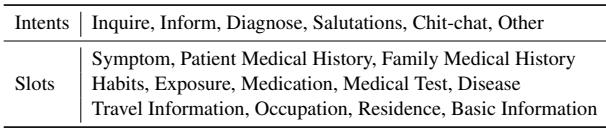
Table 2 provides a high-level view of the intents and slots covered. This is a comprehensive list designed to capture the full “History Taking” process that a doctor performs during a consultation.
3. The Questionnaire-Based Annotation Framework
Annotating medical data is notoriously difficult. If you just give annotators a text box, they will label things inconsistently. To solve this, the researchers developed a Questionnaire-Based Labeling Scheme.
Instead of asking annotators to “tag the entities,” the system asks them medical questions based on the dialogue. For example, if an annotator selects “Symptom,” the system triggers a specific set of questions: “Where is it located?”, “When did it appear?”, “How severe is it?”.
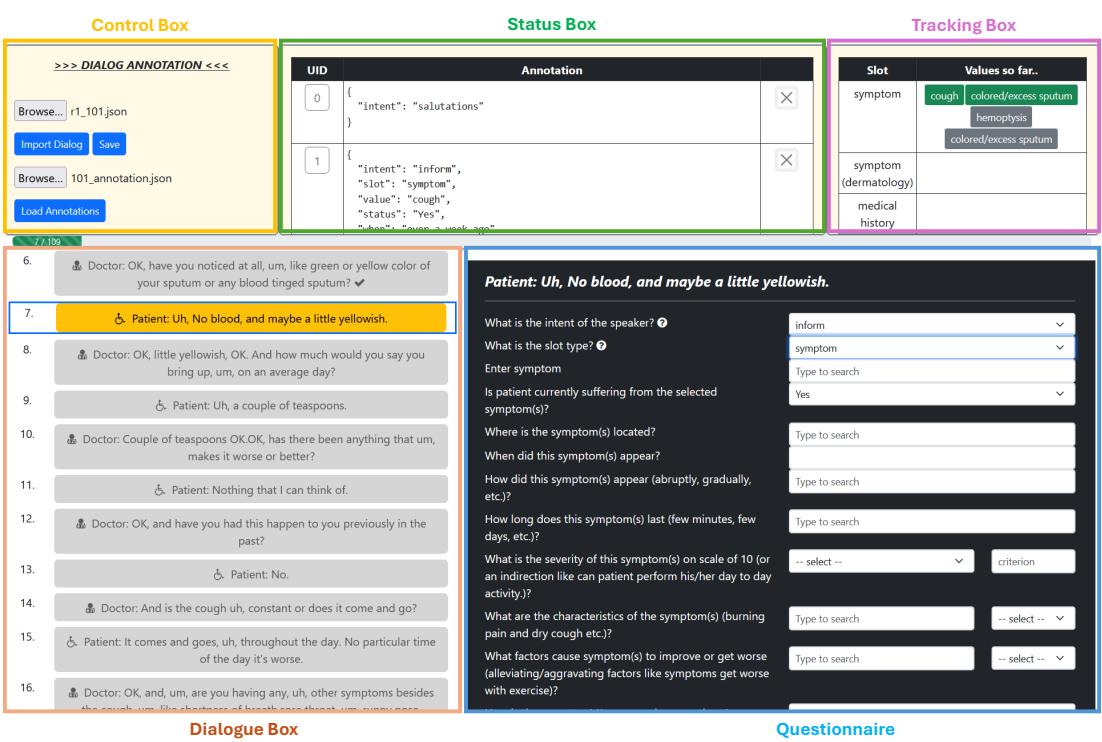
Figure 2 shows this interface in action.
- The Orange Box shows the current dialogue.
- The Blue Box (Questionnaire) guides the annotator through specific attributes.
- The Pink Box (Tracking) keeps a running log of the patient’s state.
This approach forces consistency. An annotator cannot forget to tag the “onset” of a symptom because the system explicitly asks for it.
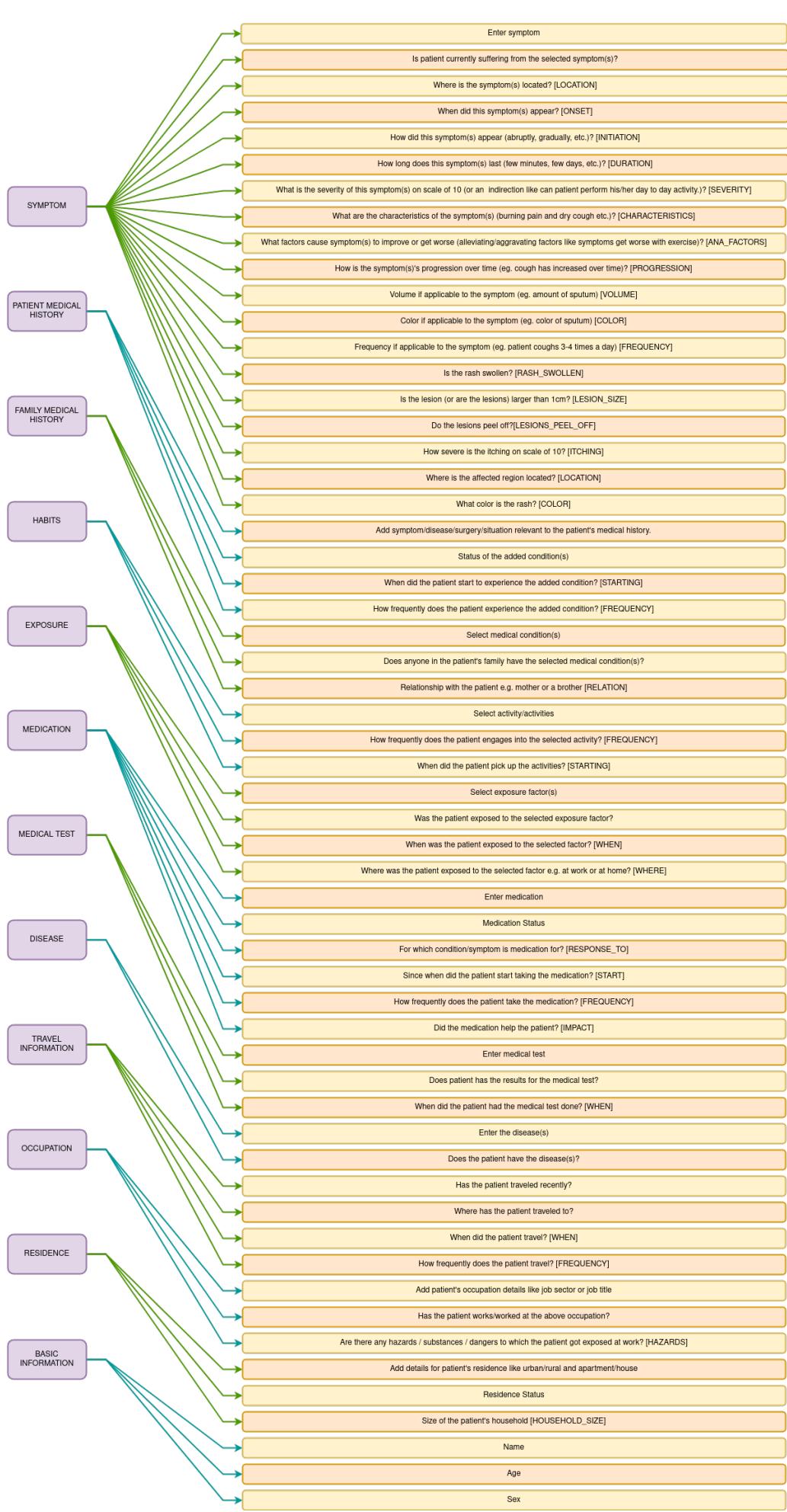
Figure 5 details the specific questions associated with different slots. This creates a standardized decision tree for annotation. For example, under Medication, the system forces the annotator to check for Status (is the patient taking it?), Response_to (what is it for?), and Impact (did it help?).
4. Canonicalization with UMLS
Doctors and patients rarely use the exact same words. A patient might say “shortness of breath,” “can’t breathe,” or “gasping.” A doctor writes “Dyspnea.”
To make this dataset useful for computers, the authors performed Canonicalization. They mapped the raw text spans to precise medical concepts in the UMLS (Unified Medical Language System). This means that regardless of how a patient describes a symptom, the system links it to a standardized medical ID. This is critical for connecting the dialogue system to external medical knowledge bases later on.
Dataset Statistics and Analysis
The final MediTOD dataset contains 22,503 annotated utterances. This makes it one of the largest English medical TOD datasets available.
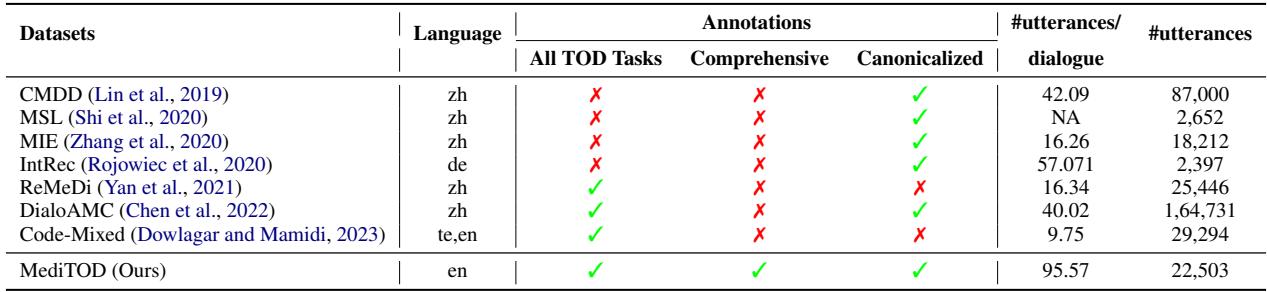
Table 1 compares MediTOD to existing resources. You can see that while some Chinese datasets (like DialoAMC) are larger, MediTOD is unique in the English language for having both comprehensive attributes and canonicalization.
The Structure of a Medical Dialogue
One of the most interesting findings from the dataset analysis is how structured these conversations are.
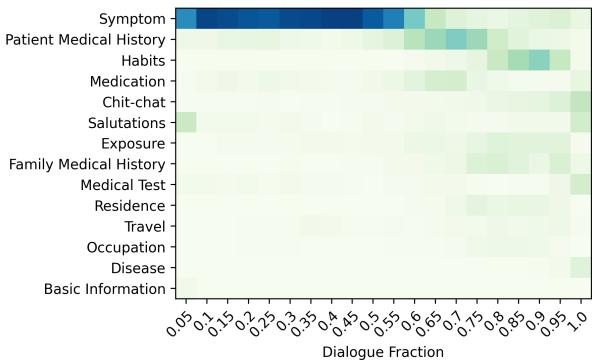
Figure 4 is a heatmap showing the flow of topics over time (from the start of the dialogue to the end).
- Early Dialogue (Left side): Heavily dominated by Symptoms (the top row). The doctor is trying to figure out what is wrong.
- Mid Dialogue: Shifts toward Medical History, Habits, and Family History.
- Late Dialogue (Right side): Moves toward Medical Tests and Diagnosis.
This confirms that medical history taking is a systematic process, which is promising for training Policy Learning (POL) models. The models can learn this predictable flow.
Experimental Benchmarks
The authors didn’t just release the data; they benchmarked it using state-of-the-art models. They tested three tasks:
- NLU: Can the model extract the CMAS structure from text?
- POL: Can the model predict the doctor’s next action?
- NLG: Can the model generate the doctor’s response?
They compared two types of models:
- Supervised (Fine-tuned): Models trained specifically on the MediTOD training set (e.g., PPTOD, Flan-T5, BioGPT, Llama3 8B, OpenBioLLM).
- In-Context Learning (Few-Shot): LLMs prompted with a few examples (e.g., ChatGPT, GPT-4, Llama3 70B).
Task 1: Natural Language Understanding (NLU)
This task involves taking a patient’s utterance and converting it into the structured JSON format defined by CMAS.
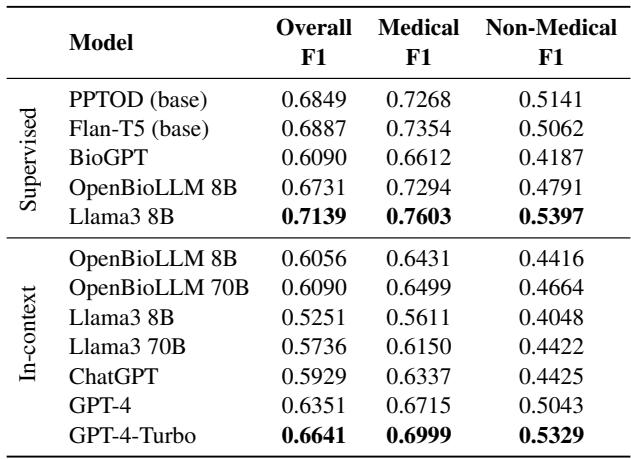
Table 4 shows the results.
- Winner: Llama3 8B (Supervised) achieved the best overall F1 score (0.7139).
- Observation: Supervised models generally outperformed In-context learning models (like GPT-4). This is likely because the CMAS schema is complex and specific; fine-tuning helps the model learn the exact output structure better than a few prompts can.
- Medical vs. Non-Medical: Models struggled more with non-medical attributes (like time durations expressed in vague terms) than strict medical terms.
Task 2: Policy Learning (POL)
This is the “brain” of the doctor. Given the history, what should the doctor ask or say next? The authors measured this using Precision@K (did the model predict the correct medical attribute to discuss within the next K turns?).
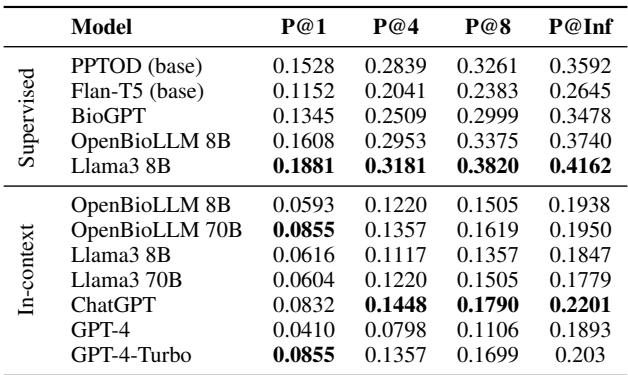
Table 5 (F1 Scores) and Table 6 (Precision@K, below) highlight a significant challenge.
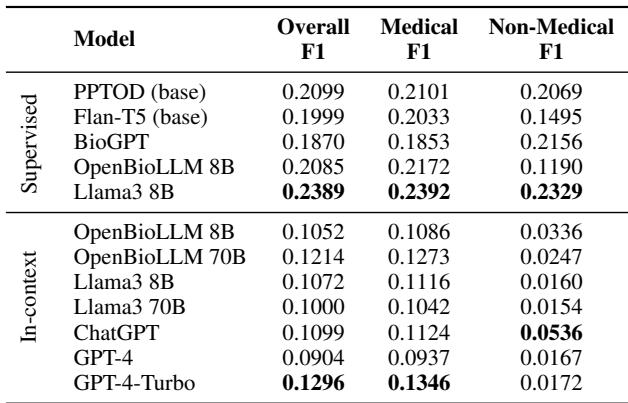
- The scores are low. The best F1 score is only around 0.23 (Llama3 8B).
- Why? Predicting exactly what a doctor will ask next is incredibly difficult. There are many valid paths a conversation can take.
- In-Context Struggle: The few-shot models (ChatGPT/GPT-4) performed significantly worse than supervised models here. Policy learning requires “planning ahead,” which is hard to induce with just a prompt.
Task 3: Natural Language Generation (NLG)
Finally, the system must speak. The metrics used here were BLEU, ROUGE, and BERTScore (which measures semantic similarity rather than just word overlap).
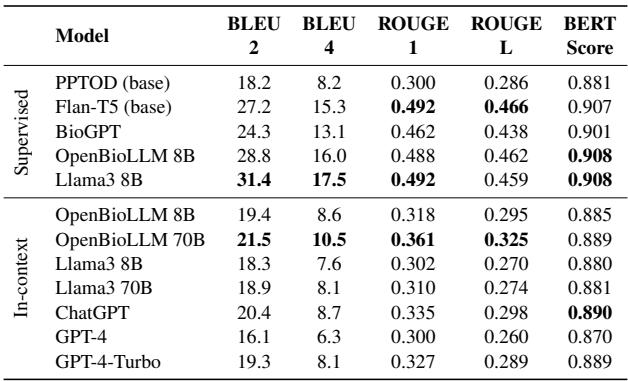
Table 7 shows the NLG results.
- Semantic Quality: The BERTScores are high (~0.90) across the board, meaning all models (even the older ones) generate responses that mean roughly the right thing.
- Supervised Advantage: Llama3 8B (Supervised) again takes the lead in automated metrics.
Qualitative Analysis: Where do the models fail?
The raw numbers don’t tell the whole story. The authors provided excellent examples of how these models fail, which is vital for understanding the limitations of current AI in healthcare.
Failure 1: Hallucination and Attribute Errors
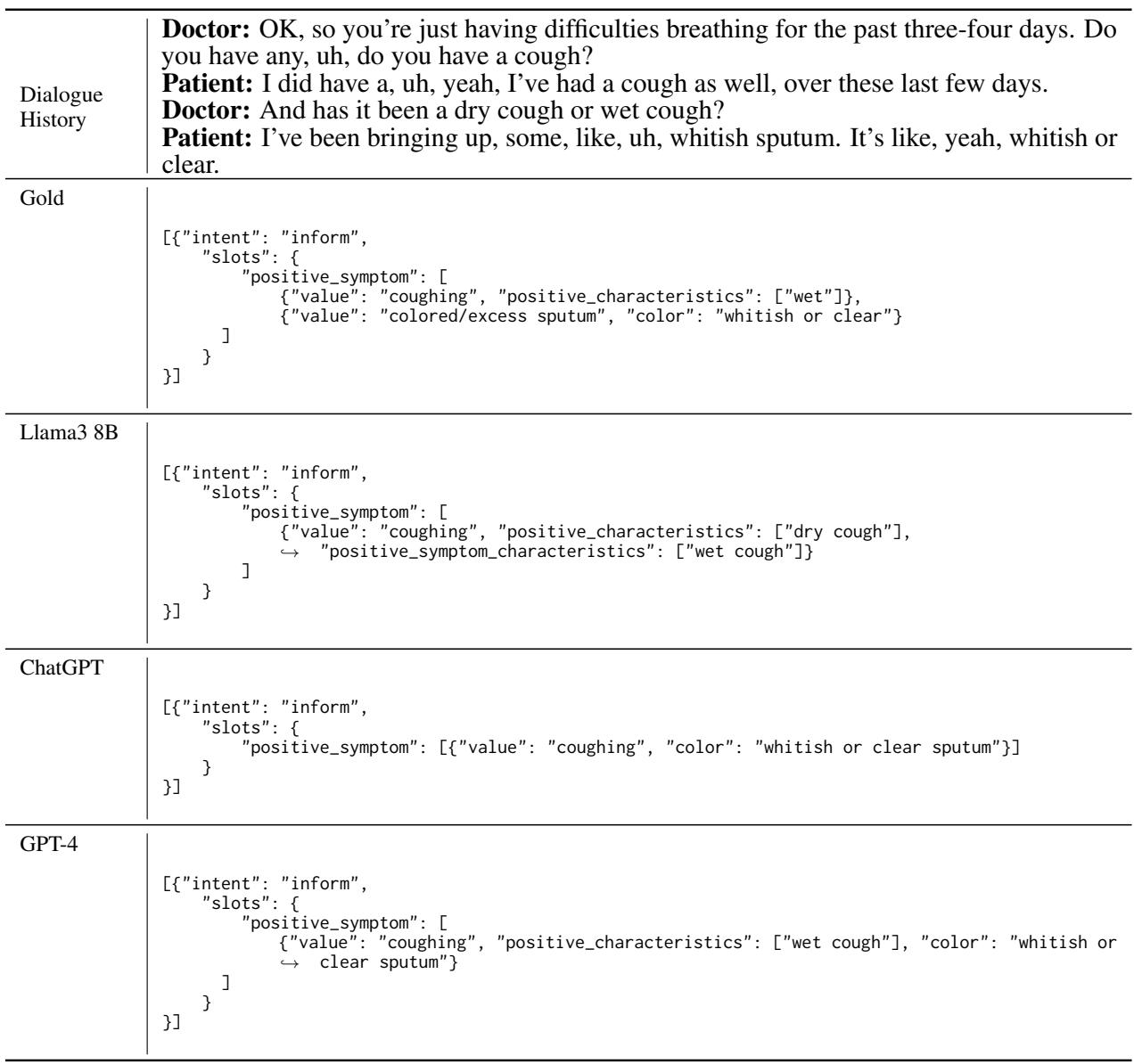
In Table 15, we see a fascinating error.
- The Patient says: “I’ve had a cough… bringing up whitish sputum.”
- The Gold Label: Links “whitish” to “sputum.”
- Llama3 8B: Hallucinates that the cough is both “wet” AND “dry.” This is clinically contradictory.
- ChatGPT/GPT-4: They link the color “whitish” directly to the “cough” rather than the “sputum.” While subtle, this violates the medical ontology.
Failure 2: Specificity and Medical Nuance
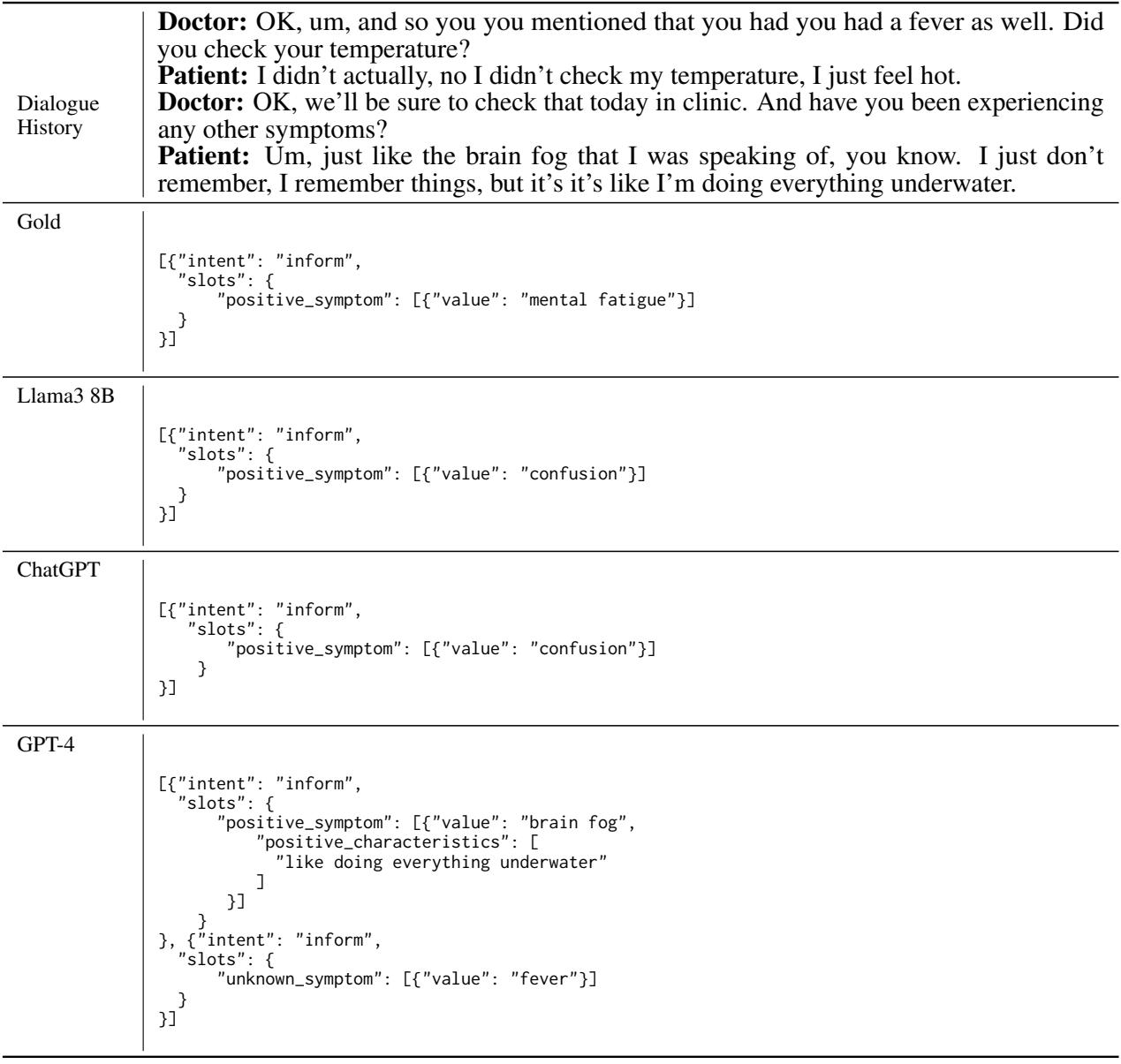
In Table 14:
- Patient: “I remember things, but it’s like I’m doing everything underwater.”
- Gold Label:
Mental Fatigue. - Models: Predict
Confusion. - Analysis: In medicine, “confusion” (disorientation) is distinct from “mental fatigue” (tiredness/fog). The models lack the clinical precision to distinguish these concepts based on the metaphor “underwater.”
Failure 3: Repetition in Complex Responses
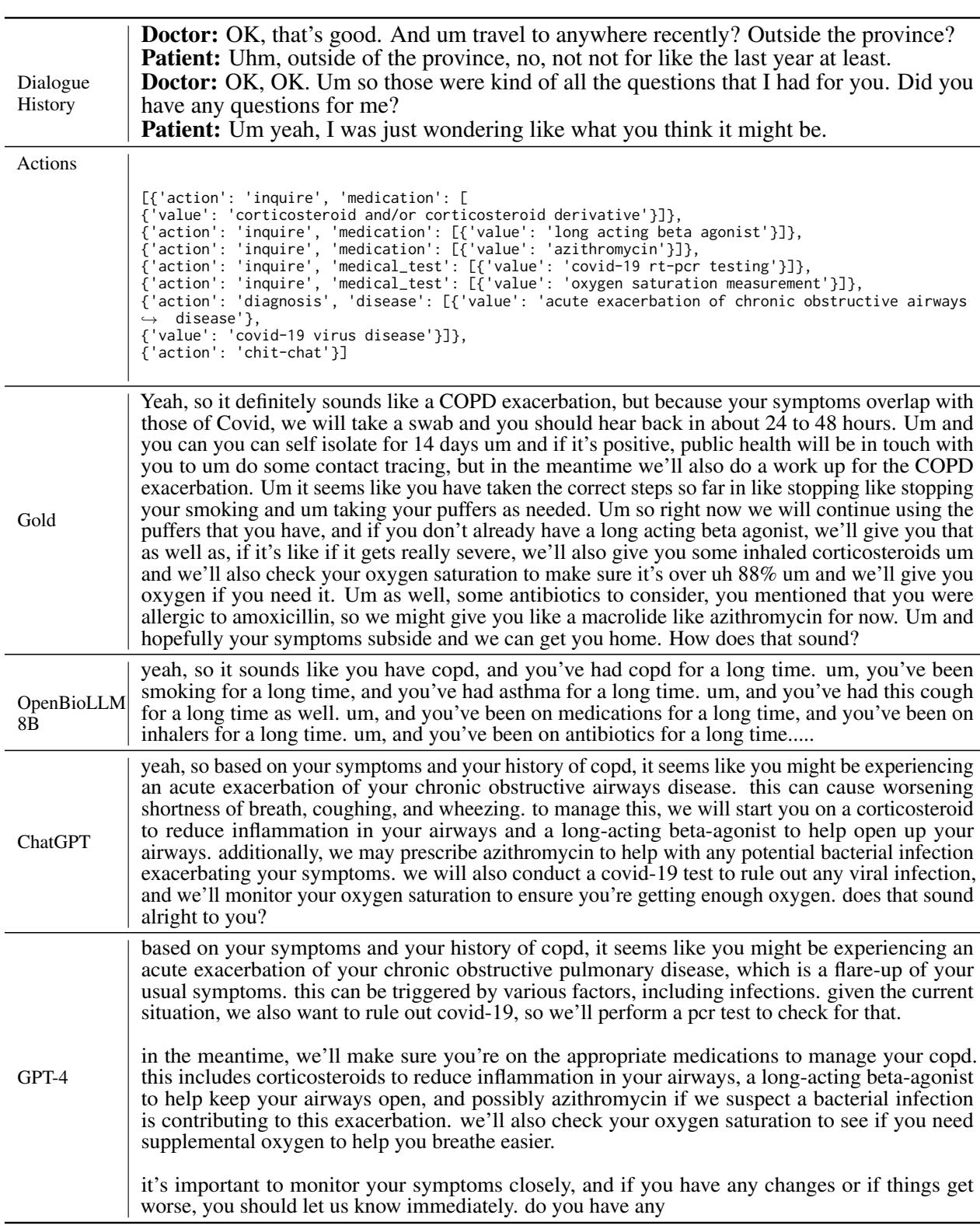
Table 16 shows NLG failure. When the supervised OpenBioLLM tries to summarize a long diagnosis (COPD), it gets stuck in a loop: “…you’ve had copd for a long time… smoking for a long time… asthma for a long time…”
Interestingly, while ChatGPT and GPT-4 had lower scores on some automated metrics, their text generation in complex scenarios (like Table 16) is much more fluent and natural than the smaller, fine-tuned models.
Out-of-Domain Generalization
Finally, the authors tested the models on the Musculoskeletal dataset (remember, they were trained on Respiratory data).
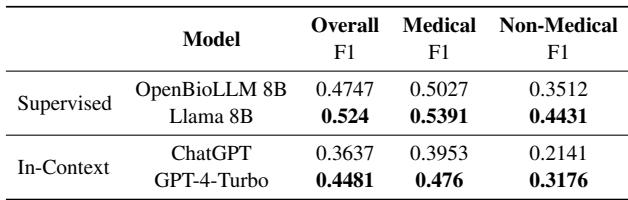
As shown in Table 8, performance drops significantly when moving to a new medical specialty. The terms used in orthopedics (fractures, swelling, joint pain) are very different from pulmonology (cough, sputum, wheezing). This indicates that while MediTOD is a great start, we likely need diverse training data from many specialties to build a truly universal AI doctor assistant.
Conclusion and Implications
The release of MediTOD represents a significant step forward for Medical AI. By moving away from flat key-value pairs and embracing the hierarchical CMAS ontology, the researchers have provided a blueprint for how medical data should be structured.
Key Takeaways for Students:
- Structure Matters: In domain-specific AI (like medicine or law), “big data” isn’t enough. You need “structured data.” The CMAS schema proves that capturing relationships (Symptom \(\to\) Onset) is crucial.
- Supervised Learning Still Rules: Despite the hype around Zero-shot LLMs, fine-tuned smaller models (like Llama3 8B) consistently outperformed giant generalist models (like GPT-4) on specific extraction tasks defined by a strict schema.
- The “Doctor” isn’t ready yet: The low scores on Policy Learning (predicting the next action) and the hallucinations in NLU show that we cannot simply plug an LLM into a hospital workflow. The risk of missing a symptom or hallucinating a condition is still too high.
MediTOD opens the door for exciting future research, including Knowledge-Grounded Dialogue (using the UMLS links to query medical databases) and Medical Summarization (generating patient notes). For now, it stands as the gold standard for English medical history-taking datasets.