](https://deep-paper.org/en/paper/2410.18481/images/cover.png)
Introduction: The Black Box of Conversation
In the rapidly evolving landscape of Artificial Intelligence, conversational agents—from customer service chatbots to sophisticated virtual assistants—have become ubiquitous. We interact with them daily to book flights, check bank balances, or troubleshoot technical issues. These are known as Task-Oriented Dialogs (TOD).
Behind every effective task-oriented bot lies a structured workflow: a flowchart designed by human experts that dictates: “If the user asks for X, check for Y. If Y is missing, ask for Z.” This structure ensures the agent actually helps the user achieve their goal. However, designing these workflows is a tedious, manual process. Furthermore, with the advent of Large Language Models (LLMs), the “logic” is often buried within billions of parameters, turning the bot into a black box that is hard to control or debug.
This leads to a compelling research question: Can we automatically reverse-engineer the underlying flowchart just by looking at the logs of past conversations?
If we could feed a raw transcript of thousands of customer support calls into a model and have it output a clean, directed graph of the service workflow, it would revolutionize how we design, audit, and improve conversational AI.
This is the problem tackled by the research paper “Dialog2Flow: Pre-training Soft-Contrastive Action-Driven Sentence Embeddings for Automatic Dialog Flow Extraction.” The researchers introduce a novel way to embed sentences—not by what they mean semantically, but by what action they perform in a conversation. By doing so, they can map a chaotic conversation into a structured trajectory, effectively visualizing the hidden logic of dialogue.
In this post, we will deep-dive into how Dialog2Flow (D2F) works, the mathematical innovation behind its “Soft-Contrastive” loss function, and how it outperforms existing state-of-the-art models in extracting usable dialogue flows.
Background: The Anatomy of a Task-Oriented Dialog
To understand how Dialog2Flow works, we first need to understand the data it operates on. Unlike open-ended chit-chat (e.g., “Do you think aliens exist?”), Task-Oriented Dialogs are functional. They have a start, a goal, and a finish line.
Dialog Acts and Slots
In the world of computational linguistics, we break down these conversations using two key concepts:
- Dialog Acts: The communicative intent of the speaker (e.g.,
INFORM,REQUEST,GREET,CONFIRM). - Slots: The specific parameters or entities involved (e.g.,
PHONE_NUMBER,DEPARTMENT,PRICE).
When we combine the Dialog Act with the Slot, we get an Action.
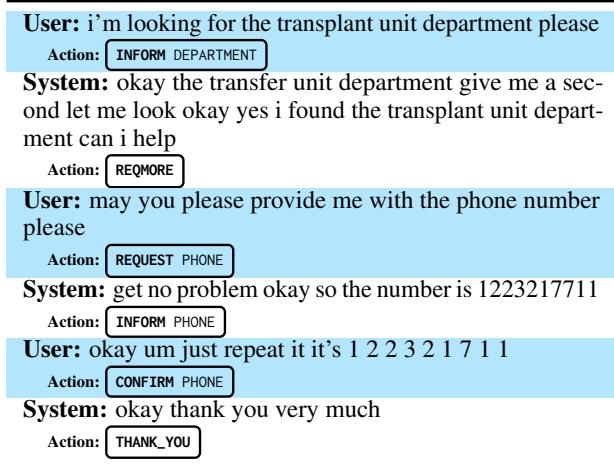
As shown in Figure 1 above, an utterance like “may you please provide me with the phone number please” isn’t just a sentence; it is a specific action labeled REQUEST PHONE. The system’s response, “the number is 122…”, is the action INFORM PHONE.
The Goal: From Utterances to Graphs
The ultimate objective of this research is to take thousands of these discrete actions and stitch them together to reveal the “Global Workflow” of a specific domain (like a hospital or a restaurant booking system).
If we define every possible action as a “node” in a graph, and every turn in the conversation as an edge connecting two nodes, we should ideally produce a clean flowchart that looks like this:
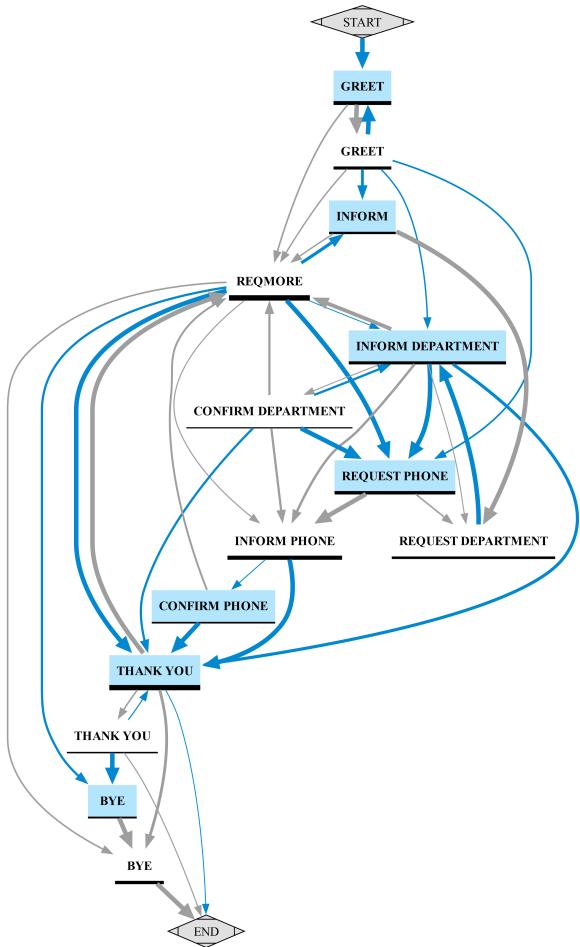
Figure 2 represents the “Ground Truth”—the actual workflow used to generate the data. We see clear paths: specific requests lead to specific confirmations, which lead to specific information being provided.
The Problem with Existing Embeddings
To automate this extraction without having access to the ground truth labels, we usually rely on Sentence Embeddings. We turn every sentence into a vector (a list of numbers) and group similar vectors together.
However, standard embedding models fail here:
- Semantic Models (e.g., Sentence-BERT): These group sentences by meaning. They might group “What is the price?” and “The price is $5” together because they share the word “price.” But in a flowchart, a question and an answer are opposite steps.
- Context Models (e.g., DSE): These group sentences based on whether they appear near each other in a conversation. This helps, but often blurs the lines between distinct actions.
Dialog2Flow proposes a third way: Action-Driven Embeddings. The model is trained to group sentences that perform the same communicative function, regardless of the specific words used.
The Foundation: A Unified Dataset
One of the major hurdles in this field is data fragmentation. There are dozens of datasets for task-oriented dialog, but they all use different labeling schemes. One dataset might use the label question_price, another request_cost, and a third ask_amount.
Before training their model, the authors undertook a massive data engineering effort. They consolidated twenty different task-oriented dialog datasets. They manually inspected and standardized the annotations, mapping disparate labels into a unified schema of 18 dialog acts and 524 slot labels.
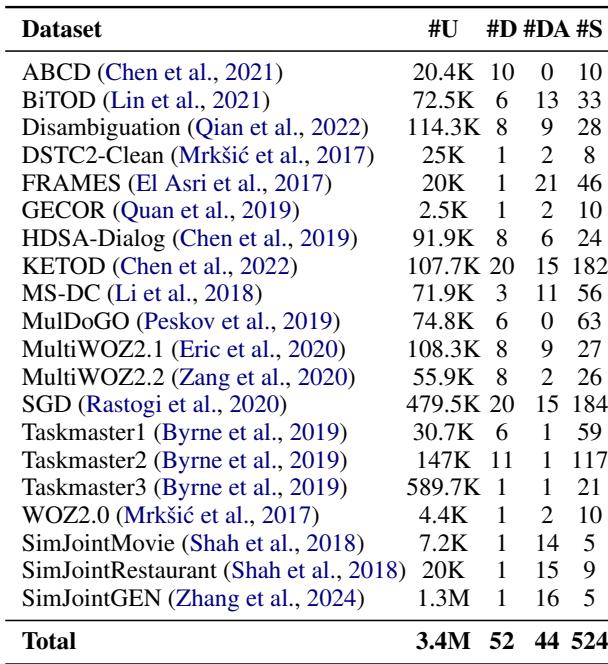
As seen in Table 1, the resulting corpus is massive, containing 3.4 million utterances across 52 domains. This is the largest publicly available dataset with standardized action annotations, and it serves as the bedrock for training the Dialog2Flow model.
The Core Method: Soft-Contrastive Learning
This section details the heart of the paper: how the Dialog2Flow (D2F) model actually learns.
The Architecture
The framework uses a standard architecture common in modern NLP:
- Encoder (\(f\)): A BERT-based transformer that converts a sentence \(x\) into a representation vector.
- Contrastive Head (\(g\)): A small neural network layer that maps that representation into a specific space where the training loss is calculated.
- Similarity Measure: Cosine similarity is used to measure how “close” two sentences are in this space.
The magic isn’t in the architecture itself, but in the Loss Function—the mathematical formula that tells the network how to adjust its weights during training.
Standard Supervised Contrastive Loss (The “Hard” Way)
In standard contrastive learning, the goal is binary:
- Positive Pairs: Pull these together (e.g., two sentences that both mean
REQUEST PRICE). - Negative Pairs: Push these apart (e.g.,
REQUEST PRICEandGREETING).
The standard equation for this “Hard” Supervised Contrastive Loss looks like this:
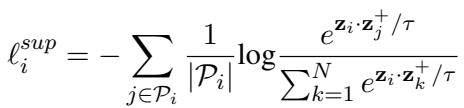
Here, \(\mathbf{z}_i\) is our anchor sentence, and \(\mathbf{z}_j^+\) is a positive match. The formula essentially tries to maximize the similarity between the anchor and the positive match, while minimizing the similarity to everything else in the batch (the denominator).
The Limitation: This approach treats all negatives equally.
In a dialogue, REQUEST PRICE is definitely different from INFORM PRICE. However, they are related—they both deal with pricing. They are semantically closer to each other than REQUEST PRICE is to GOODBYE.
The standard “Hard” loss forces the model to push INFORM PRICE and GOODBYE away from REQUEST PRICE with equal force. This results in a latent space where relationships between actions are lost.
The Innovation: Soft Contrastive Loss
The authors introduce a Soft Contrastive Loss. Instead of a binary “same vs. different” signal, they use the semantic similarity of the labels themselves to guide the learning.
They define a semantic similarity measure \(\delta(y_i, y_j)\) between the labels of two sentences. For example, the label “Inform Price” and “Request Price” might have a similarity of 0.6, while “Inform Price” and “Greeting” have a similarity of 0.1.
The Soft Contrastive Loss incorporates this similarity into the target distribution:
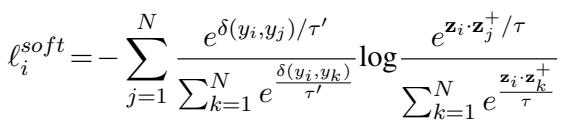
Let’s break this down:
- Look at the first term: \(\frac { e ^ { \delta ( y _ { i } , y _ { j } ) / \tau ^ { \prime } } } { \sum ... }\). This creates a “soft” target. It tells the model: “The distance between these two sentences should be proportional to the semantic distance between their labels.”
- If two labels are somewhat related, the model is penalized less for placing them near each other.
- If two labels are completely unrelated, the model is pushed to separate them aggressively.
This nuance allows Dialog2Flow to learn a “map” of conversation where similar actions cluster near each other, creating distinct regions for specific types of interactions (e.g., a “Pricing” region, a “Greeting” region).
Visualizing the Latent Space
Does this mathematical change actually result in a better organization of data? The authors visualize the embeddings on a sphere (since cosine similarity operates on angles).
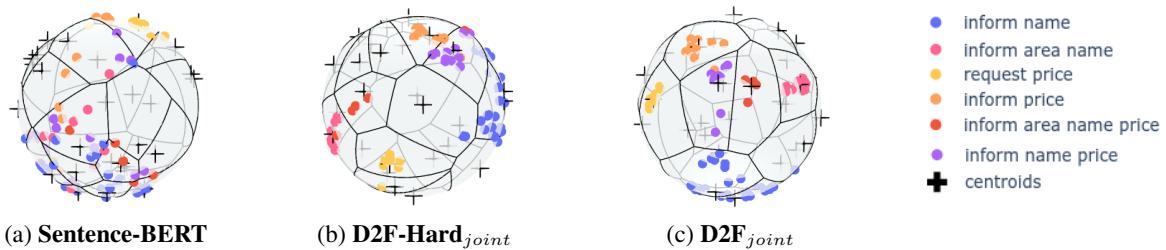
Figure 3 offers a striking comparison:
- (a) Sentence-BERT: Notice how the space is dominated by broad semantic concepts. It struggles to cleanly separate specific actions.
- (c) D2F (Joint): The clusters are tight and well-defined. Crucially, look at the arrangement. The cluster for
inform price(orange) is adjacent torequest price(yellow).inform name(blue) is in a different region.
The soft contrastive loss has successfully organized the latent space not just by topic, but by functional action, maintaining the semantic relationships between those actions.
Experiments and Quantitative Results
To prove the model’s effectiveness, the researchers evaluated it on two fronts: similarity-based metrics (how well it clusters) and the actual extraction of dialog flows.
Clustering Quality
They used a “Few-Shot Classification” task. Essentially, they gave a classifier just 1 or 5 examples of an action and asked it to identify other examples of that action from the embeddings. A high score means the embeddings for a specific action are very distinct and clumped tightly together.
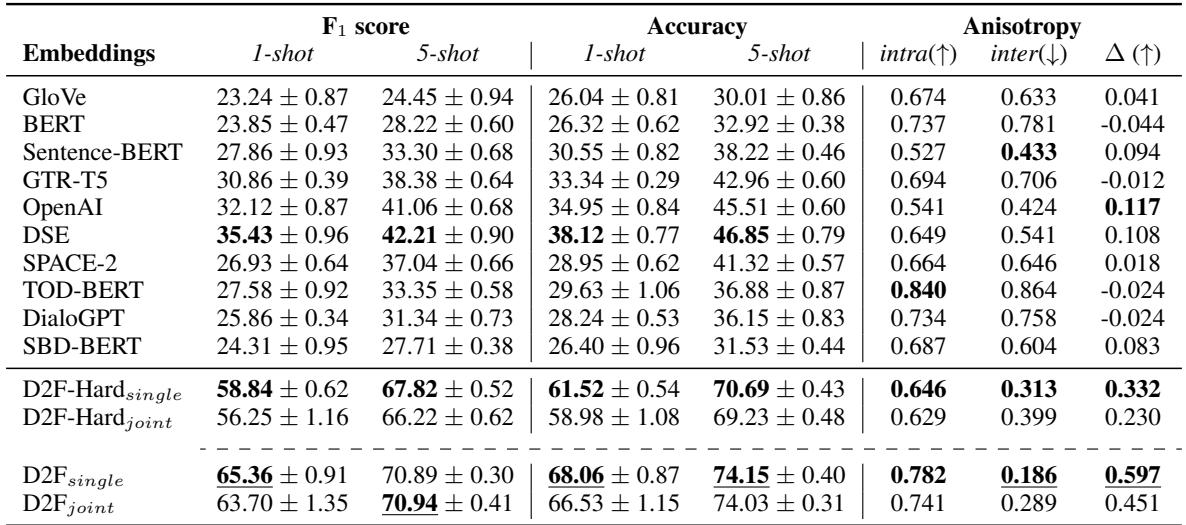
Table 2 shows the results on the unified test set:
- Baselines: General models like GloVe and BERT perform poorly (F1 scores around 20-30%). Even OpenAI’s embedding model only reaches ~32%.
- TOD-Specific: Models trained on dialogs like DSE and TOD-BERT do better (~35-40%), proving that context matters.
- Dialog2Flow (D2F): The proposed model dominates, jumping to 65-70% F1 scores.
The table also measures Anisotropy (specifically the \(\Delta\)). High \(\Delta\) Anisotropy is good—it means embeddings of the same action are very similar (high intra-action), while embeddings of different actions are dissimilar (low inter-action). D2F achieves a \(\Delta\) of 0.597, compared to just 0.108 for the next best baseline. This confirms the visual evidence from Figure 3: D2F creates very tight, distinct clusters.
Dialog Flow Extraction Results
Now for the ultimate test: Can D2F automatically reconstruct the flowchart of a conversation?
The researchers took the SpokenWOZ dataset (a challenging dataset of spoken conversations), clustered the sentences using different embedding models, and then drew lines between the clusters based on how the conversations flowed.
They then compared the size of these “Induced Graphs” to the “Reference Graph” (the ground truth). If the induced graph is much smaller, the model collapsed too many distinct actions together. If it’s too big, it fractured single actions into duplicates.
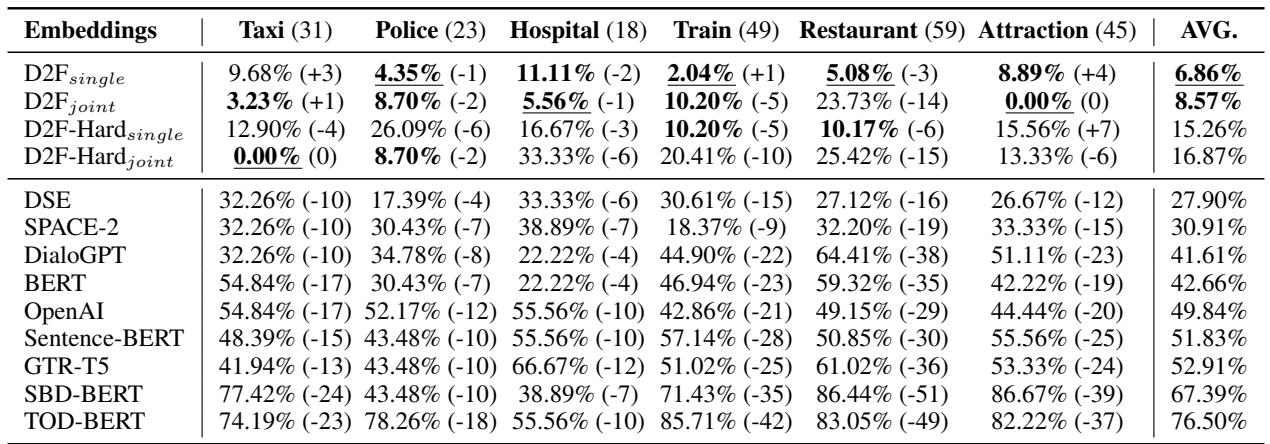
Table 6 reveals the accuracy of the graph complexity.
- SBD-BERT / TOD-BERT: These models produced graphs that were massively different in size (67-76% error), indicating they failed to capture the true structure of the interaction.
- DSE: Better, but still a 27% error.
- D2F (Single/Joint): The error drops to 6-8%. This suggests that D2F is finding almost the exact same number of “states” or “actions” as the human annotators defined.
Qualitative Analysis: Comparing the Flowcharts
Numbers are great, but in this field, visual inspection of the graphs is crucial. Let’s look at the graphs generated for the “Hospital” domain.
The Failures
First, let’s look at what happens when we use standard Sentence-BERT:
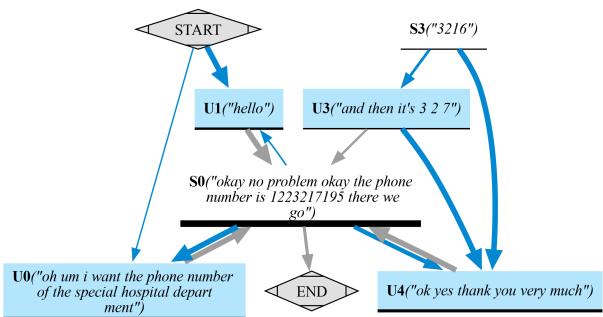
Figure A1 shows a graph with only 8 nodes. It is overly simplistic. It groups too many things together, losing the nuance of the back-and-forth negotiation.
Next, DSE (Dialog Sentence Embedding), which uses context:
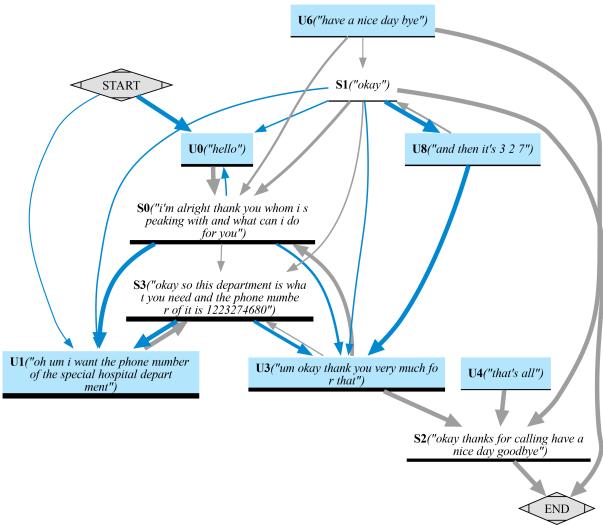
Figure A2 is better (12 nodes), but looking closely, the flow is messy. It struggles to distinguish between different types of user requests.
The Success: Dialog2Flow
Now, look at the graph generated by Dialog2Flow:
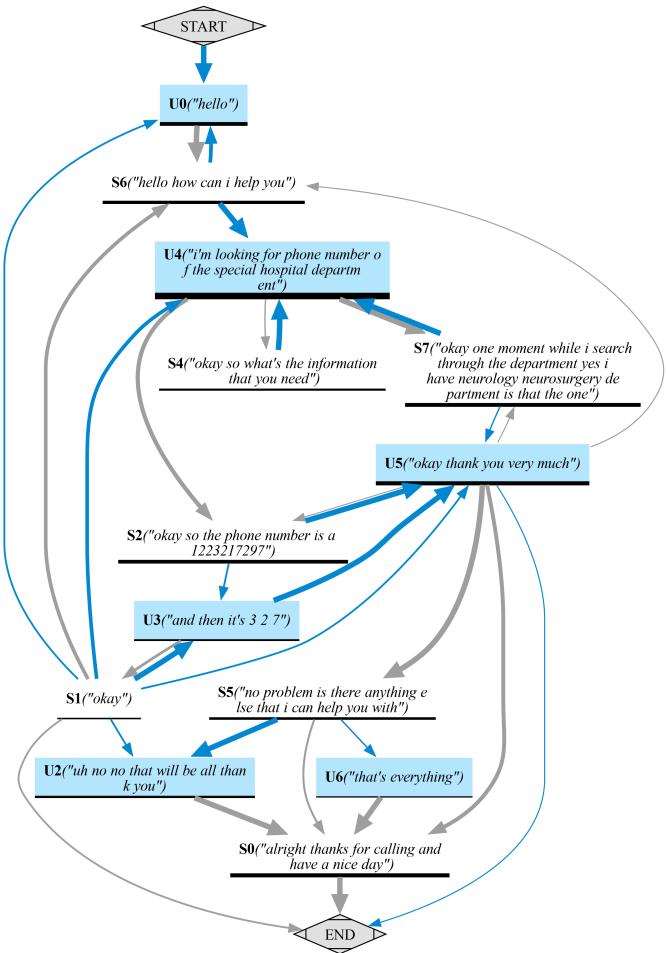
Figure 4 is remarkably close to the ground truth (Figure 2).
- Start: It correctly identifies the greeting (U0/S6).
- Request: It identifies the user asking for a department (U4).
- Branching: It captures the system’s logic: it can either confirm the department (S7) or request more info (S4).
- Resolution: It shows the system providing the number (S2).
- Closing: It captures the specific “Thank you” and “Goodbye” sequences (U2, S0).
The model discovered this logic purely by clustering the sentences based on the D2F embeddings—without ever seeing the ground truth labels for this specific domain.
Refining the Output with LLMs
One small challenge with unsupervised clustering is that the resulting nodes are just numbers (Cluster 0, Cluster 1). To make the graphs readable for humans, we need to label them.
The authors propose a “Prompt-Based” approach. They feed the sentences inside a cluster to a model like GPT-4 and ask, “What is the canonical intent of these sentences?”
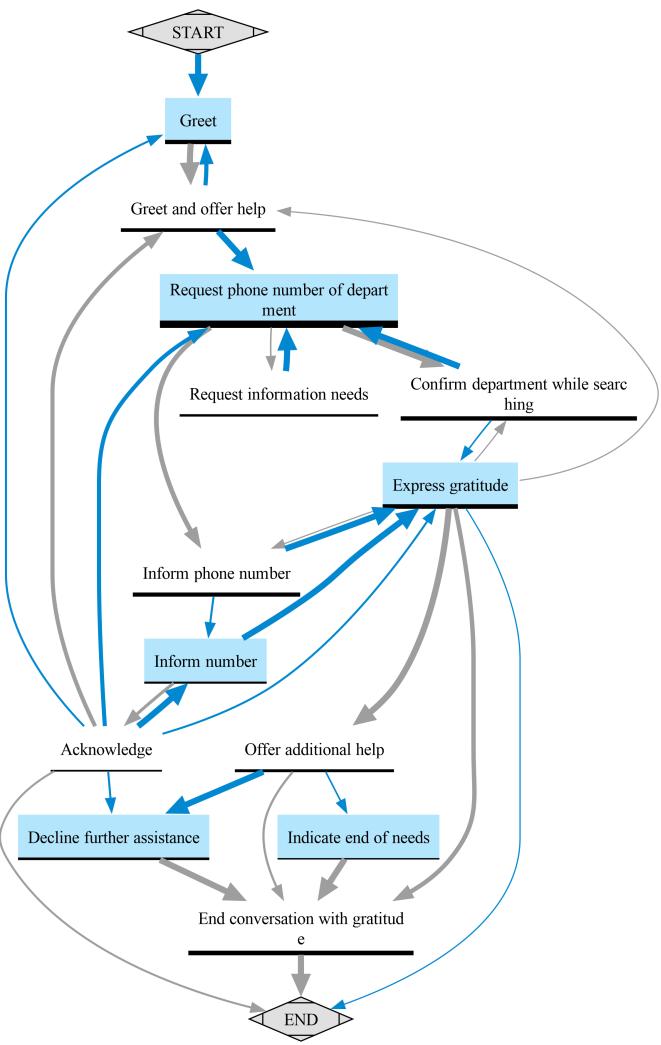
Figure A5 shows the result. The cryptic node IDs are replaced with clear labels like “Inform Phone Number” or “Request Entertainment Place.” This combination of D2F for structure and LLMs for labeling provides a complete pipeline for automated workflow discovery.
Conclusion and Implications
The Dialog2Flow paper presents a significant step forward in our ability to understand and structure conversational data. By shifting the focus of embedding models from “What does this mean?” to “What action is this performing?”, the researchers have unlocked a way to visualize the hidden logic of chatbots.
Key Takeaways:
- Action over Semantics: For dialogue structure, we need to model the function of an utterance, not just its content.
- Soft Contrastive Loss: Using semantic similarity of labels to guide training creates a much more organized latent space than binary positive/negative pairs.
- Real-World Utility: D2F outperforms massive general-purpose models (like OpenAI’s embeddings) on the specific task of dialog flow extraction.
Why does this matter? As we rely more on Large Language Models, the risk of hallucinations or off-script behavior increases. By using tools like Dialog2Flow, developers could potentially “ground” an LLM. Instead of letting the LLM guess what to do next, the system could consult the extracted flowchart to determine the next valid action, combining the fluency of an LLM with the safety and reliability of a traditional flowchart.
This research bridges the gap between the rigid, hand-coded bots of the past and the fluid, black-box AI of the present, offering a glimpse into a future where AI is both flexible and transparent.