](https://deep-paper.org/en/paper/2411.16781/images/cover.png)
Introduction
In the rapidly evolving landscape of computer vision and robotics, understanding human movement is fundamental. Whether it’s for Virtual Reality (VR), healthcare monitoring, or creating digital avatars, the ability for machines to perceive, describe, and replicate human body language is crucial.
Traditionally, this field has been fragmented. If you wanted to estimate a 3D pose from an image, you used one specific model. If you wanted to generate a 3D animation from a text description like “a person running,” you used a completely different generative model. And if you wanted to edit a pose—say, taking a sitting character and making them cross their legs—that required yet another specialized system.
These tasks—comprehension, generation, and editing—have largely been studied in isolation. Furthermore, most systems only handle one modality at a time (e.g., only text-to-pose, but not image-to-text).
Enter UniPose.
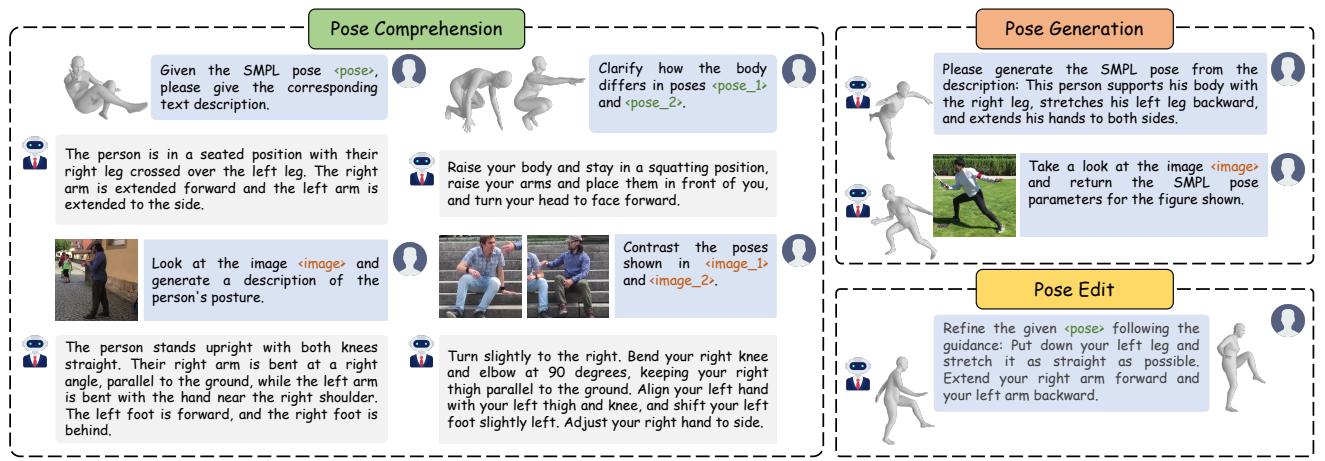
UniPose is a novel framework that attempts to unify these disparities. By leveraging the reasoning capabilities of Large Language Models (LLMs), UniPose treats human pose data as a “foreign language,” enabling a single model to comprehend, generate, and edit poses across text, images, and 3D SMPL representations.
In this post, we will deconstruct the UniPose paper. We will explore how the researchers turned 3D coordinates into language tokens, how they overcame the limitations of standard visual encoders, and how they modified LLM attention mechanisms to handle the unique spatial nature of human skeletons.
Background: The Multimodal Challenge
Before diving into the architecture, it is essential to understand why this unification is difficult.
The Modality Gap
Human communication regarding posture involves seamless transitions between visual cues (seeing a pose), linguistic descriptions (saying “they are kneeling”), and spatial understanding (the 3D position of joints).
- Pose Comprehension: Requires translating visual or 3D data into text (e.g., Image Captioning for poses).
- Pose Generation: Requires translating text or images into 3D geometric data.
- Pose Editing: Requires understanding an initial state, interpreting a text instruction, and predicting a new spatial state.
Recent Multimodal LLMs (MLLMs) like LLaVA or GPT-4V have made strides in connecting images and text. However, they typically rely on visual encoders like CLIP. While CLIP is excellent at matching general semantics (e.g., knowing a photo contains a “dog” or “grass”), it struggles with fine-grained spatial details. It might know a person is “standing,” but it often fails to detect if the left knee is slightly bent or if the right arm is rotated 45 degrees backward.
The Representation Gap
LLMs operate on discrete tokens—sequences of words or sub-words. 3D human poses, typically represented by SMPL (Skinned Multi-Person Linear) parameters, are continuous numerical values representing joint rotations and body shape. Feeding continuous numbers directly into an LLM designed for discrete vocabulary is inefficient and hard to model.
UniPose addresses these gaps through three key innovations:
- A Pose Tokenizer: To align 3D data with text.
- A Visual Processor: To capture fine-grained details.
- A Unified LLM: To process all tasks in a single framework.
The UniPose Framework
The core philosophy of UniPose is to bring every modality—text, image, and pose—into a shared representation space that an LLM can process. Let’s look at the high-level architecture.
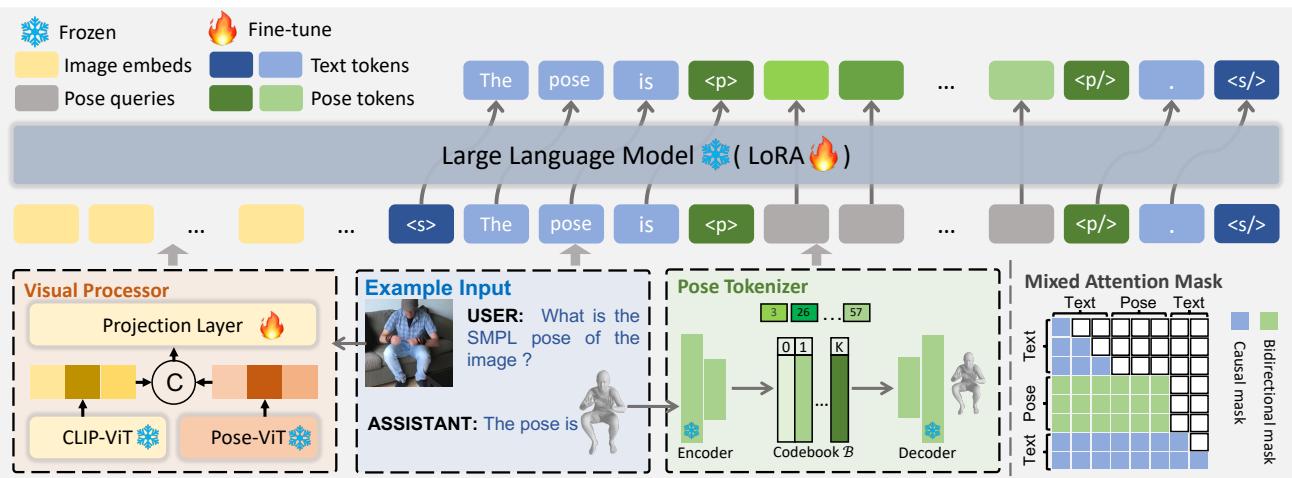
As shown in the architecture diagram above, the system consists of three main components. We will break them down one by one.
1. The Pose Tokenizer: Treating Pose as Language
To make an LLM “speak” pose, the researchers treated 3D skeletal data as a specific type of language. They employed a VQ-VAE (Vector Quantized Variational Autoencoder) to transform continuous 3D SMPL parameters into discrete tokens.
How it works: The tokenizer takes the continuous rotation parameters of a skeleton (\(\theta\)) and passes them through an encoder (\(\mathcal{E}\)) to get a latent embedding (\(z\)). The critical step is quantization. The model looks up the nearest match for this embedding in a learnable “codebook” (\(\mathcal{B}_p\)) of discrete vectors.
\[ \widehat { \boldsymbol { z } } = \underset { b _ { m } \in \mathcal { B } _ { p } } { \arg \operatorname* { m i n } } \left. \boldsymbol { z } - b _ { m } \right. _ { 2 } . \]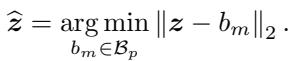
This process effectively “snaps” the continuous pose data to the nearest “word” in the pose dictionary. The result is a sequence of discrete codebook indices, which act exactly like text tokens.
\[ \mathbf { u } = \underset { m \in \{ 1 , \dots , M \} } { \arg \operatorname* { m i n } } \ \| z - b _ { m } \| _ { 2 } . \]
By expanding the LLM’s vocabulary to include these pose tokens, UniPose creates a unified space where text and pose can coexist. The LLM can now output a sequence of tokens that a De-tokenizer (decoder \(\mathcal{D}\)) converts back into a 3D human mesh.
2. The Visual Processor: A Mixture of Encoders
Standard MLLMs fail at detailed pose estimation because they rely solely on CLIP. To solve this, UniPose introduces a Mixture-of-Visual-Encoders.
The visual branch processes an image \(x\) through two parallel paths:
- CLIP-ViT (\(f_a\)): This frozen encoder aligns visual features with the text embedding space. It provides the “big picture” context.
- Pose-ViT (\(f_b\)): This is a Vision Transformer specifically pre-trained on pose estimation tasks (like HMR 2.0). It is expert at detecting keypoints and joint locations.
The outputs of these two encoders are concatenated and passed through a projection layer. This fusion allows the model to understand the semantic context (“a person sitting on a chair”) and the precise geometric configuration (“left leg crossed over right”).
3. Mixed Attention Mechanism
Standard LLMs are autoregressive. They generate text one word at a time, looking only at previous words (causal attention). This makes sense for language, which flows linearly from left to right.
However, a human pose is non-sequential. The position of your hand and your foot exist simultaneously and are spatially dependent on each other, not causally dependent. Treating pose tokens as a linear sequence restricts the model’s ability to reason about the body as a whole.
UniPose implements a Mixed Attention strategy:
- Text Tokens: Use standard Causal Attention (looking only at the past).
- Pose Tokens: Use Bidirectional Attention. When generating or editing a pose, the pose tokens can attend to each other simultaneously.
This is achieved by using predefined “Pose Queries” (\(Q\)) during generation. The LLM predicts all pose tokens in a single forward pass (or in parallel), which significantly accelerates inference speed compared to generating them one by one.
Training Paradigm
Training UniPose is a multi-stage process designed to gradually teach the model to align these different modalities.

Stage 1: Pose Tokenizer Training
First, the VQ-VAE is trained to reconstruct 3D poses. This builds the “dictionary” for the poses. Once trained, the tokenizer is frozen.
Stage 2: Pose-Text Alignment Pre-training
The LLM is trained to understand the relationship between text and pose tokens. The model learns tasks like “Pose-to-Text” (captioning a skeleton) and “Text-to-Pose” (generating a skeleton from a description).
The loss functions here are standard log-likelihood objectives, maximizing the probability of the correct next token. For example, for generating a text description \(t\) from a pose \(u\):
\[ \mathcal { L } _ { 1 } = \sum _ { i = 1 } ^ { L _ { t } } \log p _ { \theta } \left( t ^ { i } | \mathbf { v } / \mathbf { u } , t ^ { < i } \right) , \]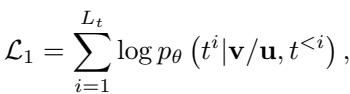
Stage 3: Visual Projector Pre-training
Next, the visual projector is trained to align images with the LLM’s embedding space. The model learns Image-to-Text and Image-to-Pose tasks.
Stage 4: Instruction Fine-Tuning
Finally, the entire model (including the visual encoders) is fine-tuned using instruction templates (e.g., “Could you estimate the SMPL pose of the individual in this image?”). This ensures the model can follow natural language user commands.
Experiments and Results
The researchers evaluated UniPose across three broad categories: Comprehension, Generation, and Editing.
1. Pose Comprehension
Can the model describe what it sees? The team tested UniPose on tasks like generating text descriptions from images and distinguishing differences between two images (Image-Diff).
In the Image-to-Text comparisons, UniPose showed a significant advantage over general-purpose MLLMs like GPT-4V and Qwen-VL. Because general models lack a specific pose encoder, they often hallucinate body orientation.
In the example above, note how UniPose (left column) accurately identifies the intricate fencing position. In contrast, other models might get the general idea of “fencing” right but fail to describe the specific leg positions or body orientation correctly.
2. Pose Generation (Text-to-Pose)
For generating 3D poses from text descriptions, UniPose was compared against specialized models like PoseScript and ChatPose.
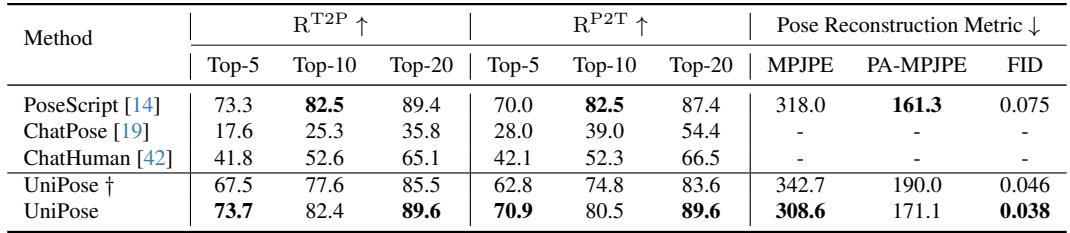
UniPose achieved top-tier results in retrieval metrics (\(R^{T2P}\)) and reconstruction error (MPJPE). The authors attribute this success to the Mixed Attention mechanism, which allows the model to capture bidirectional dependencies between body parts, rather than trying to build a skeleton “sequentially.”
3. Pose Estimation (Image-to-Pose)
This is the classic computer vision task: take a picture, output a 3D mesh.
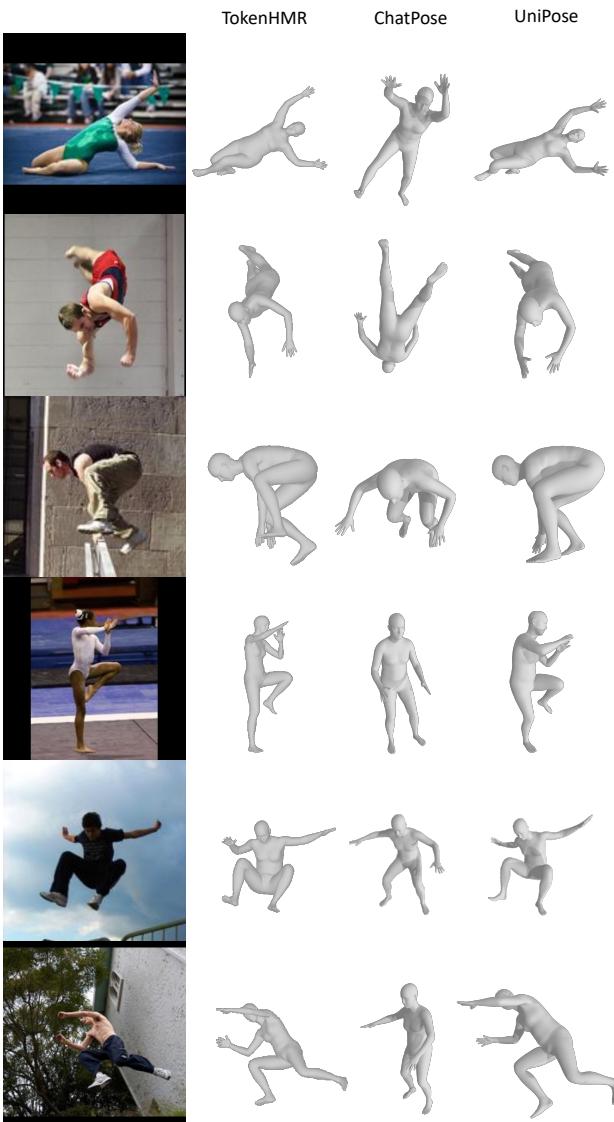
As seen in the qualitative results above, UniPose generates meshes that align very well with the source images, even for complex dynamic actions (like the handstand or martial arts kick).
Quantitatively, UniPose outperforms other MLLM-based approaches (like ChatPose) by a wide margin.
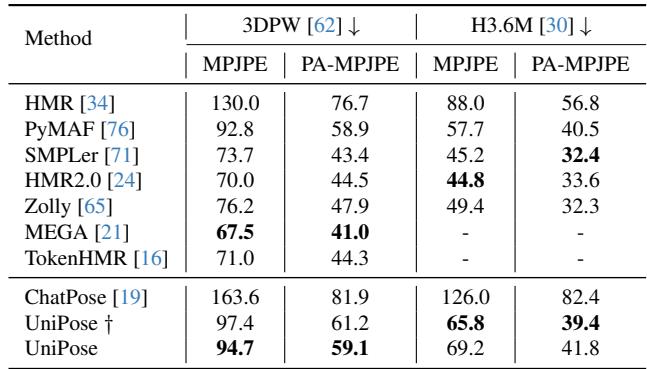
A Note on Precision: You might notice in Table 4 that specialized regression methods (like HMR 2.0) still have slightly lower error rates (MPJPE) than UniPose. This is expected. Specialized models are optimized purely for coordinate regression. However, UniPose trades a small amount of geometric precision for massive flexibility—it can explain why it chose that pose, edit it, or describe it, which HMR 2.0 cannot do.
4. Pose Editing
Finally, the ability to edit a pose based on instructions (e.g., “raise your hands”) was tested.
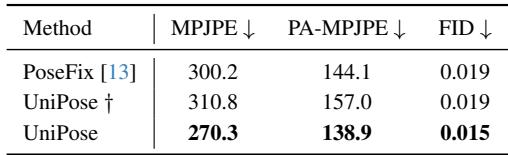
UniPose demonstrated superior performance in editing compared to PoseFix, achieving lower joint position errors (MPJPE) and better distribution matching (FID). This highlights the model’s ability to understand the semantic instruction and apply it to the spatial tokens.
Discussion and Future Implications
One of the most fascinating capabilities of UniPose is its zero-shot generalization, enabled by its multimodal nature.
Text-Enhanced Pose Estimation
Because the model understands both text and vision, users can guide the pose estimation process. If the model is struggling with a complex image, a user can provide a text prompt to clarify the pose.
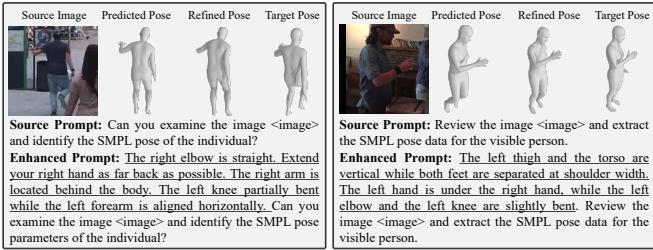
In Figure 5, we see an example where the initial prediction is slightly off (the “Predicted Pose”). By feeding the model a text description of the pose alongside the image (“Enhanced Prompt”), UniPose refines its estimation to match the “Target Pose” much more accurately. This “human-in-the-loop” capability is a significant advantage of using an LLM-based framework.
Why Attention Matters
The ablation studies in the paper strongly support the architectural choices. Specifically, switching from standard Causal Attention to the proposed Mixed Attention (bidirectional for pose) resulted in a massive performance jump and a reduction in inference latency.

As shown in Table 7, Mixed Attention improved Text-to-Pose retrieval (R_T2P) from 9.0 to 13.8, while drastically cutting latency.
Conclusion
UniPose represents a significant step forward in human-centric AI. By successfully integrating a pose tokenizer, a dual-path visual processor, and a mixed-attention LLM, the authors have created a “Swiss Army Knife” for human pose tasks.
Key Takeaways:
- Unification: We no longer need separate models for understanding, generating, and editing poses.
- Fine-Grained Perception: Integrating a pose-specific visual encoder overcomes the limitations of generic CLIP embeddings.
- Spatial-Semantic Alignment: Treating pose as a language allows LLMs to reason about body mechanics, but treating that language as “spatial” (via bidirectional attention) is key to high performance.
While specialized regression models still hold the crown for raw coordinate precision, UniPose offers a glimpse into a future where AI understands human movement not just as numbers, but as a rich, descriptive, and interactive language.