](https://deep-paper.org/en/paper/2412.13736/images/cover.png)
Imagine visiting a doctor with a complex X-ray. You ask, “Is there a tumor?” and the doctor simply says “Yes” and walks out of the room. No explanation, no pointing to the shadow on the film, and no discussion of why they reached that conclusion. You would likely feel terrified and skeptical.
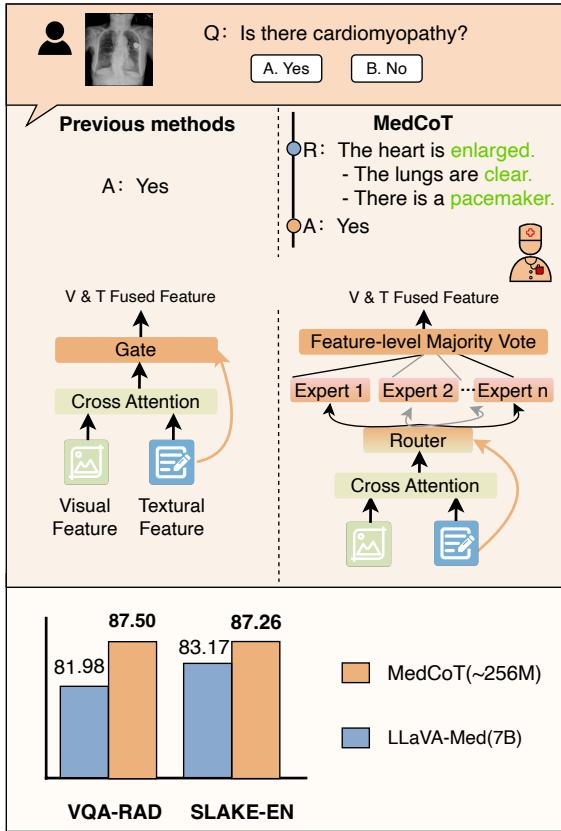
Unfortunately, this is how many Artificial Intelligence systems in Medical Visual Question Answering (Med-VQA) currently operate. They ingest an image and a question, and they output a flat answer. While accuracy is important, in a clinical setting, the reasoning path—the “why”—is just as critical as the final “what.” Furthermore, relying on a single AI model is like relying on a single doctor who might be tired or biased; it lacks the robustness required for life-critical diagnostics.
In this post, we are diving deep into MedCoT (Medical Chain of Thought), a new framework presented by researchers from Zhejiang University and A*STAR. This paper introduces a “Hierarchical Expert” system that mimics real-world medical consultations. Instead of a single black box, MedCoT employs a team of “specialists” to reason, verify, and vote on a diagnosis.
By the end of this article, you will understand how MedCoT leverages Large Language Models (LLMs) for reasoning and a Sparse Mixture of Experts (MoE) for precise diagnosis, allowing a relatively small model (256M parameters) to outperform massive models (7B parameters) like LLaVA-Med.
The Problem: Black Boxes and Hallucinations
Medical VQA is a multimodal task. The AI must understand a medical image (visual feature extraction) and a natural language question (textual feature extraction), then fuse them to provide an answer.
Previous approaches have focused heavily on feature fusion mechanisms—trying to squeeze the most signal out of the image and text vectors. However, they face two major hurdles:
- Lack of Interpretability: Models like “Yes/No” classifiers don’t explain their logic.
- Single-Point Failure: A single model can “hallucinate” (confidently state something wrong) without anyone checking its work.
The concept of Chain of Thought (CoT)—prompting AI to show its work step-by-step—has revolutionized text-based AI. However, applying this to medical imaging is hard because acquiring high-quality medical explanations (rationales) usually requires expensive manual annotation by doctors.
MedCoT solves this by automating the reasoning process using a hierarchy of AI agents.
The MedCoT Architecture: A Team of Specialists
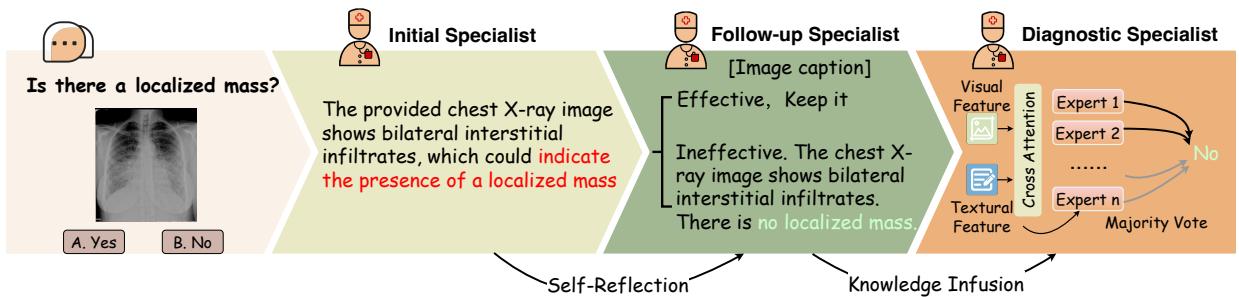
The core philosophy of MedCoT is that medical diagnosis should be a multi-stage process involving verification. The authors designed a pipeline consisting of three distinct “Specialists”:
- Initial Specialist: Proposes a preliminary diagnosis and rationale.
- Follow-up Specialist: reviews the rationale for errors (Self-Reflection).
- Diagnostic Specialist: The final decision-maker using a Mixture of Experts.
Let’s break down each stage.
1. The Initial Specialist: The First Opinion
The process starts with an image (\(I\)) and a question (\(Q\)). The goal isn’t just to get an answer (\(A\)), but to generate a Rationale (\(R\)).
The researchers use a Large Language Model (LLM) as the Initial Specialist. They prompt the LLM with instructions like “Please proceed with a step-by-step analysis and provide a rationale.”
This effectively forces the model to generate a “Chain of Thought.” For example, if looking at a Chest X-ray, the Initial Specialist might output: “The image shows bilateral interstitial infiltrates, which could indicate a mass.”
Mathematically, this framework aims to minimize the error between the predicted answer and the true answer (\(A^*\)) by optimizing two functions: \(f\) (which generates the rationale) and \(g\) (which makes the final diagnosis).

Here, \(f\) represents the Initial and Follow-up specialists creating the rationale, and \(g\) represents the final Diagnostic Specialist.
2. The Follow-up Specialist: The Reviewer
LLMs are powerful, but they are prone to hallucinations. They might describe a fracture where there is none. This is where the Follow-up Specialist comes in.
This module acts as a supervisor. It takes the rationale generated by the Initial Specialist and performs Self-Reflection. It asks: “Is this rationale effectively valid for the question and image?”
- If Valid: The rationale is kept.
- If Ineffective: The Specialist discards it and generates a new, corrected rationale. It also adds a descriptive image caption to help ground the next stage in visual reality.
This logic is defined by a conditional function where \(R_{\hat{i}}\) is the initial rationale and \(R_{\hat{f}}\) is the final approved rationale:

By filtering out “bad advice” before it reaches the final stage, MedCoT significantly reduces the noise that typically confuses VQA models.
3. The Diagnostic Specialist: The Mixture of Experts
Now that we have a trusted Rationale (\(R\)) and the original Question (\(Q\)) and Image (\(I\)), we need to make the final diagnosis. This is handled by the Diagnostic Specialist, a locally deployed model based on the Multimodal T5 architecture.
Unlike a standard Transformer that treats all data the same, this specialist uses a Sparse Mixture of Experts (MoE).
The Pipeline
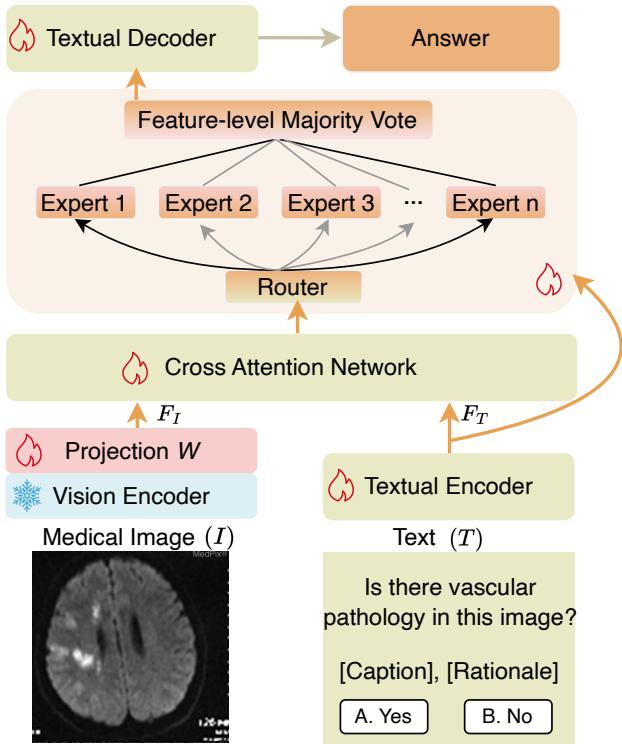
- Encoders: The image goes through a Visual Encoder (like DETR) to become visual features (\(F_I\)). The text (Question + Rationale + Options) goes through a Textual Encoder to become textual features (\(F_T\)).
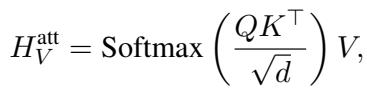
- Cross-Attention: The model needs to figure out which parts of the image are relevant to the text. A Cross-Attention Network integrates the features, creating an “attention-guided” visual feature (\(H_V^{\text{att}}\)).
- The Router and Experts: This is the most innovative part of the Diagnostic Specialist. Instead of one feed-forward network, the model has several “Expert” networks (e.g., Expert 1 through Expert \(n\)).
A Router looks at the input features and decides which experts are best suited to handle this specific medical case. For example, one expert might be great at brain MRIs, while another specializes in chest X-rays.
Sparse MoE and Majority Voting
This is called “Sparse” MoE because the model doesn’t activate all experts for every image. It selects only the top \(k\) experts. This saves computational power while allowing for high specialization.
The chosen experts process the features, and their outputs are combined via a Feature-level Majority Vote. The model calculates a weight (\(W_i\)) for each selected expert based on how confident the router was in choosing them.
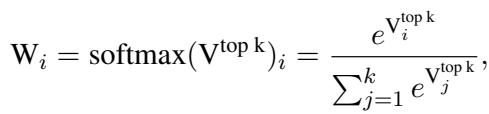
The final feature representation (\(E_{F_f}\)) is a weighted sum of the experts’ opinions:
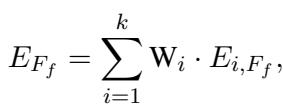
Finally, these “expert” features are fused with the original text features to produce the final answer.

Why This Hierarchy Matters: A Case Study
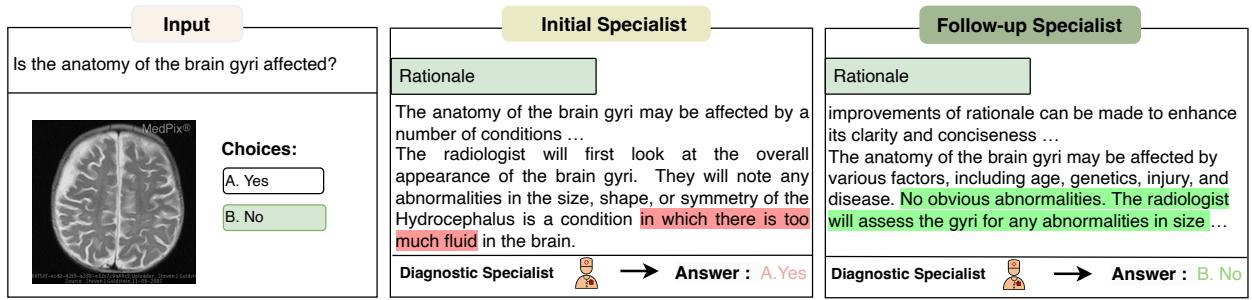
To understand why this complexity is necessary, let’s look at a concrete example provided by the authors regarding a brain MRI.
In the example below, the question asks if the “anatomy of the gyri” is affected.
- The Initial Specialist hallucinates. It claims that “excess fluid” is affecting the gyri and suggests the answer is Yes.
- The Follow-up Specialist intervenes. It reviews the image and notes, “No obvious abnormalities.” It corrects the rationale.
- The Diagnostic Specialist receives this corrected information and correctly concludes the answer is No.
Without the Follow-up Specialist (the “second doctor”), the system would have confidently delivered a wrong diagnosis based on a hallucinated symptom.
Experiments and Results
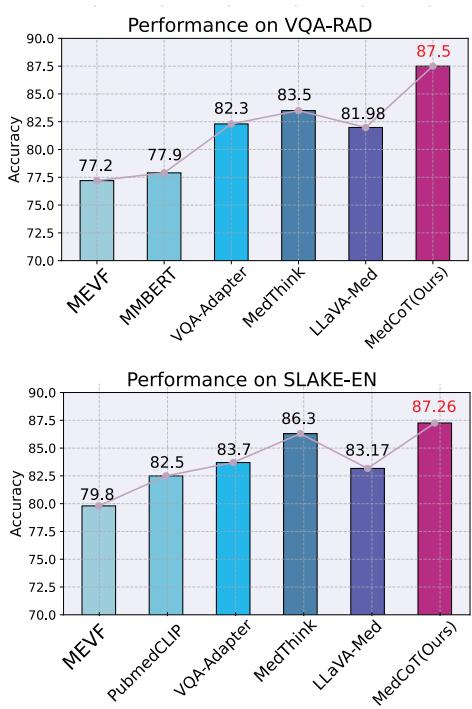
The researchers tested MedCoT on four standard datasets, including VQA-RAD (Radiology) and SLAKE-EN (Bilingual medical VQA). They compared their 256M parameter model against heavy hitters like LLaVA-Med (7 Billion parameters).
Beating the Giants
Despite being significantly smaller, MedCoT achieved State-of-the-Art (SoTA) performance.
- VQA-RAD: MedCoT achieved 87.50% accuracy, beating LLaVA-Med (81.98%).
- SLAKE-EN: MedCoT achieved 87.26% accuracy, beating LLaVA-Med (83.17%).
This is a massive finding for students and researchers with limited compute resources. It suggests that architecture and reasoning workflow (Hierarchical Experts) can trump raw model size.
Ablation Studies: Do we really need all these parts?
The authors performed “ablation studies”—removing parts of the model to see if they actually matter.
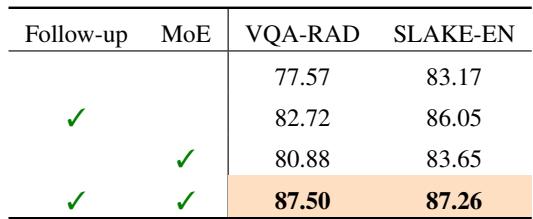
- Removing the Follow-up Specialist: Performance dropped by over 6% on VQA-RAD. This proves that “Self-Reflection” is crucial for correcting LLM hallucinations.
- Removing MoE: Replacing the Mixture of Experts with a standard gate dropped performance by nearly 5%.
The table below summarizes these findings. The checkmarks indicate which components were active. The bottom row (full MedCoT) clearly dominates.
The Power of Specialization
One of the most interesting results came from analyzing which questions benefited from the Mixture of Experts.
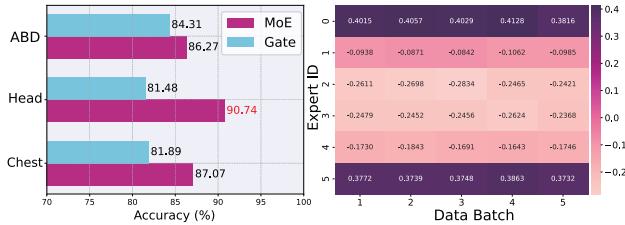
The researchers categorized questions by organ (Head, Chest, Abdomen). They found that the MoE architecture specifically boosted performance on “Head” related questions by nearly 10% compared to a standard gating model.
When they visualized the router’s choices (the heatmap below), they found that specific experts (Expert 0 and Expert 5) were consistently chosen for head-related images. This confirms that the model actually learned to specialize parts of its neural network for specific anatomies, just like human medical specialists.
Stability and Expert Count
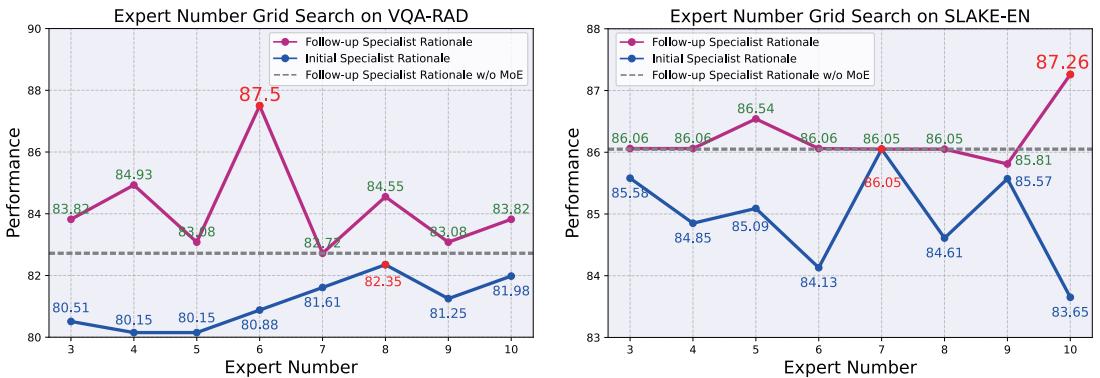
How many experts do you need? The researchers ran a grid search to find the optimal number.
In the graph below, the purple line (MedCoT with Follow-up) consistently outperforms the blue line (MedCoT without Follow-up/Initial only) and the gray line (No MoE). This visually reinforces that both the quality of the rationale (provided by the Follow-up Specialist) and the MoE architecture contribute to the final stability and accuracy.
Conclusion
MedCoT represents a significant step forward in making Medical AI trustworthy. By acknowledging that a single model cannot do it all, the researchers created a system that:
- Reasons: It generates natural language rationales, not just labels.
- Verifies: It uses a hierarchical review process to catch hallucinations.
- Specializes: It uses a Mixture of Experts to route specific medical problems to specific sub-networks.
For students of AI, MedCoT serves as a perfect example of how system design—chaining models together and implementing feedback loops—can often yield better results than simply training a larger monolithic model. In the high-stakes world of medicine, having “two doctors” (or three specialists) is indeed better than one.