](https://deep-paper.org/en/paper/2502.06519/images/cover.png)
Introduction
In the rapidly evolving world of robotics, the ability to create high-fidelity 3D maps is crucial. Whether it is a drone inspecting a warehouse or a quadruped exploring a disaster zone, robots rely on these maps to understand their environment. Recently, 3D Gaussian Splatting (GSplat) has emerged as a powerful technique for representing scenes, offering photorealistic quality and real-time rendering speeds that surpass traditional point clouds or voxel maps.
However, a significant bottleneck remains: multi-robot collaboration. When multiple robots explore a large area, they each generate their own local “submap.” To create a cohesive global map, these local submaps must be stitched together—a process known as registration.
Traditionally, registering maps requires one of two things:
- Prior knowledge: Knowing roughly where the robots started relative to each other (initialization).
- Shared data: Access to the raw camera images and poses from every robot to find overlaps.
In many real-world scenarios, neither is available. Communication bandwidth might be low, preventing the sharing of raw images, and GPS might be denied indoors.
Enter SIREN (Semantic, Initialization-free REgistratioN).
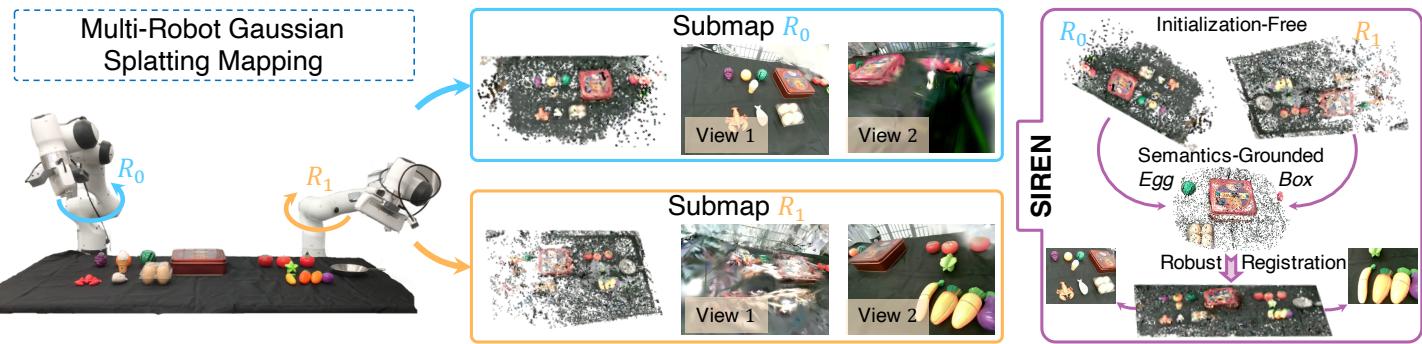
As illustrated above, SIREN is a novel pipeline capable of taking two completely disconnected submaps (like those from Robot \(R_0\) and Robot \(R_1\)) and fusing them perfectly without needing camera poses, original images, or any initial guess of where the maps align. It achieves this by shifting the focus from pure geometry to semantics—understanding what is in the scene, not just where points are located.
The Challenge of Map Registration
To appreciate SIREN, we must understand why merging 3D maps is difficult. This is effectively a 3D puzzle. You have two pieces of a scene (submaps) that overlap, but they are oriented differently, scaled differently, and positioned in arbitrary coordinate systems.
The Geometric Limitation
Classic algorithms like Iterative Closest Point (ICP) try to slide these maps over each other until the geometry matches. However, ICP is “local”—if you don’t start with the maps nearly aligned, it will fail, likely locking the maps into a nonsensical configuration (a local minimum).
The Radiance Field Hurdle
With modern Neural Radiance Fields (NeRFs) and Gaussian Splats, the problem is even trickier. These representations are optimized for view synthesis, not necessarily geometric precision. Prior methods for registering NeRFs or GSplats often required the original training images to photometrically align the scenes. If a robot only transmits the compressed map and not the gigabytes of raw video, those methods become useless.
The SIREN Architecture
SIREN overcomes these limitations by leveraging a hierarchy of information: Semantics \(\rightarrow\) Geometry \(\rightarrow\) Photometry.
The algorithm operates in three distinct stages, designed to handle the registration problem from a coarse, global level down to a fine, pixel-perfect level.
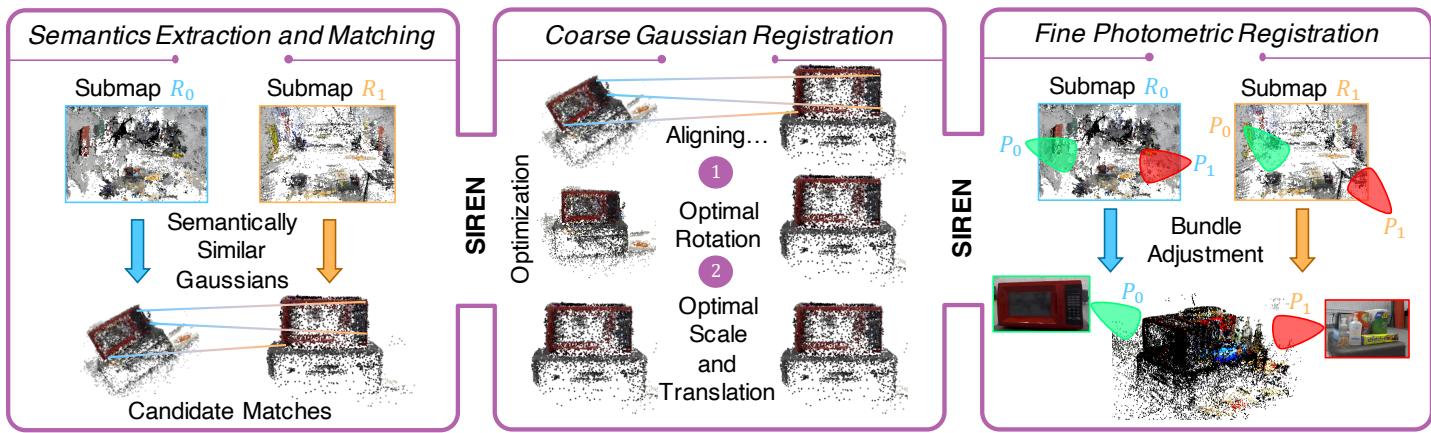
Let’s break down these three pillars of the SIREN methodology.
1. Semantic Feature Extraction and Matching
The most robust way to align two unknown maps is to identify unique objects. If both maps contain a “fire extinguisher” and a “red exit sign,” aligning those specific objects gives you a very strong rough alignment, regardless of how the maps are rotated.
SIREN embeds high-dimensional semantic features directly into the Gaussian Splatting model. Instead of just color and opacity, every 3D Gaussian ellipsoid carries a semantic vector derived from vision-language models (like CLIP).
Training Semantic GSplats
The researchers train a semantic field alongside the standard GSplat color attributes. They use a contrastive loss function to ensure that the 3D semantic features, when rendered, match the 2D semantic features extracted from the training images by the foundation model.
The loss function for this process is defined as:

Here, \(\mathcal{L}_{\mathrm{gs}}\) is the standard Gaussian Splatting loss, while the additional terms minimize the difference between rendered semantic features \(\hat{\mathcal{I}}_f\) and ground-truth features \(\mathcal{I}_f\) using cosine similarity \(\phi\).
Matching
Once the maps are trained, SIREN extracts “feature-rich” Gaussians—those that strongly correspond to specific semantic concepts (e.g., “chair,” “plant”). It then performs matching between the Source Map and Target Map based on the cosine similarity of these semantic vectors. This creates a set of candidate correspondences \(\mathcal{E}\), linking a Gaussian in Map A to a Gaussian in Map B because they likely represent the same part of the same object.
2. Coarse Gaussian-to-Gaussian Registration
With a set of candidate matches, the next step is Geometric Registration. The goal is to find a transformation—comprising scale (\(s_c\)), rotation (\(R\)), and translation (\(t\))—that aligns the matched Gaussians.
SIREN formulates this as an optimization problem. It seeks to minimize the distance between the matched points and the difference in their covariances (shapes), weighted by their semantic similarity \(w_{ij}\).
The optimization objective is:
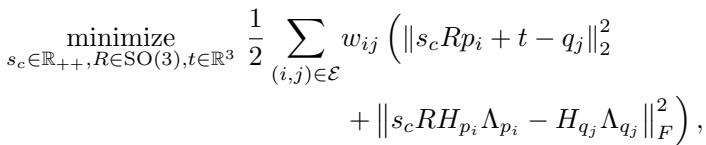
This equation minimizes two things:
- Positional difference: \(\| s_c R p_i + t - q_j \|^2_2\) (Distance between mean positions).
- Shape difference: The Frobenius norm term checks if the rotated shape (covariance) of the source Gaussian matches the target Gaussian.
The Closed-Form Solution
Usually, solving for these parameters requires iterative solvers that are slow and prone to errors. A major contribution of this paper is deriving a closed-form solution for this specific problem formulation. This means the optimal alignment can be calculated instantly using linear algebra (Singular Value Decomposition).
The derived solution allows the explicit calculation of rotation \(R_c^*\), scale \(s_c^*\), and translation \(t_c^*\):
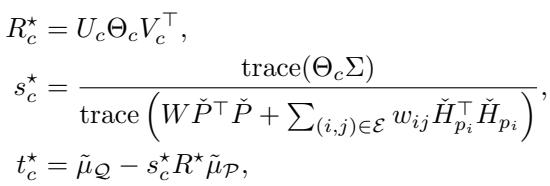
To make this robust against outliers (e.g., matching a “chair” in the kitchen to a “chair” in the dining room), the authors utilize RANSAC (Random Sample Consensus). This statistical method repeatedly picks small subsets of matches to find the transformation that satisfies the majority of the data, effectively filtering out incorrect semantic matches.
3. Fine Photometric Registration
The semantic and coarse geometric alignment gets the maps “in the ballpark.” However, for high-fidelity fusion, “ballpark” isn’t good enough. The fused map needs to look seamless.
SIREN achieves this via Photometric Registration. It uses the coarse alignment to establish a common coordinate frame. Then, it leverages the unique capability of Gaussian Splats: Novel View Synthesis.
- Render Synthetic Images: SIREN renders images from both the source and target maps at the estimated same camera poses.
- Feature Matching: It uses standard computer vision feature extractors (like SuperPoint) on these rendered images to find precise visual landmarks (corners, edges, textures) that semantics might have missed.
- Bundle Adjustment: It runs a lightweight Structure-from-Motion (SfM) optimization to refine the relative transformation.
This step corrects minute errors in rotation or translation that the coarse step couldn’t resolve, ensuring that the texture of the floor or the writing on a box aligns perfectly between the two maps.
Experiments and Results
The researchers tested SIREN against a suite of state-of-the-art baselines, including PhotoReg, GaussReg, and variants of ICP. The tests covered standard datasets (Mip-NeRF360) and real-world data collected by a Boston Dynamics Spot (quadruped), a drone, and robotic manipulators.
Geometric Precision
The geometric accuracy of SIREN is staggering compared to traditional methods.
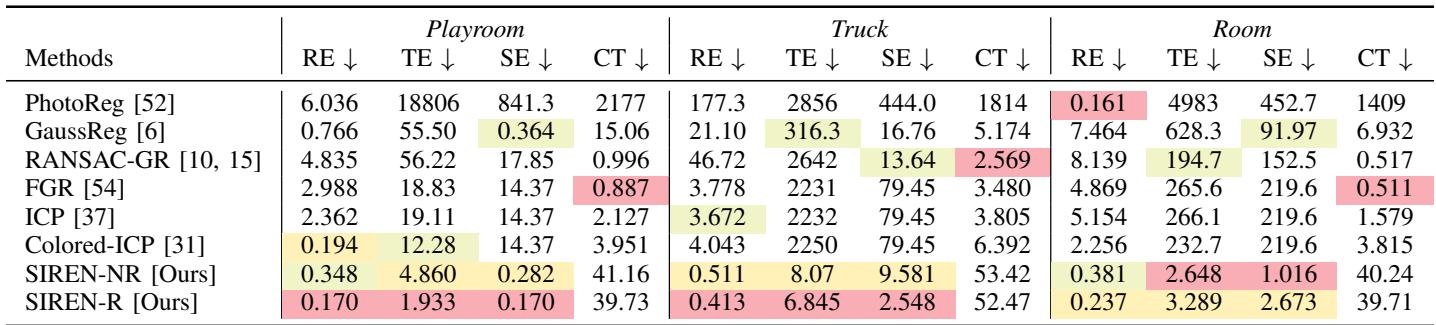
In Table I, look at the Translation Error (TE) and Rotation Error (RE) columns. In the “Truck” scene, methods like PhotoReg and RANSAC-GR show massive errors (Translation Error > 2000). SIREN reduces this to single digits (6.8 - 8.0).
In the most challenging scenes, the paper reports that SIREN achieves approximately:
- 90x smaller rotation errors
- 300x smaller translation errors
- 44x smaller scale errors
Visual Fidelity
Numbers are important, but in visual mapping, the proof is in the rendering.
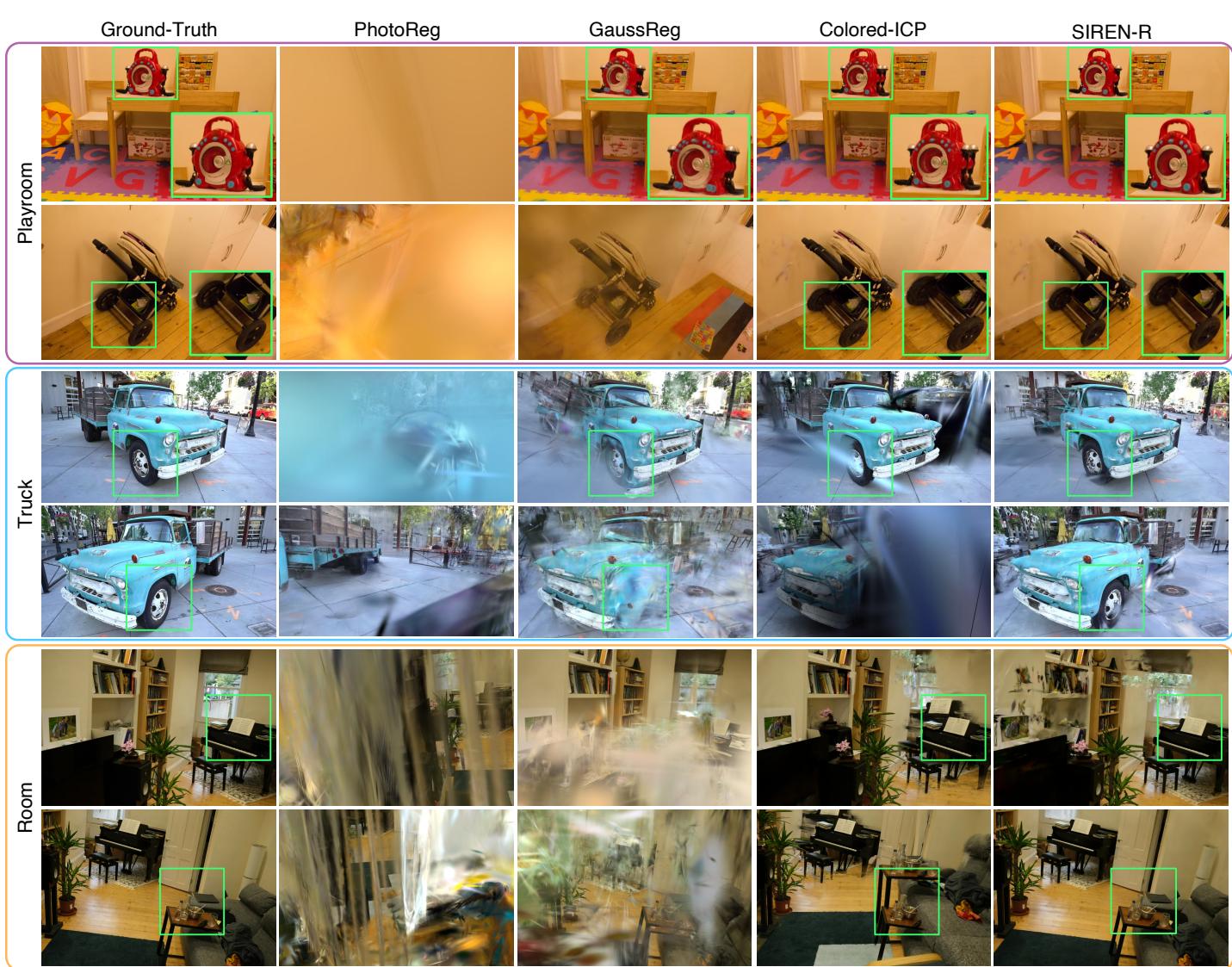
In Figure 4, we see comparisons in the “Playroom,” “Truck,” and “Room” scenes.
- Green Squares: Highlight areas of detail.
- PhotoReg: Often results in severe blurring (ghosting), indicating the maps aren’t sitting on top of each other correctly.
- SIREN-R (Right): Produces crisp, coherent images. The geometry of the truck and the furniture is preserved, showing that the two submaps have been fused with high precision.
Mobile Robot Mapping
The team deployed a Quadruped and a Drone to map a kitchen, workshop, and apartment. These environments are unstructured and “messy,” typical of real-world robotics tasks.
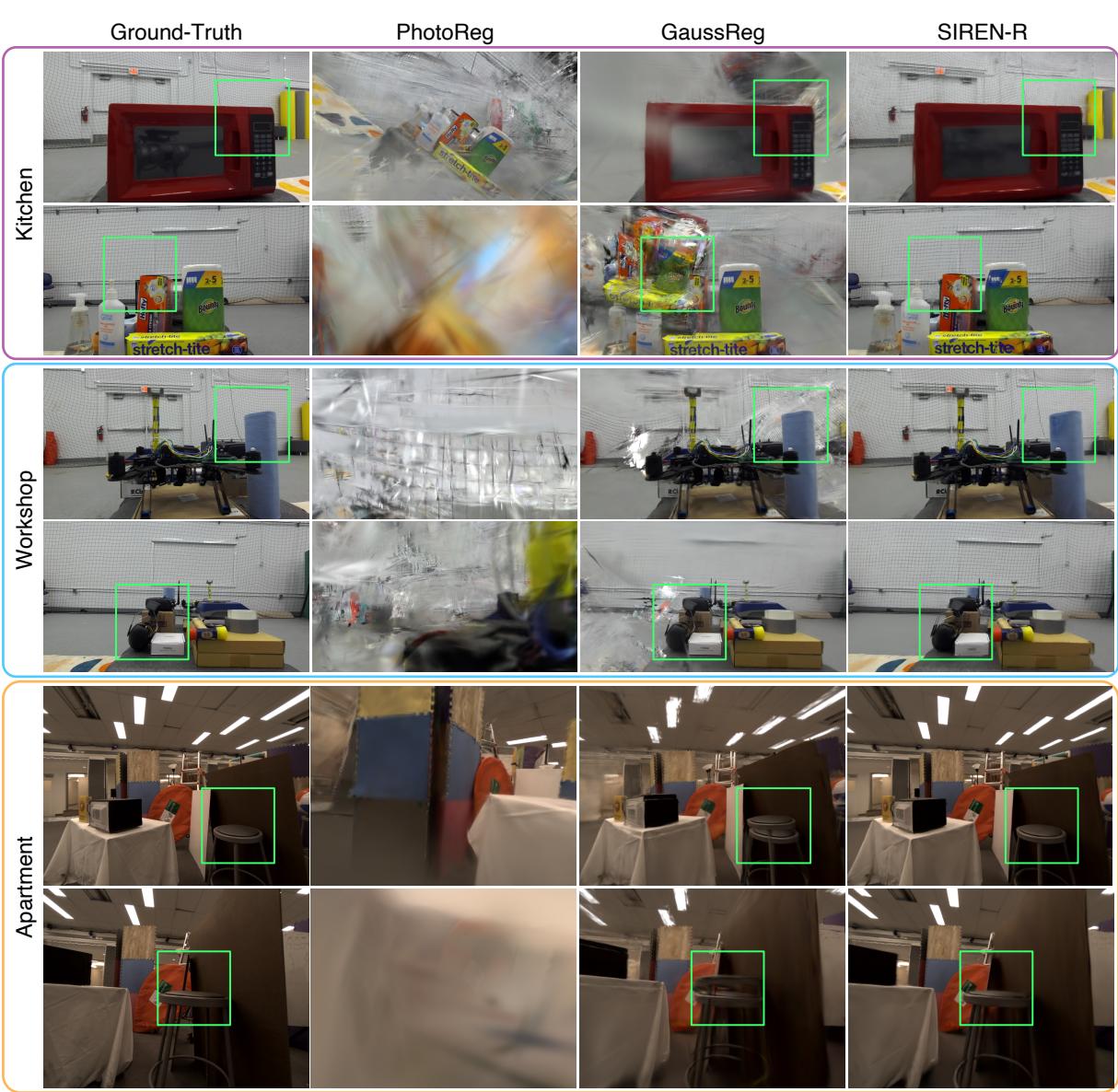
As shown in Figure 6, SIREN successfully registers maps even in these complex environments. The “Ground Truth” (left) is closely matched by “SIREN-R” (right). Competing methods like GaussReg often introduce artifacts or fail to align the high-frequency details of the scene (like the items on the shelves).
Application: Collaborative Manipulation
One of the most compelling applications for this technology is in multi-arm manipulation. Robot arms typically have a limited workspace. To map a large table, you might need two robots.
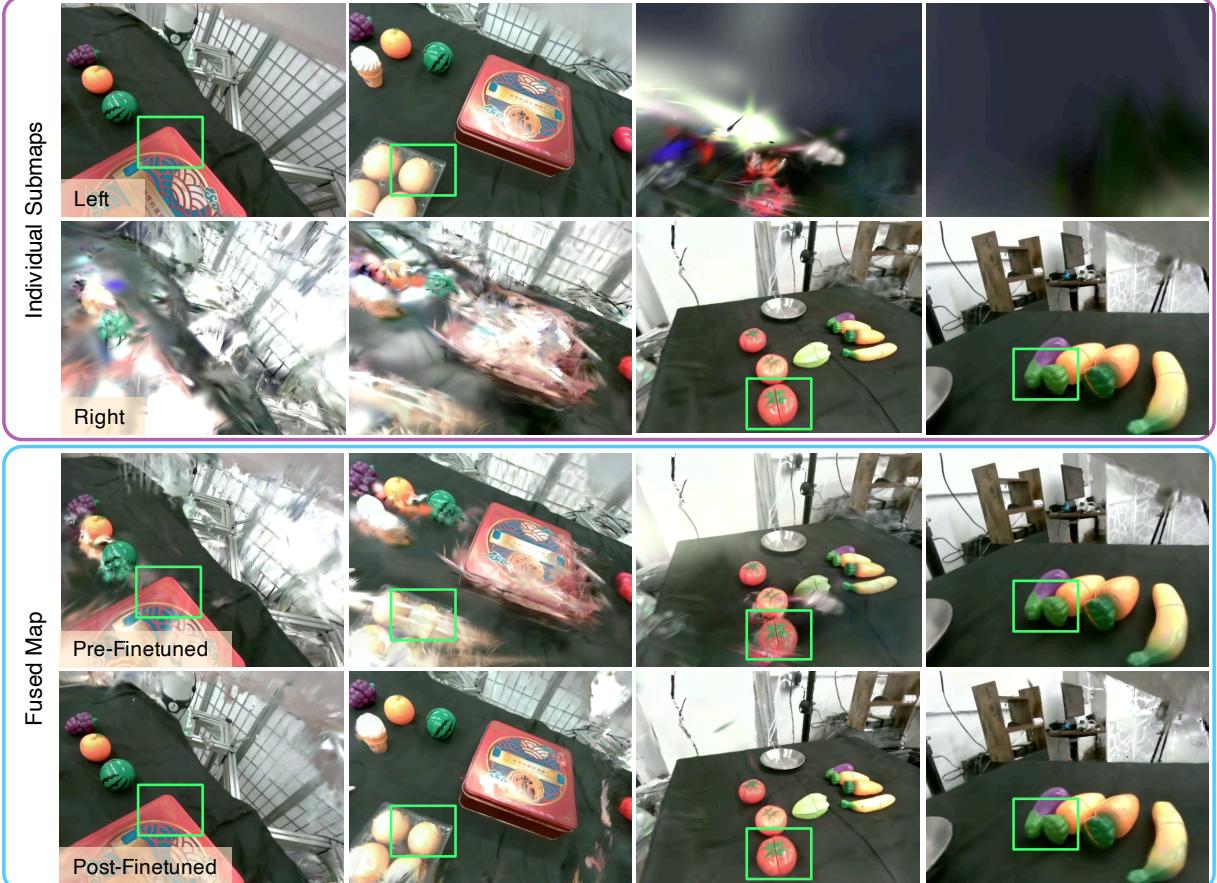
Figure 8 illustrates this scenario perfectly:
- Individual Submaps: The robot on the left sees the left side of the table clearly, but the right side is blurry or missing (out of reach). The robot on the right has the opposite view.
- Fused Map: SIREN stitches these partial views together.
- Finetuning: The bottom-right panel shows the result after an additional finetuning step. SIREN can generate synthetic data from the fused map to retrain the GSplat, removing “floaters” (misty artifacts in empty space) and creating a clean, global map of the table.
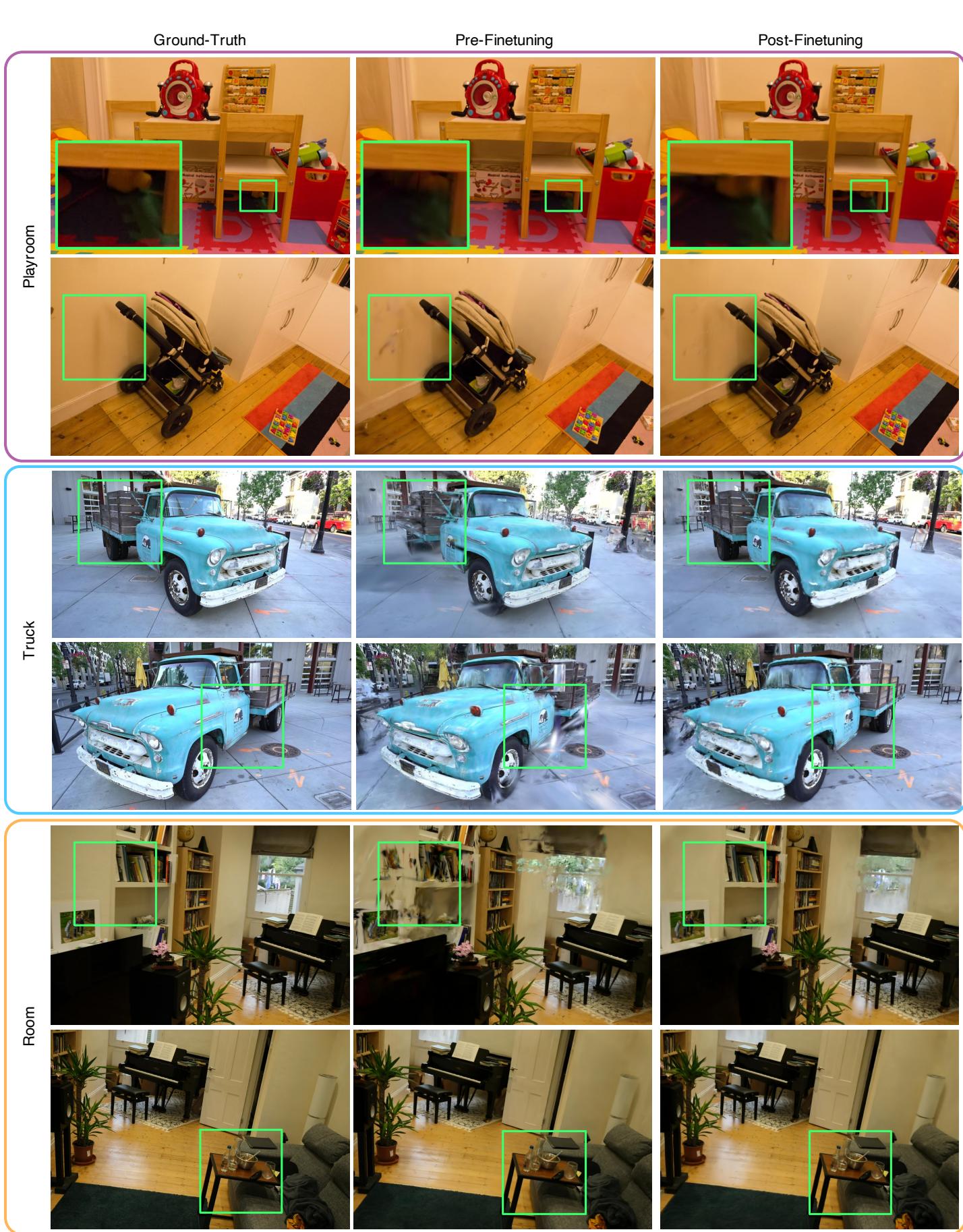
The ability to finetune the map without needing to go back and take new photos is a significant advantage. Figure 9 details how finetuning sharpens the visuals, removing the noise inherent in the raw submaps.
Conclusion
SIREN represents a significant step forward in robotic mapping. By decoupling registration from the need for camera poses or prior initialization, it grants robots a new level of autonomy. They can explore, map, and merge their understandings of the world relying solely on the content of what they see—semantics—rather than external tracking systems.
The combination of semantic robustness (for global alignment) and photometric precision (for local refinement) proves to be a winning strategy. As robots increasingly move out of the lab and into unstructured environments like disaster zones, construction sites, and homes, capabilities like those demonstrated by SIREN will be essential for coherent, large-scale spatial understanding.