](https://deep-paper.org/en/paper/2502.13581/images/cover.png)
Introduction
In the world of Recommender Systems, we are currently witnessing a paradigm shift. The field is moving away from traditional classification-based methods—which select the best item from a massive, fixed pool—toward Generative Recommendation (GR). Inspired by the success of Large Language Models (LLMs) like GPT, GR models treat user behavior as a language. They “tokenize” user actions and train models to autoregressively predict the next token in a sequence.
However, there is a significant “translation” problem in this new paradigm. In language, the atomic unit is a word or subword, which naturally flows in a sentence. In recommendation, the atomic unit is a user action (usually interacting with an item). Current GR models typically tokenize these actions independently. For example, if you buy a specific pair of socks, the model assigns it a fixed token pattern, regardless of whether you bought those socks after purchasing a tuxedo or a basketball uniform.
This approach ignores context. Just as the word “bank” means something different depending on whether it appears near “river” or “money,” an item in a shopping history carries different intent based on its neighbors.
In this post, we will dive deep into a research paper titled “ActionPiece: Contextually Tokenizing Action Sequences for Generative Recommendation”. This paper proposes a novel method to tokenize user actions that captures not just what the item is, but how it relates to the items before and after it. By treating items as unordered sets of features and merging them based on co-occurrence, ActionPiece brings the sophisticated contextual awareness of modern NLP to recommender systems.
Background: The State of Generative Recommendation
To understand why ActionPiece is necessary, we must first look at how Generative Recommendation currently works and where it falls short.
From IDs to Tokens
Traditional sequential recommenders (like SASRec or BERT4Rec) represent items using unique IDs. If a platform has 10 million items, the model needs an embedding table with 10 million entries. This is memory-intensive and struggles with the “cold start” problem (new items with no history).
Generative Recommendation solves this by breaking items down into tokens. Instead of one unique ID, an item might be represented by a short sequence of tokens from a shared vocabulary. This vocabulary is much smaller than the total number of items, making the model more scalable.
However, existing tokenization strategies have limitations. As summarized in the table below, methods like Product Quantization (VQ-Rec) or Hierarchical Clustering (P5-CID) create static representations.
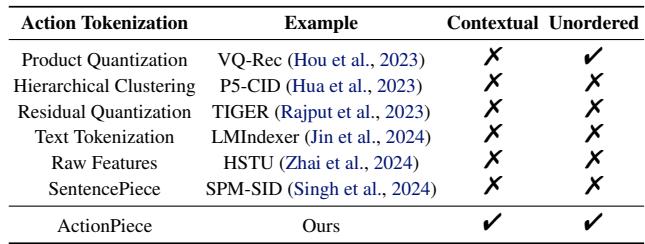
The column to pay attention to is “Contextual.” Before ActionPiece, the answer was always “No.” Existing methods tokenize each action in isolation. They replace an item with a token pattern (e.g., Item_A becomes Token_1, Token_2), but Item_A always translates to Token_1, Token_2, regardless of the user’s previous history.
The Inspiration: BPE in NLP
The authors draw a strong parallel to Natural Language Processing (NLP). In the early days, NLP used word-level tokenization. But this was rigid. Modern LLMs use Byte-Pair Encoding (BPE) or Unigram tokenization. These methods start with individual characters and iteratively merge frequent pairs. Crucially, they allow the same root word to be tokenized differently depending on its suffix or prefix.
ActionPiece aims to be the “BPE of Recommender Systems.” It seeks to learn a vocabulary where tokens represent meaningful patterns of features, potentially spanning across multiple items in a user’s history.
The ActionPiece Method
The core innovation of ActionPiece lies in how it represents data and how it constructs its vocabulary. It moves away from the idea of an “Item ID” and embraces the concept of an “Action Feature Set.”
1. Representing Actions as Unordered Feature Sets
In the real world, an “action” (like buying a product) is defined by the product’s attributes: brand, category, price, color, etc. ActionPiece represents each action in a user’s sequence as a set of features.
Crucially, a set is unordered. A “Nike Red T-Shirt” is the same as a “Red Nike T-Shirt.” The order of features within a single item doesn’t matter, but the order of actions across time (buying the shirt, then the socks) does matter.
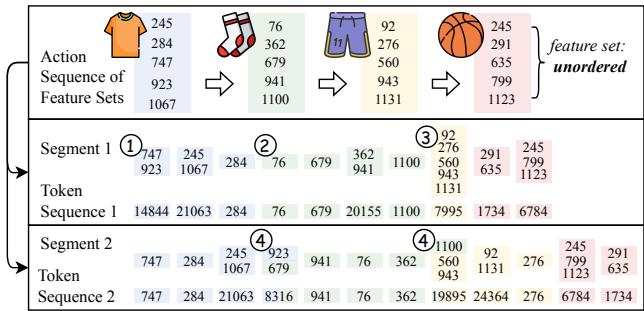
Figure 1 illustrates this concept beautifully.
- Top Layer: We see a sequence of items: a T-shirt, socks, shorts, and a basketball.
- Feature Sets: Each item is decomposed into numerical features (e.g., the T-shirt is
{245, 284, 747, 923}). - Segments: The model doesn’t just output the features one by one. It groups them into tokens (the numbers in the “Token Sequence” rows).
Notice something important in “Segment 2”: The token 8316 might combine a feature from the T-shirt and a feature from the socks. This is contextual tokenization. The representation of the T-shirt is literally bleeding into the representation of the socks, fusing them into a single token that captures the transition.
2. Vocabulary Construction
How do we decide which features to group together into a token? The authors use a bottom-up approach similar to BPE, but adapted for sequences of sets.
Initialization
The process starts with a base vocabulary containing every unique feature found in the dataset. If we have a feature “Color: Red” and “Brand: Nike,” these are our initial atomic tokens.
Weighted Co-occurrence Counting
The algorithm iteratively merges the most frequent pairs of tokens into new, complex tokens. In text processing, counting pairs is easy: you just count A next to B. But in ActionPiece, we have sets.
We need to count two types of relationships:
- Intra-set: Two features appearing within the same item (e.g., “Nike” and “Red”).
- Inter-set: A feature in one item appearing adjacent to a feature in the next item (e.g., “Basketball” in item \(t\) and “Pump” in item \(t+1\)).
Since sets have different sizes, we cannot simply count raw frequencies. The authors introduce a probabilistic weighting scheme to normalize these counts.
If we imagine flattening the set into a random sequence, the probability of two tokens being adjacent determines their weight.
For tokens in the same set: The weight depends on the size of the set \(|\mathcal{A}_i|\). Smaller sets imply a stronger connection between their features.

For tokens in adjacent sets: The weight depends on the size of both sets. This captures the sequential transition.

This weighting ensures that the model doesn’t bias heavily toward massive feature sets or ignore the connections between items.
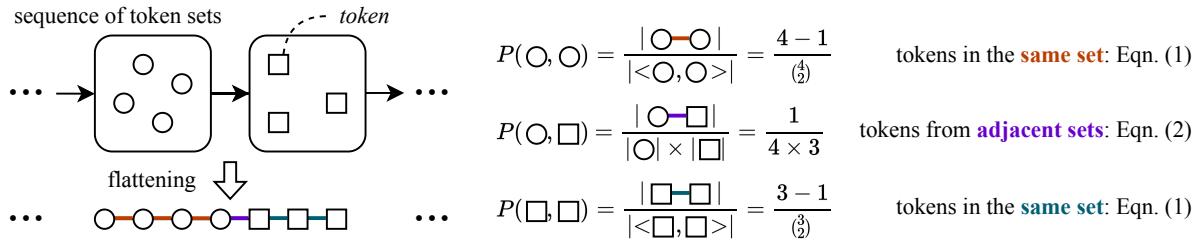
As shown in Figure 2, the algorithm calculates these weights for every pair. It might find that the pair \(<\bigcirc, \square>\) (a cross-item pair) has a high score, indicating a strong contextual link between those two actions.
Updating the Corpus with Intermediate Nodes
Once the “best” pair is identified, the algorithm merges them into a new token. This is where the data structure gets clever.
Merging two features inside the same item is simple: you just replace them. But merging features across two items is complex. You can’t just put the new token in Item A or Item B arbitrarily.
To solve this, the authors utilize a double-ended linked list and introduce Intermediate Nodes.
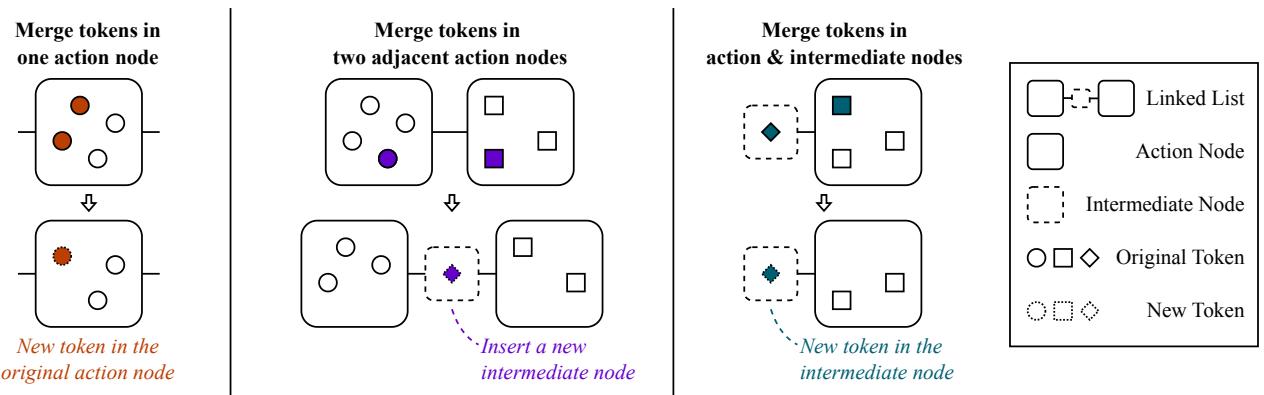
Looking at Figure 3, we see three merge scenarios:
- Same Node: Two tokens in one item merge. The set gets smaller.
- Adjacent Nodes: A token from Item A merges with a token from Item B. A new intermediate node (the dashed box) is created between them to hold this new “transition token.”
- Action + Intermediate: A token from an item merges with an existing intermediate token. This allows the context to grow, capturing complex chains of behavior.
This efficient update mechanism allows ActionPiece to construct a vocabulary that contains single features, whole items, and cross-item patterns.
3. Segmentation via Set Permutation Regularization (SPR)
After constructing the vocabulary, we need to tokenize the actual user sequences for training. A naive approach would be to just greedily apply the merge rules. However, sets are unordered. If we force a fixed order, we introduce an artificial bias.
The authors propose Set Permutation Regularization (SPR).
The idea is simple but powerful:
- Take the unordered set of features for an item.
- Randomly shuffle (permute) them.
- Treat this shuffled version as a sequence and apply the merge rules.
Because the order is random, the resulting tokens will vary. One permutation might merge “Red” and “Nike” first. Another might merge “Nike” with the “Socks” in the next action.
This generates multiple valid token sequences for the same underlying user history. This serves two purposes:
- Data Augmentation: During training, the model sees different “views” of the same action sequence, preventing overfitting and helping it learn the robust semantics of the features.
- Inference Ensembling: During prediction, we can generate multiple tokenizations of the user’s history, predict the next item for each, and average the results.
Experiments and Results
Does context-aware tokenization actually lead to better recommendations? The authors tested ActionPiece on three datasets from Amazon Reviews: Sports, Beauty, and CDs.
Comparative Performance
They compared ActionPiece against a wide range of baselines, including:
- ID-based methods: BERT4Rec, SASRec.
- Feature-enhanced methods: FDSA, VQ-Rec.
- Generative methods: TIGER, HSTU, SPM-SID.
The results were decisive.
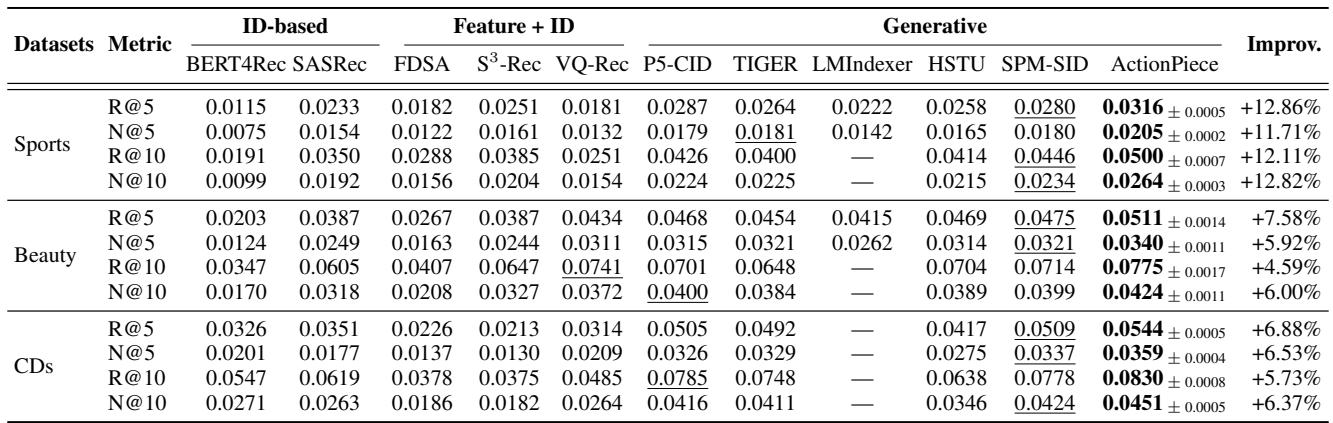
As Table 4 shows, ActionPiece (bottom row) achieves the best performance across all datasets and metrics (Recall@K and NDCG@K).
- It outperforms TIGER (a popular generative model) by a significant margin.
- It beats SPM-SID, which uses SentencePiece but lacks the unordered set handling and cross-action context of ActionPiece.
- The improvement is most notable in the CDs dataset, which is larger and has longer sequences, suggesting ActionPiece scales well and captures rich sequential dependencies.
Why Does It Work?
The researchers performed ablation studies to pinpoint the source of these gains.
1. The Power of SPR (Token Utilization) One hypothesis was that Set Permutation Regularization (SPR) forces the model to use more of the vocabulary, rather than relying on a few frequent tokens.
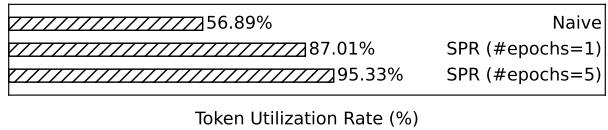
Figure 5 confirms this. With “Naive” segmentation (fixed order), the model only utilizes about 57% of the available tokens. With SPR, utilization jumps to over 95% within 5 epochs. By shuffling the features, the model learns to recognize and use almost every pattern in its vocabulary, making it much more expressive.
2. Inference Ensembling We mentioned earlier that SPR allows for ensembling during inference. Does this actually help?
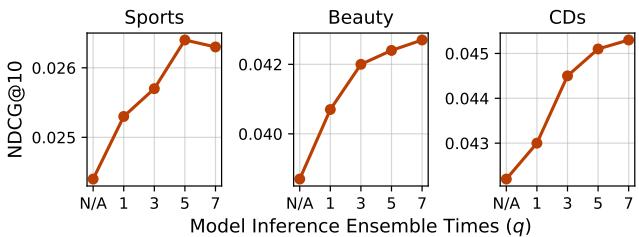
Figure 6 shows the NDCG@10 scores as the number of inference ensembles (\(q\)) increases. There is a clear upward trend. Using just one segment (\(q=1\)) is good, but averaging the predictions from 5 or 7 different permutations yields even higher accuracy. This confirms that the diversity of tokenizations provides complementary information.
3. Vocabulary Size Trade-offs The authors also analyzed how the vocabulary size affects the system.
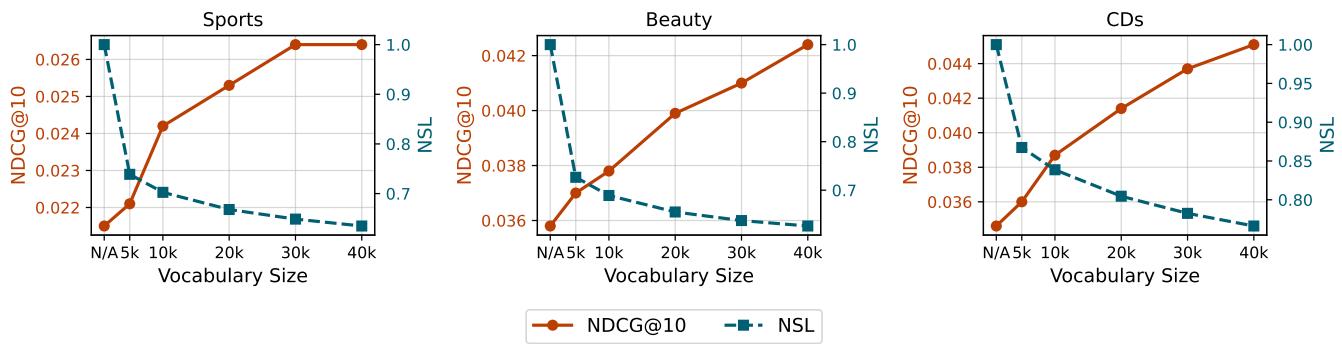
In Figure 4, we see two lines:
- Orange (NDCG): Generally improves as vocabulary size increases (up to a point, around 40k).
- Teal (Sequence Length - NSL): Decreases as vocabulary size increases.
This makes intuitive sense. Larger vocabularies allow the model to create “dense” tokens that represent complex concepts (like “Nike Red Shirt”). This shortens the sequence the model has to process (lower NSL), making it more efficient, while simultaneously capturing better semantics (higher NDCG).
Computational Efficiency
You might worry that calculating all these co-occurrences is slow. The authors address this by using inverted indices and a max-heap with lazy updates.
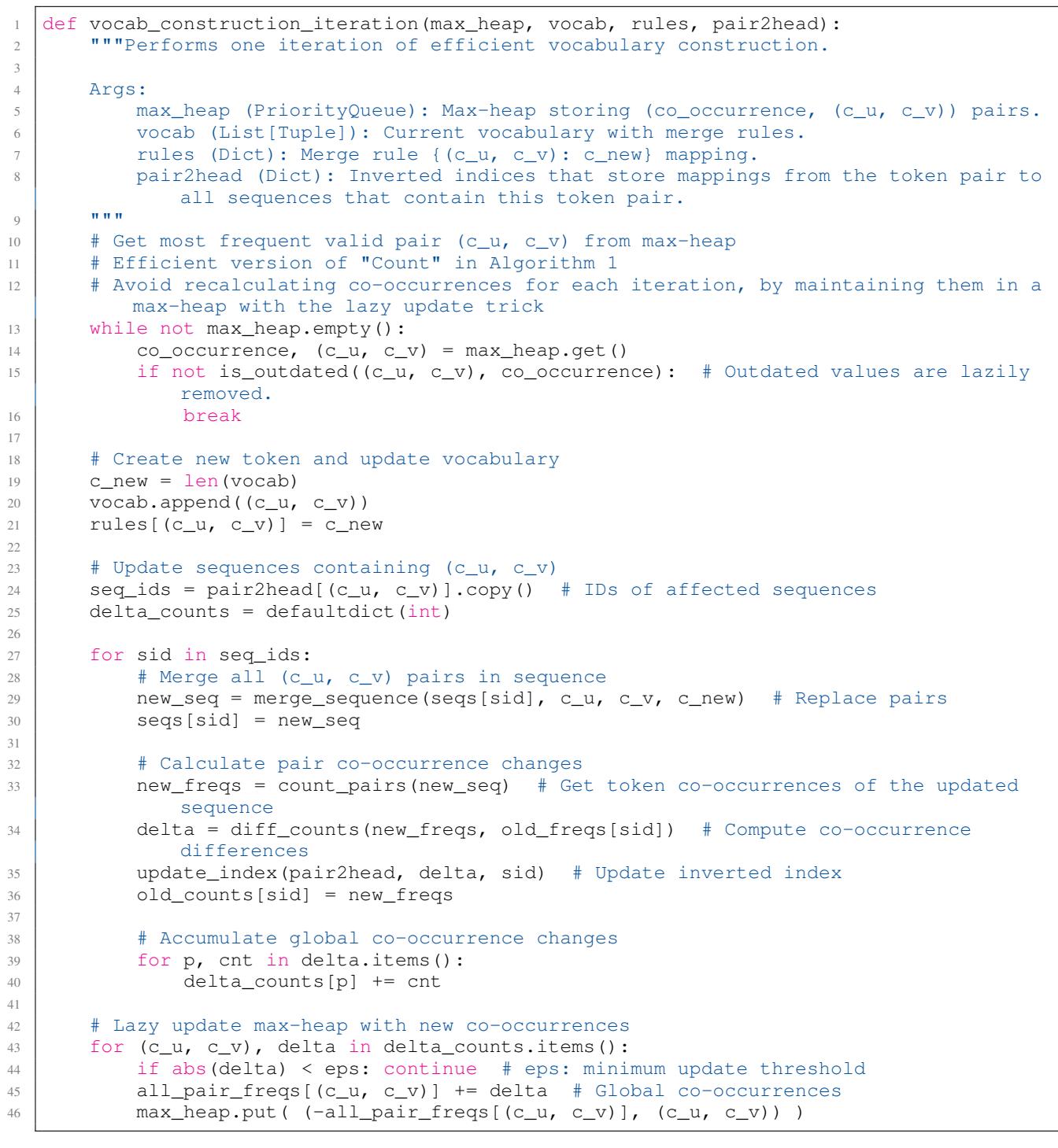
As outlined in the pseudocode (Figure 7), instead of recounting everything from scratch every iteration (which would be incredibly slow), they only update the parts of the corpus affected by a merge. This reduces the time complexity significantly, making the algorithm practical for large datasets.
Conclusion
ActionPiece represents a significant step forward for Generative Recommendation. By acknowledging that user actions are context-dependent and composed of unordered features, it breaks free from the limitations of rigid ID-based or independent-token systems.
The key takeaways are:
- Context is King: Merging tokens across adjacent items captures sequential behavior explicitly in the token vocabulary.
- Sets, Not Sequences: Treating item features as unordered sets reflects reality better than arbitrary feature lists.
- Randomness is Robustness: Set Permutation Regularization acts as a powerful data augmentation technique, forcing the model to learn deeper semantic connections.
As recommender systems continue to merge with generative AI, techniques like ActionPiece that align the data representation (actions) with the modeling paradigm (next-token prediction) will be essential for building the next generation of intelligent discovery engines.