](https://deep-paper.org/en/paper/2503.08257/images/cover.png)
If you have ever watched a robot try to pick up an irregularly shaped object—say, a spray bottle or a stuffed animal—you likely noticed a hesitation. Unlike humans, who instinctively shape their hands to conform to an object’s geometry, robots often struggle with “dexterous grasping.”
While simple parallel-jaw grippers (think of a claw machine) are reliable for boxes, the Holy Grail of robotics is a multi-fingered dexterous hand that can grasp anything.
Today, we are diving deep into DexGrasp Anything, a research paper that proposes a significant leap forward in this field. This work introduces a method that combines the generative power of Diffusion Models with the strict laws of Physics, resulting in a system that can generate stable, human-like grasps for thousands of unseen objects. Furthermore, the researchers have released a massive dataset—DexGrasp Anything (DGA)—containing over 3.4 million grasping poses, paving the way for truly universal robotic manipulation.
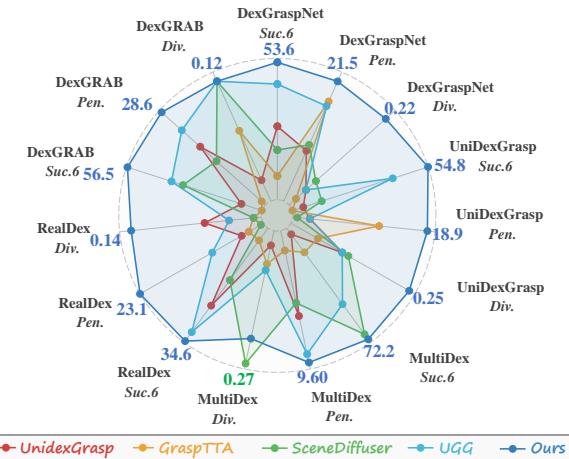
The Challenge: Why is Grasping So Hard?
To understand the contribution of this paper, we first need to look at why dexterous grasping is difficult.
A human hand has over 20 degrees of freedom. When we pick up a coffee mug, we don’t calculate the inverse kinematics of every joint consciously; we rely on intuition and muscle memory. For a robot, however, this is a high-dimensional optimization nightmare.
Traditional methods relied on analytical approaches, calculating forces and friction cones to ensure stability. These are precise but computationally expensive and brittle—they often fail when the object shape isn’t perfectly known.
Recently, data-driven methods have taken over. By training on large datasets, robots learn “priors” about how to grasp things. Generative models, particularly Diffusion Models, have shown great promise here. They can generate diverse grasping poses by learning the distribution of successful grasps.
However, there is a catch. Standard diffusion models are “hallucinators.” They generate things that look right but might be physically impossible. A diffusion model might predict a finger passing straight through a solid object (penetration) or fingers intersecting each other.
DexGrasp Anything solves this by enforcing physical constraints—specifically preventing penetration and ensuring contact—directly into the training and generation process.
The Solution: DexGrasp Anything
The core of this method is a Physics-Aware Diffusion Generator. It uses a U-Net architecture to generate hand poses based on the 3D point cloud of an object. But unlike standard diffusion models, it doesn’t just learn from images or data points; it learns from physics.
Architecture Overview
The system operates in two distinct phases: Training and Sampling (Inference).
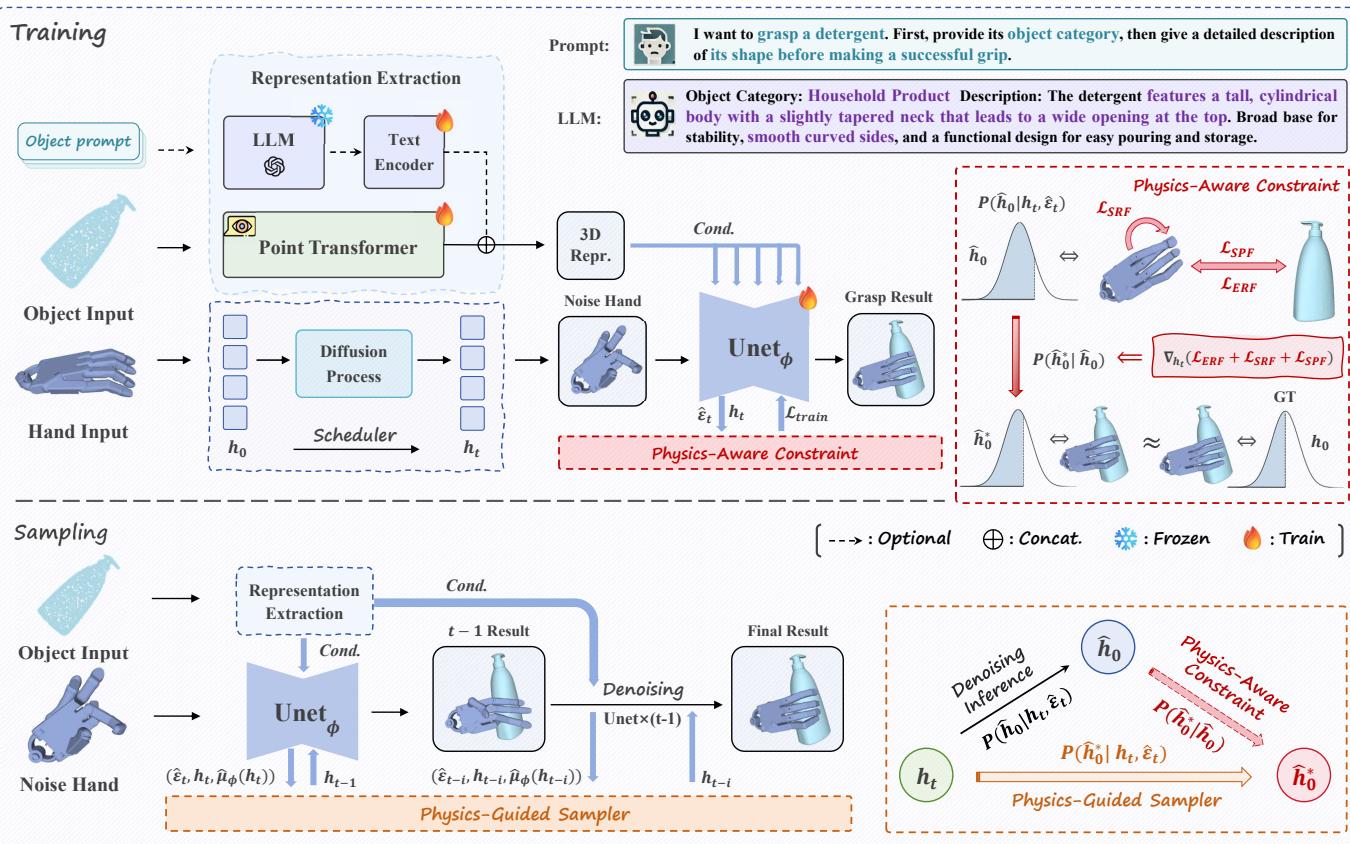
As shown in Figure 2 above, the process begins with the object input. The model takes a 3D point cloud of the object. Interestingly, it also uses a Large Language Model (LLM) to extract semantic information about the object (e.g., “This is a bottle, grasp the neck”), which is combined with the spatial data.
The model is a conditional diffusion model. It attempts to learn the conditional distribution \(P(h|O)\), where \(h\) is the hand pose and \(O\) is the object observation.
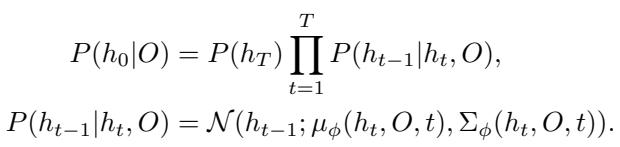
The innovation lies in how they force the model to respect reality using three specific physical constraints.
The “Secret Sauce”: Three Physical Constraints
To stop the robot from hallucinating impossible grasps, the authors introduce three specific force-based objectives. These are applied during training (to teach the model physics) and during sampling (to guide the final result).
1. Surface Pulling Force (SPF)
One of the most common failures in robotic grasping is the hand hovering near the object without actually touching it. This results in a loose grip that drops the item.
The Surface Pulling Force (SPF) acts like a magnet. It identifies points on the inner surface of the robot’s fingers and pulls them toward the object’s surface if they are within a certain threshold.
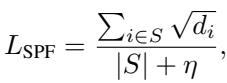
In this equation, \(d_i\) represents the distance between a finger point and the nearest object point. By minimizing this loss, the model learns to make tight contact.
2. External-Penetration Repulsion Force (ERF)
The opposite problem is “clipping,” where the generated hand pose intersects with the object mesh. In a simulation, this looks like a ghost hand; in the real world, this would smash the object or the robot’s motors.
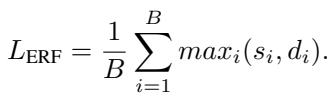
The External-Penetration Repulsion Force (ERF) pushes the hand out of the object. It uses the signed distance field (SDF) of the object. If a hand point is inside the object, the signed distance is negative, triggering a repulsion force.

The loss function effectively penalizes the maximum penetration depth:
3. Self-Penetration Repulsion Force (SRF)
Finally, a robot hand is a mechanical assembly. Fingers cannot cross through each other. The Self-Penetration Repulsion Force (SRF) ensures that the structural integrity of the hand is maintained by enforcing a minimum distance between the hand’s own joints and links.

Physics-Aware Training
Standard diffusion models are trained using a simple Mean Squared Error (MSE) loss, which compares the predicted noise against the actual noise added to the data:

This standard loss doesn’t know about physics—it only cares about statistical distribution. The authors modify this by introducing a Physics-Aware Training (PADG) objective.
During the diffusion training process (where noise is added and then removed), the model predicts a “clean” hand pose \(\hat{h}_0\) from the noisy input \(h_t\).
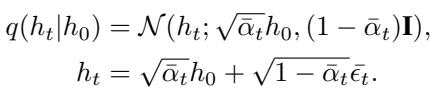
The authors then apply the three physical constraint losses (SPF, ERF, SRF) to this estimated clean pose. This allows gradients from physical violations to update the model weights. The total loss function becomes a combination of the standard diffusion loss and the weighted physical losses:

This means the neural network is explicitly penalized if it predicts a grasp that clips through the object or itself, even during the noisy stages of training.
Physics-Guided Sampling
Training a smart model is only half the battle. When the robot is actually operating (inference time), it starts with pure noise and iteratively refines it into a grasp.
The authors implement a Physics-Guided Sampler. At each step of the denoising process, they don’t just let the model predict the next step blindly. They calculate the gradient of the physical constraints (Are we penetrating? Are we touching?) and use that gradient to steer the denoising process.
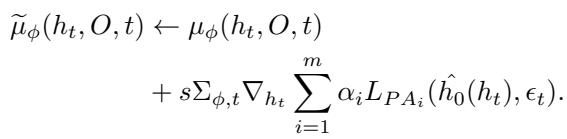
This effectively nudges the hand pose toward a physically valid configuration at every millisecond of the generation process.
The Data Engine: Scaling Up to 3.4 Million Grasps
A generative model is only as good as its training data. The researchers identified a major bottleneck in the field: existing datasets were either too small, lacked object diversity, or relied on “eigengrasp” spaces that limited the complexity of poses.
To solve this, they created the DexGrasp Anything (DGA) Dataset.
Construction Strategy
- Curation: They aggregated diverse data from simulators (IsaacGym), human capture (GRAB), and existing optimization datasets.
- Model-in-the-Loop Generation: They used their own DexGrasp Anything model to generate new grasps for thousands of objects from the Objaverse dataset.
- Strict Filtering: They applied rigorous physics checks—objects couldn’t move more than 2cm under force, and penetration had to be negligible.
Dataset Statistics
The result is the largest dexterous grasping dataset to date.
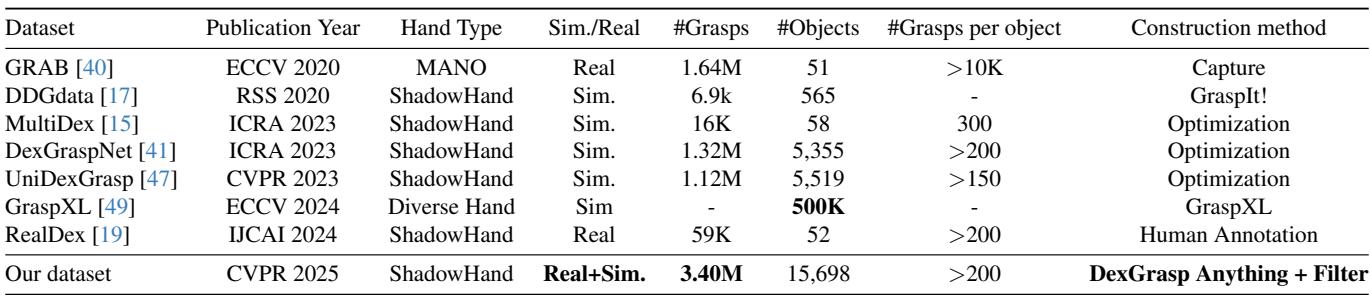
As Table 1 shows, the DGA dataset contains 3.4 million grasps across 15,698 objects. This dwarfs previous datasets like DexGraspNet or MultiDex.
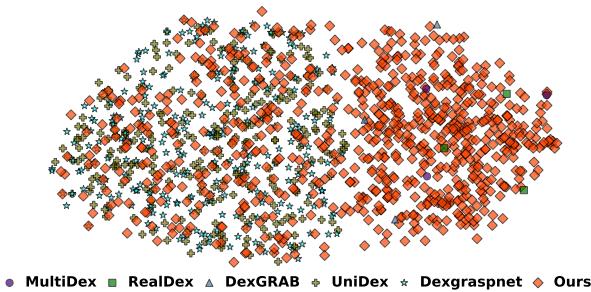
The diversity is also visualized using t-SNE (a way of mapping high-dimensional data to 2D). In the image below, you can see that the DGA dataset (orange diamonds) covers a much broader area of the feature space than previous datasets, indicating a wider variety of object shapes and types.
Experiments and Results
Does adding physics constraints actually work? The authors compared DexGrasp Anything against state-of-the-art methods like UniDexGrasp, SceneDiffuser, and UGG.
Quantitative Performance
The key metrics used were:
- Success Rate (Suc.6): The grasp holds the object steady against gravity in 6 different directions.
- Penetration (Pen.): How much the hand intersects the object (lower is better).
- Diversity (Div.): How different the generated grasps are from each other.

Table 2 shows that DexGrasp Anything achieves the highest success rates (over 53% for strict Suc.6 on DexGraspNet) while maintaining low penetration. Notably, the “w/ LLM” (with Large Language Model features) version performs the best, proving that understanding what an object is helps the robot hold it better.
Qualitative Visualizations
Numbers are great, but in robotics, seeing is believing. The visual comparisons show that baseline methods often result in fingers floating off the object or clipping through it.
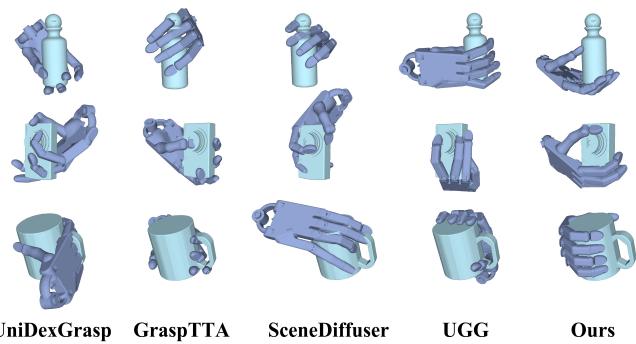
In Figure 4, notice how the Ours column shows tight, realistic wrapping of fingers around the mugs and bottles, whereas UniDexGrasp or SceneDiffuser sometimes show loose or physically impossible grips.
Ablation Study: Do we need all the forces?
To prove that every component matters, the authors stripped the model down and added components back one by one.
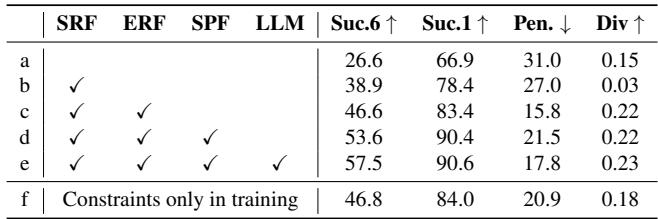
- Row (a): Baseline diffusion. Low success, high penetration.
- Row (d): Adding all physics constraints (SRF + ERF + SPF). Success rate jumps significantly, and penetration drops.
- Row (e): Adding the LLM. Further refinement in success and penetration.
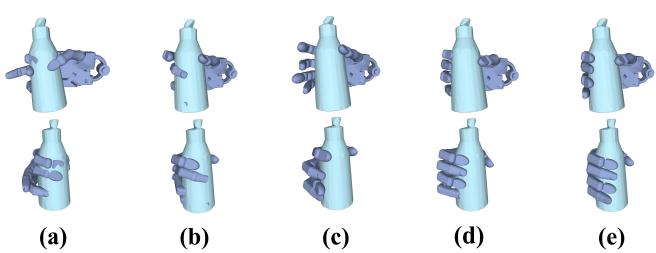
Visually, the difference is stark. Figure 5 below shows the evolution of a grasp. Without constraints, the hand might just pass through the bottle. With constraints, it wraps firmly around the base.
Cross-Dataset Generalization
One of the most impressive results is how well the model generalizes. When trained on the massive DGA dataset and then tested on other datasets (like RealDex), the performance improves across the board compared to models trained on smaller datasets.
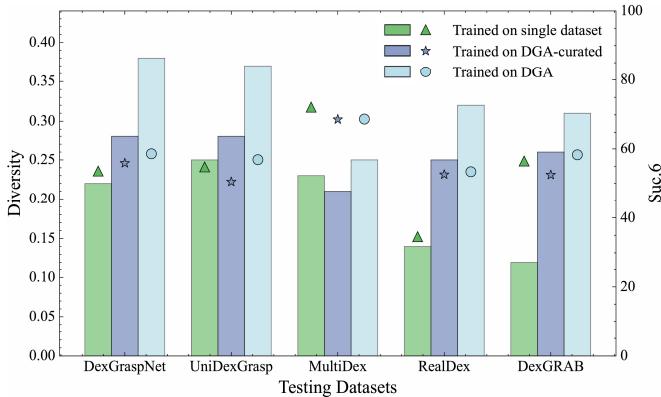
In Figure 8, we see that models trained on the DGA dataset (light blue circles/bars) consistently achieve higher diversity and success rates than those trained on single datasets.
Real-World Application
Finally, a simulation is only useful if it transfers to reality. The authors deployed DexGrasp Anything on a real ShadowHand robot.
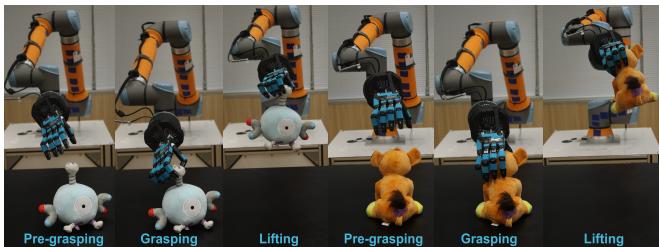
The robot successfully performed “pick-and-lift” tasks on deformable objects like plush toys—a notoriously difficult task because the object shape changes when touched. The success in the real world validates the “Physics-Aware” approach; by strictly enforcing physics in training, the “Sim-to-Real” gap is bridged effectively.
Conclusion
DexGrasp Anything represents a maturation of generative AI in robotics. It moves beyond simply generating things that “look right” to generating actions that “work right” according to physical laws.
By integrating Surface Pulling, External Repulsion, and Self-Repulsion forces into both the training and sampling phases of a diffusion model, the researchers have created a system that is robust, diverse, and highly successful. Coupled with the release of the massive DGA dataset, this work provides a new foundation for universal robotic manipulation.
For students and researchers, the key takeaway is the power of inductive bias. Pure data-driven learning is powerful, but injecting known constraints (like physics) into the learning process is often the key to solving complex, real-world problems.