](https://deep-paper.org/en/paper/2503.16979/images/cover.png)
The dream of “Holographic” communication—where you can view a remote event from any angle in real-time—has long been a staple of science fiction. In computer vision, this is known as Free-Viewpoint Video (FVV). The goal is to reconstruct dynamic 3D scenes from multiple camera feeds instantly.
While recent technologies like 3D Gaussian Splatting (3DGS) have revolutionized how we render static scenes, handling dynamic scenes (videos where people and objects move) remains a massive computational bottleneck. Traditional methods require processing the entire video offline, which is useless for live interactions like virtual meetings or sports broadcasting. Even existing “streaming” methods often take over 10 seconds to process a single frame, creating an unacceptable lag.
Enter Instant Gaussian Stream (IGS).
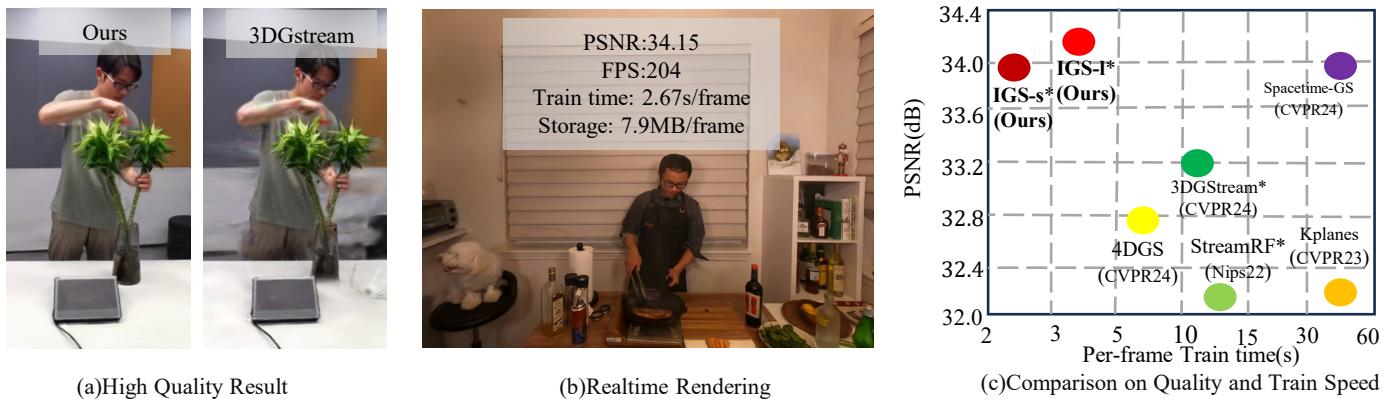
As shown in Figure 1, IGS is a new framework that drastically cuts down reconstruction time to roughly 2.67 seconds per frame while maintaining high visual fidelity. In this post, we will decode how IGS achieves this speed-up by combining a generalized neural network for motion prediction with a smart key-frame strategy.
Background: The Challenge of Dynamic Splatting
To understand IGS, we first need a quick refresher on 3D Gaussian Splatting (3DGS). Unlike meshes (triangles) or NeRFs (volumetric rays), 3DGS represents a scene as a cloud of 3D Gaussians (ellipsoids).
Each Gaussian is defined by a center position \(\mu\), a covariance matrix \(\Sigma\) (shape/rotation), opacity \(\alpha\), and color coefficients. The mathematical representation of a Gaussian primitive is:

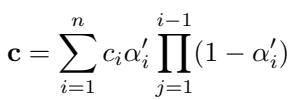
To render an image, these 3D Gaussians are projected onto a 2D plane and blended together using alpha blending:
The Streaming Problem
For a static photo, you optimize these Gaussians once. For a video, the scene changes every fraction of a second.
Existing solutions usually try to optimize the Gaussians for every single frame from scratch or calculate complex deformations via optimization. This is slow (high latency). Furthermore, if you simply update the previous frame’s Gaussians based on new data, small errors start to pile up. By frame 100, the reconstruction often looks like a distorted mess—a phenomenon known as error accumulation.
The researchers behind IGS propose a two-pronged solution:
- Stop optimizing every frame: Use a trained neural network to predict how Gaussians move.
- Fix the drift: Periodically use a “Key Frame” to refine the model and reset accumulated errors.
The Core Method: Instant Gaussian Stream (IGS)
The IGS pipeline is designed to handle the trade-off between speed and accuracy. It does not treat every frame equally. Instead, it divides the video into Key Frames and Candidate Frames.
The architecture relies on a novel component called the Anchor-driven Gaussian Motion Network (AGM-Net).
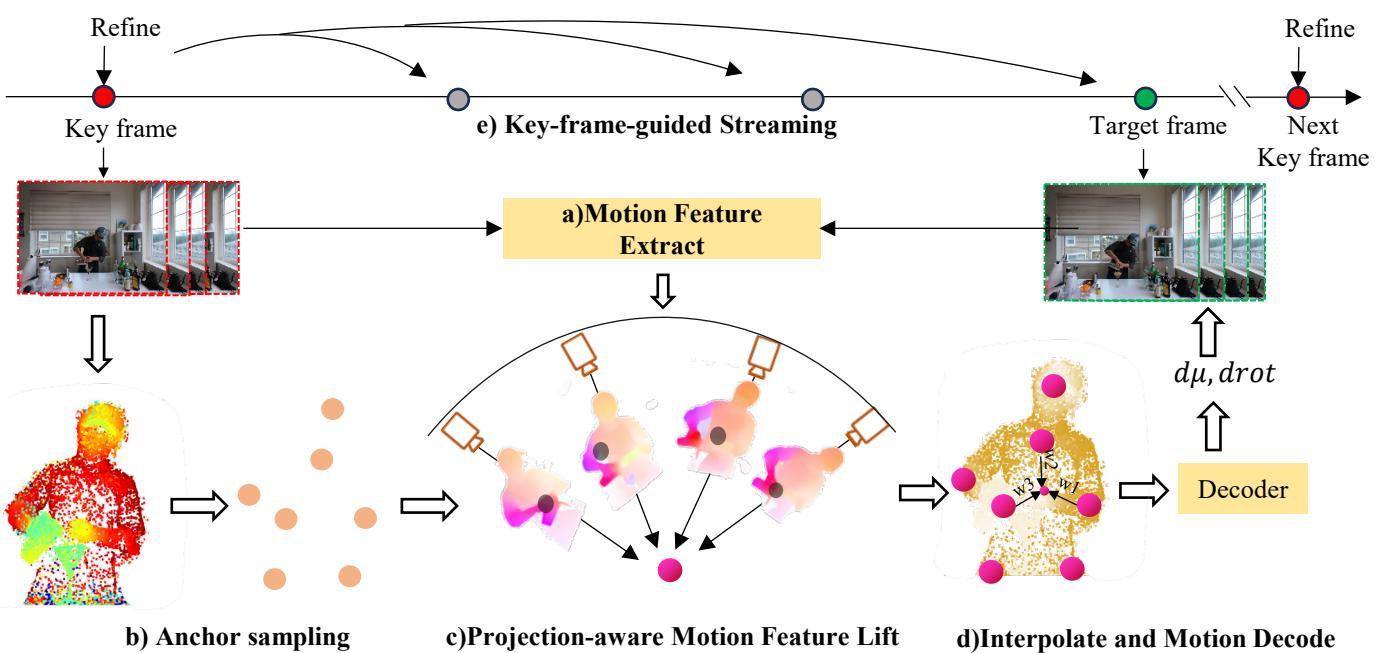
As illustrated in the pipeline above, the process flows from a Key Frame to a Target (Candidate) Frame. Let’s break down the AGM-Net mechanics step-by-step.
1. Anchor Sampling
A dynamic scene might contain millions of Gaussian points. Calculating the motion for every single point individually is computationally too heavy. Instead, the authors use a sparse set of representative points called Anchors.
They employ Farthest Point Sampling (FPS) to select \(M\) anchor points (typically around 8,192) from the full set of Gaussians. These anchors act as “control points” for the geometry.

2. Projection-Aware Motion Feature Lift
This is arguably the most clever part of the system. We have 2D images of the scene moving (which gives us 2D optical flow features), but we need to move 3D Gaussians. How do we bridge 2D pixel data to 3D space?
The authors extract 2D motion features from the multi-view images using an optical flow model. Then, they project the 3D Anchor points onto these 2D feature maps.
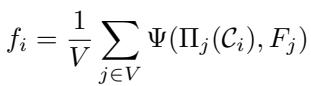
By projecting the anchors into the camera views, the system “lifts” the 2D motion information into 3D space. Each anchor gathers motion cues from multiple camera angles, creating a rich 3D motion representation.
3. Motion Decoding and Interpolation
Once the anchors have their raw 3D features, a Transformer block processes them. This allows the anchors to share information globally—for example, understanding that if the “shoulder” anchor moves, the “arm” anchor should likely move too.

Now, we need to transfer this motion knowledge from the sparse Anchors back to the millions of dense Gaussian points. IGS uses a weighted interpolation based on the distance to the nearest anchors (K-nearest neighbors).
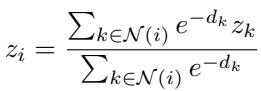
Finally, a linear layer decodes these features into actual physical movements: a change in position (\(d\mu\)) and a change in rotation (\(drot\)).

The Gaussians are then updated simply by adding these predicted deltas:
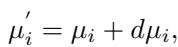

This entire process—from anchors to updated Gaussians—happens in a single forward pass. There is no iterative optimization loop for these candidate frames, which is why IGS is so fast.
4. Key-Frame-Guided Streaming Strategy
If the AGM-Net were perfect, we could just predict frame 1 from frame 0, frame 2 from frame 1, and so on forever. In reality, tiny predictions errors accumulate.
To solve this, IGS uses a Key-frame-guided strategy.
- Key Frames: Every \(w\) frames (e.g., every 5th frame), the system designates a Key Frame.
- Refinement: For Key Frames, the system does perform optimization. It refines the Gaussian parameters to match the ground truth images perfectly.
- Reset: The AGM-Net always predicts candidate frames starting from the most recent Key Frame.
This prevents errors from propagating. If frame 3 is slightly off, frame 4 doesn’t inherit that error because it is predicted freshly from Key Frame 0.
Max Points Bounded Refinement: Optimization usually involves “densifying” (adding more points) to capture detail. However, in a streaming context, if you keep adding points, your memory usage will explode. IGS introduces a limit (Max Points Bounded) to ensure the number of Gaussians stays stable, preventing memory overflow and overfitting.
Experiments & Results
The researchers compared IGS against state-of-the-art methods, including offline champions like 4DGS and streaming methods like 3DGStream.
Speed and Quality
The primary metric for success here is the balance between training time and visual quality (PSNR).
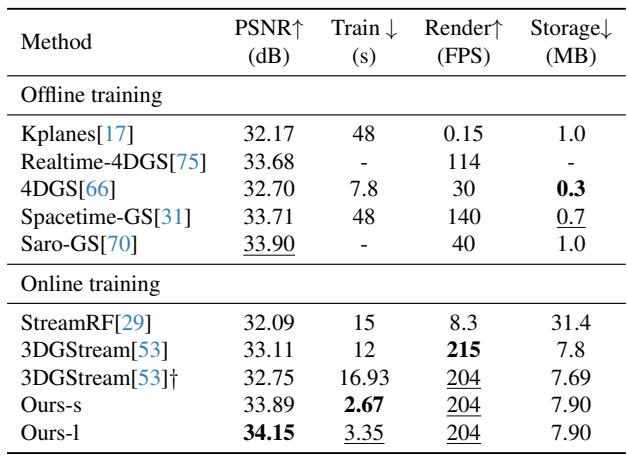
Looking at Table 1, IGS-s (Small) and IGS-l (Large) achieve training times of 2.67s and 3.35s respectively. Compare this to 3DGStream, which takes roughly 12-16 seconds. Despite being 4-6x faster, IGS achieves higher PSNR (Peak Signal-to-Noise Ratio), indicating better image quality.
Visual Quality Comparison
Numbers are good, but visual clarity matters most in rendering.
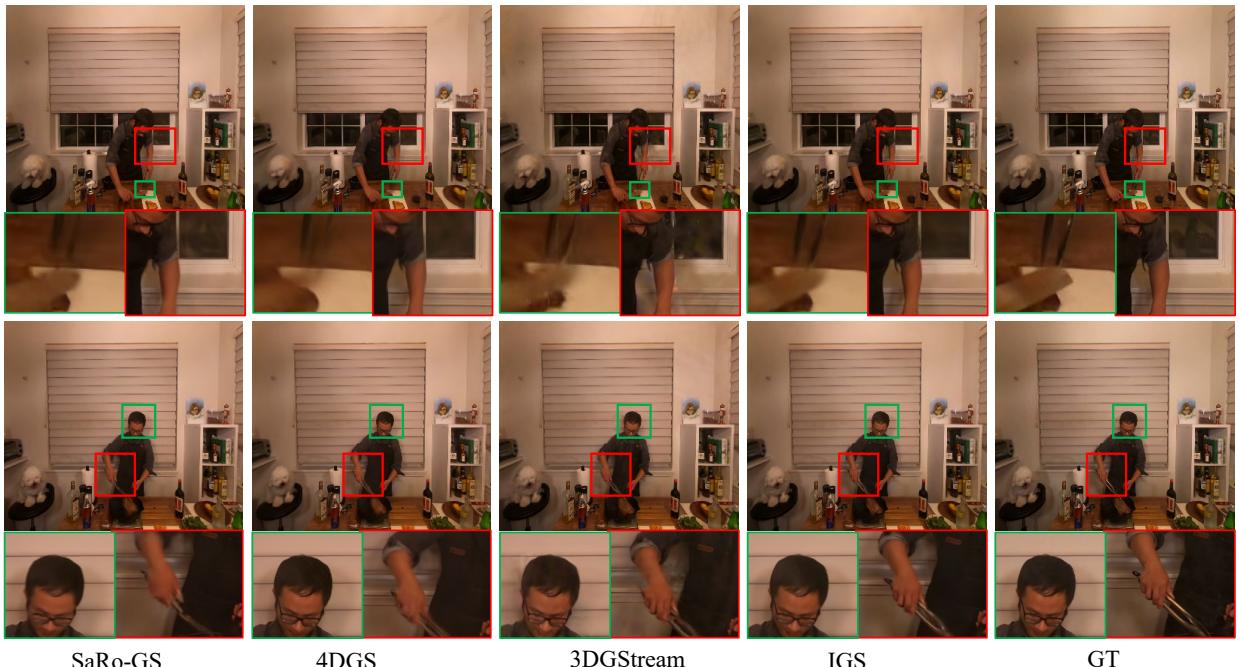
In Figure 5, look closely at the “Cut Roasted Beef” and “Sear Steak” rows. 3DGStream tends to blur fine details like the utensils or the texture of the meat during motion. IGS maintains a sharpness that is much closer to the Ground Truth (GT).
Combating Error Accumulation
Does the Key-Frame strategy actually stop the drift?
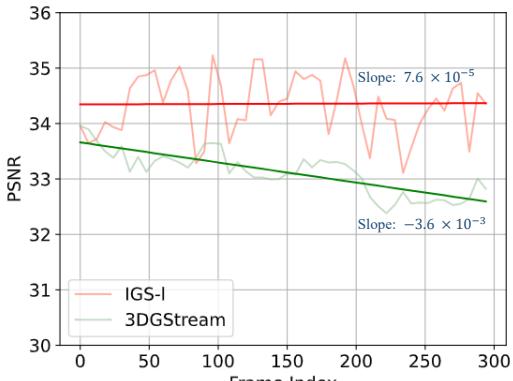
Figure 3 plots the quality (PSNR) over time. The green line (3DGStream) clearly trends downward—as the video goes on, the quality gets worse. The IGS line (red), while fluctuating slightly due to the key-frame intervals, maintains a stable high quality throughout the sequence. This proves that the strategy successfully mitigates error accumulation.
Cross-Domain Generalization
One of the most impressive aspects of IGS is its generalizability. The AGM-Net is trained on one dataset (N3DV) but can be applied to completely different scenes (Meeting Room dataset) without retraining the network weights—only the per-scene Gaussians are refined.
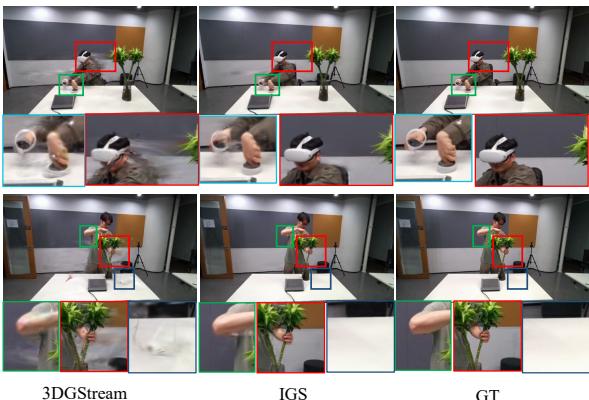
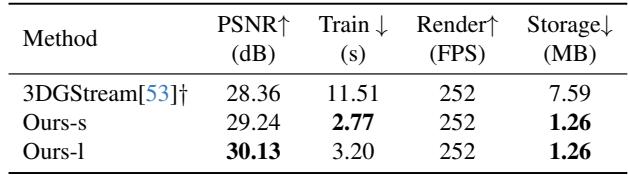
Even in this cross-domain setting (Table 2), IGS outperforms the baseline, achieving 2.77s reconstruction time versus 11.51s, with significantly lower storage requirements (1.26 MB vs 7.59 MB).
Ablation Studies
The authors also validated their design choices. For example, is the “Projection-aware” lifting really necessary?
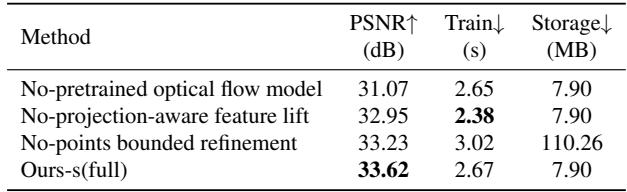
Table 3 shows that removing the projection-aware feature lift drops the PSNR from 33.62 dB to 32.95 dB. Similarly, removing the max-points bounding causes storage usage to skyrocket from 7.9 MB to 110.26 MB, proving that memory management is crucial for streaming.
We can also visualize the impact of the Key-frame refinement:
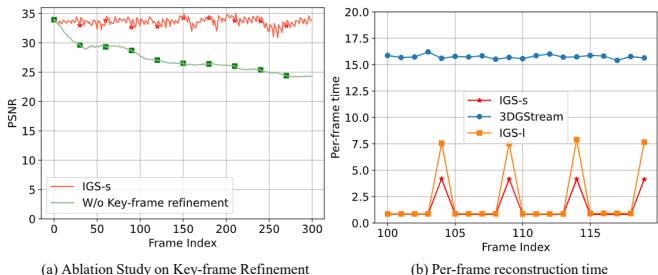
Figure 6(a) shows the disastrous drop in quality (green dashed line) if Key-frame refinement is removed. Figure 6(b) visualizes the timing: the spikes represent the Key Frames (taking longer to process), while the flat low lines are the Candidate frames processed instantly by AGM-Net.
Conclusion
Instant Gaussian Stream (IGS) represents a significant leap forward in the reconstruction of dynamic 3D scenes. By shifting the heavy lifting from per-frame optimization to a generalized neural network (AGM-Net), the researchers have achieved a method that is:
- Fast: reducing reconstruction latency to ~2 seconds.
- High Quality: outperforming existing streaming methods in visual fidelity.
- Stable: eliminating the “drift” common in long video processing via Key-frame guidance.
This work paves the way for practical, real-time applications of free-viewpoint video. In the near future, the “holographic” video calls of sci-fi movies might finally become a reality on our screens, powered by the efficient streaming of Gaussian Splats.
While IGS introduces some frame-to-frame jitter (a limitation discussed by the authors due to the lack of temporal dependency modeling between predictions), the foundational architecture offers a robust platform for future improvements in temporal consistency. For students and researchers in computer vision, IGS serves as a perfect example of how combining classical geometric sampling (anchors) with modern deep learning (Transformers/Flow) can solve complex efficiency bottlenecks.