](https://deep-paper.org/en/paper/2509.01657/images/cover.png)
Quality Over Quantity: Improving Robot Learning with Importance Weighted Retrieval
The field of robotics is currently facing a “data hunger” crisis. While we have seen massive leaps in capability thanks to Deep Learning, these models require enormous amounts of data. In Computer Vision or NLP, scraping the internet provides billions of examples. In robotics, however, data must be physically collected—a slow, expensive, and labor-intensive process.
To solve this, researchers often turn to Few-Shot Imitation Learning. The goal is simple but ambitious: teach a robot a new task using only a handful of demonstrations (the “target” data) by supplementing them with relevant clips from massive, pre-existing datasets (the “prior” data). This process is known as Retrieval.
But here lies the problem: How do you decide which data from the massive pile is actually useful for your specific new task?
Standard methods rely on simple geometric distance, essentially asking, “Which old data looks closest to my new data?” In the paper “Data Retrieval with Importance Weights for Few-Shot Imitation Learning,” researchers from Stanford University argue that this intuition is mathematically flawed. They propose a new probabilistic approach called Importance Weighted Retrieval (IWR), which treats data selection not as a geometry problem, but as a probability density estimation problem.
In this post, we will break down why the old way of retrieving data is noisy and biased, and how IWR uses importance sampling to drastically improve robot performance in both simulated and real-world environments.
The Status Quo: Retrieval via Nearest Neighbors
To understand the contribution of this paper, we first need to look at how robots currently “retrieve” memories.
Imagine you want to teach a robot to pick up a red mug. You give it 5 demonstrations (\(D_{target}\)). You also have a massive hard drive with 100,000 previous robot interactions (\(D_{prior}\)), ranging from opening drawers to picking up bananas.
Most state-of-the-art methods—such as Behavior Retrieval (BR) or Flow Retrieval—follow a standard recipe:
- Encode: Compress all image/action data into a lower-dimensional “latent space” (often using a Variational Autoencoder, or VAE).
- Measure: For every point in the massive prior dataset, find the distance to the nearest point in the target dataset.
- Select: Keep the points with the smallest distance.
Mathematically, the standard selection rule looks like this:

Here, \(f_{\phi}\) is the encoder. We look for samples in the prior dataset (\(D_{prior}\)) where the squared Euclidean distance (\(L2\)) to the closest target sample is below a certain threshold \(\zeta\).
The Problem with “Closest”
While intuitive, the researchers point out that this “Nearest Neighbor” approach suffers from two major mathematical weaknesses:
- High Variance (Noise): Relying on the single nearest neighbor is statistically brittle. If your target demonstrations are slightly noisy, or if the latent space isn’t perfectly smooth, you might retrieve data that looks close geometrically but is semantically irrelevant.
- Bias: This method completely ignores the distribution of the prior data. It asks “does this look like the target?” but fails to ask “how common is this in the prior dataset?” This leads to a skewed distribution of training data.
The researchers realized that the standard L2-distance rule is actually just a crude approximation of a probability density estimate—specifically, it is the limit of a Gaussian Kernel Density Estimate (KDE) as the bandwidth approaches zero. By acknowledging this connection, they could replace the crude approximation with a proper statistical tool.
The Solution: Importance Weighted Retrieval (IWR)
IWR fundamentally shifts the perspective from distance to probability. Instead of asking “how close is this point?”, IWR asks “how likely is this point to belong to the target distribution compared to the prior distribution?”
The method consists of three main stages, illustrated below:

Let’s break down the two key innovations: Smoothing via KDEs and Importance Sampling.
1. Smoothing with Kernel Density Estimation (KDE)
The first upgrade IWR makes is replacing the “nearest neighbor” check with a Gaussian Kernel Density Estimate (KDE).
Imagine your 5 target demonstrations are dots on a piece of paper. The “nearest neighbor” method draws a tiny circle around each dot. If a prior data point lands in the circle, it keeps it.
A KDE, conversely, places a smooth “hill” (a Gaussian) over each dot and sums them up. This creates a continuous terrain of probability. A prior data point is evaluated based on its height on this terrain.
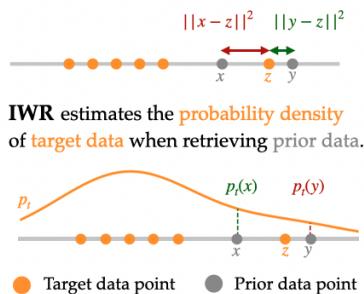
As shown in Figure 2 above, the difference matters.
- L2 Distance (Top): The prior point \(y\) is geometrically closer to a single target point \(z\) than \(x\) is. So, standard methods pick \(y\).
- IWR (Bottom): The point \(x\) is situated in a region where many target points are clustered. Even if it isn’t the closest to any single point, it has a higher probability density under the target distribution \(p_t\). IWR correctly identifies \(x\) as the better candidate.
The mathematical formulation for this density estimate is:

This formula calculates the probability \(p^{KDE}(z)\) by averaging the Gaussian contributions from all data points, smoothed by a bandwidth parameter \(h\) and covariance \(\Sigma\). This creates a lower-variance, more robust estimate of where the “good” data lives.
2. The Power of Importance Weights
The second, and perhaps more critical innovation, is the application of Importance Sampling.
In Imitation Learning, we want to minimize the loss on the target distribution (\(p_t\)). However, we are retrieving samples from a prior distribution (\(p_{prior}\)). If we simply grab data that looks like \(p_t\), we are ignoring the fact that the prior dataset has its own biases (e.g., it might have 1,000 clips of opening a drawer but only 5 of lifting a mug).
To correct for this, we need to weight the data. We want to sample data based on the Importance Weight ratio:
\[ w = \frac{p_t(z)}{p_{prior}(z)} \]- Numerator (\(p_t\)): Is this data relevant to my new task?
- Denominator (\(p_{prior}\)): Is this data over-represented in the old dataset?
The researchers seek to satisfy the following expectation, ensuring the data we train on mathematically represents the target task:

By estimating both \(p_t\) and \(p_{prior}\) using KDEs, IWR assigns a score to every piece of prior data. It then retrieves the data with the highest weights.
The final retrieval rule for IWR looks like this:

This inequality selects points where the importance weight (ratio of densities) exceeds a threshold \(\zeta\). Note the summation inside the log—this is the “smoothing” effect of the KDE in action, considering all target points simultaneously rather than just the nearest one.
Does it Work? Experimental Results
The researchers put IWR to the test against standard baselines (Behavior Cloning, Behavior Retrieval, Flow Retrieval, and SAILOR) in both simulated environments and real-world robot tasks.
The Environments
The evaluation covered a diverse set of tasks:
- Robomimic Square: A precise assembly task.
- LIBERO: A benchmark suite with 10 different kitchen-style tasks.
- Real-World Bridge V2: Manipulating objects like corn, carrots, and eggplants in a toy sink.

Performance Gains
The results were consistent and significant. In almost every category, replacing the standard L2 distance metric with IWR’s probability-based metric improved success rates.

In Table 1, notice the “Real World Tasks” (Corn, Carrot, Eggplant).
- Standard Behavior Retrieval (BR) struggled, achieving only 2/20 success on the Corn task.
- IWR jumped to 9/20.
- On the long-horizon Eggplant task, IWR achieved 11/20 full successes, while the next best method (BR) only managed 3/20.
This indicates that IWR isn’t just a theoretical improvement; it translates to robust, physical robot behavior.
Why Does it Work Better? A Deep Dive
To understand why IWR wins, the authors analyzed exactly what data was being retrieved.
Consider the “Mug-Pudding” task. The goal is to put a white mug on a plate and pudding to the left. The prior dataset contains confusing “distractor” tasks, like putting a chocolate pudding down, or putting the mug to the right.
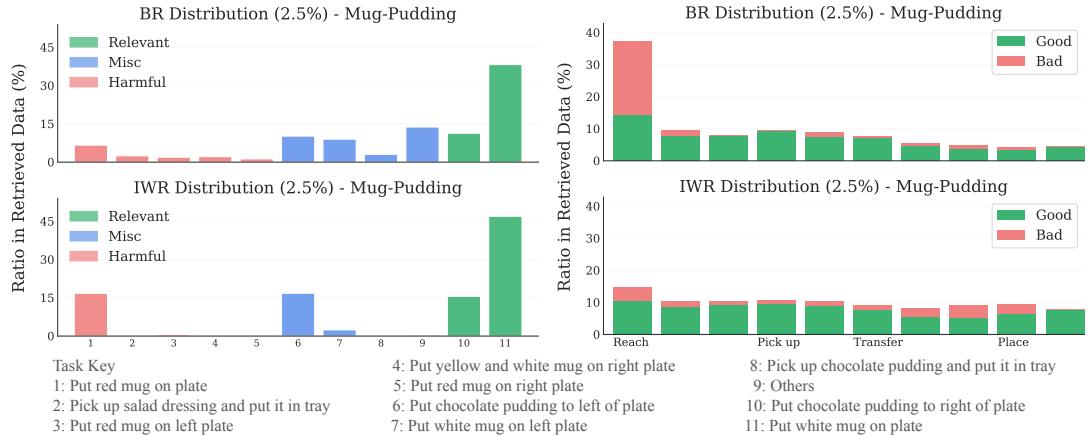
Figure 4 reveals the critical difference:
- Left Charts (Tasks): The standard method (BR) retrieves a large amount of “Harmful” data (Red bars)—likely tasks involving similar-looking objects that are manipulated incorrectly. IWR (Bottom Left) significantly filters these out, retrieving mostly “Relevant” or “Mixed” (partially useful) data.
- Right Charts (Timesteps): Standard retrieval often over-samples the beginning of trajectories (where nothing is happening yet). IWR retrieves a balanced distribution across the entire timeline of the task.
Because IWR models the prior distribution (\(p_{prior}\)), it implicitly understands that “sitting still at the start of an episode” is extremely common in the prior dataset. The denominator in the importance weight (\(1/p_{prior}\)) penalizes these common, uninformative frames, allowing the unique, task-relevant actions to shine through.
Versatility
One of the strongest features of IWR is that it is agnostic to the underlying representation. Whether you use VAE latents (like Behavior Retrieval), Optical Flow (Flow Retrieval), or Skill-based embeddings (SAILOR), you can apply IWR on top.

Table 2 demonstrates that applying IWR to existing methods (SR-IWR and FR-IWR) generally boosts their performance, proving that the math is universally applicable to retrieval-based learning.
Conclusion
The transition from “Big Data” to “Smart Data” is a crucial step for robotics. This paper highlights that as we rely more on retrieving data from massive, uncurated datasets, our selection criteria must mature.
Heuristic methods like “Nearest Neighbor” served us well in the early days, but they carry hidden biases and susceptibility to noise. By formalizing retrieval as a probabilistic problem—specifically one of Importance Sampling with Kernel Density Estimation—IWR offers a principled way to select data.
The takeaways for students and practitioners are clear:
- Geometry \(\neq\) Probability: Being “close” in latent space doesn’t always mean “probable” or “useful.”
- Context Matters: You cannot ignore the distribution of the dataset you are retrieving from.
- Smoothness helps: Aggregating information from all available demonstrations (via KDE) is more robust than trusting a single nearest neighbor.
As robot datasets continue to grow into the scale of millions of trajectories, methods like IWR will be essential filters, ensuring that robots learn from the signal, not the noise.