](https://deep-paper.org/en/paper/file-2258/images/cover.png)
Introduction: The Hidden Evidence in Our Hands
In the realm of forensic science, every pixel counts. Consider the Victim Identification Programme within the Department of Homeland Security. They process millions of images and videos related to child abuse cases, searching for any clue to identify perpetrators. Often, the suspect’s face is hidden, and the only visible evidence is a hand holding a device or an object.
This is where finger knuckle biometrics steps into the spotlight. Unlike fingerprints, which require a surface touch, knuckle patterns are clearly visible in standard photographs. However, automated identification has historically hit a wall. While recent AI has become adept at matching high-quality, straight-on images of hands, it fails spectacularly when the finger is bent, rotated, or captured from a distance—the exact scenarios found in real-world surveillance and forensic evidence.
Furthermore, in a courtroom, saying “the AI said it’s a match” isn’t enough. Prosecutors need explainability. They need to show a jury why two images match, pointing to specific physical features like creases and lines, much like a fingerprint analyst points to whorls and ridges.
In this deep dive, we will explore a groundbreaking paper, “Towards Explainable and Unprecedented Accuracy in Matching Challenging Finger Crease Patterns,” which proposes a novel solution to these problems. The researchers introduce a method that doesn’t just treat the finger as a texture but understands the geometry of its creases, achieving unprecedented accuracy while offering the interpretability required for justice.
The Core Problem: Texture vs. Structure
To understand the innovation here, we must first understand why current methods fail.
Most state-of-the-art biometric systems (like those using ResNet or DenseNet) treat a finger knuckle image as a texture. They look at the skin’s surface and learn statistical patterns. This works beautifully when the finger is flat. But the proximal interphalangeal (PIP) joint—the middle knuckle—is highly agile. When you bend your finger, the skin stretches, the lighting changes, and the texture deforms.
For a standard Convolutional Neural Network (CNN), a bent finger looks like a completely different object compared to a straight finger. The failure rates for “cross-pose” matching (matching a straight finger to a bent one) have been notoriously high.
The researchers argue that while skin texture changes with movement, the knuckle creases (the deep lines in your skin) and their intersections (keypoints) remain relatively stable relative to each other. By shifting the focus from global texture to structural keypoints, we can build a system that is robust to deformation.
The Solution: The Correspondence Graph Neural Network (CGN)
The proposed framework is a multi-stage pipeline designed to mimic how a human forensic examiner works: identify landmarks, find correspondences, and compare the structural relationship.
Let’s visualize the entire framework before breaking it down:

As shown in Figure 2, the process is divided into four distinct steps.
Step 1: Knuckle Crease Point Detection
The first challenge is detecting the “interest points” or keypoints on the finger. The researchers utilize a deep neural network inspired by the SuperPoint architecture, adapted specifically for knuckle creases. This module, referred to as KnuckleCreasePoint, scans the image and outputs three things for every detected point:
- Location (\(K\)): The (x, y) coordinates.
- Descriptor (\(F\)): A deep feature vector describing the visual area around the point.
- Score (\(S\)): How “confident” the model is that this is a valid keypoint.
Unlike traditional methods (like SIFT) that might rely on simple contrast changes, this deep learning approach is robust enough to find consistent points even when the lighting is poor or the skin is stretched.
Step 2: Finding Correspondences
Once we have a set of points for the “Probe” image (the unknown finger) and the “Gallery” image (the stored record), we need to figure out which point matches which.
The system constructs a descriptor matrix for both images using the following formulation:

Here, the location (\(K\)) and score (\(S\)) are processed by a Multi-Layer Perceptron (MLP) and added to the visual features (\(F\)). This creates a rich representation (\(D\)) that contains both “what the point looks like” and “where it is.”
To match these points, the model uses a Graph Neural Network (GNN) with self-attention and cross-attention layers (referred to as KnucklePointPair). It essentially asks: Which point in Image A corresponds to which point in Image B?
It generates a cost matrix to evaluate potential matches:
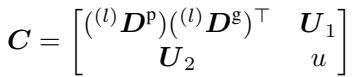
From this matrix, the system filters out the noise and selects only the Top-K strongest matches. If a point in the Probe image has a very strong similarity to a point in the Gallery image, they are considered a “matched pair.”
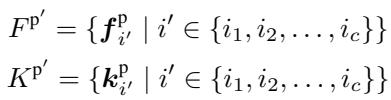
Step 3: Building the Graph
This is where the method moves from “image matching” to “structure matching.” A collection of matched points is good, but a graph of those points is better.
The researchers use the coordinates of the matched keypoints to construct a graph for both images. They use a k-Nearest Neighbors (k-NN) approach. For every keypoint, edges are drawn to its nearest neighbors.
Why do this? Because even if a finger is bent or rotated, the relative relationship between neighbor points remains structurally similar.
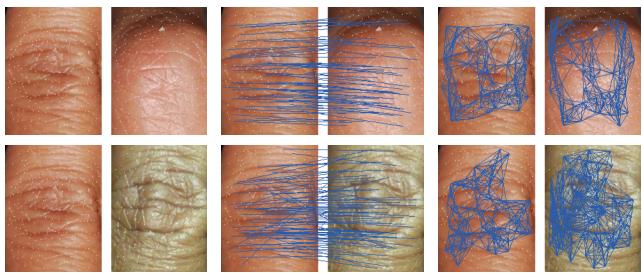
Look at Figure 3 above.
- The top row shows a “Genuine” pair (same person). Notice how the graph structure on the far right (e) looks remarkably similar to (f), even though the images might differ slightly.
- The bottom row shows an “Imposter” pair. The points are scattered, and the resulting graphs look completely different.
This visual graph is the core of the explainability this paper promises. A forensic examiner can show these graphs to a jury to demonstrate why the system believes two images belong to the same person.
Step 4: Graph Similarity and the “Tracker”
Now that we have two graphs, how do we mathematically determine if they are the same? This is the domain of the Graph Neural Network (GNN).
The Insight: Node vs. Feature Dimension
One of the paper’s key theoretical contributions is an observation about how GNNs process data. Typically, GNNs aggregate information along the feature dimension. However, the authors found that for knuckle patterns, the correlation between matched points is much stronger along the node dimension.
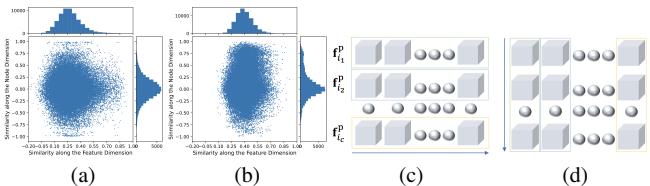
As visualized in Figure 4, the diagonal line in plot (b) and the dense cluster in plot (d) show that when we process along the node dimension (looking at specific keypoints across the dataset), the distinction between a match and a non-match is much sharper.
Consequently, they designed a specific “Convolution along the Node Dimension”:

The Tracker Module
To calculate the final similarity score, the model uses a dual-pathway approach:
- Self-Graph: Updates the features of the nodes based on their neighbors within the same image.
- Cross-Node: Compares the features of corresponding nodes between the two images.
The similarity isn’t just checked once. It is “tracked” across multiple layers (\(l\)) of the neural network. The system calculates the cosine similarity between corresponding points at every layer.

This evolution of similarity is crucial. In a true match, the similarity should arguably get stronger or stay high as the network processes the graph structure. In a false match, the structure will fall apart.

As shown in Figure 5, the Tracker concatenates these similarity scores from all layers into a final vector. This vector is fed into a final MLP to output a single score: Match or No Match.

Theoretical Uniqueness: Can Knuckles be duplicated?
Beyond the AI architecture, this paper attempts something rare in computer vision papers: a theoretical proof of uniqueness.
In fingerprint analysis, there are established statistical models that calculate the probability of two different people having the same fingerprint (False Random Correspondence or FRC). This probability is so low that fingerprints are considered unique.
The authors applied a similar multivariate Gaussian model to their knuckle keypoints.

By modeling the location (\(K\)) and features (\(F\)) of the keypoints, they estimated the probability of finding a random match between two different people using the Poisson distribution:

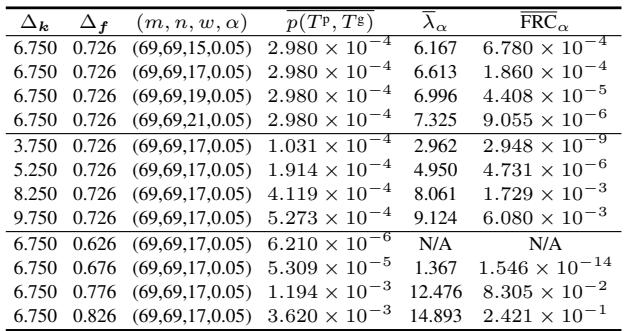
The Result: The calculated False Random Correspondence (FRC) is extremely low (see Table 5 below). This provides a theoretical “upper bound” on performance, suggesting that knuckle patterns are indeed sufficiently unique to be used as admissible forensic evidence, distinct from just “AI magic.”
Experiments and Results
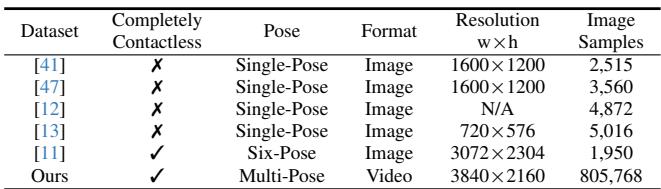
To prove their method works, the authors couldn’t just use existing datasets—they were too small or too easy (mostly straight fingers). So, they built their own.
The New Dataset
They introduced the Multi-pose Finger Knuckle Video Dataset:
- 351 Subjects
- Over 800,000 images
- 4K Resolution
- Captured under ambient lighting with completely contactless mobile imaging.
This is currently the largest and most challenging dataset of its kind.
Performance
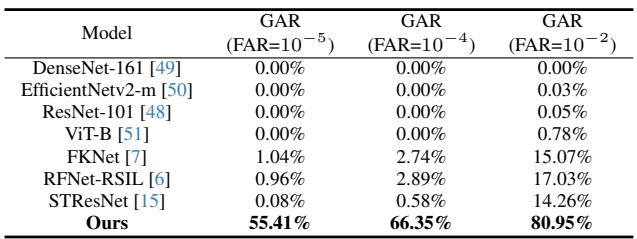
The researchers tested their method (Ours) against standard heavyweights like ResNet-101, DenseNet, and Vision Transformers (ViT), as well as specialized biometric networks (FKNet, RFNet).
The results were stark.

Looking at Figure 6:
- Graph (a) shows the performance on the new, massive dataset. The proposed method (Red line) achieves an Equal Error Rate (EER) of 2.00%, while the next best method is at 17.71%.
- Graph (c) is the most telling. This is the “Finger Knuckle v3.0” dataset, known as the most challenging available. Standard methods like ResNet flatline near the bottom (almost 0% accuracy). The proposed method maintains a robust curve.
The table below quantifies this dominance on the challenging dataset. Notice that at a False Accept Rate (FAR) of \(10^{-4}\), the proposed method achieves 66.35% accuracy, while ResNet and others are at 0.00%.
Ablation Studies
Was it the Graph Neural Network? Was it the Node-dimension convolution? The authors ran “ablation studies” (removing parts of the model to see what breaks) to confirm their design choices.

Figure 8 shows that their specific graph architecture (CGN) outperforms general-purpose graph matching networks like SimGNN or MGNN. This validates that the “Tracker” and “Node-Dimension Convolution” are not just fancy add-ons, but essential for the specific geometry of finger knuckles.
Conclusion: A Step Forward for Forensics
This paper represents a significant leap in biometric identification. By shifting focus from texture (which is unreliable under deformation) to explainable structural keypoints, the authors have solved a major bottleneck in contactless finger matching.
Key Takeaways:
- Robustness: The method works even when fingers are bent or rotated, scenarios where traditional CNNs fail.
- Explainability: The use of keypoint graphs provides visual evidence that can be interpreted by humans, a crucial requirement for law enforcement.
- Uniqueness: The statistical analysis offers the first theoretical backing for the uniqueness of 2D knuckle patterns.
- Open Science: The release of the largest multi-pose video dataset will likely fuel the next generation of research in this field.
As biometric technology moves away from touch-based sensors toward contactless, hygiene-friendly, and surveillance-ready systems, approaches like the one detailed here will become the new standard. Whether for unlocking a smartphone with a casual wave or identifying a suspect from a blurry video frame, the “creases” in our hands tell a story unique to each of us—and now, computers can finally read them.