](https://deep-paper.org/en/paper/file-2389/images/cover.png)
Introduction
Imagine trying to teach a computer to understand a language spoken by only a few hundred people. You don’t have millions of hours of perfectly transcribed YouTube videos or audiobooks. Instead, you have a hard drive full of field recordings collected by linguists over the last twenty years: interviews recorded in windy villages, story-telling sessions interrupted by roosters, and transcriptions that are often incomplete or mixed with research notes.
This is the reality for low-resource language processing. While Automatic Speech Recognition (ASR) has achieved near-human performance for languages like English and Mandarin, it struggles significantly with the world’s 7,000+ endangered and under-resourced languages.
The bottleneck isn’t just the quantity of data; it’s the quality. In a new paper titled “That doesn’t sound right: Evaluating speech transcription quality in field linguistics corpora,” researchers from Boston College and MGH Institute of Health Professions tackle a critical, often overlooked problem: how to automatically identify and filter out “bad” data in field linguistics corpora without needing a native speaker to check every file.
In this post, we will dive deep into their proposed solution—a novel metric called Phonetic Distance Match (PDM)—and explore how cleaning up dirty data can actually outperform simply having more data.
The Context: Field Linguistics vs. ASR Needs
To understand the problem, we first need to understand where the data comes from.
The Disconnect
ASR models usually crave consistency. Standard datasets (like Librispeech) consist of people reading books in quiet rooms, transcribed verbatim.
Field linguistics data is different. Linguists document languages to analyze their structure or preserve cultural heritage, not to train neural networks. A recording might be transcribed loosely, or the transcription might include glosses (grammatical explanations) and translations mixed in with the actual spoken words. Sometimes, the linguist might not have been fluent enough to transcribe the rapid speech of a native elder accurately.
The “Garbage In, Garbage Out” Problem
For high-resource languages, a few bad transcripts don’t matter—the model sees enough good data to ignore the noise. But when you only have 2 hours of audio total, every second counts. If 20% of your training data is mismatched (the text doesn’t match the audio), the model learns to associate the wrong sounds with the wrong words. This degrades performance significantly.
The researchers propose that instead of feeding everything into the model, we should act like a bouncer at a club: check the ID of every audio-transcript pair and kick out the ones that don’t match. But how do you do that automatically for a language you don’t speak and for which no existing ASR model exists?
The Core Method: Assessing Transcription Quality
The researchers introduce two metrics to solve this, but the star of the show is a novel approach called Phonetic Distance Match (PDM).
1. Phonetic Distance Match (PDM)
The intuition behind PDM is brilliant in its simplicity. If we can’t compare the text to the audio directly (because we don’t have an ASR model for this language), we can try to convert both the audio and the text into a common format and compare them there.
The researchers chose ASCII characters as that common ground. Here is the step-by-step architecture of PDM:
- Audio to Phones: They feed the audio through a universal phone recognition model called Allosaurus. This model doesn’t know the specific language, but it knows what human speech sounds like and can output a stream of IPA (International Phonetic Alphabet) symbols representing the audio.
- Phones to ASCII: They convert these IPA symbols into their closest ASCII character equivalents (e.g., converting a specific IPA nasal sound to “n”).
- Text to ASCII: They take the human-written transcription and also normalize it to ASCII. Since many field orthographies are Latin-based, this aligns the character sets.
- Comparison: They calculate the Levenshtein distance (edit distance) between the ASCII-audio representation and the ASCII-text representation.
If the distance is low, the audio and text likely match. If the distance is high, something is wrong—the text might be a translation, a note, or a completely different sentence.
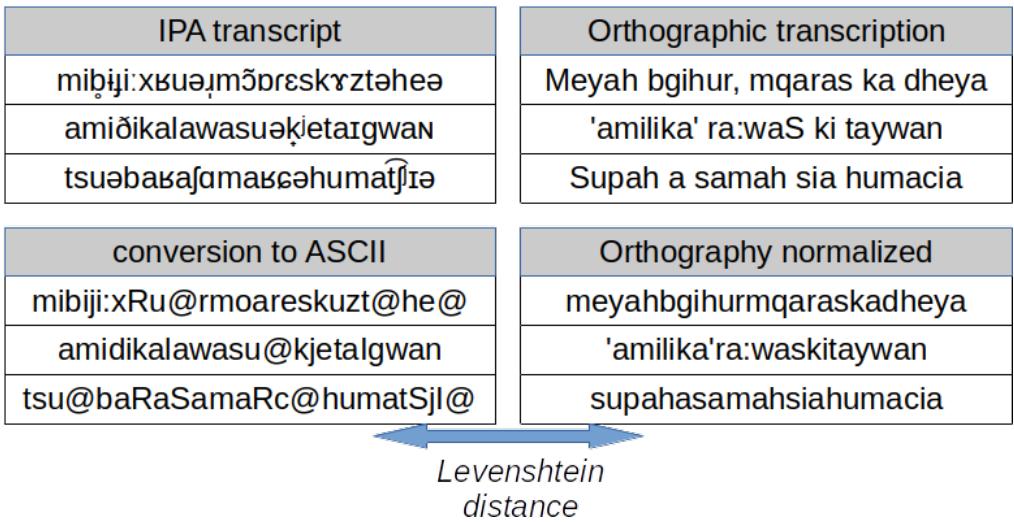
As shown in Figure 4, the system takes the raw IPA output (top left) and the manual text (top right), flattens them both into simple ASCII strings (bottom), and measures how many edits it takes to turn one into the other.
2. The CTC Metric (The Baseline)
To see if PDM is actually useful, they compared it against a more traditional method: CTC Posterior probability. They used a large, pre-trained wav2vec model to force-align the text with the audio. The idea is that if the model struggles to align the text to the sound waves (resulting in a low probability score), the transcript is probably bad.
Experimental Setup: Simulating “Bad” Linguistics Data
To prove their metric works, the researchers needed datasets where they knew exactly which files were “bad.” Since real-world data is messy in unknown ways, they started by creating a controlled environment.
They took high-quality, clean datasets (the CURATED set) from languages like Bunun, Saisiyat, and Seediq (indigenous languages of Taiwan), as well as Mboshi and Duoxu. They then intentionally “corrupted” 20% of the data to mimic common fieldwork errors.
They introduced three specific types of corruption:
- Deleted: Removing three random words from the transcript (simulating a linguist missing parts of a sentence).
- Cropped: Deleting the last 50% of the transcript (simulating incomplete documentation).
- Swapped: Replacing the transcript entirely with text from a different sentence (simulating a file naming error or mismatch).
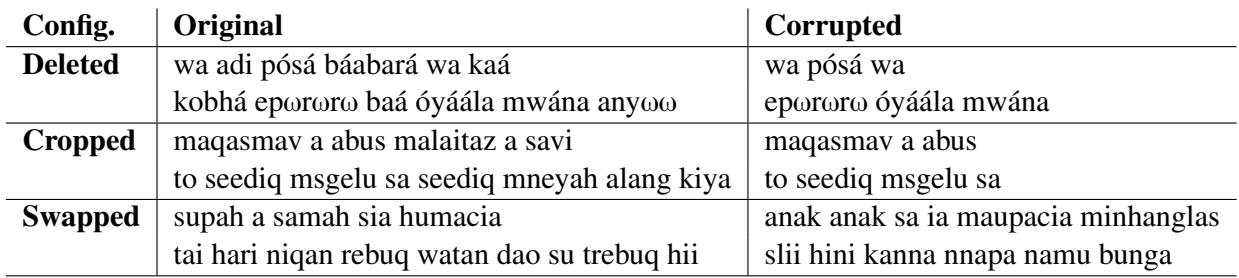
Table 2 above illustrates these corruptions. In the “Swapped” example, you can see the transcript becomes completely unrelated to the original phonetic content.
The Baseline Impact
Before testing their fix, the authors established how damaging these errors are.
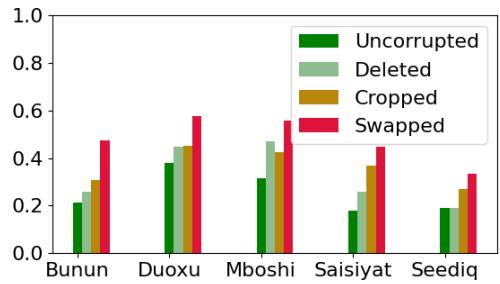
Figure 1 shows the Word Error Rate (WER)—where lower is better—for the different corruptions.
- Green (Uncorrupted): The baseline performance.
- Red (Swapped): This is the most destructive error. The WER spikes dramatically because the model is being trained on completely wrong labels.
- Brown (Cropped): Also quite damaging.
- Light Green (Deleted): Surprisingly, missing just a few words (Deleted) didn’t hurt performance as much, likely because the bulk of the sentence was still correct.
Results: Can We Catch the Errors?
The first question the researchers asked was: Can PDM actually identify the corrupted files?
They evaluated this using ROC curves, which measure the ability of a classifier to distinguish between classes (in this case, “clean” vs. “corrupted”). An Area Under the Curve (AUC) of 1.0 is perfect; 0.5 is random guessing.
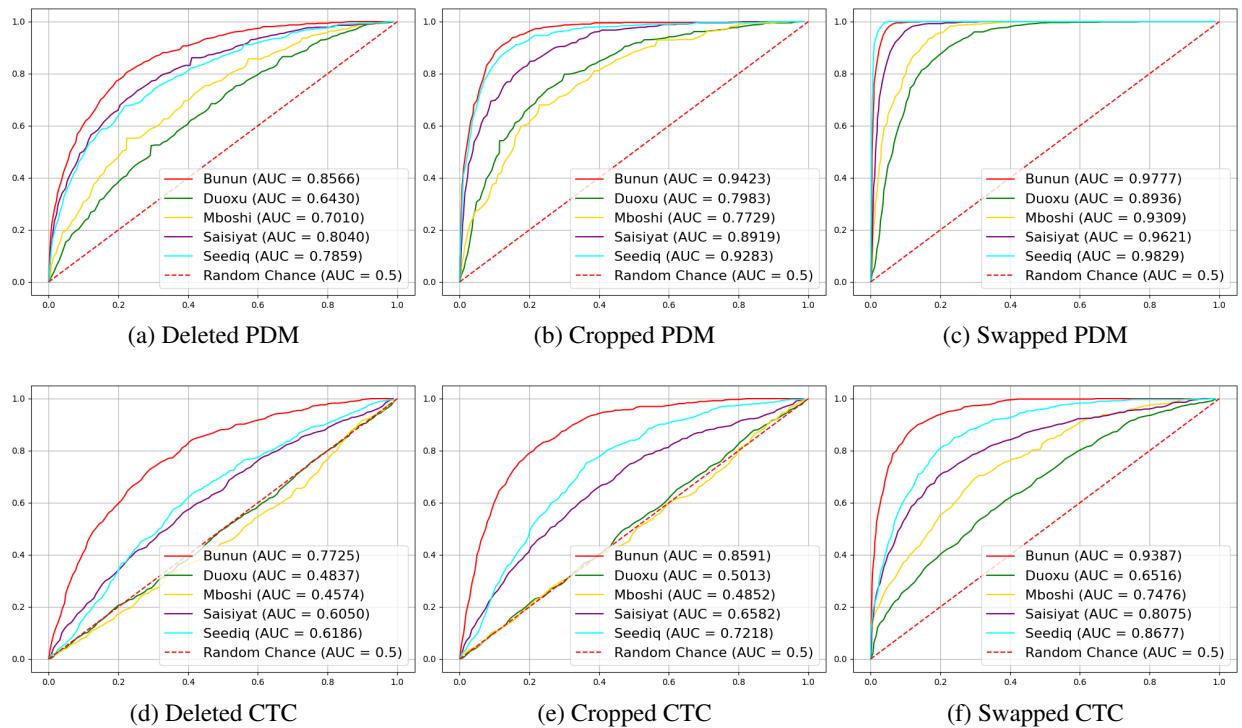
Figure 5 tells a compelling story:
- Top Row (PDM): Look at graph (c) on the far right. PDM is nearly perfect (AUC > 0.95) at detecting Swapped transcripts. It is also very strong at detecting Cropped transcripts (graph b).
- Bottom Row (CTC): The CTC metric struggles significantly, often performing barely better than random chance (the red dashed line).
Key Takeaway: PDM is a highly effective “lie detector” for transcriptions. It doesn’t need to know the language; it just measures the distance between the sounds it hears and the letters it sees.
Improving ASR by Filtering
The ultimate test is whether removing these bad files actually helps the ASR model learn better. The researchers trained ASR models on the corrupted datasets, but with a twist: they filtered out the “worst” 20% of data according to their PDM scores.
Simulated Data Results
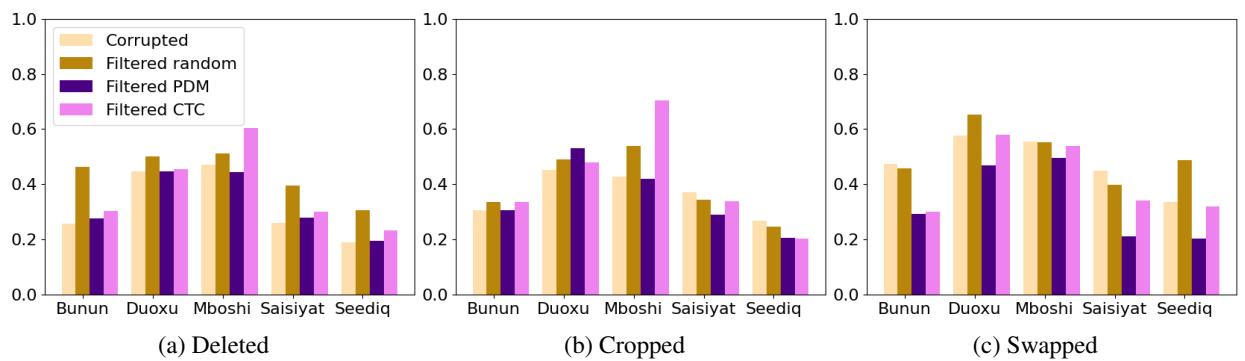
Figure 2 visualizes the Word Error Rate (WER) across the different languages. Remember, lower bars are better.
- Light Orange (Corrupted): The high error rate caused by the bad data.
- Dark Purple (Filtered PDM): This is the crucial bar. In the Swapped and Cropped scenarios (graphs b and c), the PDM filter dramatically lowers the WER, often bringing it close to the performance of the original clean dataset.
- Pink (Filtered CTC): The CTC filter often fails to improve the model, sometimes making it worse than doing nothing.
This confirms that for gross errors (like mismatched files or half-finished transcripts), throwing away data based on PDM scores is a winning strategy.
Real-World Fieldwork Results
Finally, the researchers stepped out of the simulation. They applied PDM to two actual fieldwork datasets from the Pangloss collection: Namakura (Vanuatu) and Thulung Rai (Nepal). These are real, messy recordings with no “ground truth” labels to check against.
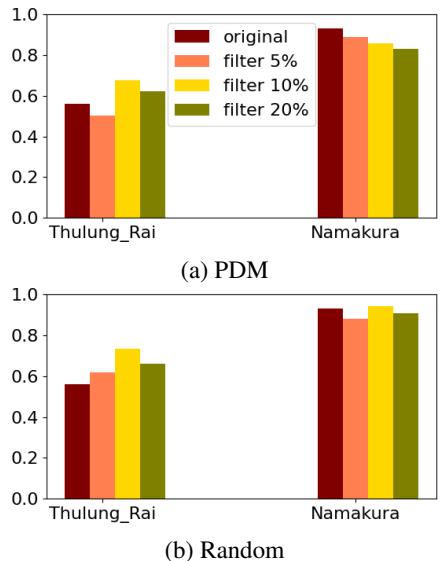
Figure 3 shows the results of filtering real data.
- Chart (a): Shows filtering by PDM score.
- Chart (b): Shows random filtering (just removing data blindly).
For Namakura (the right cluster in Chart A), filtering out 5%, 10%, and even 20% of the worst-rated data progressively improved the model (lowered the WER). This suggests the original dataset had a significant number of errors that PDM successfully caught.
For Thulung Rai, filtering the worst 5% helped, but filtering more started to hurt performance. This indicates that the Thulung Rai dataset was likely cleaner to begin with, so aggressive filtering started throwing away good data.
Conclusion and Implications
This research highlights a pivotal concept in modern AI, particularly for low-resource domains: Data-centric AI. Instead of just trying to build bigger, more complex models, we can often achieve better results by intelligently cleaning the data we feed them.
The PDM metric is a valuable tool for field linguists and computer scientists alike. It offers a way to:
- Sanitize archives: Automatically flag potentially mismatched recordings in legacy databases.
- Improve ASR: Train better models for endangered languages by filtering out noise.
- Save time: Point linguists directly to the files that need manual correction, rather than having them review thousands of hours of audio.
The method is particularly elegant because it is language-agnostic. By converting everything to ASCII—a rough approximation of sound—it bypasses the need for complex, language-specific pronunciation dictionaries.
While it has limitations (it might not catch subtle spelling errors or inconsistencies in languages with non-Latin scripts), PDM proves that sometimes, listening to the “phonetic distance” is the best way to tell if a transcript sounds right.