](https://deep-paper.org/en/paper/file-2692/images/cover.png)
Introduction
Imagine navigating a world not designed for you. For the over one billion people globally living with some form of physical disability, this is a daily reality. Whether it’s finding wheelchair-accessible housing, managing chronic pain, or dealing with the social isolation that often accompanies physical limitations, the need for reliable support is massive.
In the age of AI, conversational agents (chatbots) offer a promising solution. They are available 24/7 and can provide immediate information. However, there is a glaring problem with most current systems: they are robotic. If a user expresses frustration about losing mobility, a standard chatbot might output a sterile list of medical definitions. It lacks the “human” touch—the ability to understand the user’s specific personality, age, and gender, and to respond with genuine empathy and politeness.
Enter ABLE (Adaptive, Bespoke, Listen, and Empathetic).
In a recent paper, researchers introduced ABLE, a novel conversational support system specifically designed for physical disabilities. Unlike one-size-fits-all models, ABLE uses Reinforcement Learning (RL) to tailor its responses to the user’s specific persona. It doesn’t just answer questions; it adapts its tone to be polite and empathetic, creating a safe, supportive digital environment.
In this deep dive, we will explore how ABLE was built, the massive dataset created to train it, and the unique reward mechanisms that teach an AI how to be kind.
The Problem: One Size Does Not Fit All
Personalization in healthcare isn’t just a luxury; it’s a necessity. A young man dealing with a sports injury has different emotional needs and communication styles compared to an elderly woman managing age-related mobility issues. Furthermore, personality plays a huge role in how we communicate. Psychology relies heavily on the OCEAN model (Openness, Conscientiousness, Extraversion, Agreeableness, Neuroticism). A chatbot should ideally adjust its strategy based on these traits.
Current AI solutions often fail here. They lack:
- Personalization: They treat every user the same.
- Empathy: They focus on information retrieval rather than emotional support.
- Data: There hasn’t been a comprehensive dataset specifically designed for persona-based disability support—until now.
Building the Foundation: The PERPDSCD Dataset
You cannot train a personalized model without personalized data. Since no suitable dataset existed, the researchers created PERPDSCD (Persona-Tailored Physical Disability Support Conversational Dataset).
This wasn’t just a web scrape. It was a carefully engineered process involving both Large Language Models (LLMs) and human experts.
1. The Blueprint
The researchers defined a wide array of support topics, ranging from mobility aids and home modifications to emotional support and parenting with disabilities.
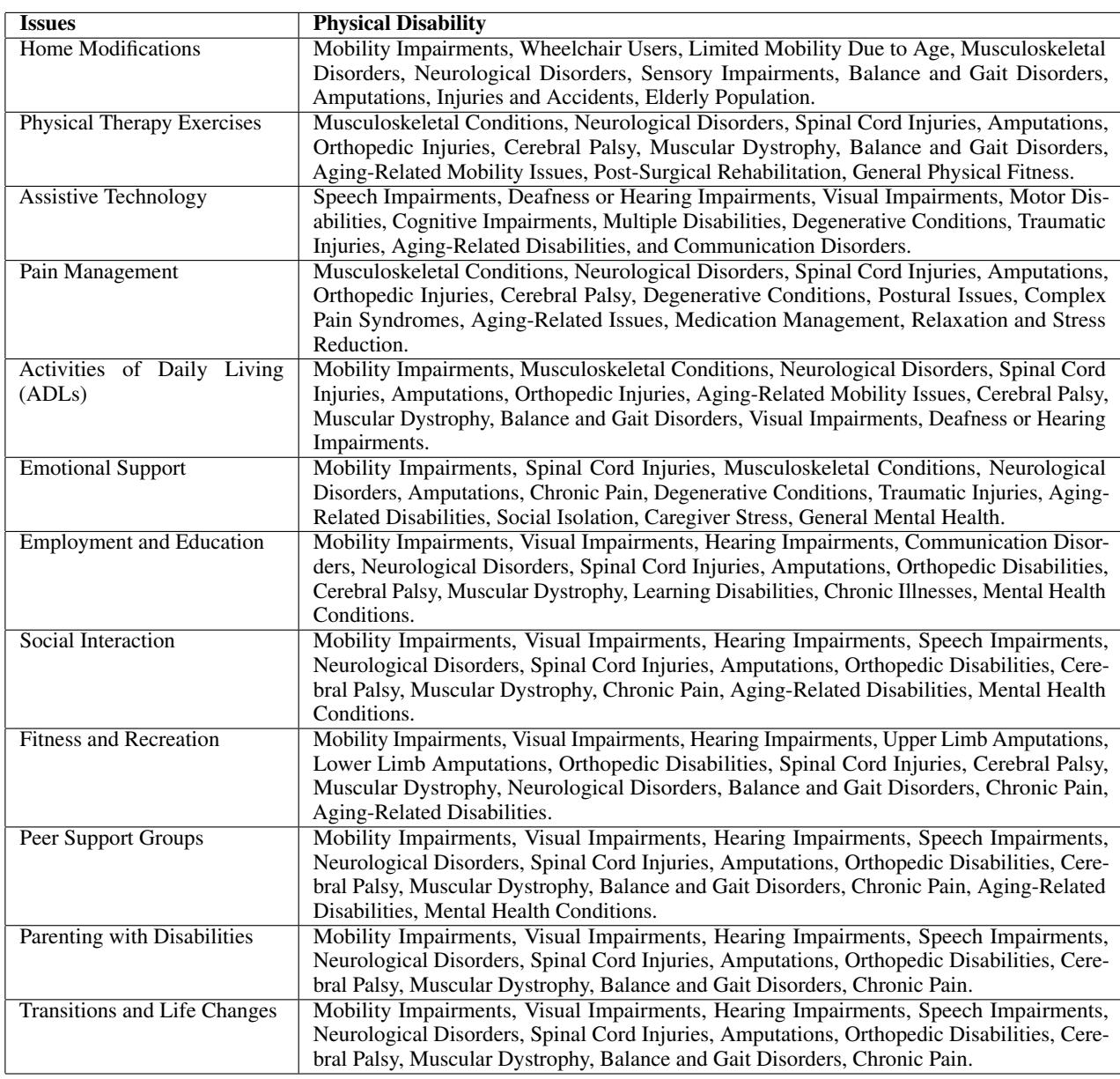 Table 4: A breakdown of the topics and specific disabilities covered in the dataset, ensuring a wide range of support scenarios.
2. Generative Pipeline
To create the dialogues, the team used GPT-3.5, but they didn’t just ask it to “write a chat.” They used detailed prompts that included specific patient profiles (Age, Gender, Disability Type) and specific OCEAN personality combinations.
They also used “Seed Utterances”—starter sentences written by human linguistics experts—to guide the model.
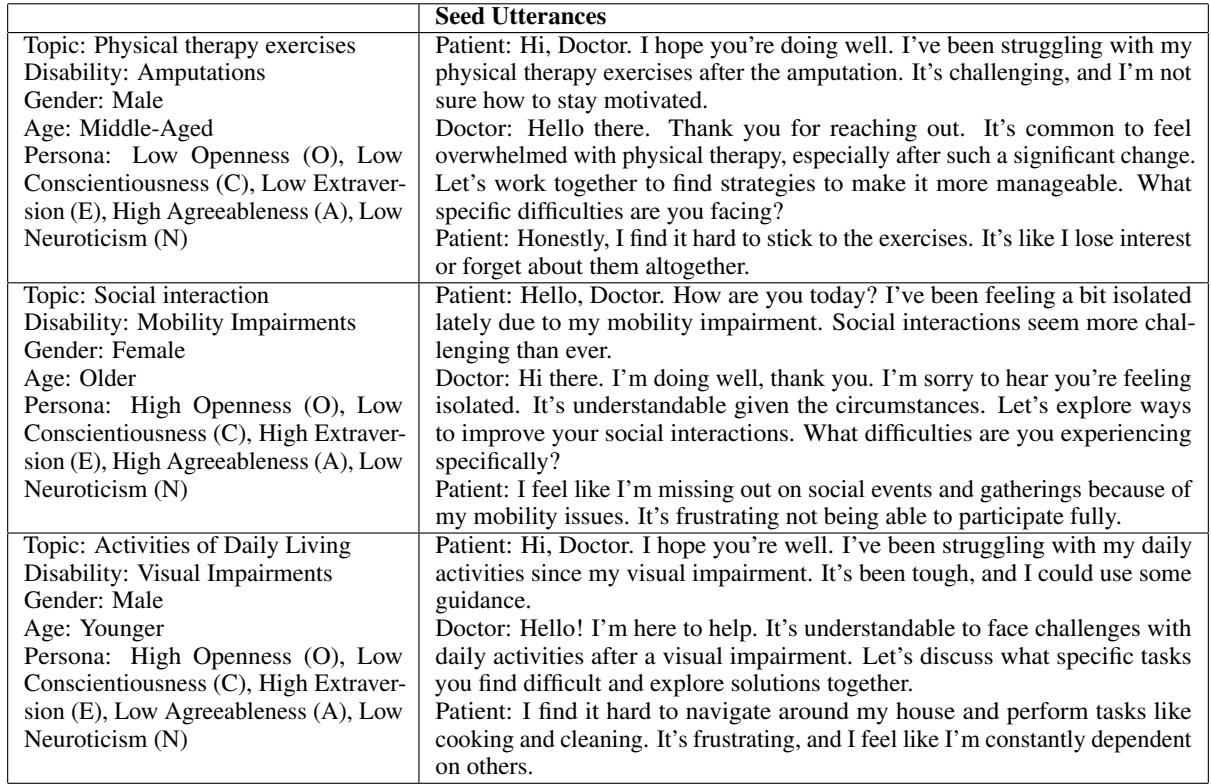 Figure 2 & Table 8: The prompt template used to generate dialogues (top) and examples of expert-written seed utterances (bottom) that set the tone for the AI.
3. Quality Control
The result was a massive dataset of over 18,000 dialogues. However, AI-generated data can be noisy. The team employed a rigorous quality control process where human annotators rated dialogues on coherence and naturalness. Bad dialogues were discarded, and mediocre ones were manually fixed.
The final dataset statistics are impressive:
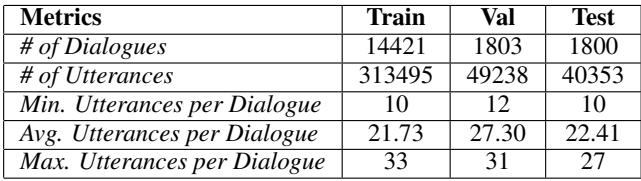 Table 1: The statistics of the final PERPDSCD dataset, comprising over 18,000 dialogues and 300,000 utterances.
Crucially, the dataset was annotated for Politeness and Empathy. This allows the model to learn the difference between a neutral statement and a supportive one.
 Table 7: Examples from the dataset showing how utterances are labeled. Note the difference between a “Non-Empathetic” response telling a user to “toughen up” versus an “Empathetic” one offering support.
The ABLE Architecture
Now that we have the data, how does the system work? ABLE is built on a two-stage training process that transforms a standard language model into a specialized support agent.
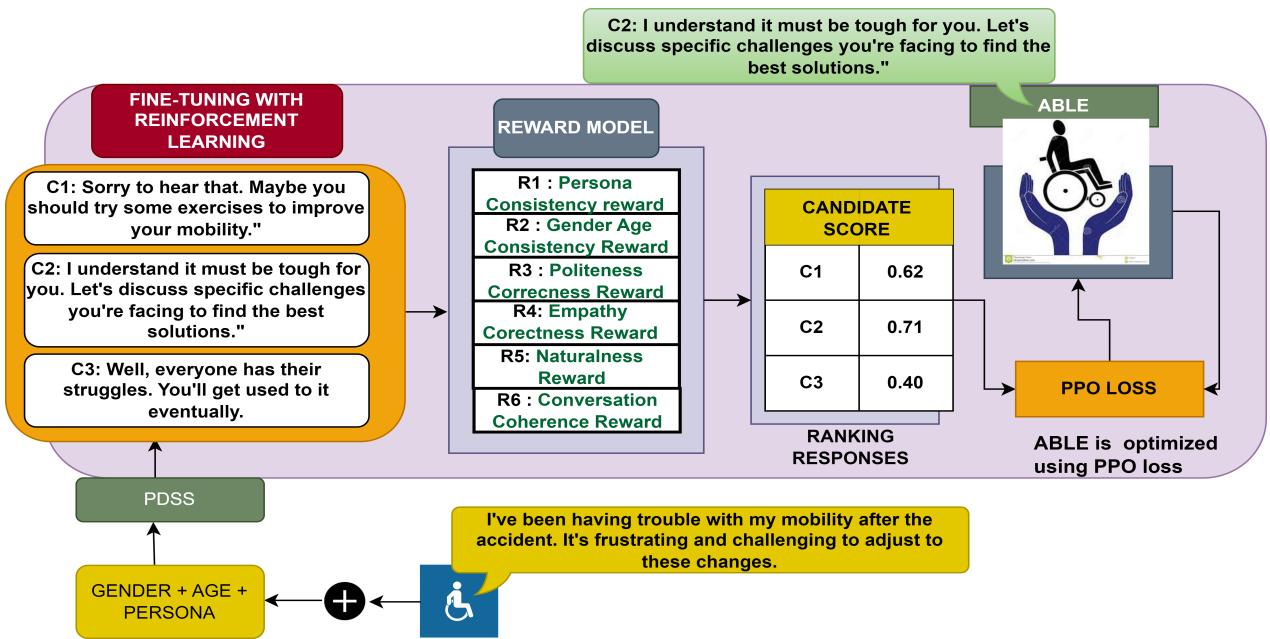 Figure 1: The overall architecture of ABLE. It starts with a base model (PDSS) trained on the dataset, which is then refined using Reinforcement Learning with six specific reward models.
Phase 1: Supervised Fine-Tuning (Warm-Start)
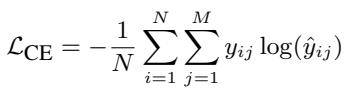
The backbone of ABLE is a language model called Phi-2. The researchers first fine-tuned this model using the PERPDSCD dataset. This stage, called PDSS (Persona-Demographic-Specific System), teaches the model the basics of the domain.
The input to the model isn’t just the chat history (\(c_i\)); it also includes the user’s profile: Persona (\(p_i\)), Gender (\(g_i\)), and Age (\(a_i\)).
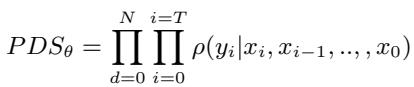
The model is trained to minimize the Cross-Entropy loss, effectively learning to predict the next logical word in a medical support conversation.
Phase 2: Reinforcement Learning (The “Secret Sauce”)
Supervised learning is good for learning grammar and facts, but it struggles with abstract concepts like “be more polite” or “match this personality type.” This is where Reinforcement Learning (RL) comes in.
The team used Proximal Policy Optimization (PPO) to fine-tune the model further. In this setup, the model generates a response, and a “judge” (the reward function) gives it a score. The model then adjusts its parameters to get a higher score next time.
The innovation in ABLE lies in its Six Novel Reward Functions. These rewards guide the model to be the best version of itself.
Reward 1: Persona-Consistency
This reward checks if the AI’s response matches the user’s personality profile. If the user is anxious (High Neuroticism), the AI should respond differently than if the user is highly practical (High Conscientiousness).

Reward 2: Gender-Age Consistency
This ensures the response is appropriate for the user’s demographic. The advice and tone used for a teenager might differ from that used for a senior citizen.

Reward 3: Politeness Correctness
Using a classifier trained on the dataset, this reward calculates a score based on how polite the generated response (\(y\)) is compared to a baseline.

Reward 4: Empathy Correctness
Similarly, this reward pushes the model to generate responses that demonstrate understanding and compassion, which are critical in disability support.

Reward 5: Naturalness
It’s not enough to be polite; the text must sound human. This reward penalizes awkward phrasing or grammatical errors.

Reward 6: Conversation Coherence
This reward uses BERT-Score to ensure the response actually makes sense in the context of the previous conversation history. It prevents the chatbot from hallucinating or changing the subject randomly.

The Total Reward
The final score used to update the model is a weighted sum of all six rewards.
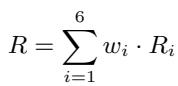
The model is updated using the PPO algorithm, which ensures that the updates are stable and don’t drastically change the model’s behavior in a single step (which could lead to “catastrophic forgetting”).

Experiments and Results
The researchers compared ABLE against several strong baselines, including GPT-2, Llama-2 (7B), Mistral-7B, and Zephyr-7B. They evaluated performance using both automated metrics and human judges.
Automatic Evaluation
The automated metrics looked at accuracy across the four key dimensions: Persona (PCA), Gender-Age (GAA), Politeness (PA), and Empathy (EA).
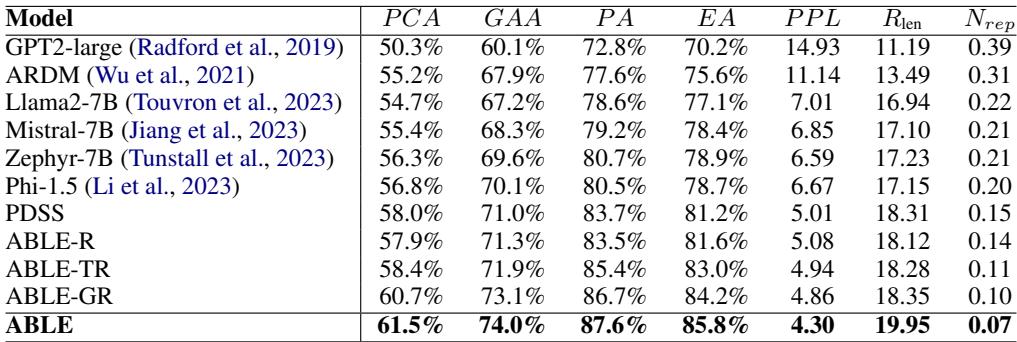 Table 2: ABLE (bottom row) consistently outperforms all baselines across every metric. Notably, the “ABLE-GR” (Goal Reward) and “ABLE-TR” (Text Reward) variants show that combining all rewards yields the best performance.
You can see a clear hierarchy: older models like GPT-2 struggle, while newer models like Zephyr do better. However, ABLE, with its specialized RL training, achieves the highest scores, particularly in Politeness (87.6%) and Empathy (85.8%).
Human Evaluation
Metrics are useful, but human judgment is the gold standard for conversation. Evaluators rated the models on a scale of 1-5.
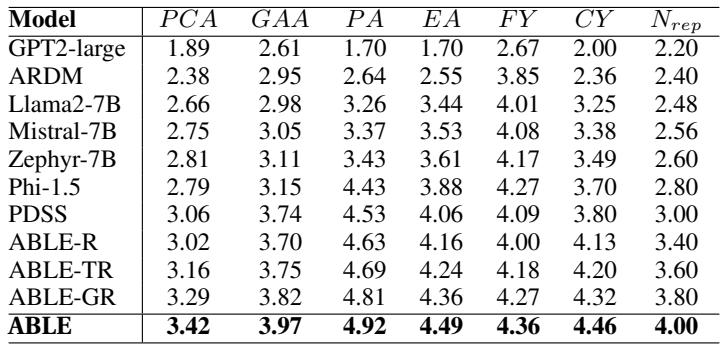 Table 3: Human evaluators rated ABLE significantly higher than competitors. Specifically, ABLE achieved a score of 4.92/5 on Politeness and 4.49/5 on Empathy.
Seeing the Difference
Numbers are abstract, but the actual generated text tells the story. In the example below, the user expresses feeling overwhelmed by life changes after an injury.
- GPT-2 gives a generic “change is difficult” response.
- ARDM offers a standard “I’m sorry.”
- ABLE, however, validates the user’s feelings (“I truly hear you”), normalizes the need for support (“it’s courageous”), and offers a collaborative path forward (“Together, let’s explore…”).
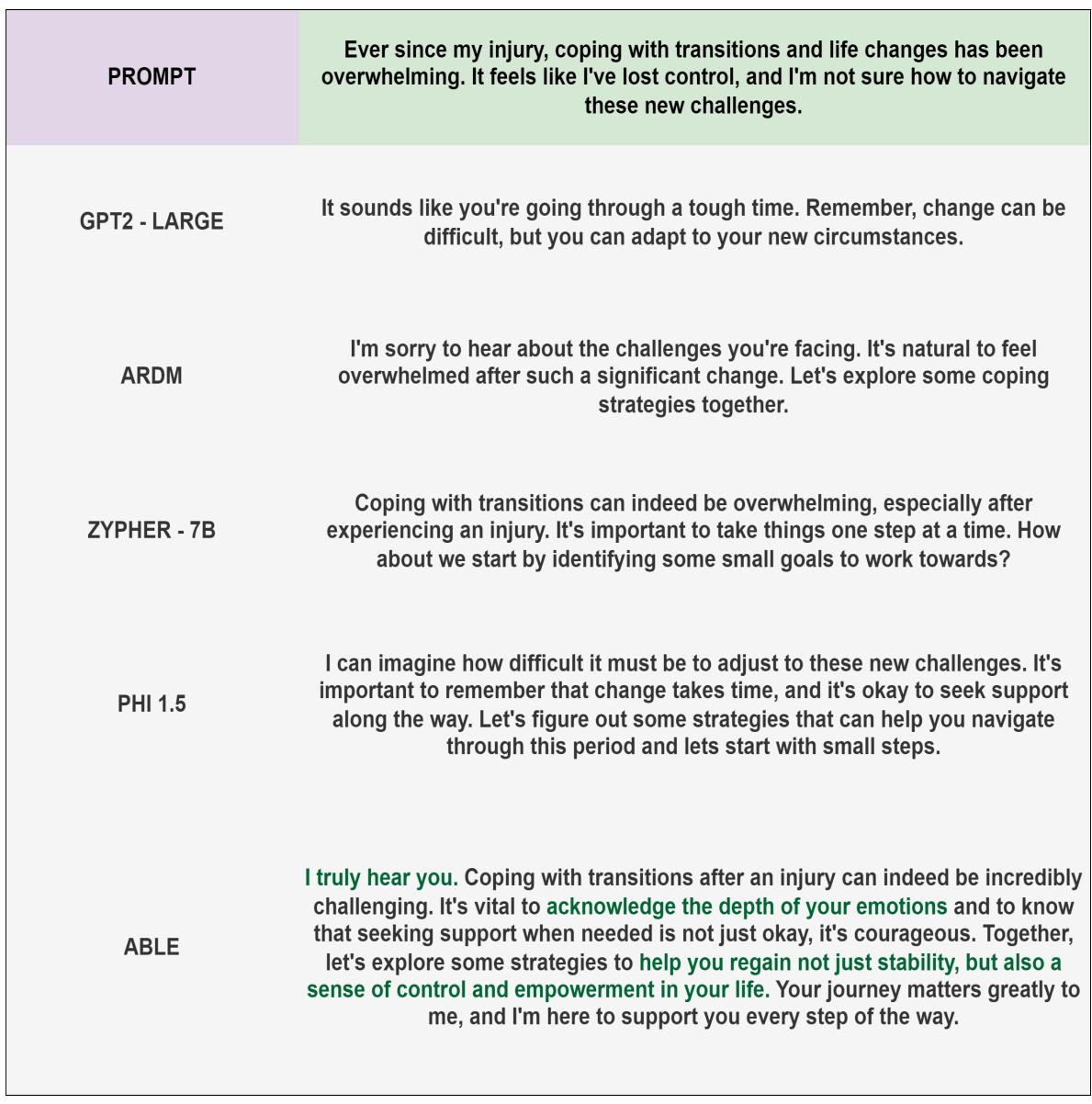 Figure 5: A side-by-side comparison of model outputs. ABLE’s response is noticeably longer, more nuanced, and significantly more empathetic.
The system can also handle multi-turn conversations while maintaining this persona consistency.
 Figure 3: An example of how the system generates a dialogue based on a specific persona profile (Older Male, Amputee).
 Figure 4: A full conversation flow. Notice the tags [Polite] and [Empathetic] indicating the intended tone of the doctor’s responses.
Conclusion
The ABLE system represents a significant step forward in assistive AI. By moving beyond generic “Question-Answer” pairs and integrating psychological profiling (OCEAN) with Reinforcement Learning, the researchers have created a system that feels more human.
The key takeaways from this research are:
- Data Matters: The creation of PERPDSCD provides a crucial resource for future research in disability support.
- Rewards Drive Behavior: Simply training on text isn’t enough. Explicitly rewarding the model for politeness, empathy, and consistency drives significantly better user experiences.
- The Human Element: For vulnerable populations, the way information is delivered is just as important as the information itself.
While the authors acknowledge limitations—such as the potential for LLM hallucinations or bias—ABLE lays the groundwork for a future where digital support is not just smart, but also kind, understanding, and uniquely tailored to every individual.