](https://deep-paper.org/en/paper/file-2762/images/cover.png)
Introduction
Imagine you are reading a transcript of a heated political debate or analyzing a complex legal case. Your brain naturally categorizes the statements being made. When a speaker says, “The project is expensive,” and follows it with, “However, the long-term benefits are undeniable,” you instantly recognize a conflict or an “attack” on the first premise. Conversely, if they say, “Thus, we should proceed,” you recognize support.
This ability to map the logical connections between sentences is known as Argument Relation Classification (ARC). It is a fundamental task in Natural Language Processing (NLP) that enables machines to understand not just what is being said, but how arguments are constructed.
While humans rely on intuition and linguistic cues, machines struggle with this. Current state-of-the-art models often rely on massive Transformer architectures (like BERT or RoBERTa) or try to inject external “common sense” knowledge bases to bridge the gap.
But what if the secret to understanding arguments isn’t about knowing more facts, but about better understanding the structure of language itself?
In this post, we will dive deep into a research paper titled “Argument Relation Classification through Discourse Markers and Adversarial Training” (DISARM). The researchers propose a novel method that teaches a model to recognize argument relations by leveraging Discourse Markers—words like “however,” “because,” and “consequently”—and aligning them with argument logic using a sophisticated Adversarial Training technique.
By the end of this article, you will understand how combining Multi-Task Learning with adversarial strategies can push the boundaries of how AI understands human debate.
Background: The Challenge of Argument Mining
Before we look at the solution, let’s clearly define the problem. Argument Relation Classification (ARC) is a classification task. Given two argument units (sentences or clauses), the model must decide how they relate to each other.
Typically, there are three classes:
- Support: The second unit provides a reason or evidence for the first.
- Attack: The second unit opposes or contradicts the first.
- Neutral: There is no argumentative dependency between them.
Let’s look at some examples from the paper to visualize this.
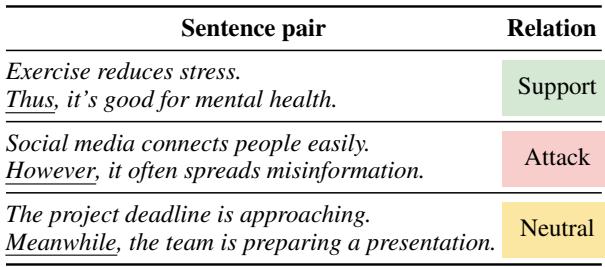
As you can see in Table 1, the relationship is often signaled by specific words. In the “Attack” example, the word However is a dead giveaway. In the “Support” example, Thus acts as a bridge.
these linguistic bridges are called Discourse Markers.
The Hypothesis
The core hypothesis of the DISARM paper is simple yet powerful: Learning to identify Discourse Markers should help a model identify Argument Relations.
If a model knows that “However” usually signals a contrast, it should easily learn that sentences connected by “However” likely have an “Attack” relation.
However, simply feeding these markers into a model isn’t enough (as we will see in the experiments later). The researchers needed a way to force the model to learn the underlying semantics shared between discourse markers and argument relations.
The Core Method: DISARM
The proposed architecture, DISARM (DIScourse markers and adversarial Argument Relation Mining), uses a Multi-Task Learning (MTL) setup. This means the neural network tries to solve two problems at once:
- The ARC Task: Is this relation Support, Attack, or Neutral?
- The DMD Task (Discourse Marker Discovery): Which discourse marker (e.g., Elaborative, Inferential, Contrastive) connects these sentences?
But here is the twist: The model is designed to map both tasks into a unified latent space using Adversarial Training.
Let’s break down the architecture step-by-step.
1. Input Representation
The model takes pairs of sentences from two different datasets: an ARC dataset (the target) and a Discourse Marker dataset (the auxiliary helper).
The input \(x^k\) is formatted by concatenating the two sentences (\(s_1\) and \(s_2\)) with special separator tokens.

Here, \(k\) represents the task (ARC or DMD). The model processes this sequence using a RoBERTa-base encoder.
2. The Encoder and Embedding Strategy
Standard Transformers often use the output of the very last layer (CLS token) for classification. However, the authors of DISARM note that different layers of a Transformer capture different types of information. Shallow layers (closer to the input) capture syntactic features (grammar), while deeper layers capture semantic features (meaning).
To get the best of both worlds, DISARM averages the embeddings from the first layer (\(h_i\)) and the last layer (\(h_l\)).

3. Cross-Attention Mechanism
Once the sentences are encoded, the model needs to understand how sentence A relates specifically to sentence B. To do this, DISARM employs a Cross-Attention layer.
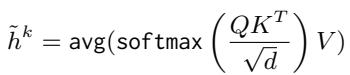
In attention mechanisms, we typically have Queries (\(Q\)), Keys (\(K\)), and Values (\(V\)). Here, the model computes attention scores to weigh how much focus the first sentence should put on different parts of the second sentence (and vice versa).

The final representation for a sentence pair, \(\tilde{h}^k\), is a weighted sum derived from this attention process. This ensures the model isn’t just looking at two isolated sentences, but actively comparing them.
4. The Architecture Overview
Now, let’s put these pieces together visually. Below is the complete architecture of DISARM.
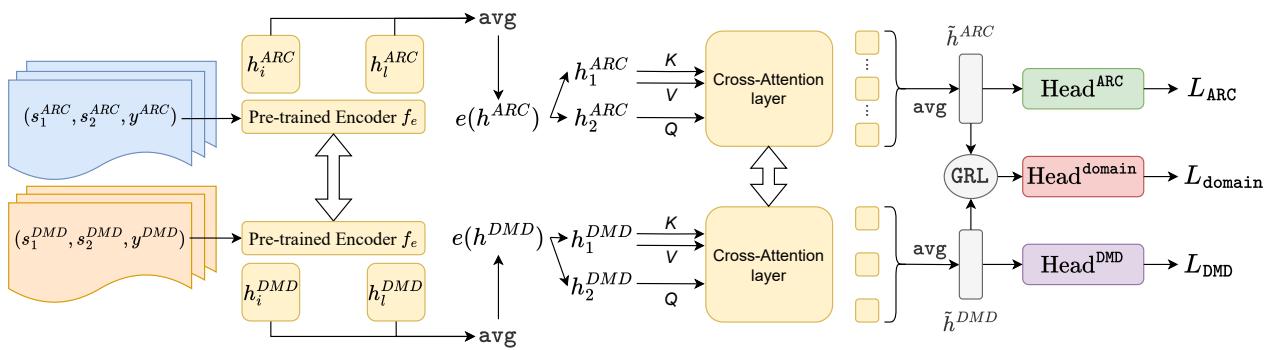
As shown in Figure 1, there are two parallel streams during training: one for the ARC task (left) and one for the DMD task (right). They both use the encoder we described above.
However, notice the components at the top:
- Head ARC: Classifies Support/Attack/Neutral.
- Head DMD: Classifies the type of discourse marker (Elaborative/Inferential/Contrastive).
- Head Domain (The Adversary): This is the most critical part of the innovation.
5. Adversarial Training and the Gradient Reversal Layer
This is where the magic happens. We want the encoder to produce embeddings that are useful for both tasks. More importantly, we want the embeddings for “Attack” (ARC task) to look mathematically similar to the embeddings for “Contrastive” (DMD task).
To achieve this, the authors use a Gradient Reversal Layer (GRL).
How GRL Works
The Head Domain (seen in Figure 1) tries to guess which dataset the sample came from: Is this an ARC sample or a Discourse Marker sample?
- The Head’s Goal: Minimize the error in guessing the domain (be a good discriminator).
- The Encoder’s Goal: Maximize the error of the Head (fool the discriminator).
When the error signals (gradients) flow backward from the Domain Head during training, the GRL multiplies them by a negative number (\(-\lambda\)). This reverses the learning direction. The encoder is punished if the Domain Head guesses correctly.
The Result: The encoder is forced to remove “domain-specific” features (fingerprints that reveal which dataset the text is from) and retain only the “shared” semantic features. This aligns the two tasks into a single, shared embedding space.
6. The Loss Function
The model is trained to minimize a total loss function that combines three objectives:
- \(L_{ARC}\): Accuracy on the argument relation task.
- \(L_{DMD}\): Accuracy on the discourse marker task.
- \(L_{domain}\): The adversarial domain loss.

Here, \(\beta\) and \(\gamma\) are hyperparameters that weigh how important the auxiliary tasks are compared to the main ARC task.
Experiments and Results
To prove that this complex architecture actually works, the researchers tested DISARM against standard benchmarks.
Data
They used three standard ARC datasets (Student Essay, Debatepedia, M-ARG) and the Discovery dataset for the discourse markers.
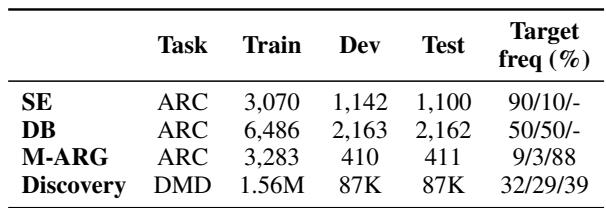
Table 2 highlights a common issue in this field: Data Imbalance. Notice how in the Student Essay (SE) dataset, 90% of relations are “Support.” This makes it very easy for a model to be lazy and just guess “Support” every time. The Discovery dataset (DMD), however, is much larger (1.56M examples) and more balanced. By leveraging this large auxiliary dataset, DISARM can learn robust linguistic patterns that transfer to the smaller ARC datasets.
Performance Comparison
The researchers compared DISARM against KE-RoBERTa (a state-of-the-art model that uses external knowledge graphs like ConceptNet) and a standard RoBERTa+ baseline.
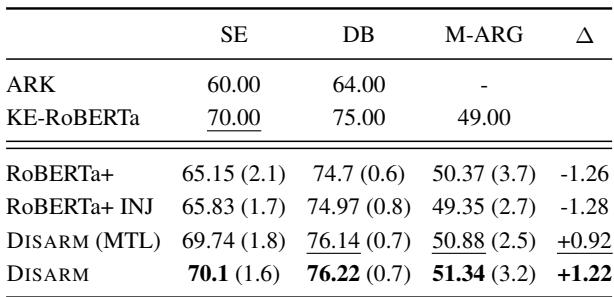
Table 3 shows the results. The key takeaways are:
- DISARM is the winner: It achieves the best F1 scores across all three datasets (SE, DB, M-ARG).
- Significant Gain: It improves upon the state-of-the-art KE-RoBERTa by an average of 1.22 points.
- Adversarial Training Matters: Look at the row DISARM (MTL). This is the model without the adversarial Gradient Reversal Layer. It performs worse than the full DISARM. This proves that simply training on two tasks isn’t enough; you must force the logical alignment using adversarial training.
Ablation Study: Why not just inject markers?
You might wonder: Why go through all this trouble? Why not just preprocess the text, find the discourse markers, and feed them into the model as extra words?
The authors tested this in the RoBERTa+ INJ row in Table 3. This model had markers explicitly injected into the input. Surprisingly, it performed worse.
The authors conclude that explicitly injecting markers adds “superficial knowledge” that can distract the model. The model focuses too much on the presence of the specific word rather than the relationship between the sentences. DISARM’s approach forces the model to learn the concept of the relation, which is far more robust.
Visualizing the Latent Space
To truly understand what the Adversarial Training accomplished, we can visualize the “Latent Space”—the mathematical map where the model places the sentences.
The researchers used t-SNE, a technique that compresses high-dimensional data into 2D plots. Points that are closer together in the plot are “mathematically similar” to the model.
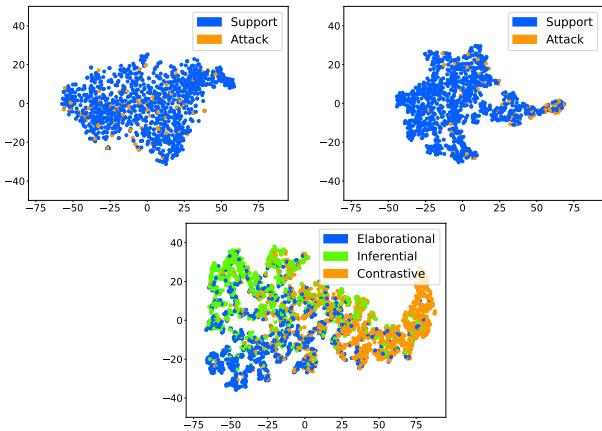
Let’s analyze Figure 2:
- Top Left (RoBERTa+): This is the baseline model. The blue (Support) and Orange (Attack) dots are somewhat mixed and clustered near the center. The separation is weak.
- Top Right (DISARM): This is the new model. Notice how the Orange dots (Attack) have pulled away from the Blue dots (Support). The classes are more distinct, making classification easier.
- Bottom (DISARM on Discovery): This shows the Discourse Marker classes.
The Critical Insight: By comparing the Top Right and Bottom plots, the researchers observed that the “Attack” cluster in the ARC task aligns spatially with the “Contrastive” cluster in the DMD task.
This confirms the theory: The Adversarial Training successfully forced the model to realize that an Argumentative Attack is semantically the same thing as a Contrastive Discourse Relation.
Conclusion and Implications
The DISARM paper presents a compelling argument for the use of Multi-Task and Adversarial Learning in NLP. Instead of relying on massive external knowledge bases (which can be slow and incomplete), DISARM looks inward at the structure of language itself.
Key Takeaways:
- Discourse Markers are Signals: Words like “however” and “therefore” carry the DNA of argumentation.
- Alignment is Key: It is not enough to train on multiple tasks. You must align their representations so that knowledge transfers effectively.
- Adversarial Training Works: The Gradient Reversal Layer is a potent tool for forcing models to learn shared, generalized features rather than domain-specific shortcuts.
For students of AI and NLP, DISARM illustrates that sometimes the best way to solve a specific problem (like classifying arguments) is to simultaneously solve a broader, fundamental problem (understanding how language connects) and force the model to see them as two sides of the same coin.
As AI continues to evolve, techniques that allow models to “understand” the logical flow of conversation—rather than just keyword matching—will be essential for creating systems that can debate, reason, and assist humans in complex decision-making.