](https://deep-paper.org/en/paper/file-2839/images/cover.png)
Introduction
The digital transformation of healthcare has provided us with a staggering amount of data. Electronic health records (EHRs) track everything from routine checkups to critical diagnoses, creating a rich history of patient health. Yet, having data and effectively using it to predict the future are two very different things. One of the most critical challenges in modern medical AI is predicting disease progression and comorbidity—the likelihood that a patient with one condition (like diabetes) will develop another (like heart disease).
Traditionally, researchers have relied on static data and standard machine learning models to crunch these numbers. While effective to a degree, these methods often view diseases as isolated data points or rigid mathematical nodes, missing the complex, nuanced biological and clinical narratives that connect them. They lack “world knowledge.”
This brings us to a compelling question: Can Large Language Models (LLMs)—the same technology behind ChatGPT—bridge this gap? LLMs understand text, context, and semantic relationships better than any previous AI architecture. But can they understand the mathematical structure of disease networks?
In this post, we explore a novel framework called ComLLM (Disease Comorbidity Prediction using LLM). This research investigates whether combining the reasoning power of LLMs with the structural rigour of Graph Theory can enhance our ability to predict how diseases progress.
Background: The Comorbidity Challenge
To understand why this research matters, we first need to understand the problem of comorbidity. Comorbidity refers to the co-occurrence of multiple health conditions in a single patient. It complicates treatment, increases healthcare costs, and leads to worse patient outcomes.
Predicting comorbidity isn’t just about looking at a patient’s current blood test. It requires understanding the hidden relationships between diseases. For example, Arthritis and Cardiovascular disease often coexist, not just by random chance, but due to shared underlying mechanisms or risk factors.
The Limits of Traditional Methods
For years, researchers have modeled these relationships using Disease Networks. Imagine a graph where every circle (node) is a disease, and every line (edge) connecting them represents a known relationship or comorbidity.
The task of predicting a new comorbidity is mathematically known as Link Prediction. If we can predict a new edge between “Disease A” and “Disease B,” we are essentially predicting that a patient with A is at risk for B.
Standard methods for link prediction include:
- Heuristics: Simple rules like “Common Neighbors.” If Disease A and Disease B share many of the same connections to other diseases, they are likely related.
- Graph Neural Networks (GNNs): Advanced deep learning models designed to process graph data. While powerful, GNNs often treat nodes as abstract mathematical vectors. They struggle to incorporate external medical knowledge (like new research papers) or semantic nuances.
Enter Large Language Models
LLMs have transformed Natural Language Processing (NLP). They excel at reading medical reports and answering health questions. However, applying them to network prediction is unexplored territory. LLMs are great at text, but they aren’t natively designed to understand graph topology (the shape and structure of connections).
The researchers behind ComLLM proposed a hybrid approach: What if we could translate the mathematical structure of a disease network into natural language, and combine it with the vast medical knowledge stored in an LLM?
Core Method: The ComLLM Framework
The core innovation of this paper is ComLLM. It is a framework that integrates domain knowledge (medical facts), node-specific information (disease descriptions), and structural data (network connections) to predict relationships between diseases.
The process is not a simple “plug-and-play” of an LLM. It involves a sophisticated pipeline designed to give the Language Model the best possible chance of making an accurate prediction.
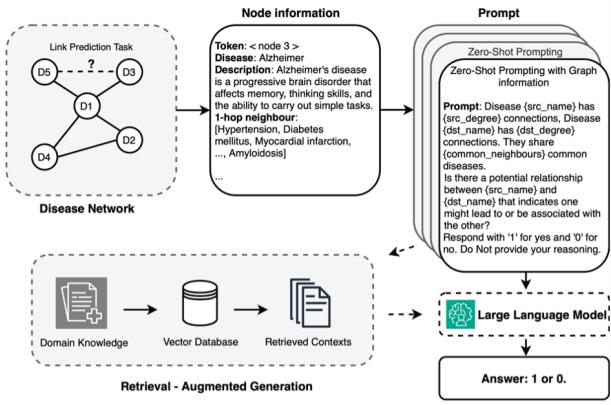
As shown in Figure 1 above, the framework operates through two distinct pathways that converge into a final prompt for the LLM. Let’s break down the key components of this architecture.
1. Disease Feature Generation
In many raw datasets, a disease is just a label (e.g., “ID: 765, Label: Hypertension”). This isn’t enough for an LLM to work with. To leverage the semantic power of the model, the researchers first enriched the dataset.
They used GPT-4 to generate comprehensive textual features for every node in the network. Instead of just a name, the system generates a detailed description of the disease’s symptoms, causes, and characteristics.
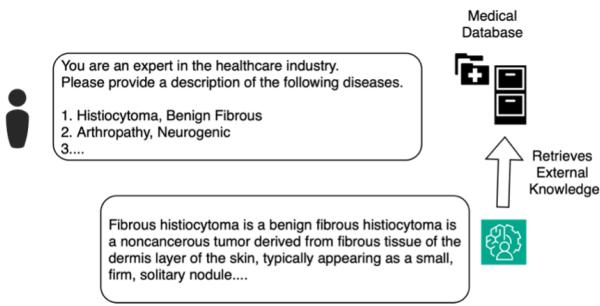
Figure 2 illustrates this step. The model acts as a medical expert, retrieving or generating descriptions for conditions like “Histiocytoma” or “Arthropathy.” This transforms a sparse graph of labels into a rich, semantically dense network where every node carries a paragraph of medical context.
2. Graph Prompting: Teaching the LLM “Topology”
One of the biggest hurdles in using LLMs for graphs is that LLMs process linear text, not spatial networks. If you simply ask an LLM, “Is Disease A related to Disease B?”, it relies solely on its pre-trained memory. It ignores the specific data structure of the patient network you are analyzing.
To fix this, the researchers introduced Graph Prompting. They convert the mathematical properties of the graph into English sentences.

Figure 3 demonstrates the power of this shift.
- Standard Prompting (Left): The model is asked about the link between Alzheimer’s and Bipolar Disorder based only on names. It might say “No” if its training data didn’t emphasize that link.
- Graph Prompting (Right): The prompt includes structural data: “Disease A has X connections… They share common neighbors…” By explicitly stating that these two diseases share many common neighbors in the network, the LLM can use logical reasoning (“shared neighbors usually imply a link”) to arrive at the correct “Yes” conclusion.
3. Retrieval-Augmented Generation (RAG)
Even with graph prompts, LLMs can “hallucinate”—confidently stating facts that aren’t true. In healthcare, accuracy is non-negotiable.
To ground the model in reality, ComLLM employs Retrieval-Augmented Generation (RAG).
- Database: The researchers created a vector database of 892 medical papers from PubMed.
- Retrieval: Before answering a prediction query, the system searches this database for relevant academic literature regarding the specific diseases in question.
- Augmentation: The content of these retrieved papers is fed into the LLM alongside the graph prompt.
This ensures the model isn’t just guessing based on general training, but is synthesizing active, retrieved medical research to make its decision.
Experiments & Results
The researchers rigorously tested ComLLM against a battery of baselines.
The Datasets: They used two primary networks:
- Human Disease Network: A smaller, denser network of disorders.
- Human Symptoms-Disease Network: A massive network connecting diseases to their symptoms (over 1 million edges).
The Baselines: They compared ComLLM against:
- Heuristics: Common Neighbor (CN), Adamic-Adar (AA).
- Embeddings: Node2Vec, Matrix Factorization.
- Graph Neural Networks (GNNs): GCN, GraphSAGE, and SEAL (state-of-the-art for link prediction).
Main Performance Analysis
The results were decisive. ComLLM consistently outperformed traditional methods.
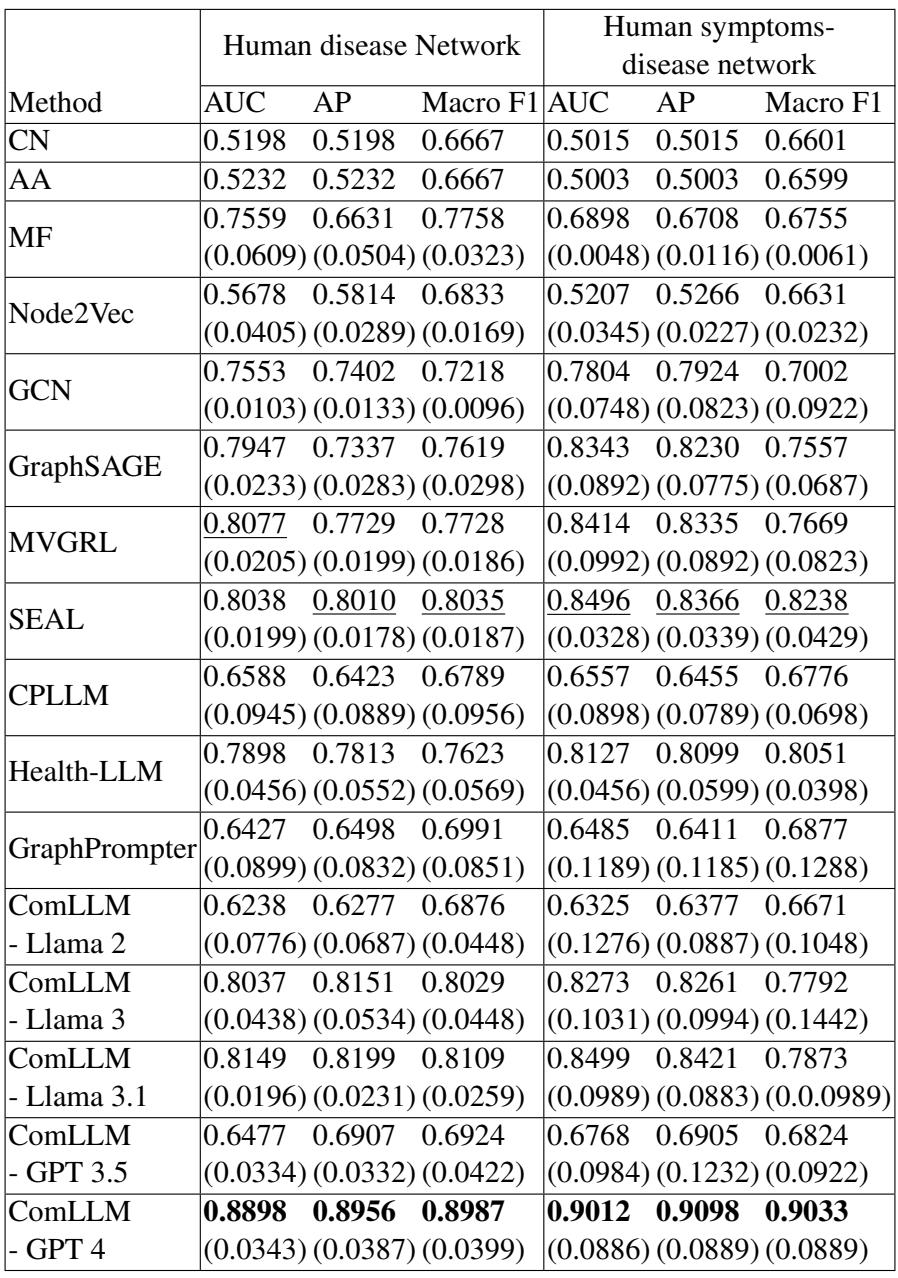
Table 2 highlights the dominance of the proposed method.
- Beating the Best: The previous state-of-the-art model, SEAL, achieved an AUC (Area Under the Curve) of 0.8038 on the Human Disease Network.
- ComLLM’s Leap: ComLLM powered by GPT-4 achieved an AUC of 0.8898. That is an improvement of over 10%, a massive margin in machine learning research.
- Consistency: The pattern holds true for the larger Symptoms-Disease network as well, where ComLLM maintained a distinct lead over GNN baselines.
It is worth noting the performance difference between LLM versions. Llama 2 struggled to beat the baselines, likely due to weaker reasoning capabilities. However, Llama 3 and GPT-4 showed that as the underlying model gets smarter, the framework’s effectiveness scales up drastically.
Why Did It Work? The Impact of Prompt Strategies
The researchers didn’t just stop at “our model is better.” They performed an ablation study to understand which parts of their framework were driving the success. They tested four configurations:
- Zero-shot: Just asking the LLM (no examples).
- Few-shot: Giving the LLM a few examples of linked diseases.
- COT (Chain-of-Thought): Asking the LLM to think step-by-step.
- Graph Prompt + RAG: The full ComLLM experience.
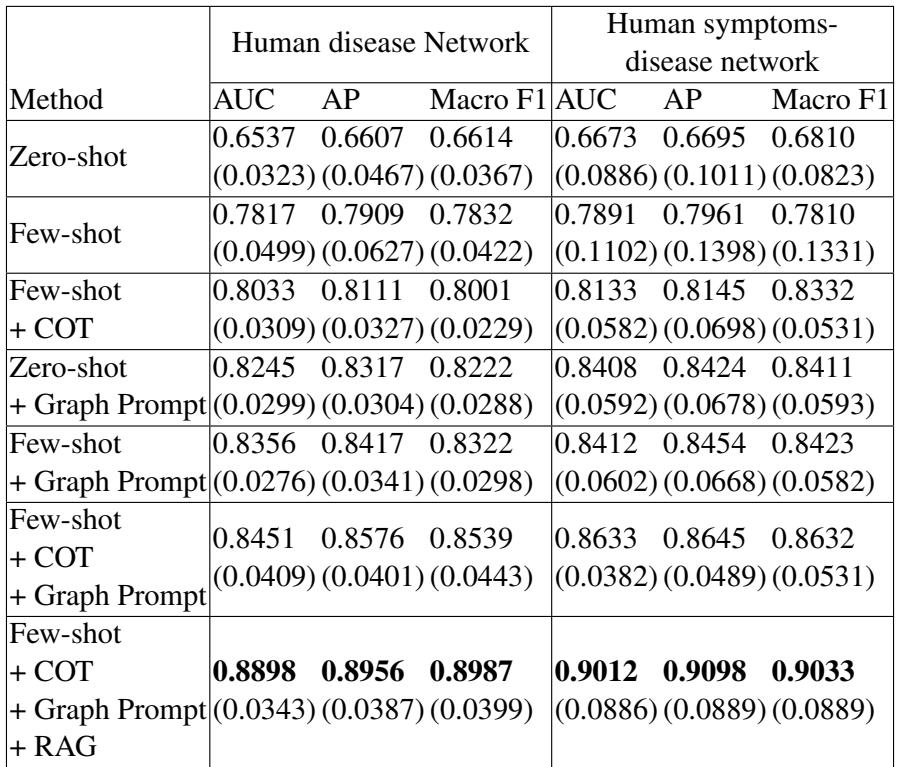
As seen in Table 3, the “Zero-shot” performance (AUC 0.6537) was mediocre. The model had general knowledge but lacked specificity.
- Adding Graph Information (Graph Prompt) jumped the score to 0.8245. This proves that telling the LLM about the network topology is critical.
- Adding RAG (Retrieval) pushed the score to the final 0.8898.
This stepwise improvement confirms that neither the LLM alone nor the graph data alone is enough. It is the synthesis of structural graph data and retrieved medical text that unlocks the high performance.
Model Comparison: Open Source vs. Proprietary
Finally, the study looked at whether open-source models (like Meta’s Llama series) could compete with OpenAI’s GPT-4.
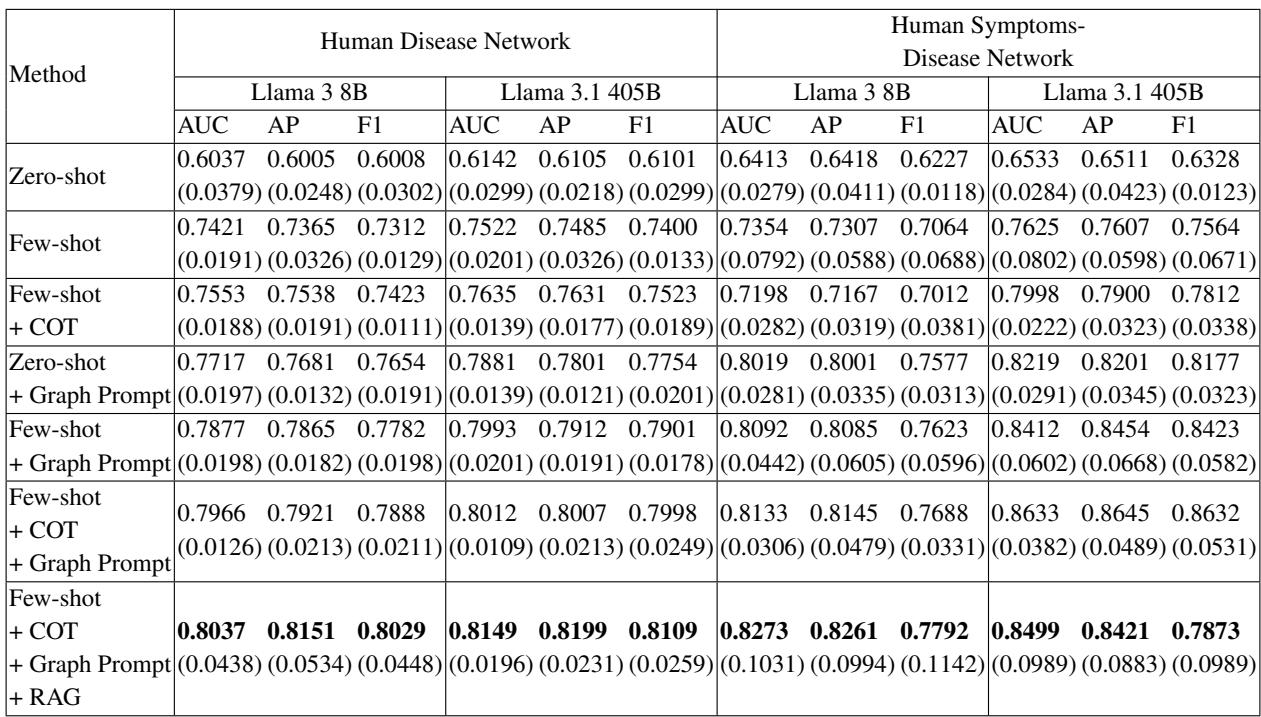
Table 4 reveals an interesting trend. The massive open-source model, Llama 3.1 405B, achieved results very close to GPT-4, reaching an AUC of roughly 0.81 with RAG integration. Even the smaller Llama 3 8B model showed respectable performance when enhanced with Graph Prompts and RAG. This suggests that the ComLLM framework is robust and can be deployed on various models, provided they have sufficient reasoning capability.
Conclusion & Implications
The ComLLM paper presents a significant step forward in healthcare AI. It moves beyond the “black box” of numerical vectors used in traditional Graph Neural Networks and embraces a method that is semantically rich and interpretable.
Key Takeaways:
- LLMs are Graph Learners: When provided with the right textual representation of graph structure (Graph Prompting), LLMs can reason about network topology better than dedicated GNNs.
- Context is King: The integration of Retrieval-Augmented Generation (RAG) ensures that predictions are based on verified external medical knowledge, significantly boosting accuracy and reducing hallucinations.
- Future of Diagnostics: This method serves as a proof-of-concept. It suggests that future diagnostic tools could analyze a patient’s history not just as a list of codes, but as a narrative within a global network of disease interactions, predicting complications before they arise.
While challenges remain—specifically the high computational cost of running these large models compared to simple GNNs—the performance gains offer a compelling argument for the integration of Large Language Models into network-based disease prediction. As models become more efficient and capable, systems like ComLLM could become standard tools in proactive health management.