](https://deep-paper.org/en/paper/file-2845/images/cover.png)
Introduction
Globally, over 50 million children aged 0–5 years experience some form of disability. For these children and their families, pediatric rehabilitation is not just about clinical visits; it is about the daily grind of navigating life. It involves finding ways to participate in family dinners, play at the park, or manage school routines. In this context, caregivers—parents and guardians—are the unsung experts. They develop unique, personalized “strategies” to help their children succeed.
Imagine a parent discovering that their child engages better with peers when activities are structured around a specific theme. That is a caregiver strategy. These insights are invaluable for clinicians to design meaningful service plans. However, this data is notoriously difficult to capture. It usually exists as unstructured, free-text narratives buried in clinical notes or surveys. Extracting this information manually is slow and unscalable.
While Natural Language Processing (NLP) offers a solution, the field suffers from a “small data” problem. There simply aren’t enough annotated datasets of caregiver strategies to train robust AI models.
In this post, we dive into CareCorpus+, a research paper that tackles this scarcity head-on. The researchers not only compiled the largest dataset of its kind—increasing available data by five-fold—but also pioneered a novel method using Large Language Models (LLMs) to generate synthetic training data. This work demonstrates how we can leverage modern AI to support under-resourced healthcare domains, turning scattered sentences into actionable clinical insights.
Background: The Context of Pediatric Rehabilitation
To understand the technical achievements of this paper, we must first understand the clinical landscape. Pediatric rehabilitation focuses on improving a child’s participation in daily activities.
Researchers use tools like the Participation and Environment Measure (PEM) to gather data. This web-based tool asks families to describe the strategies they use. For example, a parent might write, “We go to the park early in the morning when it is quiet so my son isn’t overwhelmed.”
The Classification Challenge
The goal is to take these free-text snippets and classify them into clinically established constructs. The paper focuses on five specific categories:
- Environment/Context (EC): Modifying the surroundings (e.g., “Turning down the lights”).
- Sense of Self (SOS): Boosting the child’s confidence (e.g., “Praising him when he tries”).
- Preferences (P): leveraging what the child likes (e.g., “Using his favorite toy”).
- Activity Competence (AC): Teaching specific skills (e.g., “Hand-over-hand help with brushing”).
- Non-Strategy (NS): Text that doesn’t describe a strategy (e.g., “I am worried about his progress”).
Previous attempts, such as the original CareCorpus, showed promise but were limited by size (only 780 examples) and scope (only children aged 0–3 in early intervention). The models struggled to generalize across the full 0–5 age range or different care settings like hospitals or community centers.
Building CareCorpus+: Manual Expansion
The researchers’ first step was to build a better foundation. They moved beyond the original dataset to create CareCorpus+ (CC+).
They aggregated data from three different research studies, expanding the demographic to include children up to age 5 and covering diverse settings including home, school, and pediatric intensive care units. This manual curation resulted in 3,062 caregiver strategies—a massive leap from the previous 780.
Addressing the “Non-Strategy” Noise
A major challenge in analyzing patient-reported text is noise. When parents type into a text box, they often include emotional venting, questions, or general descriptions that aren’t actionable strategies.
To train a model to recognize strategies, it must also learn what isn’t a strategy. The researchers scraped data from public child health forums (like Netmums and Patient.Info). They collected 1,002 examples of “non-strategies”—caregiver posts that mimicked the style of strategy text but contained no strategic content. This addition was crucial for teaching the model to distinguish between a helpful tip and a general comment.
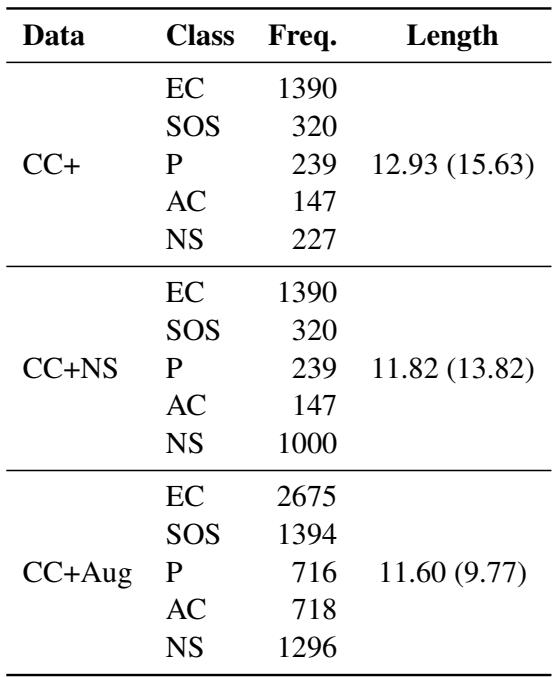
As shown in Table 9 above, the expansion resulted in a significant amount of data, particularly for the “Environment/Context” class. However, classes like “Activity Competence” remained relatively rare, highlighting the persistent issue of class imbalance even after manual expansion.
Visualizing the Data Landscape
The impact of this expansion is visible in the complexity of the data. The researchers used t-SNE (t-distributed Stochastic Neighbor Embedding) to visualize the semantic space of the strategies.
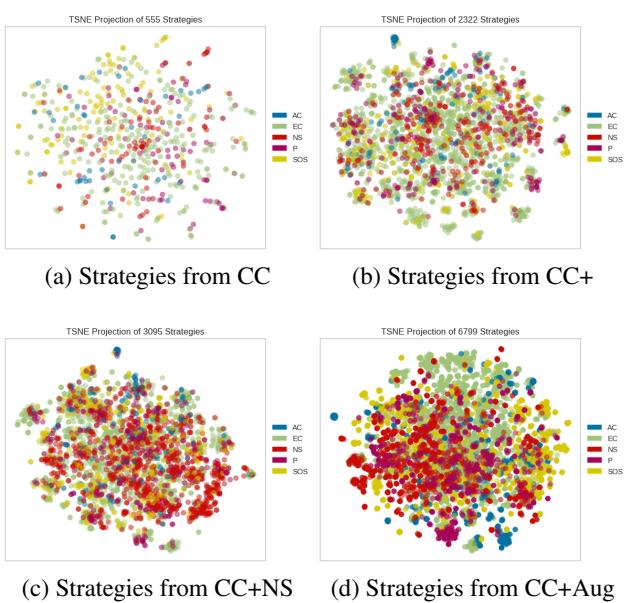
In Figure 1, notice the progression from (a) to (c).
- (a) CC: The original dataset is sparse.
- (b) CC+: The new manually curated dataset is denser and richer.
- (c) CC+NS: Adding the Non-Strategies (in red) creates a distinct cluster, helping the model separate signal from noise.
However, even with 3,000 examples, the dataset is small by Deep Learning standards. To truly unlock high performance, the researchers turned to Data Augmentation.
Core Method: Synthetic Data Augmentation
This is the technical heart of the paper. When you don’t have enough data, you can try to create it. Traditional methods involve swapping synonyms or translating text to another language and back. However, these often result in clunky, unnatural sentences.
Instead, the researchers used a Large Language Model—specifically Flan-t5-xl—to generate synthetic caregiver strategies.
Prompt-Based Paraphrasing
They didn’t just ask the LLM to “write a strategy.” They framed it as a paraphrasing task. They provided the LLM with a real strategy from their dataset and asked it to rewrite it using specific styles or contexts.
The researchers used three types of prompt templates:
- Simple: Rewrite this strategy.
- Activity-Aware: Rewrite this strategy in the context of a specific activity (e.g., “outing”).
- Setting-Aware: Rewrite this strategy in the context of a specific setting (e.g., “community”).
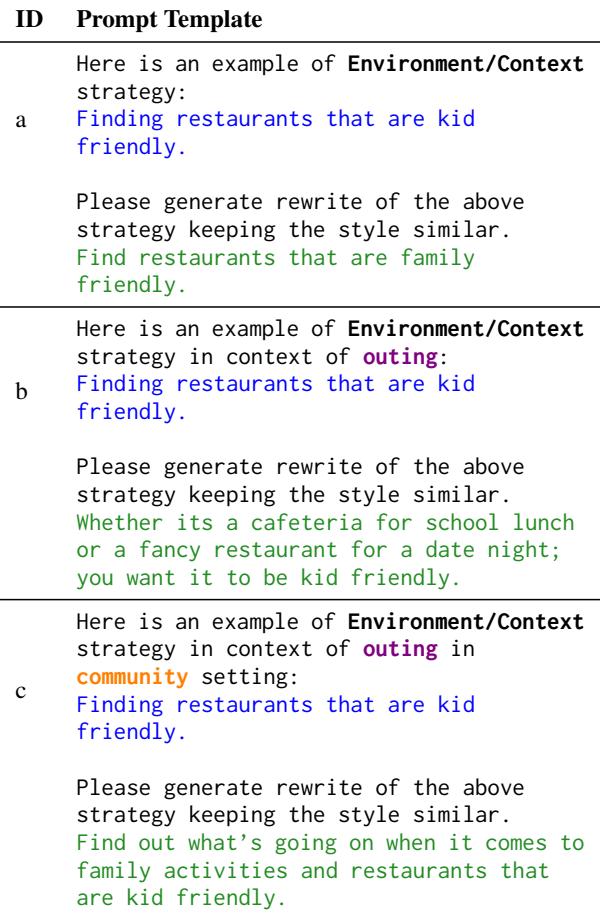
As seen in Table 2, the model takes a source strategy about “kid-friendly restaurants” and generates variations ranging from “cafeteria for school lunch” to “family activities.” This mimics the natural variation in how different parents might describe the same underlying idea.
The Quality Control Filter: PVI
LLMs are prone to “hallucination.” Sometimes they generate text that drifts too far from the original meaning or produces nonsense. If you train a classifier on bad synthetic data, performance will drop.
To solve this, the authors implemented a filtering mechanism based on Pointwise \(\mathcal{V}\)-Information (PVI).
\[ \mathrm { P V I } ( x \to y ) = - \log _ { 2 } g [ \emptyset ] ( y ) + \log _ { 2 } g ^ { \prime } [ x ] ( y ) \]
What does this equation mean? In simple terms, PVI measures how much easier it is to predict the correct label (\(y\)) if you have the input text (\(x\)), compared to if you don’t.
- High PVI: The text strongly implies the label. It is a high-quality, informative example.
- Low PVI: The text is confusing, irrelevant, or too hard to classify.
The researchers generated nearly 16,000 synthetic strategies but used PVI to aggressively filter them. They discarded over 11,000 examples, keeping only the “gold standard” synthetic data.
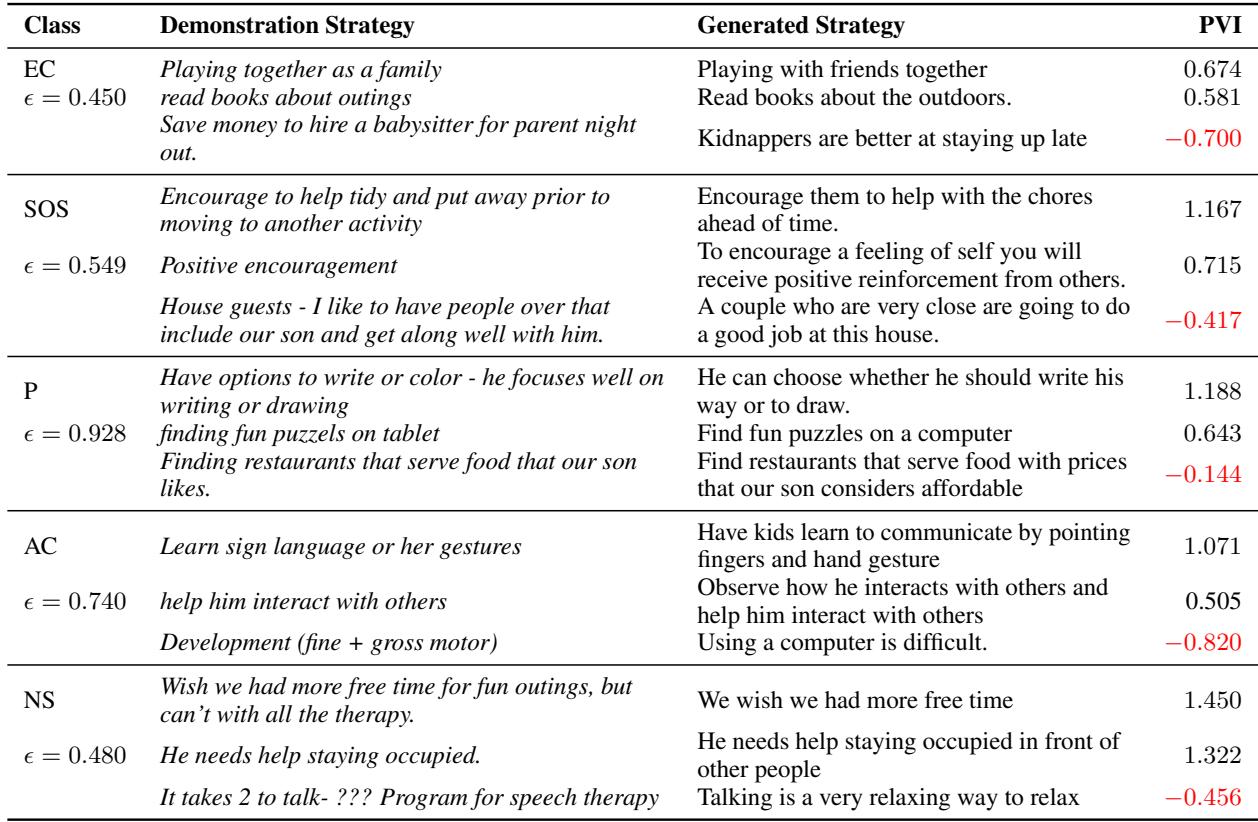
Table 5 provides a fascinating look at this filter in action. Look at the red text (Low PVI):
- Input: “Save money to hire a babysitter…”
- Synthetic Output: “Kidnappers are better at staying up late.”
The LLM hallucinated something bizarre about kidnappers. The PVI score was negative (-0.700), correctly flagging this as garbage data to be thrown out. Conversely, the high PVI examples retained the semantic meaning while varying the phrasing.
Experiments and Results
The researchers tested their datasets using several models, ranging from simple Logistic Regression to advanced pre-trained models like BERT and Bio-ClinicalBERT.
They compared four data scenarios:
- CC: The original small dataset.
- CC+: The expanded manual dataset.
- CC+NS: Expanded + Non-Strategies from forums.
- CC+Aug: Expanded + Non-Strategies + Synthetic Data.
The Performance Jump
The results were decisive. As shown in Table 3, the addition of synthetic data (CC+Aug) drastically improved performance across almost all metrics.
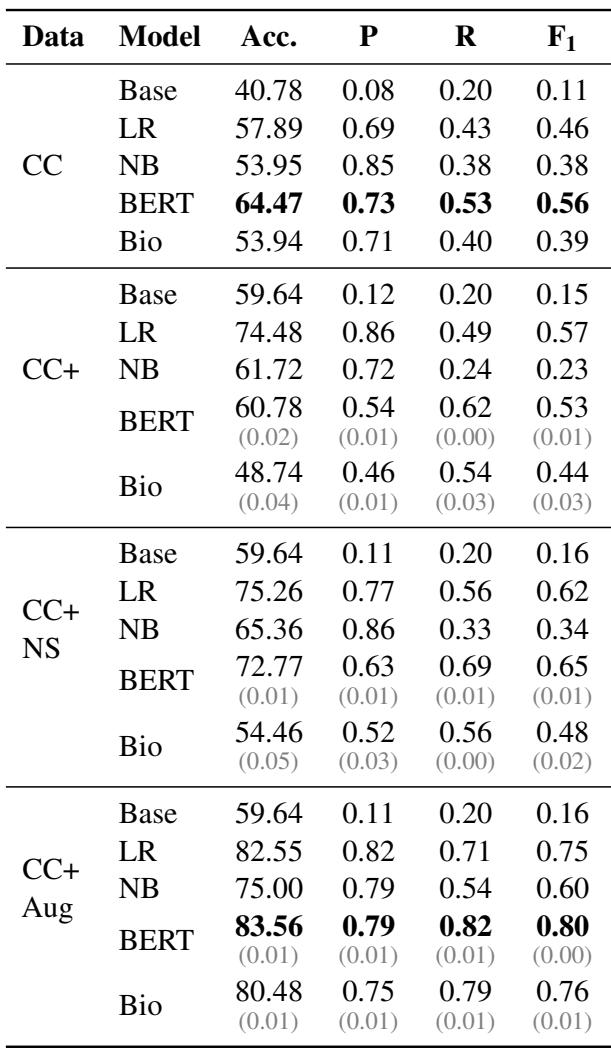
Focus on the BERT rows:
- Training on the original CC yielded an F1 score of 0.56.
- Training on CC+Aug jumped to an F1 score of 0.80.
This is a massive 50.9% relative increase in performance. It establishes a new state-of-the-art ceiling for this task. The results prove that LLM-generated data, when properly filtered, is not just “filler”—it actually helps the model learn better decision boundaries.
Does More Data Always Mean Better Results?
The researchers also analyzed how the amount of synthetic data affected performance.
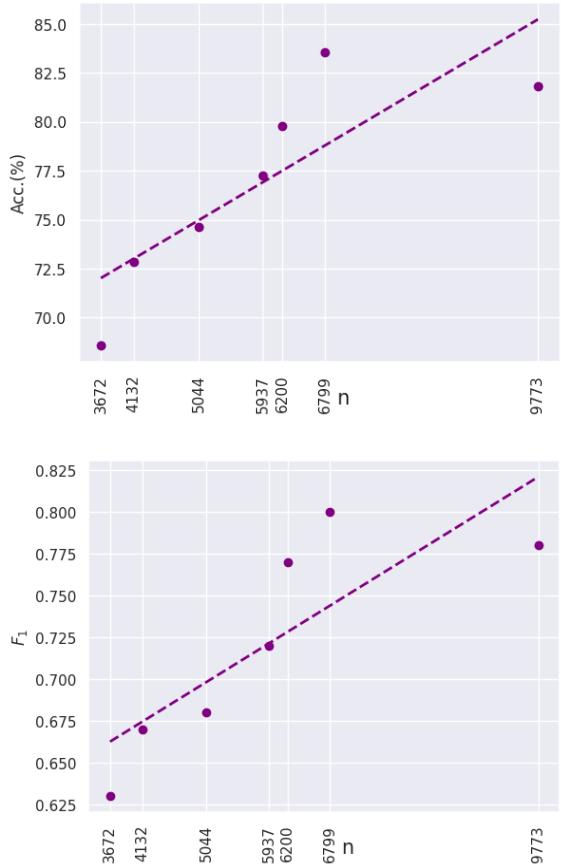
Figure 2 shows a clear upward trend. As the number of training instances (\(n\)) increases (x-axis), the F1 score (bottom graph) climbs steadily.
Crucially, the authors note that if they relaxed the PVI filter to let in more data (going up to n=9773), performance actually dropped. This reinforces the “Quality over Quantity” principle in data augmentation. A smaller, cleaner synthetic dataset is better than a massive, noisy one.
Binary Classification
The system was also tested on simplified tasks:
- Strategy vs. Non-Strategy (S/NS): Can we just identify if a sentence is a strategy?
- Extrinsic vs. Intrinsic (ES/IS): A broader grouping of the strategy types.
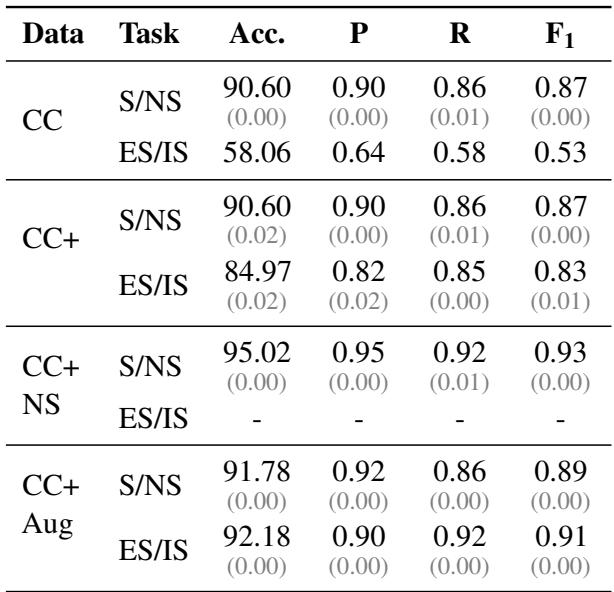
Table 4 shows that for the ES/IS task, the synthetic data (CC+Aug) pushed the F1 score to 0.91, nearly perfect classification. This suggests that the synthetic data is particularly good at helping models understand the broad linguistic differences between “changing the environment” (Extrinsic) and “changing the child’s skills” (Intrinsic).
Error Analysis and Discussion
Despite the success, the model isn’t perfect. The authors performed a detailed error analysis to understand where the model still trips up.
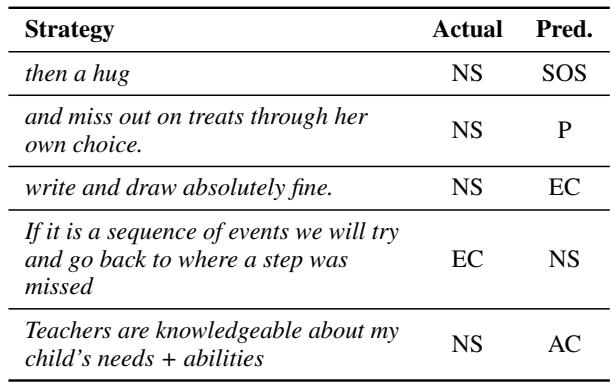
Table 6 highlights a common confusion. The model sometimes misclassifies “parenting language” as a strategy.
- Example: “Teachers are knowledgeable about my child’s needs + abilities.”
- Prediction: Activity Competence.
- Actual: Non-Strategy.
The sentence sounds positive and proactive, sharing the style of a strategy, but it is actually just a statement of fact. This indicates that future work needs to focus on detecting the “intent” or “actionability” of a sentence, rather than just its vocabulary.
Implications for Healthcare
This study goes beyond just technical metrics. It has real-world implications:
- Scalability: We can now reliably classify thousands of caregiver entries without human annotators.
- Resource Efficiency: The use of Flan-t5-xl (a relatively lightweight LLM) means this approach doesn’t require massive supercomputers, making it feasible for hospital systems.
- Equity: By incorporating data from diverse sources (forums, different studies), the model is less biased toward a specific demographic or age group.
However, the authors frankly discuss ethical considerations. Synthetic data carries the risk of diluting the “family voice.” If we rely too heavily on AI-generated text, we must ensure we aren’t losing the nuances of how real families speak about their challenges.
Conclusion
CareCorpus+ represents a significant step forward in the intersection of NLP and pediatric rehabilitation. By manually curating the largest dataset of its kind and successfully deploying a PVI-filtered synthetic data pipeline, the researchers achieved a new benchmark in classifying caregiver strategies.
Key takeaways for students and researchers:
- Data Scarcity is Solvable: You don’t always need millions of real-world examples. Smart augmentation can bridge the gap.
- Filter Your Synthetic Data: Generative AI is powerful but noisy. Metrics like PVI are essential quality control gates.
- Context Matters: The success of this project relied on deep domain knowledge—understanding the specific categories of pediatric rehabilitation—to design the prompts and the dataset structure.
This work paves the way for intelligent systems that can listen to families, understand their innovations, and help clinicians design better, more personalized care plans for children with disabilities.